
Find a fireplace that works with Salt Lake County's air, not against it.
Gas and electric fireplace resources for every city along the Wasatch Front—from Salt Lake City to Riverton—plus honest guidance on why wood and pellet appliances are the rare exception here, not the rule.
Every Project Starts From One of These Five Situations
Heating the Wasatch Front, where inversions matter more than degree days.
Salt Lake County stretches from the valley floor at roughly 4,300 feet up into Wasatch Range canyons above 8,000 feet—Big Cottonwood, Little Cottonwood, Millcreek, Emigration. With winters comparable to Madison, Wisconsin and a 28°F average winter low, the county sits in the same general cold-climate range—not brutal, but a real heating season. What sets Salt Lake County apart isn't the cold, though. It's the air. The valley traps cold, stagnant air against the Wasatch Front most winters, creating some of the worst PM2.5 inversion events in the country, compounded by wildfire smoke in late summer. That single fact drives almost every hearth decision here more than temperature does.
Because of that, wood and pellet appliances are genuinely uncommon on the valley floor—Salt Lake County is a federal PM2.5 nonattainment area, and the Utah Division of Air Quality restricts solid-fuel burning on Mandatory Action Days. New wood stove installs are rare in the incorporated cities as a result. What you will find plenty of: gas fireplaces and inserts served by Dominion Energy's extensive distribution network, and electric fireplaces in the condos, townhomes, and high-rise construction filling in Sugar House, Sandy, and downtown Salt Lake City. A small number of wood stoves persist in canyon cabins above Cottonwood Heights and in Emigration Canyon, typically burning pinyon, juniper, or aspen cut under Uinta-Wasatch-Cache National Forest permits—but that's the exception, not the default. Pick your fuel below, or browse the full directory of the 16 cities and unincorporated communities that make up the county.
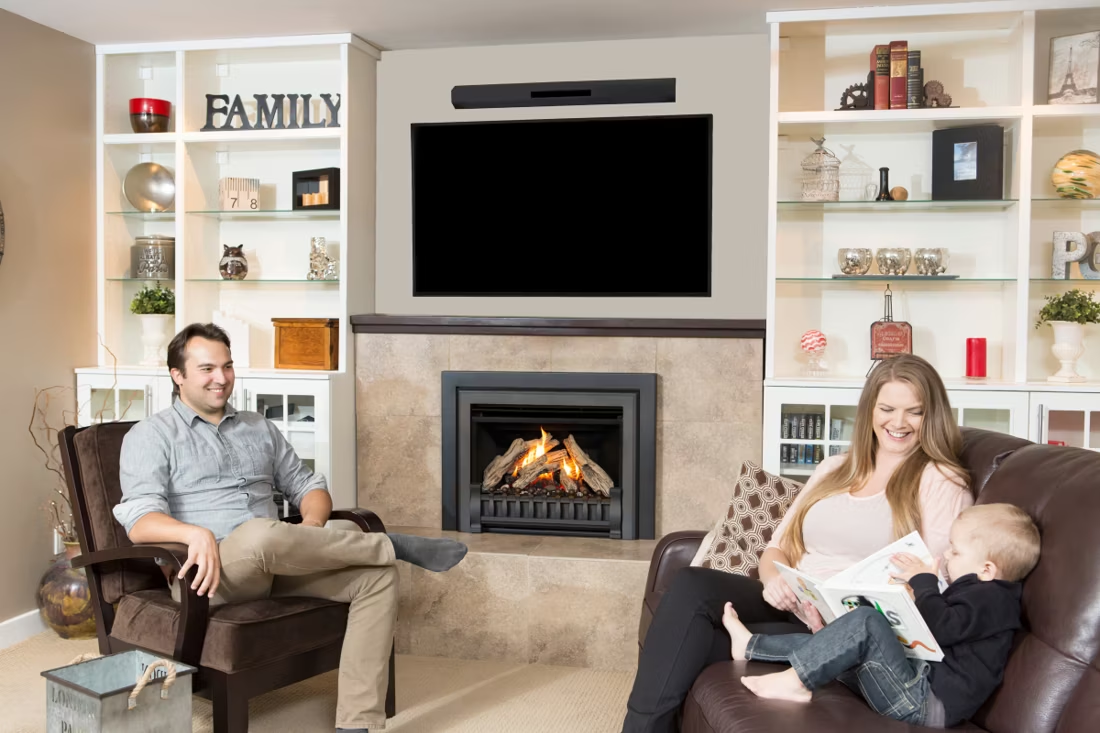
Four fuels. One honest answer for Salt Lake County.
Three steps. No salesperson until you're ready.
Tell us about your project
Your zip code, your situation, and the fuel you're leaning toward—or let the answers point you to one.
See what's actually available
The brands dealers within 100 miles genuinely carry—real options, never a catalog mirage.
Get your dealer & Project Guide
A trusted local dealer, plus the free Project Guide & Parts List that names every component of the job.
Frequently Asked Questions
Which fuel works best in Salt Lake County?
For most homes on the valley floor, gas is the practical default—Dominion Energy's natural gas network reaches nearly every incorporated city, and gas fireplaces keep working during winter Mandatory Action Days when solid-fuel burning is restricted. Electric fireplaces are a strong second choice, especially in condos and townhomes across Sugar House, Sandy, and downtown Salt Lake City where venting a gas or wood unit isn't feasible, or where residents want zero-emission ambiance during inversion season. Wood and pellet stoves are the exception rather than the rule here—they're still used in canyon cabins above Cottonwood Heights and in Emigration Canyon, typically burning pinyon, juniper, or aspen cut under Uinta-Wasatch-Cache National Forest permits, but new installs on the valley floor are limited by the county's PM2.5 nonattainment status.
Do I need a permit to install a fireplace in Salt Lake County?
Yes, in almost every case. Because Salt Lake County has 16 separate incorporated cities plus unincorporated areas, permitting runs through your specific city's building department—Salt Lake City Building Services, Sandy City, West Jordan, and so on—or through Salt Lake County Community Development if you're unincorporated. Gas fireplace and insert installations require a building permit plus a separate gas line permit pulled by a licensed gas fitter connecting to the Dominion Energy line. Electric fireplaces generally don't need a permit for plug-in units, but built-ins with new wiring or a dedicated circuit do. Most local retailers handle this paperwork as part of the installation quote.
Are there air quality restrictions on wood burning in Salt Lake County?
Yes, and they're some of the strictest in the country. Salt Lake County is designated a federal PM2.5 nonattainment area because winter temperature inversions trap pollution against the Wasatch Front for days at a time. The Utah Division of Air Quality calls Mandatory Action Days—commonly known as red air days—during which solid-fuel burning, including wood and pellet stoves, is prohibited unless the appliance is your home's sole source of heat. Wildfire smoke adds a second seasonal concern in late summer. This is the main reason new wood-burning appliance installs are rare in the incorporated cities; if you're set on wood heat, check with your city's building department on current restrictions before buying a stove.
Can one local dealer handle both gas and electric fireplaces?
Most Salt Lake County hearth retailers carry both. Dealers along the Wasatch Front typically stock gas fireplaces, inserts, and stoves alongside a line of electric fireplaces for condos, apartments, and secondary rooms—the two fuels cover the overwhelming majority of installs here, so it's the standard combination for local showrooms. A smaller number of dealers, usually those closer to the canyons, also carry a limited wood stove line for cabin customers. If you're comparing gas against electric for a specific room, a multi-fuel dealer can walk you through venting requirements, running costs, and what's realistic for your home's layout.
How does service work across a county with 16 different cities?
Salt Lake County is dense and compact compared to most counties—the drive from Salt Lake City to Draper or Riverton rarely exceeds 30 minutes, so most gas and electric service technicians cover the entire valley without significant travel fees. Gas fireplace inspection and pilot service is the bulk of the work; electric installers handle wall-mount and built-in setups. Chimney sweeps serving the smaller wood-stove population in the foothills and canyons above Cottonwood Heights and Emigration Canyon may charge modest travel fees for those routes. Fall booking (September–October) fills up fastest ahead of inversion season, when gas units see heavy use.
What's the typical cost range for fireplace installation across fuel types in Salt Lake County?
Gas fireplace, insert, or stove: roughly $4,500–$10,500 depending on whether you're connecting to existing Dominion Energy service or running new gas line. Electric fireplace: $200–$3,000 for the unit itself, with $400–$1,200 in labor for built-ins requiring a dedicated circuit; most wall-mount and freestanding units are closer to plug-and-play. Wood or pellet stove installs are less common and often run higher, $5,000–$10,000+, partly because fewer local installers specialize in solid-fuel venting under current air quality rules. See the county + fuel pages above for retailer-specific pricing.
Does a fireplace add value to my home?
On average, a fireplace adds back to the home about the same amount you spent installing it. Add the monthly savings from heating the rooms you actually use instead of the whole house—often hundreds of dollars a year—and the value case is strong before you even count what a fire does for how your family uses the room.
What is an in-home preview and do I need one?
It's a visit where a hearth professional measures your space, confirms the model you picked actually works in your home, and walks the specs—framing, gas line, venting, finish work—before anything is ordered. Some details you just can't know until you see the house. Never make a down payment without one; it's the single most-skipped step that burns buyers.
Wood, gas, pellet, or electric—how do I choose?
Match the fuel to your life, not the other way around. Wood: lowest fuel cost and total power-outage independence, but you're hauling and stacking. Gas: press a button, set a thermostat, no maintenance to speak of. Pellet: wood economics with automatic feeding, in exchange for weekly cleaning and a need for electricity. Electric: plugs in anywhere with honest supplemental heat. Nobody regrets the fuel that fits how they actually live.
Can a fireplace actually lower my heating bill?
Yes—by creating a comfort zone. A furnace heats every square foot of the house just to warm the one room you're in; a gas fireplace on low burns roughly a sixth of the gas a typical furnace does. Set the furnace around 55–60 degrees as a baseline, then heat the rooms your family actually uses. Families who heat this way commonly save $20–$60 a month.
Stove and Fireplace Dealers in Salt Lake County
Listings include WhyFire partner dealers, dealers we have verified as authorized for the brands we recommend, and established local businesses that carry hearth products. Every listing shows which one it is. The ones marked Preferred run on WhyFire's software, so they can show you real pricing and book your appointment right here. No manufacturer pays for placement. How we verify dealers →
Degrees Above Fireplaces
Ignite Fireplace
Bills Comfort Systems
Standard Plumbing
Wasatch Fireplace & Stove
(Sugar House) Alpine Fireplaces (In Breezeway Next To Theatres)
Comfort Solutions
Croft Fireplaces (Bountiful)
Modscapes Modern Living
First Class Fireplace
Heritage Homes & Fireplaces
Modscapes Outdoor Living
Find your fireplace in Salt Lake County.
Tell us about your home and we'll match you with a trusted local dealer and send a free Project Guide & Parts List—the exact parts, including the vent kit or wiring plan, for your fireplace project in Salt Lake County.
Find Your Fireplace →