
Warmth That Never Waits on a Burn Ban.
South Jordan sits in the Salt Lake Valley, where winter inversion routinely restricts solid-fuel burning. Electric fireplaces sidestep that entirely—find the right unit and connect with a trusted local dealer.
Every Project Starts From One of These Five Situations
Electric fireplaces sidestep the inversion entirely.
South Jordan sits at roughly 4,668 feet in the Salt Lake Valley, part of the Wasatch Front corridor that traps cold air—and pollution—against the mountains most winters. With average winter lows around 25°F and about 5,115 heating degree days a year, homes here need real supplemental heat, but the valley's well-documented inversion problem means Salt Lake County issues mandatory no-burn action days that specifically target wood-burning stoves and fireplaces. That's a big part of why wood and pellet heat see little uptake in South Jordan—an electric fireplace simply isn't subject to any of those restrictions, on the worst air day of January or otherwise.
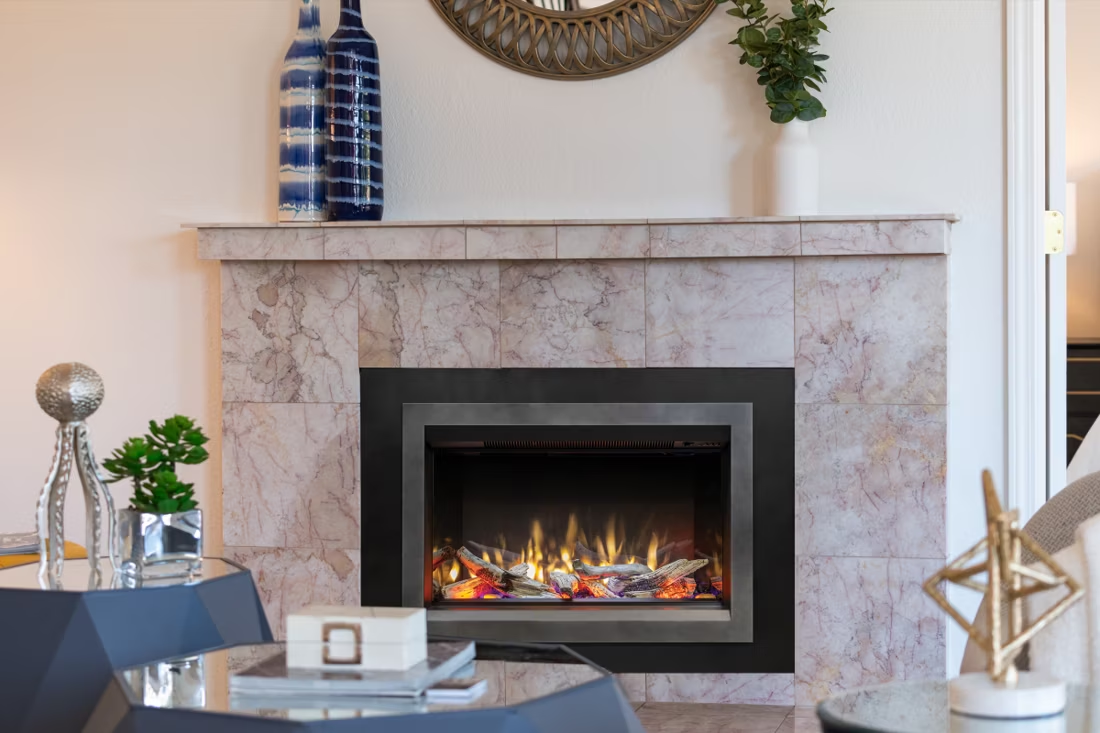
South Jordan has also grown fast, with large swaths of newer construction in planned communities like Daybreak, where design covenants often limit chimneys and exterior venting. Electric fireplaces fit that reality well: no flue, no gas line, no combustion byproducts, and often a straightforward install in a finished basement, great room, or primary bedroom. Power comes from PacifiCorp at a residential rate around 12.5 cents per kWh, which keeps day-to-day operating costs modest for supplemental zone heat, even if it isn't your only heat source.
Three steps. No salesperson until you're ready.
Tell us about your project
Your zip code, your situation, and the fuel you're leaning toward—or let the answers point you to one.
See what's actually available
The brands dealers within 100 miles genuinely carry—real options, never a catalog mirage.
Get your dealer & Project Guide
A trusted local dealer, plus the free Project Guide & Parts List that names every component of the job.
Frequently Asked Questions
How much does an electric fireplace installation cost in South Jordan?
Costs vary a lot by unit type. A plug-in freestanding electric stove or a simple insert that drops into an existing opening typically runs $500 to $1,200 including basic setup—no permit, no electrician needed if it uses a standard outlet. A built-in linear electric fireplace set into a new wall, with framing, a dedicated 20-amp circuit, and finish work, usually lands between $1,800 and $3,000 in the South Jordan area. The dealers we match you with will quote a firm number after seeing your wall and existing electrical.
Will my electric fireplace still work on a mandatory no-burn day?
Yes. Salt Lake County's mandatory action days during winter inversion target solid-fuel devices—wood stoves, wood fireplaces, and in some cases older uncertified units. Electric fireplaces produce no combustion byproducts and aren't restricted on red or yellow air days. For South Jordan households that want reliable supplemental heat regardless of the Wasatch Front's air quality that week, that's one of the clearest advantages electric has over wood.
Do I need a permit to install an electric fireplace in South Jordan?
A plug-in unit that uses an existing standard outlet doesn't require a permit. A built-in electric fireplace that needs a new dedicated circuit or any wall modification does require an electrical permit through the South Jordan City Building Department, and most licensed installers pull it as part of the job. Because electric units skip gas lines and venting altogether, the permitting process is generally faster and simpler than a gas or wood installation in this same market.
What's the difference between a plug-in electric fireplace and a built-in electric insert?
A plug-in electric fireplace is a self-contained unit—freestanding stove, mantel package, or wall-mount—that runs on a standard 120V outlet and can be moved if you relocate. A built-in electric insert is installed into a wall cavity or existing fireplace opening and typically wired to a dedicated circuit for full heater output. For South Jordan homes in newer subdivisions without an existing masonry fireplace, a built-in linear unit set into fresh framing is the more common route; homes with an old wood-burning fireplace opening often use an insert-style unit that drops right in.
How much does an electric fireplace cost to run in South Jordan?
With PacifiCorp's residential rate around 12.5 cents per kWh, a typical 1,500-watt electric fireplace heater costs roughly 19 cents an hour to run on full heat. Used a few hours a night through a South Jordan winter—where you're heating against lows in the mid-20s—that adds up to somewhere around $15 to $25 a month in most households, far less than what it costs to condition the same square footage with central heat alone. Ambiance-only mode (flame with no heater) draws only a few watts and costs pennies to run all evening.
Can I add an electric fireplace to a newer home in Daybreak or another HOA community?
Generally, yes, and it's often the easiest fireplace option in these communities. Many of South Jordan's newer planned developments, including sections of Daybreak, have design guidelines that restrict exterior venting, chimneys, or solid-fuel appliances. Because an electric fireplace needs no flue and no penetration through the roof or wall to the outside, it typically clears HOA architectural review without issue—worth confirming with your HOA's design committee before finalizing your unit, but it rarely becomes a sticking point the way a gas or wood installation might.
Why don't more South Jordan homes have wood-burning fireplaces?
Wood heat is uncommon in South Jordan specifically because of the valley's inversion problem—Salt Lake County calls mandatory no-burn action days several times most winters, and solid-fuel devices are the first restricted. A handful of older homes in the area still have wood-burning fireplaces, and residents who want to cut their own wood can get a Forest Service permit through the Uinta-Wasatch-Cache National Forest for $5 to $20 per cord during the May–October season, but it's a minority use case here. Most homeowners looking for supplemental heat in this market choose gas or electric instead.
What size electric fireplace do I need for my room?
Most electric fireplace heaters are rated to heat 400 to 1,000 square feet, which covers a typical South Jordan great room, basement family room, or primary suite as supplemental heat rather than whole-home heat. Larger open floor plans common in newer Daybreak-area builds sometimes call for a wider linear unit or a higher-wattage heater core to feel the warmth across the room. Because electric units don't need to be sized for a chimney draft the way a wood stove does, sizing is mostly about square footage, insulation, and how much of the heat output you actually want versus just the visual flame.
Electric vs. gas fireplace—which is right for my South Jordan home?
Gas fireplaces deliver more real heat output and can run during a power outage with a battery-backup ignition system, which matters on a genuinely cold Wasatch Front night. Electric fireplaces cost less to install, need no gas line or venting, aren't touched by mandatory no-burn air quality restrictions, and are simple to add to a finished basement or interior wall. For a primary heat source in a larger space, gas usually wins. For supplemental heat, ambiance, or a fireplace in a room where running gas line or venting isn't practical or HOA-approved, electric is often the better fit. Some South Jordan homeowners install gas in the main living area and electric in a bedroom or basement.
Can I put a TV above my fireplace?
Yes—with an asterisk. Fireplaces are hot and TVs don't like heat. Either put a mantel between them to deflect rising warmth, or choose a fireplace with heat-management technology that creates a cool zone on the wall above—the wall stays around 125 degrees, barely warm, while the room still gets full heat. If you like clean lines and don't want a mantel, heat management is the answer.
Does an electric fireplace need a vent or chimney?
No—that's its superpower. An electric fireplace needs a wall and an outlet, period. No vent pipe, no gas line, no clearances to design around, which is why it works in bedrooms, offices, apartments, and walls where venting a gas or wood unit would be impractical or impossible. Installation is typically the simplest and least expensive of any fireplace type.
Does a fireplace add value to my home?
On average, a fireplace adds back to the home about the same amount you spent installing it. Add the monthly savings from heating the rooms you actually use instead of the whole house—often hundreds of dollars a year—and the value case is strong before you even count what a fire does for how your family uses the room.
Should the dealer who sells my fireplace also install it?
Ideally, yes. A fireplace project involves vent pipe, gas line, electrical, and often tile or stone. Hire three or four separate trades and you own the liability and the game of telephone between them. One company selling and installing means one accountable party, start to finish—ask about factory training, on-time completion records, and what happens if an inspection fails.
Nearby Dealers
Hearth shops serving South Jordan and the surrounding area.
(Sugar House) Alpine Fireplaces (In Breezeway Next To Theatres)
Hearth & Home Distributors Of Utah - Salt Lake City
Electric Service in South Jordan
An electric fireplace's heater draws about 1,500 watts—pennies per hour at local rates.
Find your electric fireplace in South Jordan.
Tell us a bit about your home and we'll put together a free Project Guide & Parts List—the right electric fireplace or insert, the circuit and wiring specs, and a trusted local South Jordan dealer to install it.
Find Your Fireplace →