
Electric heat that skips the inversion smoke.
Zero-clearance, no-vent warmth for Riverton homes in the southern Salt Lake Valley—installed by a local pro, not a big-box guess.
Every Project Starts From One of These Five Situations
No smoke, no soot, no burn-ban worries.
Riverton sits at 4,544 feet in the southern end of the Salt Lake Valley, where winter lows average around 25°F and the valley racks up roughly 5,115 heating degree days a year—a moderate cold, but one made trickier by geography. The Wasatch Front traps cold air and pollution in winter inversions, and Salt Lake County is one of the counties where the Utah Division of Air Quality calls mandatory no-burn Action Days when fine-particulate levels spike. On those days, solid-fuel devices—even many certified wood and pellet stoves—have to stay cold, which is a big part of why wood and pellet heat have never really taken hold as everyday options here. Electric fireplaces sidestep the issue entirely: no combustion, no smoke, no restrictions tied to air quality alerts.
Electric service in Riverton runs through Rocky Mountain Power (PacifiCorp), with residential rates around $0.1252 per kWh—inexpensive enough that a typical electric fireplace running a few hours a night costs well under a dollar in electricity. Because there's no chimney or gas line to plan around, electric units go into almost any wall in a Riverton subdivision home, finished basement, or bonus room, and a licensed electrician can often complete the circuit work in a single visit. It's a low-friction way to add real, adjustable zone heat and the look of a fire without adding anything to the airshed.
Three steps. No salesperson until you're ready.
Tell us about your project
Your zip code, your situation, and the fuel you're leaning toward—or let the answers point you to one.
See what's actually available
The brands dealers within 100 miles genuinely carry—real options, never a catalog mirage.
Get your dealer & Project Guide
A trusted local dealer, plus the free Project Guide & Parts List that names every component of the job.
Frequently Asked Questions
How much does an electric fireplace installation cost in Riverton?
Costs vary widely depending on the unit type. A plug-in electric insert or freestanding stove that drops into an existing opening can run as little as $300 to $800 installed, since it just needs a standard outlet. A built-in wall unit or linear electric fireplace with a custom surround, framing, and a dedicated 120V or 240V circuit typically runs $1,500 to $3,500 once electrical work and finish carpentry are included. Riverton City requires an electrical permit for new dedicated circuits, which most local installers pull as part of the job.
Do electric fireplaces actually produce heat, or are they just for looks?
Most mid-size and larger electric fireplaces include a built-in heater rated around 1,500 watts, enough to comfortably warm a 400 to 600 square foot room as supplemental zone heat—not a whole-house furnace replacement. Many models let you run the flame effect with the heater off for ambiance-only use, which is common in Riverton living rooms and finished basements where the fireplace is a secondary heat source alongside a gas furnace.
What will it cost to run an electric fireplace in Riverton?
At Rocky Mountain Power's residential rate of about $0.1252 per kWh, a 1,500-watt heater running at full output costs roughly 19 cents an hour. Used for five hours a night through the coldest months, that works out to under $30 a month—considerably cheaper than most people expect, and with none of the venting or fuel-delivery costs that come with gas or wood.
Do I need a permit to install an electric fireplace in Riverton?
A simple plug-in unit needs no permit at all—it's treated like any other appliance. A built-in electric fireplace that requires a new dedicated circuit needs an electrical permit through Riverton City's Building Department, since it involves a licensed electrician tying into your panel. There's no venting, gas line, or combustion-air permitting to worry about, which is one reason electric installs move faster than wood or gas projects here.
Will an electric fireplace work during a power outage?
No—electric fireplaces require power to run both the heater and the flame effect, so they go dark along with everything else during an outage. If backup heat during storm-related outages is a priority for your household, a vented gas fireplace with battery-backed ignition is worth considering as a second unit. For everyday zone heat and ambiance in a home with reliable grid power, electric remains the simplest and cleanest option in Riverton.
What electric fireplace brands hold up well for Riverton homes?
Dimplex and Napoleon both make widely available linear and built-in electric units with strong heater performance and realistic flame technology, and Touchstone's Sideline line is a popular mid-price option for basement remodels and media wall installs. The right pick depends more on the opening size and wall depth you're working with than the brand—a local dealer will match unit dimensions to your framing and let you compare flame technology in person before you buy.
Wall-mounted, insert, or mantel package—which fits my Riverton home best?
Many Riverton subdivisions were built from the 1990s through the 2000s with standard stud-framed walls and no existing masonry fireplace, which makes a linear wall-mounted unit or a mantel package (electric insert plus a surround) the most common fit—both go into a stud cavity without any structural work. Homes with an existing gas or wood fireplace opening they want to convert can often use an electric insert sized to that firebox instead. A local installer can tell you within minutes which approach works with your specific opening.
Electric vs. gas fireplace—which makes more sense in Riverton?
Gas fireplaces put out more heat, work during power outages with battery-backed ignition, and are common throughout the Salt Lake Valley wherever natural gas service reaches. Electric fireplaces cost far less to install, need no venting or gas line, run on pennies per hour at Rocky Mountain Power's rates, and never trigger air-quality burn restrictions. For a finished basement, bedroom, or secondary living space where ambiance and modest supplemental heat are the goal, electric is usually the simpler and cheaper choice. For a primary living room that needs to carry real heating load, gas is worth comparing.
Why are wood and pellet stoves so uncommon in Riverton compared to electric?
Salt Lake County is one of the Wasatch Front counties where winter inversions trap fine particulate pollution against the valley floor for days at a time, and the Utah Division of Air Quality calls mandatory no-burn Action Days restricting solid-fuel devices when conditions get bad. That regulatory reality, combined with limited access to affordable cordwood compared to more forested parts of the state, has kept wood and pellet appliances rare in Riverton even though pinyon, juniper, and aspen are available from Uinta-Wasatch-Cache National Forest cutting permits. Electric fireplaces never trigger a burn restriction, which is a real practical advantage here beyond just convenience.
Can I put a TV above my fireplace?
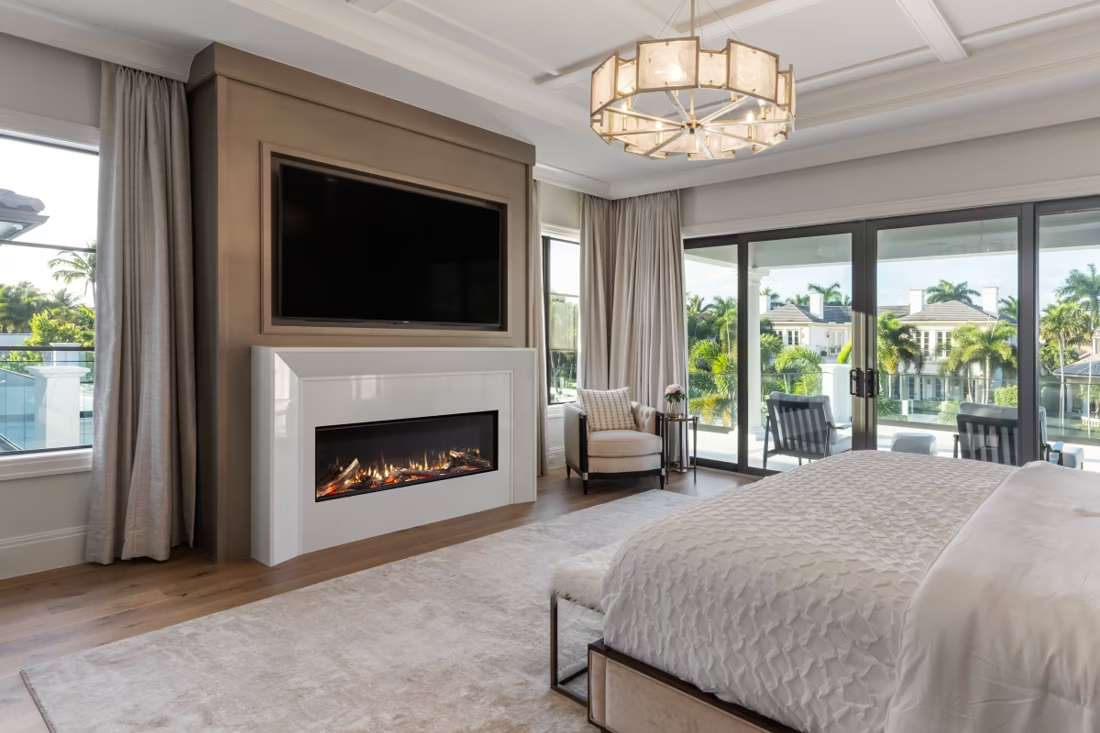
Yes—with an asterisk. Fireplaces are hot and TVs don't like heat. Either put a mantel between them to deflect rising warmth, or choose a fireplace with heat-management technology that creates a cool zone on the wall above—the wall stays around 125 degrees, barely warm, while the room still gets full heat. If you like clean lines and don't want a mantel, heat management is the answer.
Do electric fireplaces actually produce heat?
Yes—most put out around 4,800–5,000 BTUs from a standard outlet, which comfortably warms a bedroom, office, or den as a comfort-zone heater. What they won't do is carry a whole house the way wood, gas, or pellet can. Think of electric as ambiance-first with honest supplemental heat: flames on with no heat in July, flames plus warmth in January.
Does a fireplace add value to my home?
On average, a fireplace adds back to the home about the same amount you spent installing it. Add the monthly savings from heating the rooms you actually use instead of the whole house—often hundreds of dollars a year—and the value case is strong before you even count what a fire does for how your family uses the room.
Can a fireplace actually lower my heating bill?
Yes—by creating a comfort zone. A furnace heats every square foot of the house just to warm the one room you're in; a gas fireplace on low burns roughly a sixth of the gas a typical furnace does. Set the furnace around 55–60 degrees as a baseline, then heat the rooms your family actually uses. Families who heat this way commonly save $20–$60 a month.
Nearby Dealers
Hearth shops serving Riverton and the surrounding area.
(Sugar House) Alpine Fireplaces (In Breezeway Next To Theatres)
Hearth & Home Distributors Of Utah - Salt Lake City
Electric Service in Riverton
An electric fireplace's heater draws about 1,500 watts—pennies per hour at local rates.
Find your electric fireplace in Riverton.
Tell us about your space and we'll put together a free Project Guide & Parts List—the right electric unit, the circuit work it needs, and a trusted local dealer to install it.
Find Your Fireplace →