
Electric Heat That Fits Eagle Mountain's New Construction Boom.
No chimney, no smoke, no problem—electric fireplaces are the practical fit for Cedar Valley's newest neighborhoods. Find the right unit and connect with a trusted local dealer.
Every Project Starts From One of These Five Situations
The fireplace that matches how Eagle Mountain builds.
Eagle Mountain sits in the Cedar Valley at nearly 4,900 feet, on the western edge of Utah County's rapidly filling basin. Winters here are genuinely cold—average lows around 13°F and a sustained cold season that puts it in the same ballpark as Bismarck, ND for winter chill. But the valley's other defining winter feature is the inversion: cold, stagnant air settles against the Wasatch Front and traps pollution for days at a time, and Utah County regularly posts some of the worst air quality readings in the country during those events. That's a big part of why wood and pellet heat barely register here—burning solid fuel into an already-trapped air mass is a hard sell, and it shows up in how rarely those appliances get installed locally.
Eagle Mountain is also one of the fastest-growing cities in Utah, and the housing stock reflects it—the overwhelming majority of homes were framed in the last two decades inside master-planned communities, many with HOA covenants that restrict or flatly prohibit wood-burning appliances. Most of these homes were never built with a masonry chimney at all. An electric fireplace or insert drops into a framed wall with a dedicated circuit, no venting, no combustion byproducts, and no HOA fight. Paired with PacifiCorp's residential rate of about 12.5 cents per kWh, it's also one of the cheapest supplemental heat sources going—which matters on the coldest Cedar Valley nights when the furnace is already working overtime.
Three steps. No salesperson until you're ready.
Tell us about your project
Your zip code, your situation, and the fuel you're leaning toward—or let the answers point you to one.
See what's actually available
The brands dealers within 100 miles genuinely carry—real options, never a catalog mirage.
Get your dealer & Project Guide
A trusted local dealer, plus the free Project Guide & Parts List that names every component of the job.
Frequently Asked Questions
How much does an electric fireplace installation cost in Eagle Mountain?
A plug-in freestanding or insert-style electric fireplace runs $300 to $800 for the unit itself and typically needs no more than an existing outlet, so installation cost is minimal. A built-in wall or linear electric fireplace—the more common choice in Eagle Mountain's newer two-story homes—usually runs $1,500 to $4,000 once you factor in framing, a dedicated 20-amp circuit, and finish work like a surround or mantel. Because most Eagle Mountain homes are recent construction with accessible framing, built-in installs here tend to land on the lower end of that range compared to older homes that need walls opened up.
Electric vs. gas fireplace—which is right for my Eagle Mountain home?
Both are common choices locally, and the decision usually comes down to heat output versus flexibility. A gas fireplace or insert, run on natural gas service from Dominion Energy where available, produces real supplemental heat and can offset furnace use during Cedar Valley's coldest stretches. An electric fireplace produces less raw heat but installs almost anywhere—no gas line, no venting, no combustion air requirements—which makes it the simpler retrofit for interior walls, bonus rooms, or bedrooms where running a gas line isn't practical. Many Eagle Mountain homeowners choose gas for the main living area and electric for a secondary room.
Why don't more Eagle Mountain homes have wood or pellet stoves?
It's not that wood heat is unavailable—Uinta-Wasatch-Cache and Manti-La Sal National Forest both issue cutting permits for $5 to $20 per cord during the May-to-October season, and pinyon, juniper, and aspen are all available within a couple hours of the valley. But inside Eagle Mountain itself, two things work against solid fuel: most homes are inside HOA-governed developments that restrict wood-burning appliances, and Utah County's winter inversions trap wood smoke at ground level for days at a stretch, prompting real air-quality pushback on new solid-fuel installs. A small number of acreage properties outside city covenants still burn wood, but it's the exception here, not the norm.
Will my electric fireplace still work during a power outage?
No—and this is worth being upfront about. Electric fireplaces have no independent heat source; if PacifiCorp power is out, the unit is off, full stop. That's different from a battery-backed gas fireplace, which can keep running on a standing pilot during an outage. If backup heat during winter storm outages is a real priority for your household, pair an electric fireplace with a whole-house generator or keep a gas appliance elsewhere in the home. For everyday ambiance and supplemental heat when the grid is up, electric is reliable and low-maintenance.
What types of electric fireplaces are available for my home?
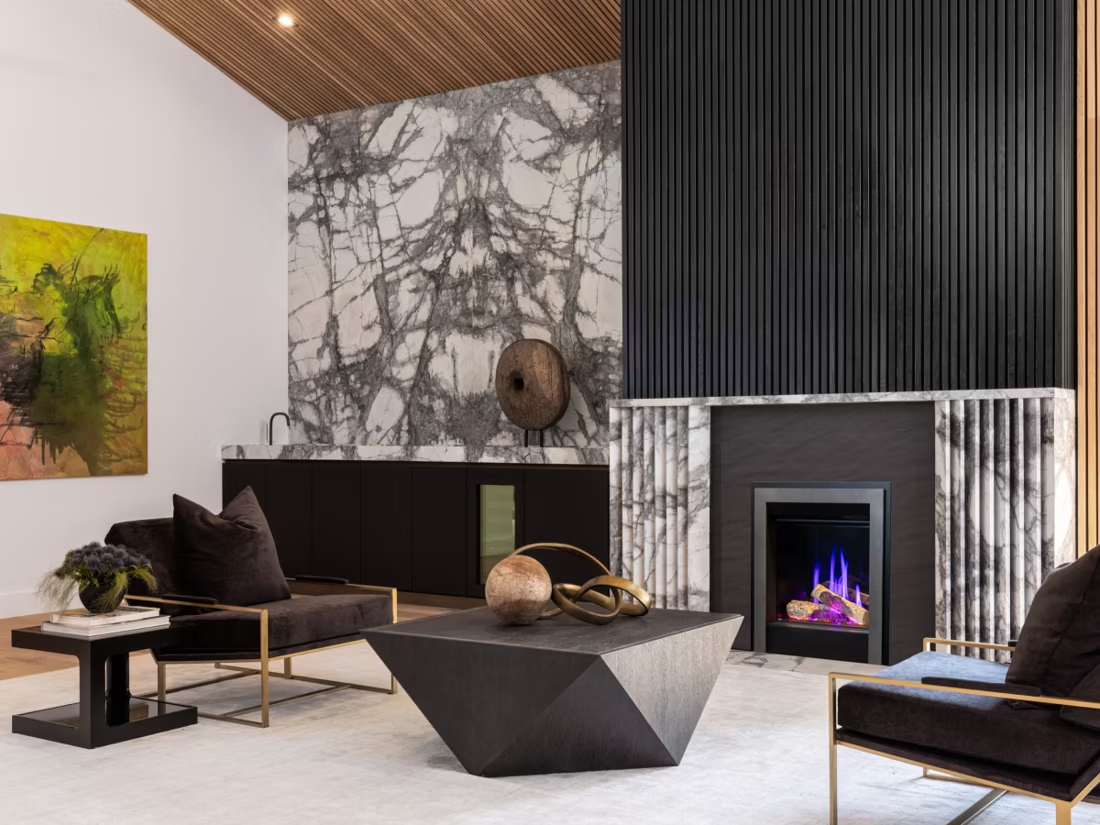
Three formats cover most Eagle Mountain installs: plug-in inserts that slide into an existing fireplace opening (rare here since most homes lack masonry fireplaces to begin with), wall-mounted units that hang like a flat-screen TV with minimal depth, and built-in linear fireplaces framed into a wall during construction or remodel—the most popular choice in the area's newer two-story floor plans because they read as a real architectural feature rather than an appliance. A local dealer can walk your framing and electrical panel to confirm which format fits your wall and circuit capacity.
Do I need a permit to install an electric fireplace in Eagle Mountain?
A plug-in unit that uses an existing outlet typically doesn't require a permit. A built-in electric fireplace that needs a new dedicated circuit does require an electrical permit through Eagle Mountain City's building department, since it involves new wiring back to the panel. If the install also involves reframing a wall or building a new mantel surround, a building permit may apply as well. Most local dealers and their licensed electricians handle this paperwork as part of the installation, so it's rarely something homeowners have to manage themselves.
How much does it cost to run an electric fireplace in Eagle Mountain?
Most electric fireplaces draw around 1,500 watts on the heat setting. At PacifiCorp's residential rate of roughly 12.5 cents per kWh, that works out to about 19 cents an hour, or under $1 for a typical five-hour evening of use. Run purely for the flame effect with the heater off, draw drops to under 100 watts—pennies an hour. That low operating cost is a big part of why electric units are popular as a secondary heat source in bedrooms or bonus rooms during Cedar Valley's coldest nights, rather than running the furnace harder to heat a room that's only occupied part of the day.
Will an electric fireplace actually heat a room in Eagle Mountain's winters?
A quality electric fireplace with a built-in fan-forced heater can genuinely warm a 300- to 400-square-foot room, which covers most bedrooms, offices, and bonus rooms in Eagle Mountain's newer homes. It won't replace a furnace on a 13-degree January morning for a whole house, but as zone heat for a specific room—letting you turn the thermostat down elsewhere—it earns its keep. Look for units with a stated heater wattage (1,400-1,500W is standard) and a built-in thermostat rather than a single high/low setting, so it cycles instead of running constantly.
Electric fireplace vs. a space heater—why spend more?
A plug-in space heater is cheaper up front, but a built-in electric fireplace is a permanent fixture that adds to home resale value, runs safer with tip-over and overheat protection built to UL standards, and doesn't need to be stored or unplugged when not in use. In a fast-growing market like Eagle Mountain where buyers are comparing similar floor plans, a finished electric fireplace wall reads as a real feature; a space heater in the corner doesn't. For year-round ambiance with occasional heat, most homeowners find the fireplace worth the difference.
Does an electric fireplace need a vent or chimney?
No—that's its superpower. An electric fireplace needs a wall and an outlet, period. No vent pipe, no gas line, no clearances to design around, which is why it works in bedrooms, offices, apartments, and walls where venting a gas or wood unit would be impractical or impossible. Installation is typically the simplest and least expensive of any fireplace type.
Can I put a TV above my fireplace?
Yes—with an asterisk. Fireplaces are hot and TVs don't like heat. Either put a mantel between them to deflect rising warmth, or choose a fireplace with heat-management technology that creates a cool zone on the wall above—the wall stays around 125 degrees, barely warm, while the room still gets full heat. If you like clean lines and don't want a mantel, heat management is the answer.
Does a fireplace add value to my home?
On average, a fireplace adds back to the home about the same amount you spent installing it. Add the monthly savings from heating the rooms you actually use instead of the whole house—often hundreds of dollars a year—and the value case is strong before you even count what a fire does for how your family uses the room.
What is an in-home preview and do I need one?
It's a visit where a hearth professional measures your space, confirms the model you picked actually works in your home, and walks the specs—framing, gas line, venting, finish work—before anything is ordered. Some details you just can't know until you see the house. Never make a down payment without one; it's the single most-skipped step that burns buyers.
Nearby Dealers
Hearth shops serving Eagle Mountain and the surrounding area.
Electric Service in Eagle Mountain
An electric fireplace's heater draws about 1,500 watts—pennies per hour at local rates.
Find your electric fireplace in Eagle Mountain.
Tell us about your home and we'll match you with the right electric fireplace or insert—plus a free Project Guide & Parts List and a trusted local dealer to install it.
Find Your Fireplace →