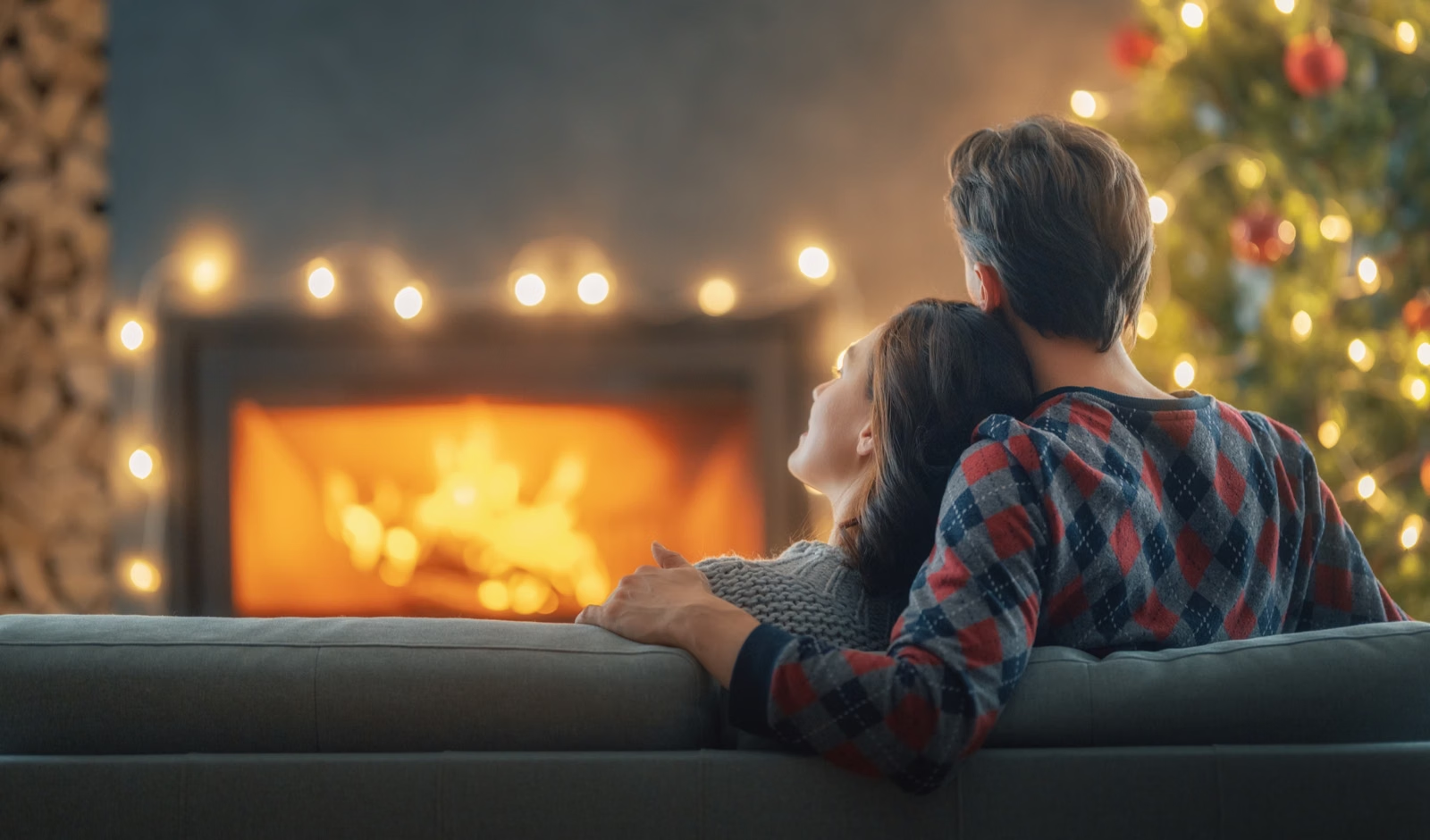
Keep Your Family Warm and Safe—No Matter What
With 2,723 heating degree days and winter lows that average around 30°F, Young County doesn't need wood heat to survive the season the way a place like Duluth, MN does—but a properly installed stove burning local oak, pecan, or mesquite gives ranch country a real source of heat when an ice storm knocks out the grid. I'll match you with a trusted local dealer who knows what actually works here.
Every Project Starts From One of These Five Situations
Ranch country that runs on oak, pecan, and mesquite.
Young County sits in the Western Cross Timbers and Rolling Plains transition of North Texas, with Graham as the county seat and roughly 12,500 residents spread across ranch land, Lake Graham, and the oil leases that have shaped the local economy since the 1919 boom. Climate zone 3A here means hot, humid summers and genuinely mild winters—2,723 heating degree days, about a third of what a home in Minneapolis, MN sees over the same stretch, and an average winter low near 30°F. Heating season runs roughly November through February, and the firewood that fuels it grows right on the property: post oak across the pastures, pecan along the creek bottoms near the Brazos and Lake Graham, and mesquite scattered across nearly every ranch in the county.
Because there's no national forest or other large public land base here, firewood in Young County comes almost entirely off private ground—mesquite thinned during pasture-clearing projects (ranchers often give it away just to get it off the land), oak and pecan taken down during routine ranch maintenance, or wood bought from a local seasoned-firewood dealer. Air quality isn't a concern the way it is in basin or valley counties out West—Young County has no non-attainment status and no winter inversion pattern—so the main local wrinkle is drought: the county judge can issue an outdoor burn ban during dry stretches, which covers brush and debris burning, not a properly installed indoor wood stove or fireplace. The bigger reason wood heat still matters here is grid reliability. Winter Storm Uri in February 2021 showed how exposed rural electric cooperative lines can be during an ice event, and a wood stove is one of the few heat sources in the house that keeps working when the power doesn't.
Three steps. No salesperson until you're ready.
Tell us about your project
Your zip code, your situation, and the fuel you're leaning toward—or let the answers point you to one.
See what's actually available
The brands dealers within 100 miles genuinely carry—real options, never a catalog mirage.
Get your dealer & Project Guide
A trusted local dealer, plus the free Project Guide & Parts List that names every component of the job.
Frequently Asked Questions
How much does a wood stove installation cost in Young County?
There's no single number, because the two most common projects here look very different. Dropping a wood insert into an existing masonry fireplace—common in older homes around Graham and Olney—is the more affordable route, since the flue and hearth are already in place. Installing a freestanding stove in a home with no existing chimney, which is common on newer ranch-style construction, costs more once you add a Class A chimney run through the roof, a code-compliant hearth pad, and clearances to combustibles. Rural properties outside Graham may also see a modest travel charge from installers based in town. A local dealer can walk your space and give you a firm number rather than a guess.
What size wood stove do I need in Young County?
Less stove than you might think. With an average winter low around 30°F and a short heating season, most Young County homes are well served by a small-to-medium stove rated for roughly 1,000 to 1,500 square feet, even when the goal is whole-house backup heat during an outage rather than daily use. Oversizing is the more common mistake—a stove sized for a much colder climate gets damped down to avoid overheating a mild North Texas house, and a smoldering fire builds creosote faster than a properly loaded one. A local dealer should size the stove to your actual square footage and insulation, not a chart built for a colder region.
Do I need a permit to install a wood stove in Young County?
Most jurisdictions in the county require a building permit for a new wood-burning appliance, whether that's through the City of Graham's permit office if you're inside city limits or Young County's permit office for unincorporated ranch and rural property. A licensed installer typically pulls this as part of the job and coordinates the inspection. It's also worth telling your homeowners insurance carrier about a new wood stove—many companies want documentation of a certified, professionally installed unit before they'll extend or maintain coverage on a home that burns wood.
Where does firewood in Young County actually come from?
Almost entirely private land—there's no national forest or other large public land base in this part of North Texas the way there is out West, so cutting permits from a forest service office aren't part of the picture here. Mesquite is the one you'll find easiest to source for free or cheap: ranchers actively thin it to reclaim grazing land, and it's common to see it given away or sold cheap by the truckload. Post oak and pecan tend to come down during routine ranch or creek-bottom maintenance near the Brazos and Lake Graham, or you can buy already-seasoned wood from a local firewood dealer if you don't have land access yourself.
What's the best wood stove for burning mesquite, oak, and pecan?
Mesquite is dense and burns hot—it's prized for smoking brisket for a reason—but it also pops and throws sparks more than oak, so a stove with a tight-sealing door and a solid ember screen matters if you're loading it. Well-seasoned mesquite, oak, and pecan all put out serious heat, and given Young County's mild winters, most homes don't need a high-end catalytic stove to hold a long overnight burn the way a Montana or Minnesota home would. A straightforward non-catalytic stove from a brand like Regency, Timberwolf, or Drolet, sized correctly by a local dealer, handles this climate and this species mix without overcomplicating the install.
Does Young County have burn restrictions that affect wood stoves?
Young County has no air-quality non-attainment designation and no winter inversion pattern, so there isn't a curtailment system like you'd find in a basin community out West. The restriction that does come up locally is a drought-driven outdoor burn ban, issued by the county judge's office during dry stretches—that covers open burning of brush and debris, not a wood stove or fireplace operating inside a home with a properly installed chimney. Still, it's worth checking current county burn ban status if you're also planning to clear mesquite brush as part of sourcing your firewood.
How often should my chimney be inspected in Young County?
Once a year, ideally in October before the first cold front rolls through—the CSIA standard holds here even though the burn season is short. Because many Young County homes use a wood stove intermittently, for cold snaps and outages rather than as a daily primary heat source, low, cooler burns can actually leave more creosote behind than a stove run hot and steady all winter. That's worth flagging to your sweep, especially if mesquite—which burns hotter but can leave more resin residue than post oak—is a regular part of your wood supply.
Wood stove vs. pellet stove—which fits Young County better?
Wood has the edge for backup heat, since it works with zero electricity—a real advantage in a rural county where ice storms can take down cooperative power lines for a day or more, and where mesquite and oak are often free or cheap off ranch land. Pellet stoves, running bagged fuel from regional brands like Forest Energy or Lignetics, burn cleaner and are easier to load and maintain, but the auger and blower need electricity, so they go dark in the exact outage scenario where wood keeps working. For a primary or ambiance appliance in town, pellet is a reasonable option; for genuine grid-independent backup heat on a rural property, wood is the more practical choice here.
Is wood heat really necessary given how mild Young County winters are?
For most homes, wood isn't the primary heat source—with only 2,723 heating degree days and lows that average around 30°F, propane or electric HVAC handles day-to-day heating just fine. Where wood earns its keep is resilience: Winter Storm Uri in February 2021 left parts of North Texas without power for days, and homes on the longer rural electric cooperative feeder lines around Young County are more exposed to that kind of outage than homes inside Graham. A wood stove burning local oak or mesquite gives a household heat that doesn't depend on the grid staying up, which is a meaningful reason to install one even in a climate this mild.
Why won't my new wood stove get going like my old one?
New wood stoves are 70%+ efficient, so far less heat goes up the flue—which also means less draft to get a fire established. The rule: build a genuinely hot fire for about 45 minutes before you choke it down. Skip that and you get smoke in the room, creosote in the chimney, and a fire that never takes off. Most performance complaints trace straight back to this.
Why is my open fireplace making my house colder?
Open fireplaces suck—literally. As the fire burns, it consumes air your furnace already paid to heat and pulls it out through the chimney, so the house is actually colder after the fire goes out than before you lit it. An insert fixes this: it seals the chimney, puts fixed glass across the front, and turns that hole in your house into a real heat source.
How much should I budget for a fireplace?
For an average home—covering the fireplace, the vent pipe, and basic installation—a budget between $3,900 and $5,500 gives you a lot of options across wood, gas, and pellet. By the time you add finish work, gas line, and electrical, the average complete installation lands between $5,000 and $12,000 all-in. In a remodel or new build, a good rule is to put about 2.5% of the total project cost toward the fireplace.
What is an in-home preview and do I need one?
It's a visit where a hearth professional measures your space, confirms the model you picked actually works in your home, and walks the specs—framing, gas line, venting, finish work—before anything is ordered. Some details you just can't know until you see the house. Never make a down payment without one; it's the single most-skipped step that burns buyers.
Stove and Fireplace Dealers in Young County
Listings include WhyFire partner dealers, dealers we have verified as authorized for the brands we recommend, and established local businesses that carry hearth products. Every listing shows which one it is. The ones marked Preferred run on WhyFire's software, so they can show you real pricing and book your appointment right here. No manufacturer pays for placement. How we verify dealers →
The Ember Shop, Inc.
David's Stove Shop Inc
Alliance Materials, Inc.
Rodak's Coffee And Bbq Grills
Texas Building Supply
Brothers Supply Co.
Get your free Young County wood heat Project Guide & Parts List.
Tell us about your home, whether you're converting an existing fireplace or starting from scratch, and we'll match you with a trusted local Young County dealer and send a free Project Guide & Parts List—the exact parts, including the vent kit, for your wood heat project.
Find Your Fireplace →