
Find the Right Fireplace for Young County's Mild Winters.
Wood, gas, pellet, and electric fireplace resources for every town in Young County—from Graham's historic courthouse square to Olney, Newcastle, South Bend, and the lake communities nearby. Find the right unit and connect with a trusted local hearth retailer.
Every Project Starts From One of These Five Situations
Cross Timbers heat, oak country, and short mild winters in Young County, Texas.
Young County sits in the Cross Timbers-to-Rolling Plains transition of North Texas, roughly 90 miles west of Fort Worth. Climate zone 3A brings short, mild winters—the average winter low hovers around 30°F, and the county logs a light winter heating load overall, a fraction of what a colder market like Bismarck, North Dakota sees in a single winter. Local wood heat leans on oak, pecan, and mesquite rather than the pine that dominates further north—mesquite in particular shows up as a byproduct of clearing cattle land, so plenty of local wood-burners are cutting and seasoning their own supply for free. Given the mild climate, fireplaces and stoves here tend to serve a supplemental or ambiance role more often than sole-source survival heat, though a properly sized unit still earns its keep during the occasional hard freeze.
This hub covers Graham—the county seat, home to what many Texans claim is the largest courthouse square in the state—along with Olney, Newcastle, South Bend, and the lake communities around Lake Graham and nearby Possum Kingdom Lake. Pick a fuel below to see local retailers, installation costs, and resources specific to that fuel in Young County. Whether you're heating a ranch house outside Olney or adding ambiance to a lake cabin, this is the starting point.
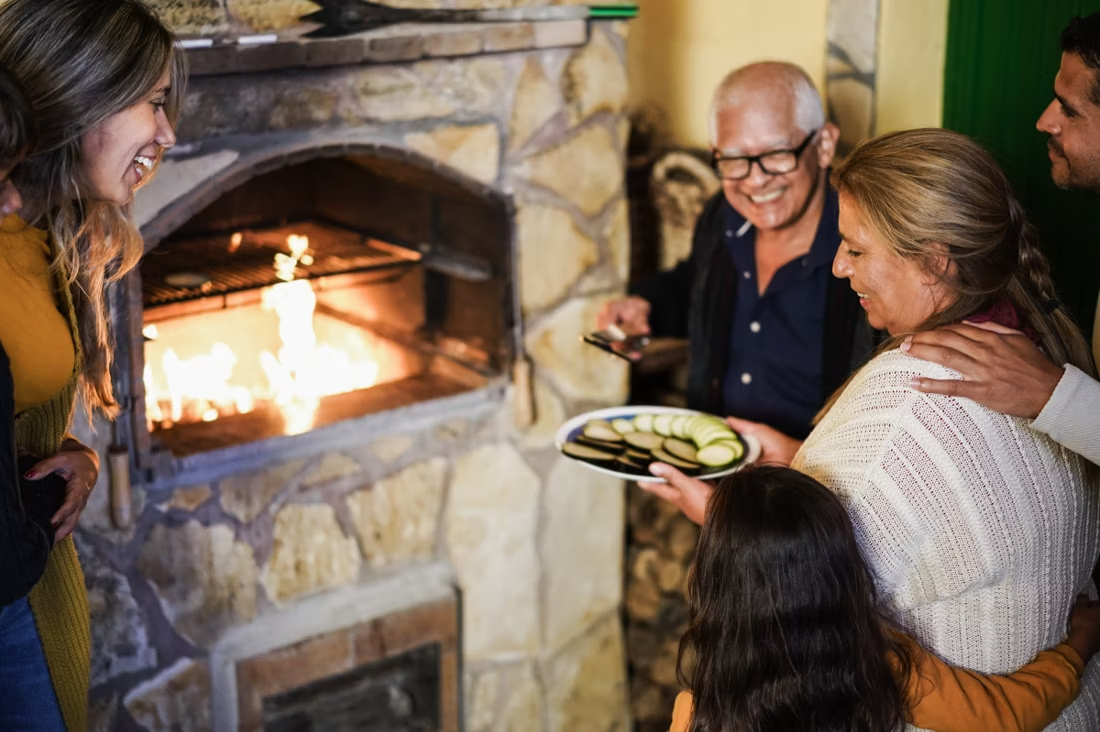
Four fuels. One honest answer for Young County.
Three steps. No salesperson until you're ready.
Tell us about your project
Your zip code, your situation, and the fuel you're leaning toward—or let the answers point you to one.
See what's actually available
The brands dealers within 100 miles genuinely carry—real options, never a catalog mirage.
Get your dealer & Project Guide
A trusted local dealer, plus the free Project Guide & Parts List that names every component of the job.
Frequently Asked Questions
Which fireplace fuel works best in Young County?
It depends on how you plan to use it. Young County's winters are mild by national standards—climate zone 3A, an average winter low near 30°F, and a light winter heating load overall, a fraction of what a colder market like Bismarck, North Dakota logs in a single winter. That means wood, gas, pellet, and electric are all viable, but most homes here use a fireplace as supplemental heat or ambiance rather than a sole heat source. Wood stays popular given the local supply of oak, pecan, and mesquite—mesquite especially, since it's often cleared off ranch land and available for the cutting. Gas fireplaces are a common upgrade in Graham and Olney where natural gas service reaches, with propane filling in on rural properties. Pellet stoves are less common but available through regional suppliers like Forest Energy and Lignetics. Electric fireplaces work well in lake homes, bedrooms, and anywhere ambiance matters more than raw BTUs.
Do I need a permit to install a fireplace in Young County?
In most cases, yes, though the process is straightforward for a county this size. Within Graham, Olney, or Newcastle city limits, permits are issued through the city; outside those limits, Young County's building permit office at the courthouse in Graham handles unincorporated construction. Wood stoves, wood inserts, gas fireplaces, gas inserts, and gas stoves generally require a building permit, and gas installations need a separate line permit pulled by a licensed gas fitter. Electric fireplaces usually skip the permit process unless you're hardwiring a built-in unit into a new circuit. Most local retailers pull the permit for you as part of installation, which is worth confirming before you sign a contract.
Are there any burn restrictions on wood-burning fireplaces in Young County?
Young County has no listed air-quality non-attainment issues, so indoor wood stoves and fireplaces don't face the inversion-driven advisories you'd see in a basin community. What does come up periodically is a county-issued outdoor burn ban, which the Young County Commissioners Court can declare during drought conditions—common in North Texas summers and falls. Those bans apply to outdoor burning like brush piles and agricultural fires, not indoor EPA-certified wood stoves or inserts. If you're burning wood indoors, the main things to watch are seasoning your oak, pecan, or mesquite properly (six months to a year dried) and getting the chimney swept annually to keep creosote in check.
Can one local dealer handle all four fuel types in a county this size?
It varies. Young County's population is just over 12,500, so the retailer base is smaller than you'd find in a metro county—most hearth dealers cluster in Graham, and some carry two or three fuel types rather than all four. It's common for Young County homeowners to also cross-shop dealers in Wichita Falls or Abilene for a wider selection, particularly for pellet stoves or higher-end gas units. I'd rather match you with whichever dealer—local or regional—actually stocks and can install the unit that fits your home, instead of steering you toward a name brand that isn't realistically available here.
How does installation and service work for rural ranch and lake properties?
Most technicians and retailers serving Young County are based in Graham and travel out to Olney, Newcastle, South Bend, and the lake properties around Lake Graham and nearby Possum Kingdom Lake. Expect a modest trip fee for service calls on outlying ranch properties, and plan installation timing around the county's busy seasons—spring roundup and fall hunting lease season can both slow scheduling. For lake cabins that sit vacant part of the year, it's worth scheduling annual chimney and gas-line inspections before peak season rather than waiting until the first cold snap.
What does fireplace installation typically cost across fuel types in Young County?
Costs tend to run lower here than in a lot of markets, partly because most Young County homes are single-story ranch construction, which simplifies venting. Wood stove or insert installation typically runs $3,500–$7,500, more if new chimney construction is needed. Gas fireplace, insert, or stove installs run roughly $4,000–$9,000, with rural propane conversions sometimes higher due to tank and line work. Pellet stove installation usually falls between $4,000–$6,500. Electric fireplaces are the least expensive route—$200–$2,500 for the unit, plus $300–$1,000 in labor for anything beyond a plug-and-play install. See the county + fuel pages above for retailer-specific pricing.
Can a fireplace actually lower my heating bill?
Yes—by creating a comfort zone. A furnace heats every square foot of the house just to warm the one room you're in; a gas fireplace on low burns roughly a sixth of the gas a typical furnace does. Set the furnace around 55–60 degrees as a baseline, then heat the rooms your family actually uses. Families who heat this way commonly save $20–$60 a month.
How much should I budget for a fireplace?
For an average home—covering the fireplace, the vent pipe, and basic installation—a budget between $3,900 and $5,500 gives you a lot of options across wood, gas, and pellet. By the time you add finish work, gas line, and electrical, the average complete installation lands between $5,000 and $12,000 all-in. In a remodel or new build, a good rule is to put about 2.5% of the total project cost toward the fireplace.
What is an in-home preview and do I need one?
It's a visit where a hearth professional measures your space, confirms the model you picked actually works in your home, and walks the specs—framing, gas line, venting, finish work—before anything is ordered. Some details you just can't know until you see the house. Never make a down payment without one; it's the single most-skipped step that burns buyers.
Can I install a fireplace myself?
If you're putting a fire in your house on purpose, it's best to work with an expert. Unless you're genuinely experienced in framing, gas line, vent pipe, and the national code on clearances to combustibles, have a professional do it—and ideally the same company that sells you the fireplace, so warranty, service, and liability all live under one roof.
Stove and Fireplace Dealers in Young County
Listings include WhyFire partner dealers, dealers we have verified as authorized for the brands we recommend, and established local businesses that carry hearth products. Every listing shows which one it is. The ones marked Preferred run on WhyFire's software, so they can show you real pricing and book your appointment right here. No manufacturer pays for placement. How we verify dealers →
The Ember Shop, Inc.
David's Stove Shop Inc
Alliance Materials, Inc.
Rodak's Coffee And Bbq Grills
Texas Building Supply
Brothers Supply Co.
Find your hearth match in Young County.
Tell us about your home and we'll match you with a trusted local Young County dealer and send you a free Project Guide & Parts List—the exact parts, vent kit, and recommended installer for your fireplace project, at no cost.
Find Your Fireplace →