
Consistent, low-mess heat for Graham, Olney, and every corner of Young County.
Young County's winters are short but they can turn sharp fast. A pellet stove gives you clean, thermostat-like heat for the cold stretches without the wood-splitting routine. Find the right unit and get matched with a trusted local dealer.
Every Project Starts From One of These Five Situations
Pellet heat for Texas' short, sharp winters.
Young County sits in the Cross Timbers and Rolling Plains country of North Texas, anchored by Graham as the county seat with Olney and Newcastle rounding out the rest. This is climate zone 3A—mixed-humid, with an average winter low around 30°F and only about 2,723 heating degree days a year. That's a fraction of what a place like Bismarck, ND or Duluth, MN racks up over a winter, and it means most homes here don't need a stove running around the clock. What Young County does get is real cold snaps: Arctic blasts sweeping down from the Panhandle that can drop temperatures into the teens or single digits for a few days at a stretch, the same kind of pattern that shut down heating systems statewide during Winter Storm Uri in 2021.
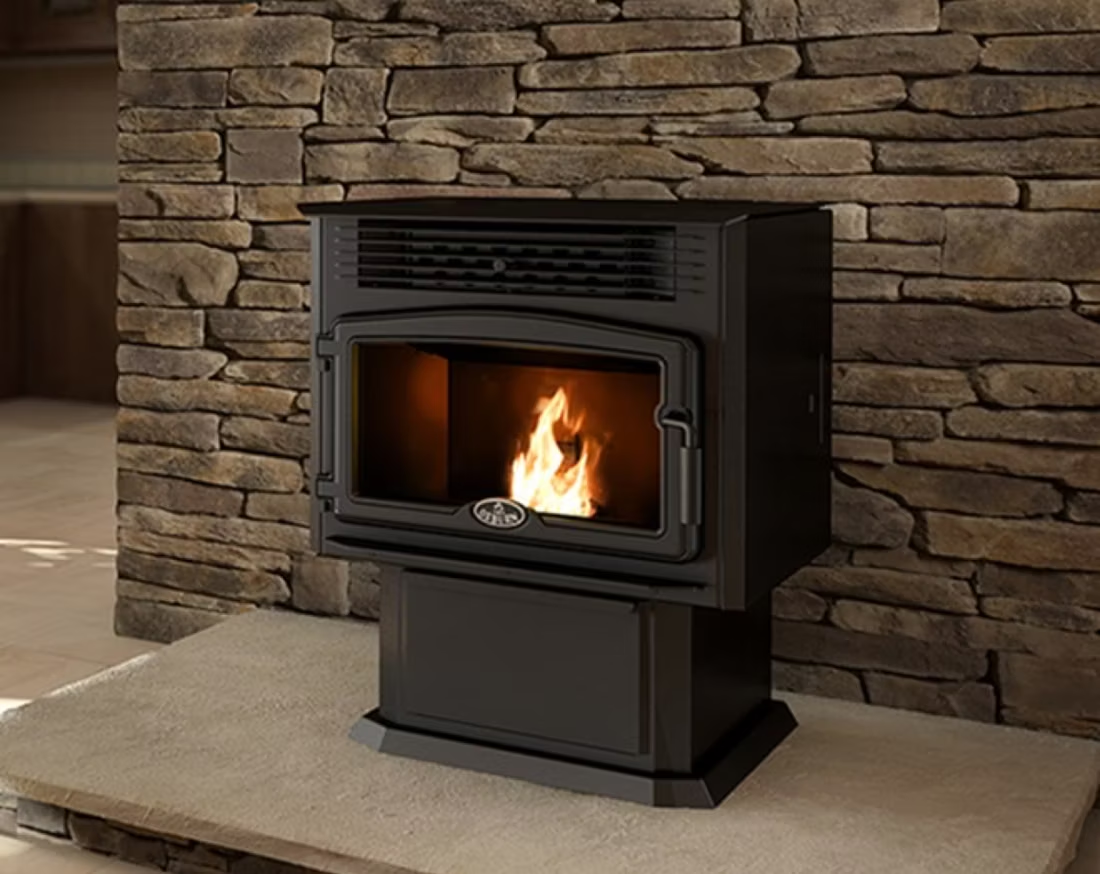
That pattern is exactly where a pellet stove earns its keep. Unlike a wood stove, there's no splitting, stacking, or hauling cordwood off oak, pecan, or mesquite trees—you load a hopper with bagged fuel from brands like Forest Energy or Lignetics, available at regional farm and ranch supply stores, and let the auger and thermostat do the rest. Young County has no local air quality non-attainment issues or wood-burning ordinances to navigate, so the fuel choice comes down to convenience and how you want to heat, not regulatory hurdles. One honest tradeoff worth knowing up front: pellet stoves need electricity to run the auger and blower, so during a grid-down event like Uri, a pellet stove goes dark along with everything else. Plenty of local homeowners pair pellet convenience for everyday use with a generator or a backup wood-burning option for true grid outages.
Three steps. No salesperson until you're ready.
Tell us about your project
Your zip code, your situation, and the fuel you're leaning toward—or let the answers point you to one.
See what's actually available
The brands dealers within 100 miles genuinely carry—real options, never a catalog mirage.
Get your dealer & Project Guide
A trusted local dealer, plus the free Project Guide & Parts List that names every component of the job.
Frequently Asked Questions
How much does a pellet stove installation cost in Young County?
A pellet stove or insert installation in Young County typically runs in the $3,000 to $6,000 range, which is lower than most wood stove installs because pellet venting is simple PL (pellet vent) pipe through an exterior wall rather than a full masonry or Class A chimney system. Inserting a pellet unit into an existing open masonry fireplace—common in older ranch-style homes throughout the county—tends to land on the lower end since the existing chimney cavity can house the vent liner. A freestanding stove in a home without an existing fireplace will run a bit higher once wall penetration and hearth pad work are factored in. A local dealer can give you a firm number after seeing your setup.
Does a pellet stove make sense for a climate as mild as Young County's?
Yes, though the use case looks different than it would in a colder region. With only around 2,723 heating degree days a year, most Young County homes don't need a stove running continuously—the value is in the handful of genuinely cold weeks and the Panhandle-driven cold fronts that can drop temperatures fast. A pellet stove can sit unused for long mild stretches and then get loaded and switched on when a front rolls through, delivering even, thermostat-controlled heat without the smoke, ash mess, or wood-sourcing effort of a traditional wood stove. For homeowners who want backup heat for the occasional hard freeze plus year-round ambiance, pellet is a solid fit for this climate.
Where can I buy pellet fuel in or near Young County?
Forest Energy and Lignetics are the two regional pellet brands most commonly stocked at farm and ranch supply stores serving Young County, including outlets in Graham and nearby towns along Highway 380 and Highway 16. Bags typically run in the $5 to $7 range for a 40-pound bag, or roughly $250 to $300 a ton if you buy by the pallet, which most local retailers can order in ahead of the cold-front season. Given the short heating season here, many homeowners buy a pallet or two in the fall rather than stocking a full winter's supply the way a colder-climate household would.
Will my pellet stove run during a power outage?
No—this is worth understanding before you buy. Pellet stoves rely on an electric auger to feed fuel and a blower to circulate heat, so when the power goes out, the stove stops working regardless of how much fuel is in the hopper. For Young County, where ERCOT grid strain during severe winter events (Winter Storm Uri being the clearest example) can mean outages lasting hours or days during the coldest weather, that's an important gap. Some homeowners address it with a small battery backup or generator sized to run the stove's electronics; others keep a wood-burning stove or fireplace as a true no-power backup alongside their pellet unit for daily convenience.
What size pellet stove do I need for my Young County home?
Because Young County's heating season is short and winter lows average around 30°F, sizing tends to run smaller than it would for a cold-climate home of the same square footage—a mid-size pellet stove (rated for roughly 1,200 to 1,800 sq ft) is enough for most main living areas here, and a small stove often suffices for single-room supplemental heat in a den or workshop. Homeowners looking for true whole-home heating during the coldest cold-front weeks should size up and talk through insulation and ceiling height with a local dealer, since an undersized unit will struggle to keep pace when temperatures drop into the teens.
Do I need a permit to install a pellet stove in Young County?
Most new pellet stove and insert installations require a building permit through the Young County building department (or the relevant city office if you're inside Graham, Olney, or another incorporated town), and the unit itself needs to meet current EPA emissions standards. Most local installers handle the permitting paperwork as part of the install, so it typically isn't something you have to manage yourself. Since Young County has no air quality non-attainment designation or wood-smoke curtailment program, there's no seasonal burn restriction to work around the way there is in parts of the country with winter inversion issues.
How much maintenance does a pellet stove need?
Pellet stoves need more routine attention than a gas unit but far less than a wood stove and chimney system. Plan on emptying the ash pan every few days of regular use, cleaning the burn pot and glass weekly, and running a full deep clean—including the exhaust fan, hopper, and venting—at least once a season, typically before the fall cold fronts arrive. An annual professional service checks the auger motor, gaskets, and venting for wear. Because Young County's pellet stoves often see intermittent use tied to cold snaps rather than continuous winter-long burning, many owners find their maintenance interval stretches naturally compared to a stove running nonstop in a colder climate.
Can a pellet insert go into my existing masonry fireplace?
Yes, and it's a common project for the older ranch-style homes found throughout Young County that were originally built with open wood-burning fireplaces for oak, pecan, or mesquite firewood. A pellet insert slides into the existing masonry opening, runs a vent liner up through the flue (or out a nearby wall, depending on the setup), and converts a heat-leaking open hearth into a sealed, efficient unit with a thermostat. The existing chimney does most of the structural work, which usually keeps the install on the lower end of the typical cost range. A local dealer can confirm your fireplace opening and flue dimensions are compatible before you buy.
Pellet stove vs. propane or gas—which fits Young County better?
Natural gas service is limited in much of rural Young County, so the real comparison for most homeowners here is pellet versus propane. Propane fireplaces offer instant on-off heat with no fuel handling and, with the right ignition system, can run without grid power. Pellet stoves require loading fuel and running electric components, but they burn a renewable, often locally available fuel (Forest Energy and Lignetics both distribute regionally) and give a more authentic flame appearance than most propane units. For homes without an existing propane tank or gas line, pellet is often the simpler retrofit into an existing fireplace opening. For homes already set up with propane, the choice comes down to whether you want the ritual of loading a hopper or the convenience of a switch.
Why is my open fireplace making my house colder?
Open fireplaces suck—literally. As the fire burns, it consumes air your furnace already paid to heat and pulls it out through the chimney, so the house is actually colder after the fire goes out than before you lit it. An insert fixes this: it seals the chimney, puts fixed glass across the front, and turns that hole in your house into a real heat source.
Are pellet stoves loud?
They make some noise—there are two fans running plus an auger motor that turns as it feeds pellets. But there's a real range: premium models are engineered quiet, and the best offer a whisper-quiet mode you can comfortably watch TV next to. If noise matters in your room, ask to hear a stove running before you buy—it's a five-minute test that saves years of annoyance.
Can a fireplace actually lower my heating bill?
Yes—by creating a comfort zone. A furnace heats every square foot of the house just to warm the one room you're in; a gas fireplace on low burns roughly a sixth of the gas a typical furnace does. Set the furnace around 55–60 degrees as a baseline, then heat the rooms your family actually uses. Families who heat this way commonly save $20–$60 a month.
Can I install a fireplace myself?
If you're putting a fire in your house on purpose, it's best to work with an expert. Unless you're genuinely experienced in framing, gas line, vent pipe, and the national code on clearances to combustibles, have a professional do it—and ideally the same company that sells you the fireplace, so warranty, service, and liability all live under one roof.
Stove and Fireplace Dealers in Young County
Listings include WhyFire partner dealers, dealers we have verified as authorized for the brands we recommend, and established local businesses that carry hearth products. Every listing shows which one it is. The ones marked Preferred run on WhyFire's software, so they can show you real pricing and book your appointment right here. No manufacturer pays for placement. How we verify dealers →
The Ember Shop, Inc.
David's Stove Shop Inc
Alliance Materials, Inc.
Rodak's Coffee And Bbq Grills
Texas Building Supply
Brothers Supply Co.
Pellet Brands Stocked Around Young County
Manufacturers will point you to the nearest stocking dealer.
Find your pellet stove in Young County, Texas.
Tell us a bit about your home and we'll put together a free Project Guide & Parts List—the right pellet stove or insert, the vent kit you'll need, and a trusted local dealer to install it.
Find Your Fireplace →