
Find the right electric fireplace for your Young County home.
Mild winters and no gas line to run—electric fireplaces fit easily into homes from Graham to Olney and the ranch country between. Find the right unit and connect with a trusted local dealer.
Every Project Starts From One of These Five Situations
Ambiance and supplemental heat, without the retrofit.
Young County sits in climate zone 3A with an average winter low around 30 degrees and roughly 2,723 heating degree days a year—a fraction of what a place like Bismarck ND or Minneapolis MN sees in a single season. That mild heating load is exactly why electric fireplaces make sense here: most homes don't need a serious primary heat source, they need supplemental warmth in a den or bedroom and a real flame look without cutting into a wall for gas line or masonry work.
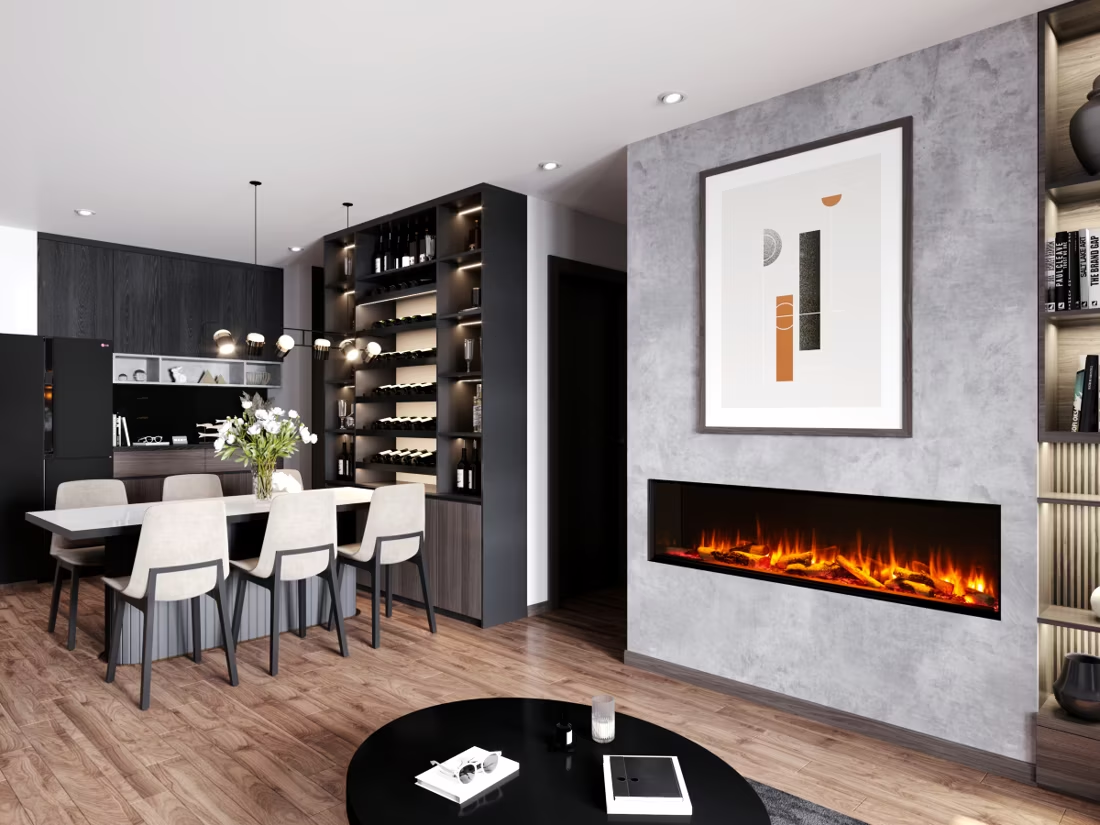
Because there's no venting, no chimney, and no gas permit involved, electric units go into existing homes around Graham and Olney in an afternoon, and they work just as well in a manufactured or ranch-style home outside city limits where running a gas line would be impractical. With no local air quality concerns to navigate and no curtailment periods to worry about, an electric insert or mantel unit gives Young County homeowners flexible zone heat for those 30-degree nights without touching the rest of the house's heating system.
Three steps. No salesperson until you're ready.
Tell us about your project
Your zip code, your situation, and the fuel you're leaning toward—or let the answers point you to one.
See what's actually available
The brands dealers within 100 miles genuinely carry—real options, never a catalog mirage.
Get your dealer & Project Guide
A trusted local dealer, plus the free Project Guide & Parts List that names every component of the job.
Frequently Asked Questions
How much does an electric fireplace installation cost in Young County?
Most electric fireplace projects in Young County are on the lower end of hearth-product costs—plug-in inserts and mantel units can be self-installed for the cost of the unit itself, while built-in models that require a dedicated 120V or 240V circuit typically run in the $400 to $1,200 range once an electrician handles the wiring. Because there's no chimney, gas line, or venting involved, labor costs stay modest compared to wood or gas installs. A local dealer can tell you quickly whether your chosen unit needs new wiring or just an existing outlet.
Do I need a permit to install an electric fireplace in Young County?
In most cases, no—a plug-in electric fireplace or insert that uses an existing outlet doesn't trigger a building permit. If you're adding a new dedicated circuit or doing any wall modification to recess a built-in unit, that electrical work should go through a licensed electrician, and larger structural changes may need to go through the county. Local dealers who install electric units regularly can tell you upfront whether your specific project needs any sign-off before work starts.
Will an electric fireplace actually heat my Young County home?
Electric fireplaces are best understood as supplemental or zone heat rather than a whole-home solution—most units put out around 4,000 to 5,000 BTUs, enough to comfortably warm a single room or open living area. Given Young County's mild climate (an average winter low near 30 degrees and around 2,723 heating degree days a year), that's usually plenty for taking the edge off a cold snap in a den, bedroom, or sunroom without running the central system harder. If you're looking to heat an entire home as a primary source, wood or gas will do more work—electric shines as the low-fuss option for one room at a time.
What's the difference between an electric insert and a built-in electric fireplace?
An electric insert is sized to slide into an existing fireplace opening—including old, unused wood-burning fireboxes common in older Graham homes—and typically just needs a nearby outlet. A built-in electric fireplace is designed to be recessed into new framing or a wall, often used in new construction or remodels where there's no existing fireplace opening to work with. For Young County homeowners with an old masonry fireplace that's gone unused for years, an insert is usually the simpler and less expensive path to getting heat and ambiance back from that space.
Can an electric fireplace run during a power outage?
No—electric fireplaces require power to operate, so during an outage they won't produce heat or flame effect. This is worth weighing for rural Young County properties where outages can run longer than in town. Homeowners who want a heat source that works regardless of grid status typically pair an electric fireplace in the main living space with a wood stove or vented gas unit elsewhere in the home as backup, especially on outlying ranch properties around Olney and the county's rural stretches.
How much does it cost to run an electric fireplace?
Most electric fireplaces draw around 1,500 watts on the heat setting, which costs a few cents per hour to run at typical Texas electricity rates—considerably less than heating a whole room with central HVAC. Since Young County's mild winters mean the unit is usually running for shorter stretches and fewer months than in colder climates, annual operating costs stay low. Running the flame effect alone, without heat, draws only a small fraction of that wattage—useful for year-round ambiance in a living room or bedroom.
What size electric fireplace do I need for my room?
Sizing is mostly about matching the unit's footprint to your fireplace opening or wall space, plus getting enough BTU output for the room. A 26-40 inch insert or mantel unit comfortably handles a bedroom or den, while a 50-inch-plus linear unit suits an open-concept living area common in newer Graham construction. Because Young County's heating needs are modest, homeowners here generally have more flexibility to prioritize looks and screen size over raw heat output compared to colder-climate buyers. A local dealer can measure your space and talk through wall-mount versus insert versus built-in options.
Electric vs. gas—which is right for my Young County home?
Gas fireplaces put out real, substantial heat, work during power outages once installed with a battery-backup ignition, and suit homeowners who want a fireplace to meaningfully offset heating bills. Electric fireplaces cost far less to install, require no gas line or venting, and are ideal for homeowners who want flame ambiance and light supplemental warmth without construction. In a mild climate like Young County's, where the heating load is modest and rooms often just need a little extra warmth, electric is frequently the more practical and lower-cost choice—though homeowners converting an old wood-burning fireplace with an existing chimney sometimes lean gas instead for stronger heat output. A local dealer can walk through both options for your specific room and budget.
Are electric fireplaces good for supplemental heat in mild climates like Young County's?
Yes—this is exactly the use case electric fireplaces are built for. With an average winter low around 30 degrees and roughly 2,723 heating degree days a year, Young County doesn't see the sustained deep-cold stretches that push homeowners in places like Duluth MN toward high-output wood stoves as a primary heat source. Instead, most local demand is for taking the chill off a room during the occasional cold front, adding ambiance to a living space, or warming a sunroom or bedroom without touching the central HVAC system—all things a well-sized electric insert or mantel unit handles well.
Can I put a TV above my fireplace?
Yes—with an asterisk. Fireplaces are hot and TVs don't like heat. Either put a mantel between them to deflect rising warmth, or choose a fireplace with heat-management technology that creates a cool zone on the wall above—the wall stays around 125 degrees, barely warm, while the room still gets full heat. If you like clean lines and don't want a mantel, heat management is the answer.
Does an electric fireplace need a vent or chimney?
No—that's its superpower. An electric fireplace needs a wall and an outlet, period. No vent pipe, no gas line, no clearances to design around, which is why it works in bedrooms, offices, apartments, and walls where venting a gas or wood unit would be impractical or impossible. Installation is typically the simplest and least expensive of any fireplace type.
Does a fireplace add value to my home?
On average, a fireplace adds back to the home about the same amount you spent installing it. Add the monthly savings from heating the rooms you actually use instead of the whole house—often hundreds of dollars a year—and the value case is strong before you even count what a fire does for how your family uses the room.
Can a fireplace actually lower my heating bill?
Yes—by creating a comfort zone. A furnace heats every square foot of the house just to warm the one room you're in; a gas fireplace on low burns roughly a sixth of the gas a typical furnace does. Set the furnace around 55–60 degrees as a baseline, then heat the rooms your family actually uses. Families who heat this way commonly save $20–$60 a month.
Stove and Fireplace Dealers in Young County
Listings include WhyFire partner dealers, dealers we have verified as authorized for the brands we recommend, and established local businesses that carry hearth products. Every listing shows which one it is. The ones marked Preferred run on WhyFire's software, so they can show you real pricing and book your appointment right here. No manufacturer pays for placement. How we verify dealers →
The Ember Shop, Inc.
David's Stove Shop Inc
Alliance Materials, Inc.
Rodak's Coffee And Bbq Grills
Texas Building Supply
Brothers Supply Co.
Get your Young County electric fireplace Project Guide.
Tell us a bit about your home and we'll match you with a trusted local dealer and send over a free Project Guide & Parts List for your electric fireplace project—the exact parts and a recommended installer near you.
Find Your Fireplace →