
Keep Your Family Warm and Safe—No Matter What
Dependable wood heat for Wayne County's farms, hollows, and long rural roads—built to keep burning through ice storms and outages, and to work with the oak and hickory already growing on your own land.
Every Project Starts From One of These Five Situations
Hardwood is home-grown heat here.
Wayne County sits on the Western Highland Rim in south-central Tennessee, a mostly rural stretch of oak-hickory forest with a population under 6,300 spread between Waynesboro, Clifton, and Collinwood. The climate here is Zone 4A mixed-humid, with an average winter low around 27°F and a moderate winter heating season overall—real winter, but nowhere near the much longer, harder winters you'd find in a place like Duluth, MN or Burlington, VT. What Wayne County does have is a lot of timbered acreage, older farmhouses without natural gas service, and the kind of winter ice storms that regularly take down Meriwether Lewis Electric Cooperative lines in the rural parts of the county.
That combination is exactly why wood heat has stayed standard here rather than a novelty. Oak and hickory—the two most common species on local land—burn hot and long, and plenty of Wayne County homeowners are heating with wood they cut off their own property or bought from a neighbor's sawmill rather than a forest-service permit, since the county doesn't sit on major public timberland the way some Tennessee counties do. There's no air-quality non-attainment designation here and no seasonal burn curtailment to work around, which keeps the process simpler than it is in western states dealing with winter inversions. The main things that matter are a properly sized, EPA-certified stove or insert and correct venting for your particular farmhouse, cabin, or newer build.
Three steps. No salesperson until you're ready.
Tell us about your project
Your zip code, your situation, and the fuel you're leaning toward—or let the answers point you to one.
See what's actually available
The brands dealers within 100 miles genuinely carry—real options, never a catalog mirage.
Get your dealer & Project Guide
A trusted local dealer, plus the free Project Guide & Parts List that names every component of the job.
Frequently Asked Questions
How much does a wood stove installation cost in Wayne County?
Most wood stove installations in Wayne County run somewhere between $3,000 and $7,500, depending on whether you're installing a freestanding stove with new Class A chimney pipe or an insert into an existing masonry fireplace, plus any hearth pad work needed for clearance. Older farmhouses around Clifton and Collinwood with an existing masonry chimney tend to land on the lower end if the flue is in good shape; homes without any existing chimney run higher once full venting is factored in. Because Wayne County is rural, expect installers based out of Waynesboro or neighboring Lawrenceburg and Savannah to add a modest trip charge for jobs farther out in the county.
What size wood stove do I need for my Wayne County home?
With Wayne County's Zone 4A climate and a moderate winter heating season overall, most homes don't need the largest catalytic stove on the market—this isn't the kind of sustained subzero cold you'd see in Fargo, ND or Duluth, MN. A small stove works for a single room, cabin, or hunting lodge; a medium stove (rated for 1,000–2,000 square feet) handles most main living areas in the county's typical farmhouse or ranch-style home; and a large stove makes sense mainly for open, poorly insulated older homes or for anyone planning to heat the whole house with wood through the winter. A local dealer can size this correctly during an in-home visit—oversizing leads to smoldering, sooty fires, while undersizing leaves you cold on the handful of nights each winter that dip into the teens.
Where can I find certified wood stove installers near Wayne County?
Look for NFI (National Fireplace Institute) or CSIA (Chimney Safety Institute of America) certification—both indicate real training in wood-burning clearances and venting, not just general contracting experience. Given Wayne County's small population and rural footprint, most certified hearth dealers cover the county from a base in Waynesboro or a nearby town like Savannah or Lawrenceburg, and will typically build a short travel charge into quotes for jobs out toward Clifton or Collinwood. Skip the handyman-and-a-pipe-kit route for anything wood-burning—improper clearances and venting are the leading cause of chimney fires, and it's not worth the risk on a farmhouse you're trying to make safer, not less safe.
What's the difference between a wood stove and a wood insert?
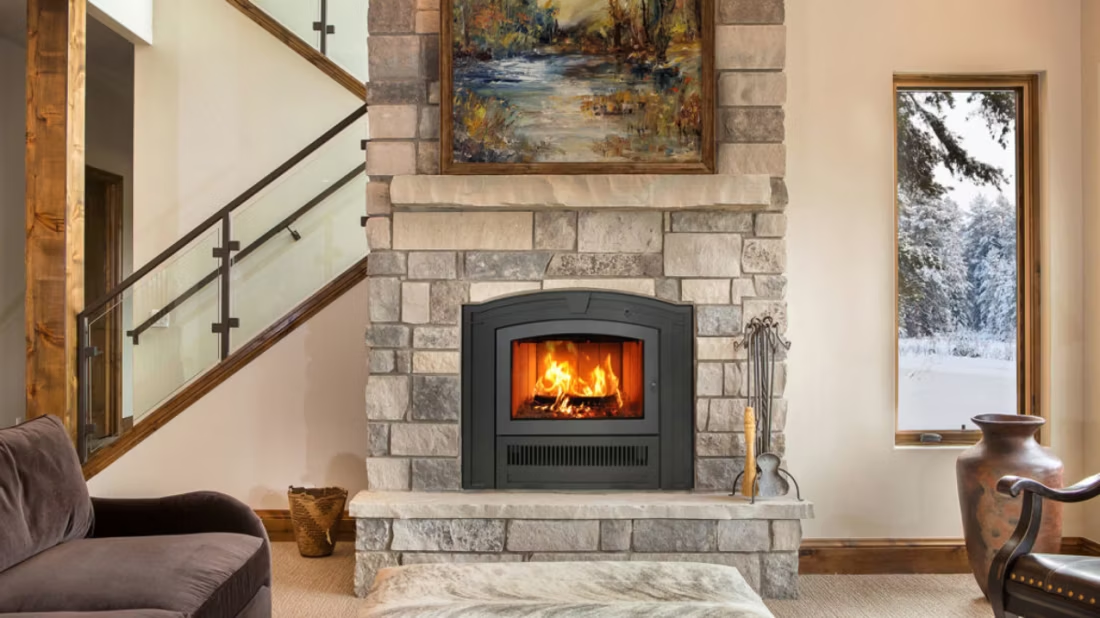
A wood stove is a freestanding unit on its own hearth pad that vents through new or existing chimney pipe—it can go almost anywhere with the right clearances. A wood insert slides into an existing masonry fireplace opening and uses that chimney (typically with a stainless liner) to vent, turning a drafty open hearth into a sealed, efficient heat source. Wayne County has a lot of older homes with existing masonry fireplaces that were built for looks more than heat output, and for those, an insert is usually the better upgrade—you keep the chimney you already have and get real heating performance out of it. Newer builds without an existing fireplace are usually better suited to a freestanding stove.
Do I need a permit to install a wood stove in Wayne County?
Yes—new wood stove and insert installations require a building permit, and the unit itself needs to meet current EPA 2020 NSPS emissions standards. Most local installers handle the permitting through the Wayne County Building Department as part of the install, so it's not something you typically have to coordinate yourself. Because the county doesn't carry an air-quality non-attainment designation, there aren't seasonal burn curtailment periods to plan around the way there are in some western states—the permitting here is really about safe installation, not smoke management.
What's the best wood stove for Wayne County's climate?
Because Wayne County's winters are moderate—an average low around 27°F rather than the sustained single digits you'd get in Bozeman, MT or International Falls, MN—most homes here do fine with a solid mid-size non-catalytic stove from a brand like Pacific Energy or Lopi, especially burning local oak and hickory, both high-BTU hardwoods that hold coals well overnight. A catalytic stove built for 20-plus hour burns is more stove than most Wayne County homes need day to day, though it can be worth it for anyone planning to heat primarily with wood through the occasional cold snap or ice-storm outage. Bring your square footage and insulation details to a local dealer and they'll match the stove to the house rather than the climate alone.
How often should my chimney be inspected and cleaned?
The CSIA recommends an annual inspection for any wood-burning appliance, and Wayne County is no exception—late summer or early fall, before the first cold snap, is the ideal window. Homes leaning on wood as a primary or heavy supplemental heat source (common in the rural stretches of the county without natural gas service) may need a mid-season cleaning if they're burning through several cords a winter. Given how spread out the county is, it's worth scheduling your sweep before the season fills up rather than waiting until the first freeze.
Where can I get firewood in Wayne County?
Most firewood in Wayne County comes from private timbered land, local sawmill scrap, or small firewood dealers rather than a public-land permit system, since the county doesn't have significant national forest acreage the way some parts of Tennessee do. Oak and hickory are the go-to species for heat output, with maple and pine commonly used for kindling and quick-starting fires. Expect to pay in the neighborhood of $150 to $250 for a delivered cord depending on species and seasoning, with rural delivery out toward Clifton or Collinwood sometimes carrying a small distance charge. Buying a cord already split and seasoned a full year ahead of winter is the difference between a clean-burning fire and a smoky, creosote-heavy one.
Wood stove vs. pellet stove—which is right for me?
Wood stoves run on cordwood, work without electricity, and pair naturally with Wayne County's own oak and hickory—a real advantage when Meriwether Lewis Electric Cooperative lines go down in an ice storm and you need heat with no power at all. Pellet stoves, using bagged fuel from regional suppliers like Lignetics, Hamer Pellet Fuel, or Greenway Renewable Energy, are more convenient day-to-day—load the hopper, set the thermostat, less ash—but the auger and blower need electricity, so they go dark in the same outage a wood stove would ride through. For a rural county where storm-related outages aren't rare, wood tends to be the more resilient choice; pellet appeals more to in-town homeowners prioritizing convenience over backup heat.
Why is my open fireplace making my house colder?
Open fireplaces suck—literally. As the fire burns, it consumes air your furnace already paid to heat and pulls it out through the chimney, so the house is actually colder after the fire goes out than before you lit it. An insert fixes this: it seals the chimney, puts fixed glass across the front, and turns that hole in your house into a real heat source.
Why won't my new wood stove get going like my old one?
New wood stoves are 70%+ efficient, so far less heat goes up the flue—which also means less draft to get a fire established. The rule: build a genuinely hot fire for about 45 minutes before you choke it down. Skip that and you get smoke in the room, creosote in the chimney, and a fire that never takes off. Most performance complaints trace straight back to this.
What is an in-home preview and do I need one?
It's a visit where a hearth professional measures your space, confirms the model you picked actually works in your home, and walks the specs—framing, gas line, venting, finish work—before anything is ordered. Some details you just can't know until you see the house. Never make a down payment without one; it's the single most-skipped step that burns buyers.
Can I install a fireplace myself?
If you're putting a fire in your house on purpose, it's best to work with an expert. Unless you're genuinely experienced in framing, gas line, vent pipe, and the national code on clearances to combustibles, have a professional do it—and ideally the same company that sells you the fireplace, so warranty, service, and liability all live under one roof.
Stove and Fireplace Dealers in Wayne County
Listings include WhyFire partner dealers, dealers we have verified as authorized for the brands we recommend, and established local businesses that carry hearth products. Every listing shows which one it is. The ones marked Preferred run on WhyFire's software, so they can show you real pricing and book your appointment right here. No manufacturer pays for placement. How we verify dealers →
Phoenix Sales
Rogers Lp Gas LLC
Vaughan Gas
Bell Gas
Pittman Propane
Thompson Gas
Consolidated Trade Services
Greater Dickson Gas Authority
Walt Mestan Dba The Fireplace Center
Find your wood fireplace in Wayne County.
Tell us about your home and we'll match you with a trusted local dealer and send over a free Project Guide & Parts List—the exact stove or insert, vent kit, and install plan for your Wayne County home.
Find Your Fireplace →