
Propane-powered warmth for Wayne County's Highland Rim winters.
From Waynesboro out through Clifton and Collinwood, most of Wayne County runs on propane rather than a municipal gas line—and a good gas fireplace or insert still delivers instant, no-hassle heat through the county's moderate winter heating season. Find the right unit and get matched with a trusted local dealer.
Every Project Starts From One of These Five Situations
Instant heat without splitting a single log.
Wayne County sits on the Western Highland Rim in south-central Tennessee, a heavily wooded, hilly stretch of the state with a population under 6,300 spread across Waynesboro and a handful of smaller communities like Clifton and Collinwood. Winters here aren't brutal by national standards—average lows hover around 27°F and the county sees a moderate winter heating season overall—but the cold-and-damp stretches from December through February are real enough that plenty of homes want heat that doesn't depend on someone hauling in oak or hickory rounds every evening.
Because Wayne County is largely rural, most homes outside the immediate Waynesboro area don't have access to a municipal natural gas line—propane, delivered and stored in a tank on the property, is the standard fuel for gas fireplaces and inserts here. That's not a downside so much as the normal setup: a direct-vent propane fireplace or insert gives you the flip-a-switch convenience of gas, doesn't require you to feed or clean up after it, and—with the right ignition system—can even keep running during the ice-related power outages that occasionally hit this part of the Highland Rim.
Three steps. No salesperson until you're ready.
Tell us about your project
Your zip code, your situation, and the fuel you're leaning toward—or let the answers point you to one.
See what's actually available
The brands dealers within 100 miles genuinely carry—real options, never a catalog mirage.
Get your dealer & Project Guide
A trusted local dealer, plus the free Project Guide & Parts List that names every component of the job.
Frequently Asked Questions
How much does a gas fireplace installation cost in Wayne County?
Most gas fireplace and insert installations in Wayne County fall somewhere between $3,500 and $9,000, depending on the unit, whether you're converting an existing masonry fireplace, and whether a new propane tank needs to be set. A direct-vent insert dropped into an existing chimney with a propane line already run tends to land on the lower end. New construction or a built-in fireplace that requires framing, venting, and a fresh propane tank installation runs toward the higher end. Because so few Wayne County properties sit on a natural gas main, expect your quote to include propane tank sizing and placement as part of the estimate—a local dealer will walk through that with you during an in-home visit.
Can I convert my existing wood fireplace to gas?
Yes, and it's a common project for older Wayne County homes that still have an open masonry fireplace built for burning oak, hickory, or pine. A gas insert typically slides into that existing firebox, using a stainless liner run up your current chimney for venting, and connects to a propane line and tank rather than a city gas main. The conversion keeps the look of the original hearth while giving you push-button heat and no more ash to haul out. Costs run in the same range as a standalone install—generally $4,000 to $8,500 depending on the insert and whether the chimney needs relining.
Do I need natural gas, or does propane work for a gas fireplace?
In Wayne County, propane is the standard answer—there's no widespread natural gas utility infrastructure reaching most of the county outside pockets of Waynesboro, so nearly every gas fireplace installed here runs on propane from a tank rather than a piped natural gas line. That's a well-established setup, not a compromise: propane fireplaces perform identically to natural gas units, and your local dealer can coordinate the tank sizing and placement with a propane supplier as part of the install. If your home happens to already have a natural gas hookup, either fuel type can typically be configured with the right orifice.
Will my gas fireplace work during a power outage?
Most models will, which matters in Wayne County where ice storms occasionally knock out power for a day or two at a time. Units with intermittent pilot ignition (IPI) include a battery backup that kicks in automatically when the power drops, so the fireplace lights and runs off the batteries until service is restored—just remember to keep fresh batteries on hand. Valor fireplaces take a different approach: the pilot's thermocouple generates its own electricity, so the unit never depends on batteries at all. Either way, if reliable heat during an outage matters to you, ask your local dealer about the ignition system before you settle on a model.
What's the difference between a gas fireplace, gas insert, and gas stove?
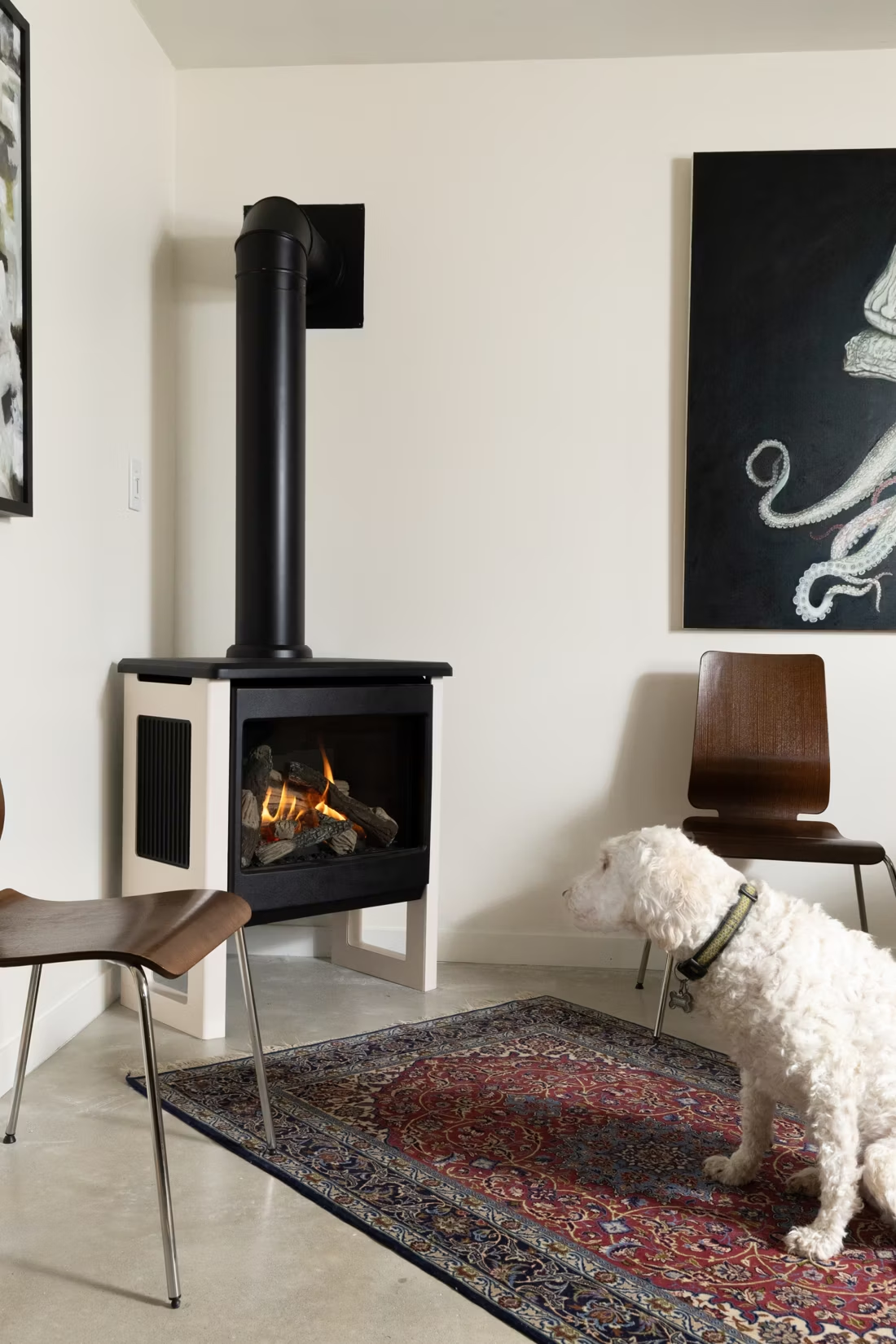
A gas fireplace is a fully built-in unit framed into a wall, generally chosen for new construction or a remodel. A gas insert is built to slide into an existing masonry firebox—the more common route for older Wayne County homes that already have a fireplace and chimney they want to upgrade. A gas stove is a freestanding cabinet-style unit that sits on the floor, similar in footprint to a wood stove but running on propane. For a home with an existing fireplace, an insert is usually the simplest and most cost-effective path; for a room with no fireplace at all, a built-in unit or freestanding stove is the better fit.
Do I need a permit to install a gas fireplace in Wayne County?
Yes—installing a new gas fireplace or insert typically requires a building permit through the county, along with sign-off on the gas line or propane connection from a licensed installer. Most local dealers handle the permitting process as part of the job, so you're not the one filing paperwork or scheduling inspections. This is also part of why it's worth using a certified hearth dealer rather than a general handyman for a propane fireplace install—they coordinate the tank placement, gas line, venting, and inspection as one job rather than several separate trades.
What's the difference between vented and vent-free gas fireplaces?
Vented (direct-vent) gas fireplaces pull combustion air from outside and exhaust it back outside through a sealed vent pipe—they're the cleaner, safer, and more universally code-compliant option. Vent-free units burn fuel directly into the room air without any outside venting; they're legal in Tennessee but come with strict rules around room size and oxygen depletion sensors, since combustion byproducts stay indoors. For most Wayne County homes, direct-vent propane fireplaces are the more common and more recommended choice—they put out real heat without any tradeoff on indoor air quality, which matters in smaller, well-sealed homes common in this part of the county.
How often should my gas fireplace be serviced?
Plan on an annual inspection, ideally in early fall before the coldest stretch sets in. A technician checks the burner, pilot assembly, venting, and gas or propane connections, and cleans the glass and interior. It's a much smaller job than a wood chimney sweep but just as important for safety, especially on a propane system where a technician will also check the regulator and tank connections. Local dealers who sell and install these units generally offer this service directly, which is worth asking about at the time of purchase.
Gas vs. wood—which is right for my Wayne County home?
Wood has deep roots in this part of Tennessee—oak, hickory, and pine are all locally abundant and burn well, and a wood stove or fireplace keeps working without electricity, which matters during ice-storm outages. Gas, running on propane for most Wayne County homes, trades that self-sufficiency for convenience: no wood to split, stack, or haul, no ash to clean up, and heat that comes on with a switch rather than a match. Homeowners weighing pellet stoves as a middle ground can find pellets locally through brands like Lignetics, Hamer Pellet Fuel, and Greenway Renewable Energy, though pellet units still need electricity to run the auger. For daily-use living spaces, propane gas is usually the easier fit; for backup heat during outages or a more traditional feel, wood still has a strong case in this county.
Why is my open fireplace making my house colder?
Open fireplaces suck—literally. As the fire burns, it consumes air your furnace already paid to heat and pulls it out through the chimney, so the house is actually colder after the fire goes out than before you lit it. An insert fixes this: it seals the chimney, puts fixed glass across the front, and turns that hole in your house into a real heat source.
What's the difference between an insert and a zero-clearance fireplace?
An insert is a fireplace that slides into a pre-existing wood-burning fireplace—if you don't have one, there's nothing to insert it into. A zero-clearance fireplace is built into a framed wall, which makes it the answer for remodels and new construction. Simple test: existing masonry fireplace means insert; blank or framed wall means zero-clearance.
Does a fireplace add value to my home?
On average, a fireplace adds back to the home about the same amount you spent installing it. Add the monthly savings from heating the rooms you actually use instead of the whole house—often hundreds of dollars a year—and the value case is strong before you even count what a fire does for how your family uses the room.
Can I install a fireplace myself?
If you're putting a fire in your house on purpose, it's best to work with an expert. Unless you're genuinely experienced in framing, gas line, vent pipe, and the national code on clearances to combustibles, have a professional do it—and ideally the same company that sells you the fireplace, so warranty, service, and liability all live under one roof.
Stove and Fireplace Dealers in Wayne County
Listings include WhyFire partner dealers, dealers we have verified as authorized for the brands we recommend, and established local businesses that carry hearth products. Every listing shows which one it is. The ones marked Preferred run on WhyFire's software, so they can show you real pricing and book your appointment right here. No manufacturer pays for placement. How we verify dealers →
Phoenix Sales
Rogers Lp Gas LLC
Vaughan Gas
Bell Gas
Pittman Propane
Thompson Gas
Consolidated Trade Services
Greater Dickson Gas Authority
Walt Mestan Dba The Fireplace Center
Find your gas fireplace in Wayne County.
Tell us a bit about your home and we'll match you with the right propane or gas fireplace, insert, or stove—plus a free Project Guide & Parts List and a trusted local dealer to install it.
Find Your Fireplace →