
Find the right fireplace for your Wayne County home.
Wood, gas, pellet, and electric fireplace resources for every community in Wayne County—from Waynesboro to Clifton on the Tennessee River to Collinwood near the Alabama line. Get matched with a trusted local dealer who knows what actually works here.
Every Project Starts From One of These Five Situations
Steady winters and hardwood heat in Wayne County, Tennessee.
Wayne County covers about 735 square miles of the Western Highland Rim in south-central Tennessee, bordering Alabama and split by the Tennessee River near Clifton. It's rolling, wooded country—elevations mostly between 600 and 1,000 feet—with oak, hickory, and maple thick on the ridges and pine mixed in on the drier slopes. Winters here are real but moderate: an average low around 27°F and a heating load well short of what you'd see in a place like Duluth MN or Burlington VT. Still, the heating season runs a solid five months, and the hardwood species that surround most Wayne County homes have made wood stoves and fireplaces a practical, low-cost way to get through it for generations.
What you'll find on this hub: hearth retailers, service technicians, and fuel suppliers covering the whole county—Waynesboro at the center, Clifton along the river, Collinwood near the state line, and smaller communities like Cypress Inn, Iron City, and Beech Creek. Pick your fuel below to see local dealers, typical installation costs, and the resources that fit your project, whether you're heating a farmhouse on hardwood ridge land or a place along the river bottom.
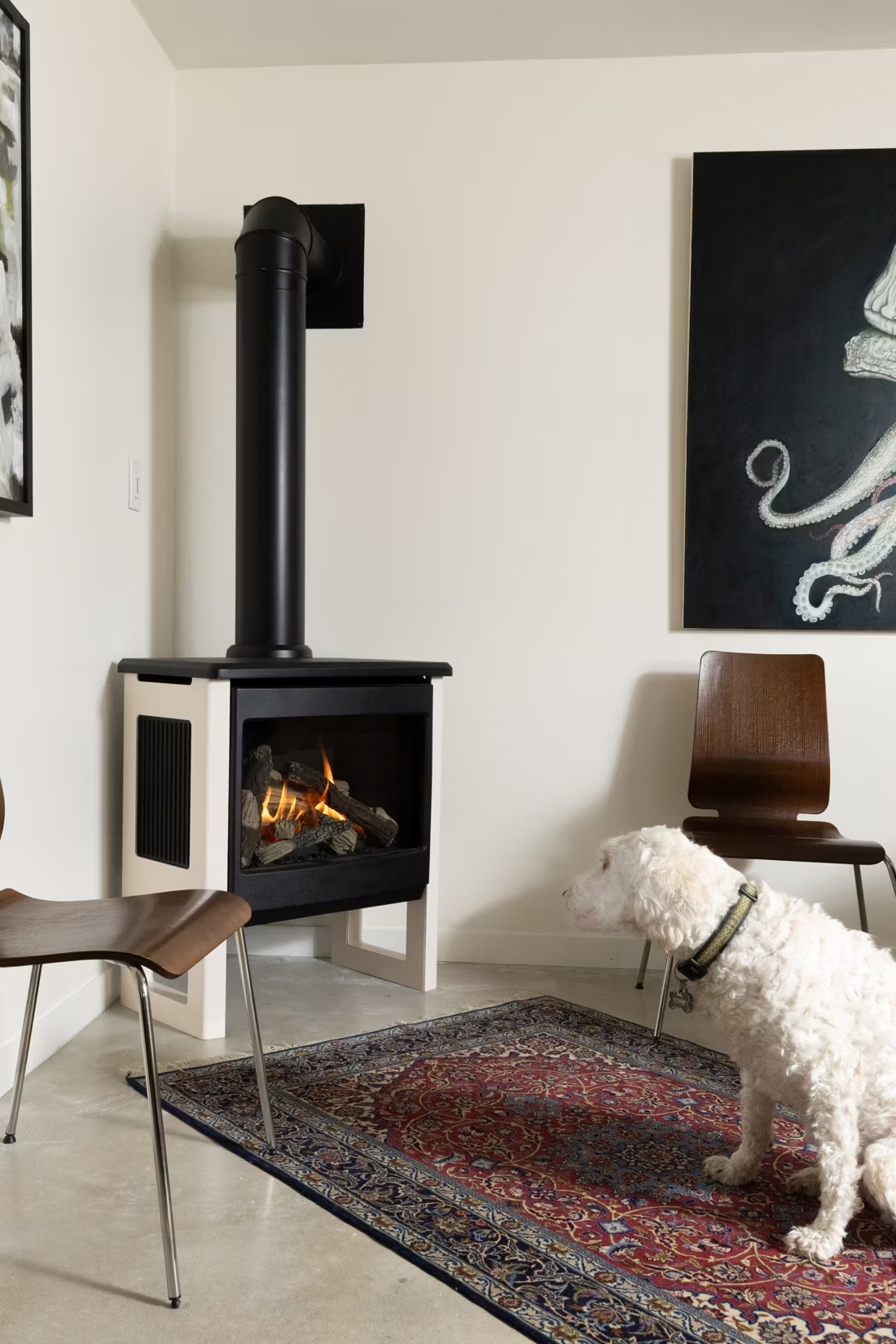
Four fuels. One honest answer for Wayne County.
Three steps. No salesperson until you're ready.
Tell us about your project
Your zip code, your situation, and the fuel you're leaning toward—or let the answers point you to one.
See what's actually available
The brands dealers within 100 miles genuinely carry—real options, never a catalog mirage.
Get your dealer & Project Guide
A trusted local dealer, plus the free Project Guide & Parts List that names every component of the job.
Frequently Asked Questions
Which fuel works best in Wayne County?
For most Wayne County homes, wood is the practical default—oak, hickory, and maple grow throughout the county, many homeowners have access to their own timber or a neighbor's woodlot, and a well-run wood stove handles the roughly five-month heating season here without a big fuel bill. Propane is the common convenience choice since natural gas mains don't reach most of rural Wayne County—propane fireplaces and inserts give you instant, thermostat-controlled heat without cutting or hauling wood. Pellet stoves are a solid middle ground: less labor than wood splitting, and regional brands like Lignetics, Hamer Pellet Fuel, and Greenway Renewable Energy keep bags reasonably available locally. Electric fireplaces work well as supplemental heat in bedrooms, dens, or older homes without existing chimneys, but given the winter lows here, they're rarely anyone's sole heat source. Many Wayne County households run wood or propane as primary heat with electric in a secondary room.
Do I need a permit to install a fireplace in Wayne County?
Generally yes, though the process is simpler here than in larger jurisdictions. New wood stoves, inserts, gas appliances, and pellet stoves typically require a building permit through the local jurisdiction—Waynesboro, Clifton, and Collinwood each handle permits within city limits, while unincorporated areas of the county go through the Wayne County Building & Codes office. The permit review mostly covers clearances to combustibles, chimney or vent height, and hearth pad sizing rather than emissions rules. Gas installations need a licensed gas-fitter for the line work, which is usually a separate step from the building permit. Electric fireplaces installed as plug-in units generally don't need a permit; built-in electric units with new wiring do. Most local retailers pull the permit as part of the installation, so you typically don't have to navigate it alone.
Are there air quality restrictions on wood burning in Wayne County?
No—Wayne County doesn't sit in a nonattainment zone and isn't prone to the winter inversions that trigger burn advisories in some western basins. There are no seasonal curtailment periods or voluntary no-burn days here, and you won't run into restrictions tied to wildfire smoke season. That said, code compliance still matters for safety: proper clearances, a correctly sized chimney or vent, and (for new installs) a stove that meets current EPA emissions standards are still part of the building permit review, and your insurance carrier may ask for proof of a code-compliant installation before covering a wood-burning appliance.
Can one local hearth retailer handle all four fuel types?
It varies. Wayne County's population is under 7,000, so the county doesn't support a large number of standalone hearth showrooms—some homeowners end up working with a retailer based in a nearby larger town like Savannah or Lawrenceburg that services Wayne County as part of a wider territory. Those regional dealers more often carry all four fuel types—wood, gas, pellet, and electric—since they're serving a broader customer base. Smaller local shops closer to Waynesboro or Clifton may focus on wood and gas, which are the two most common fuels in the county, with pellet and electric available as special order. If you want to compare fuel types side by side, it's worth checking which nearby dealer stocks working displays of each before you decide.
How does service work in rural parts of Wayne County?
Most chimney sweeps and gas technicians serving Wayne County are based out of Savannah, Lawrenceburg, or other nearby hub towns and travel into the county for appointments—including outlying communities like Cypress Inn, Iron City, and the areas along the Tennessee River near Clifton. Expect a modest travel charge for the more remote stops, and expect fall (September–October) to book up faster than mid-winter, since that's when most Wayne County homeowners get their wood stoves swept and gas units inspected ahead of the season. If you're in an outlying part of the county, scheduling your annual service early and keeping a backup heat source on hand for winter storms is a reasonable precaution.
What's the typical cost range for fireplace installation across all fuel types in Wayne County?
Costs run close to regional averages for rural Tennessee. Wood stove or insert installation: roughly $3,800–$7,500 for a typical retrofit, more if new chimney construction is involved. Gas fireplace, insert, or stove: roughly $4,000–$9,500, with propane tank setup or gas line work driving the higher end since natural gas service is limited outside town centers. Pellet stove or insert: roughly $4,000–$6,500 for most installs. Electric fireplace: $200–$2,500 for the unit itself, plus $300–$1,000 in labor for anything beyond a simple plug-in placement. Exact pricing depends on your home's existing chimney or venting situation—the county + fuel pages above break down cost drivers specific to each fuel.
What is an in-home preview and do I need one?
It's a visit where a hearth professional measures your space, confirms the model you picked actually works in your home, and walks the specs—framing, gas line, venting, finish work—before anything is ordered. Some details you just can't know until you see the house. Never make a down payment without one; it's the single most-skipped step that burns buyers.
How much should I budget for a fireplace?
For an average home—covering the fireplace, the vent pipe, and basic installation—a budget between $3,900 and $5,500 gives you a lot of options across wood, gas, and pellet. By the time you add finish work, gas line, and electrical, the average complete installation lands between $5,000 and $12,000 all-in. In a remodel or new build, a good rule is to put about 2.5% of the total project cost toward the fireplace.
What are the biggest mistakes people make buying a fireplace?
Five come up constantly: budgeting for the unit but not the full job (vent, gas line, electrical, finish work); drowning in options instead of starting from style and fuel; buying without an in-home preview; handing installation to a handyman instead of a pro; and giving up out of sheer indecision. Every one is avoidable with a clear plan—step one, step two, step three.
Does a fireplace add value to my home?
On average, a fireplace adds back to the home about the same amount you spent installing it. Add the monthly savings from heating the rooms you actually use instead of the whole house—often hundreds of dollars a year—and the value case is strong before you even count what a fire does for how your family uses the room.
Stove and Fireplace Dealers in Wayne County
Listings include WhyFire partner dealers, dealers we have verified as authorized for the brands we recommend, and established local businesses that carry hearth products. Every listing shows which one it is. The ones marked Preferred run on WhyFire's software, so they can show you real pricing and book your appointment right here. No manufacturer pays for placement. How we verify dealers →
Phoenix Sales
Rogers Lp Gas LLC
Vaughan Gas
Bell Gas
Pittman Propane
Thompson Gas
Consolidated Trade Services
Greater Dickson Gas Authority
Walt Mestan Dba The Fireplace Center
Find your fireplace project in Wayne County.
Pick your fuel below, and we'll match you with a trusted local dealer and send over a free Project Guide & Parts List—the exact parts, vent kit included, and the dealer we recommend for your home.
Find Your Fireplace →