
Find your electric fireplace in Wayne County.
No chimney, no gas line, no permit headaches—just plug-in or hardwired warmth for a bedroom, sunroom, or addition anywhere from Waynesboro to the rural edges of the county. Find the right unit and connect with a trusted local dealer.
Every Project Starts From One of These Five Situations
Zone heat for rooms your furnace doesn't reach—no chimney required.
Wayne County is rural Middle Tennessee—around 6,225 people spread across a Highland Rim landscape of hardwood forest and farmland, with Waynesboro as the county seat. Winters here sit in climate zone 4A, with an average low around 27°F and roughly 3,876 heating degree days—cold enough for regular furnace use from November through March, but nowhere near the extremes of the Upper Midwest. Plenty of Wayne County homes still burn oak, hickory, and maple cut from the surrounding hills, but a lot of the housing stock—older farmhouses, mobile homes, additions, converted porches—has rooms that central heat never quite keeps comfortable.
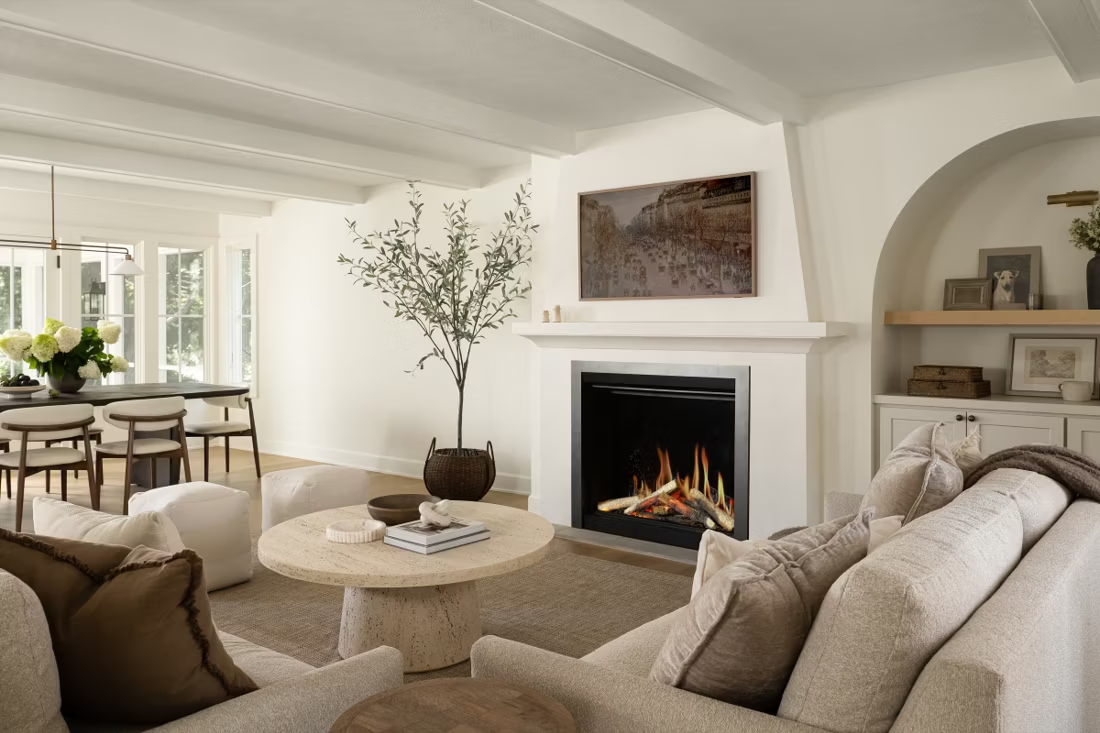
That's where electric fireplaces do their best work. A plug-in insert or a hardwired wall unit adds real, immediate heat to a bedroom, den, or bonus room without running gas line or building a chimney—which matters in a county where many homes are on well water, propane tanks, or older electrical panels where adding new infrastructure gets expensive fast. Power comes through Meriwether Lewis Electric Cooperative across most of the county, and electric fireplaces run on standard household circuits, so there's no new utility account or rate plan to negotiate. For renters and homeowners alike, it's the lowest-friction way to add supplemental heat and fireplace ambiance to a specific room.
Three steps. No salesperson until you're ready.
Tell us about your project
Your zip code, your situation, and the fuel you're leaning toward—or let the answers point you to one.
See what's actually available
The brands dealers within 100 miles genuinely carry—real options, never a catalog mirage.
Get your dealer & Project Guide
A trusted local dealer, plus the free Project Guide & Parts List that names every component of the job.
Frequently Asked Questions
How much does an electric fireplace installation cost in Wayne County?
Plug-in electric fireplace inserts and freestanding units are the least expensive option, typically running $300 to $1,000 for the unit itself with no installation labor beyond plugging it in. Built-in wall units or mantel-style fireplaces that require a dedicated 120V or 240V circuit run higher—often $1,200 to $2,500 including a licensed electrician's time to run new wiring, especially in older Wayne County farmhouses where panel capacity is limited. Because there's no venting, no gas line, and usually no permit, electric installations are consistently the most affordable fireplace option available to homeowners here.
Do I need a permit to install an electric fireplace in Wayne County?
Most plug-in electric fireplaces need no permit at all—they use a standard outlet like any other appliance. If you're installing a built-in unit that requires a new dedicated circuit or panel work, that electrical work typically needs a permit through the county, and it should be pulled by a licensed electrician regardless of whether you technically need the paperwork. A reputable local dealer or electrician handling the install will know exactly what Wayne County requires for your specific unit.
Will an electric fireplace actually heat a room, or is it just for looks?
A properly sized electric fireplace will genuinely heat a room—most units put out around 4,500 to 5,000 BTUs, enough to comfortably warm 400 to 1,000 square feet depending on insulation and ceiling height. For a Wayne County bedroom, den, or sunroom that runs cold in the 27°F average lows of a typical winter night, that's a meaningful boost. What an electric fireplace won't do is replace your central furnace or heat pump as whole-home heat—it's built for zone heating, warming the room you're actually using so you can turn the thermostat down elsewhere.
How much does it cost to run an electric fireplace on Meriwether Lewis Electric Cooperative rates?
Most electric fireplaces draw around 1,500 watts on the heat setting, which works out to roughly 15 to 20 cents per hour of run time at typical Meriwether Lewis Electric Cooperative residential rates—call it $2 to $4 for a full evening of use. That's considerably cheaper than running central heat to warm the same single room, especially in an older home with drafty additions where ductwork struggles to keep up. Running the flame effect alone, with the heater switched off, uses only a small fraction of that.
What's the difference between an electric fireplace insert, a built-in wall unit, and a freestanding stove?
An electric insert is designed to slide into an existing masonry fireplace opening, giving old wood-burning fireplaces a clean, no-mess heat source without touching the chimney. A built-in wall unit is recessed into a framed wall—common in new construction or remodels—and typically needs a dedicated circuit. A freestanding electric stove or mantel unit sits on the floor or a stand and plugs into any outlet, making it the easiest option for renters or anyone who wants to avoid construction altogether. For Wayne County's mix of older farmhouses with existing fireplaces and newer manufactured or site-built homes, all three options are common depending on the house.
Will my electric fireplace work if the power goes out?
No—electric fireplaces require power to run both the heater and the flame effect, so they shut off completely during an outage. That's worth factoring in for rural parts of Wayne County where outages can run longer than in town, particularly after ice storms. Homeowners who want heat that survives a power outage typically pair an electric fireplace for daily convenience with a wood stove or propane heater as backup—plenty of local homes already run that combination given how common wood heat still is in the county.
Electric vs. wood—which makes more sense for my Wayne County home?
Wood heat has deep roots here, with oak, hickory, and maple readily available from the surrounding hills, and it keeps working through a power outage—a real advantage in rural stretches of the county. Electric fireplaces trade that off-grid resilience for convenience: no wood to split, haul, or clean up after, no chimney to sweep, and instant on-off operation at the flip of a switch. For a primary heat source in an outbuilding or cabin, wood often wins. For a bedroom, den, or converted porch that just needs extra warmth on a cold night, electric is usually the simpler, cheaper answer.
Electric vs. pellet stove—which is right for supplemental heat?
Pellet stoves, running on bagged fuel from brands like Lignetics, Hamer Pellet Fuel, or Greenway Renewable Energy, put out considerably more heat than an electric unit and can genuinely offset a furnace's workload in a Wayne County winter—but they need venting, a hopper to refill, ash to clean out, and, like electric units, power to run the auger and blower. Electric fireplaces skip the venting and fuel handling entirely but produce less heat and cost more per BTU to run. If you're heating a single room and want zero maintenance, electric is the easier path. If you want to meaningfully cut heating bills across a larger space, a pellet stove is worth a look.
Are electric fireplaces a good fit for older Wayne County homes and manufactured housing?
Yes, often a better fit than gas or wood in these cases. Manufactured homes and older farmhouses in the county frequently have panel or structural limitations that make gas line runs or masonry chimney work impractical or expensive. A plug-in electric insert or freestanding unit sidesteps both problems—it draws on existing household wiring, needs no combustion air or clearance-to-combustibles calculations beyond the manufacturer's basic spacing, and can be moved if you relocate. For manufactured homes specifically, always check the unit's listing to confirm it's rated for that housing type before buying.
Can I put a TV above my fireplace?
Yes—with an asterisk. Fireplaces are hot and TVs don't like heat. Either put a mantel between them to deflect rising warmth, or choose a fireplace with heat-management technology that creates a cool zone on the wall above—the wall stays around 125 degrees, barely warm, while the room still gets full heat. If you like clean lines and don't want a mantel, heat management is the answer.
Does an electric fireplace need a vent or chimney?
No—that's its superpower. An electric fireplace needs a wall and an outlet, period. No vent pipe, no gas line, no clearances to design around, which is why it works in bedrooms, offices, apartments, and walls where venting a gas or wood unit would be impractical or impossible. Installation is typically the simplest and least expensive of any fireplace type.
How much should I budget for a fireplace?
For an average home—covering the fireplace, the vent pipe, and basic installation—a budget between $3,900 and $5,500 gives you a lot of options across wood, gas, and pellet. By the time you add finish work, gas line, and electrical, the average complete installation lands between $5,000 and $12,000 all-in. In a remodel or new build, a good rule is to put about 2.5% of the total project cost toward the fireplace.
Can I install a fireplace myself?
If you're putting a fire in your house on purpose, it's best to work with an expert. Unless you're genuinely experienced in framing, gas line, vent pipe, and the national code on clearances to combustibles, have a professional do it—and ideally the same company that sells you the fireplace, so warranty, service, and liability all live under one roof.
Stove and Fireplace Dealers in Wayne County
Listings include WhyFire partner dealers, dealers we have verified as authorized for the brands we recommend, and established local businesses that carry hearth products. Every listing shows which one it is. The ones marked Preferred run on WhyFire's software, so they can show you real pricing and book your appointment right here. No manufacturer pays for placement. How we verify dealers →
Phoenix Sales
Rogers Lp Gas LLC
Vaughan Gas
Bell Gas
Pittman Propane
Thompson Gas
Consolidated Trade Services
Greater Dickson Gas Authority
Walt Mestan Dba The Fireplace Center
Get your free Project Guide & Parts List for an electric fireplace in Wayne County.
Tell us about your room and your home, and we'll match you with a trusted local dealer and send over a free Project Guide & Parts List—the exact unit, mounting or circuit needs, and a recommended installer near you.
Find Your Fireplace →