
Efficient heat for York County's mild Piedmont winters.
From Rock Hill and Fort Mill to Clover and Lake Wylie, pellet stoves give Piedmont homeowners clean, thermostat-controlled heat without cutting, splitting, or stacking cordwood. Find the right unit and connect with a trusted local dealer.
Every Project Starts From One of These Five Situations
Convenient heat for a county that's growing fast.
York County sits in South Carolina's Piedmont just south of Charlotte, and it has grown accordingly—the population has crossed 318,000 as Rock Hill, Fort Mill, and Tega Cay have added subdivision after subdivision along the I-77 corridor. The climate here is mild by national standards: zone 3A, an average winter low around 33°F, and roughly 2,872 heating degree days a year—a fraction of what a place like Duluth, Minnesota racks up in a single season. Nobody in York County is heating a home through six months of hard freeze. What people actually want is efficient, low-fuss supplemental heat for the genuinely cold nights, the occasional ice storm that drops tree limbs on power lines along the Catawba River, and rooms that central HVAC never quite warms evenly.
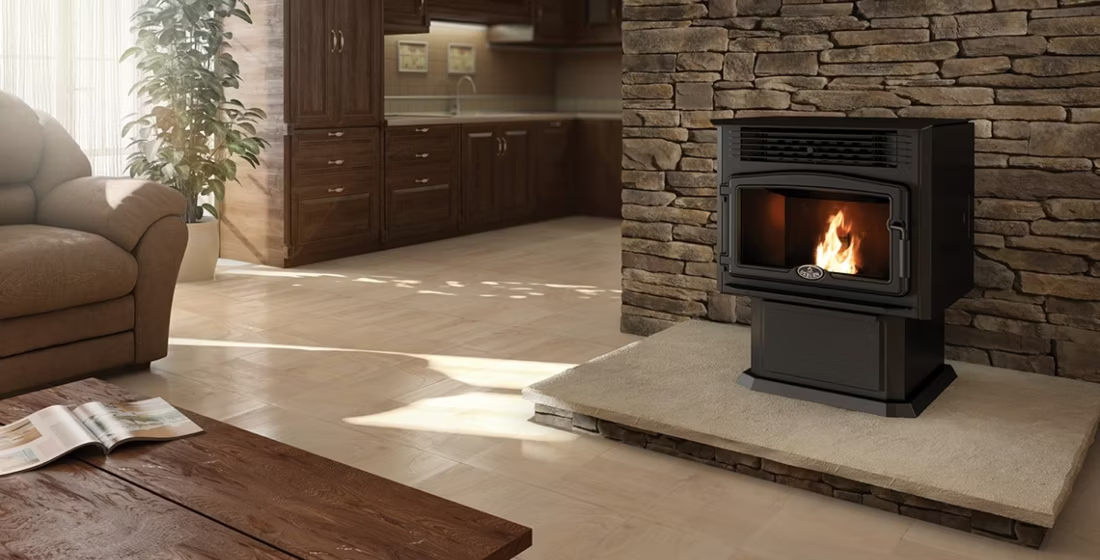
Pellet stoves fit that need well. They burn compressed hardwood and softwood pellets—supplied regionally by Lignetics, Hamer Pellet Fuel, and Greenway Renewable Energy—and run cleaner and more consistently than cordwood, with no cutting or seasoning required, just bags stacked in the garage. York County's own oak, pine, and hickory woodlots feed a healthy regional pellet supply chain, and with no local air quality non-attainment status or burn-ban history, homeowners here have more flexibility than counties dealing with winter inversion restrictions. The one tradeoff worth knowing upfront: pellet stoves need electricity to run the auger and combustion blower, so if ice-storm outages are a real concern in your part of the county, plan for a battery backup or small generator alongside the stove.
Three steps. No salesperson until you're ready.
Tell us about your project
Your zip code, your situation, and the fuel you're leaning toward—or let the answers point you to one.
See what's actually available
The brands dealers within 100 miles genuinely carry—real options, never a catalog mirage.
Get your dealer & Project Guide
A trusted local dealer, plus the free Project Guide & Parts List that names every component of the job.
Frequently Asked Questions
How much does a pellet stove installation cost in York County?
Pellet stove installations tend to run less than wood-burning masonry work because venting uses smaller PL-rated pipe rather than a full masonry chimney, and most units don't require new footings or hearth extensions. A freestanding pellet stove venting through an exterior wall is typically the most affordable path; a pellet insert going into an existing wood fireplace costs more because it involves fitting the unit to the firebox and running a liner. Homes without any existing fireplace or vent penetration will see the venting portion of the job add the most to the total. Local dealers around Rock Hill, Fort Mill, and York can give you a firm number after seeing the room and the exterior wall or chimney you're working with.
What size pellet stove do I need for a York County home?
Because York County's heating load is light—2,872 heating degree days is roughly a third of what a cold-climate county logs—most homes here do fine with a small-to-medium pellet stove used for supplemental heat in a den, bonus room, or open living area, rather than a large unit sized to carry the whole house. The exception is older, less-insulated farmhouses in the more rural western parts of the county near Clover and McConnells, where drafty construction and higher ceilings can justify a larger hopper and higher BTU output. A local dealer will look at your square footage, insulation, and how much of the heating load you actually want the stove to carry before recommending a size.
What's the difference between a pellet stove and a pellet insert?
A pellet stove is a freestanding unit that vents through an exterior wall or existing chimney and can go almost anywhere in the house with the right clearances. A pellet insert is built to slide into an existing masonry wood fireplace, sealing up the old open hearth and venting up through the existing chimney with a liner. For York County homes with an older wood fireplace that rarely gets used, an insert is usually the more efficient upgrade since it reuses the chimney you already have. Homes without an existing fireplace, or new construction, are better suited to a freestanding stove.
Do I need a permit to install a pellet stove in York County?
Yes—a building permit is generally required for a new pellet stove or insert installation, whether you're inside Rock Hill, Fort Mill, York, or Tega Cay city limits or out in unincorporated York County. Incorporated cities issue their own permits through their building departments; unincorporated areas go through the county's building codes office. Most local hearth dealers handle the permit application and inspection scheduling as part of the installation, so it's rarely something homeowners have to manage themselves.
Will my pellet stove still work if the power goes out?
No—this is the one real limitation of pellet heat, and it matters in York County because ice storms occasionally take down power lines along the Catawba River corridor and in the more wooded parts of the county. Pellet stoves rely on an electric auger to feed fuel and a blower to distribute heat, so without power the stove shuts down. If backup heat during outages is a priority, a small battery backup unit made for pellet stoves, or a portable generator sized for the stove's low wattage draw, solves the problem. If outage-proof heat is the top priority, a wood-burning stove is worth comparing against pellet before you decide.
What's the best pellet stove for York County's climate?
Because winters here rarely demand round-the-clock heat, hopper capacity and ease of use matter more than raw BTU output for most York County homes. Mid-size units from brands like Harman and England's Stove Works are common choices in the Carolinas and handle supplemental heating duty well, while larger hopper capacities are worth paying for if you want to load once and not think about it again during a cold stretch. Homeowners burning through the mild season should also weigh auto-ignition and thermostat control—features that make it easy to run a pellet stove intermittently rather than tending it constantly the way a wood stove requires. A local dealer can match hopper size and features to how you actually plan to use the stove.
Pellet vs. wood—which is right for my York County home?
Wood is abundant locally—oak, pine, and hickory are all common in York County woodlots—and a wood stove works without electricity, which matters if ice-storm outages are a real concern for your property. But wood requires cutting, splitting, seasoning, and daily tending, and produces more ash and creosote to manage. Pellet stoves trade that hands-on work for convenience: load a hopper with bagged pellets from Lignetics, Hamer Pellet Fuel, or Greenway Renewable Energy, set a thermostat, and let the stove run itself—at the cost of needing electricity to operate. For most York County homes using supplemental heat in a den or living room, that convenience tradeoff favors pellet. For rural properties where power reliability is a real concern, wood remains the safer backup.
Where can I buy pellet fuel in York County?
Regional brands including Lignetics, Hamer Pellet Fuel, and Greenway Renewable Energy supply pellets to hearth retailers and farm supply stores throughout the Rock Hill and Fort Mill area, and most are sold by the ton or in 40-pound bags year-round rather than just in winter. Buying early in the fall, before cold snaps drive up local demand, is the easiest way to avoid picked-over shelves. Your local pellet stove dealer can usually tell you which pellet brand and hardwood-to-softwood blend burns cleanest in the specific model you buy.
How much maintenance does a pellet stove need?
Pellet stoves need more routine attention than a gas fireplace but far less than a wood stove and chimney. Plan on emptying the ash pan every few days during regular use, cleaning the burn pot weekly to keep it from clogging, and scheduling a full annual cleaning and inspection—including the auger, hopper, and venting—before each heating season starts. Because York County's heating season is short, many homeowners here get away with a single thorough end-of-season cleaning rather than the mid-winter maintenance that heavier users in colder climates need.
What's the difference between an insert and a zero-clearance fireplace?
An insert is a fireplace that slides into a pre-existing wood-burning fireplace—if you don't have one, there's nothing to insert it into. A zero-clearance fireplace is built into a framed wall, which makes it the answer for remodels and new construction. Simple test: existing masonry fireplace means insert; blank or framed wall means zero-clearance.
Why is a fireplace insert so efficient?
An insert does two things: it seals the chimney completely, so you stop losing air you already paid to heat, and it radiates warmth into the room through the firebox and glass. Most add a heat-exchange fan that pulls cool room air underneath, wraps it around the hot firebox, and pushes it back out warm. Your home is more efficient before you've even lit the first fire.
Does a fireplace add value to my home?
On average, a fireplace adds back to the home about the same amount you spent installing it. Add the monthly savings from heating the rooms you actually use instead of the whole house—often hundreds of dollars a year—and the value case is strong before you even count what a fire does for how your family uses the room.
Can I install a fireplace myself?
If you're putting a fire in your house on purpose, it's best to work with an expert. Unless you're genuinely experienced in framing, gas line, vent pipe, and the national code on clearances to combustibles, have a professional do it—and ideally the same company that sells you the fireplace, so warranty, service, and liability all live under one roof.
Stove and Fireplace Dealers in York County
Listings include WhyFire partner dealers, dealers we have verified as authorized for the brands we recommend, and established local businesses that carry hearth products. Every listing shows which one it is. The ones marked Preferred run on WhyFire's software, so they can show you real pricing and book your appointment right here. No manufacturer pays for placement. How we verify dealers →
Home Flame
York County Natural Gas
Viridien Patio + Fireplace
High Country Fireplaces
Charlotte Grill Co.
Ron Steel Plumbing
Edisto Gas- Chester
EarthCore Industries
Owens Chimney Systems, Inc
Carolinas Stone Marble And Granite
Fireplace Systems
Pellet Brands Stocked Around York County
Manufacturers will point you to the nearest stocking dealer.
Find your pellet stove in York County.
Tell us a bit about your home and we'll match you with the right pellet stove or insert, plus a free Project Guide & Parts List—the exact parts, vent kit, and a recommended local York County dealer.
Find Your Fireplace →