
A pellet stove in Fort Mill is the exception, not the rule.
York County's mild winters mean most homes here don't need a pellet stove to stay warm. For the homeowners who still want one—for a bonus room, a basement, or the ambiance of a real fire—we'll connect you with a local dealer who can size it correctly.
Every Project Starts From One of These Five Situations
Fort Mill's climate just doesn't ask for it.
Fort Mill sits in climate zone 3A at 646 feet elevation, with an average winter low of 31°F and roughly 3,141 heating degree days a year. That's a fraction of what a place like Duluth, MN sees (closer to 10,000 HDD), and it means most Fort Mill homes get through winter comfortably on a heat pump or a gas furnace, no supplemental wood-pellet heat required. Pellet stoves are built to sustain long, cold burns hour after hour in places where the mercury doesn't climb out of the 20s for weeks—that's not the reality in York County, where a cold snap usually breaks within a few days.
That's why we flag pellet as a niche fit for this market rather than a standard recommendation. The homeowners who do install one here are usually after something specific: a secondary heat source for a bonus room or finished basement that the HVAC doesn't reach well, or the visual appeal of a clean-burning stove without the wood storage and chimney maintenance a wood-burning unit requires. If that's you, pellets are sourced regionally through brands like Lignetics, Hamer Pellet Fuel (produced right here in South Carolina), and Greenway Renewable Energy, and a local dealer can tell you which one is easiest to keep in stock near Fort Mill. For most other households, natural gas—widely available through Piedmont Natural Gas service in this part of York County—or a simple electric insert ends up being the more practical answer, and we'll say so if that's what your home actually needs.
Three steps. No salesperson until you're ready.
Tell us about your project
Your zip code, your situation, and the fuel you're leaning toward—or let the answers point you to one.
See what's actually available
The brands dealers within 100 miles genuinely carry—real options, never a catalog mirage.
Get your dealer & Project Guide
A trusted local dealer, plus the free Project Guide & Parts List that names every component of the job.
Frequently Asked Questions
How much does a pellet stove installation cost in Fort Mill?
Expect somewhere in the $3,000 to $6,000 range for a pellet stove or insert in Fort Mill, depending on the unit and whether you need a new vent run through an exterior wall or up an existing masonry chase. Because pellet heat is a less common request here than gas or electric, fewer local dealers keep pellet units in regular stock, so it's worth getting two quotes—pricing can vary more from dealer to dealer than it does for gas fireplace installs, where the market is more competitive.
Does a pellet stove make sense in a mild climate like Fort Mill's?
For most homes, not really—and we'll tell you that upfront. With only about 3,141 heating degree days a year and winter lows that average 31°F, Fort Mill just doesn't have the sustained cold that pellet stoves are designed to offset. Where it does make sense is as zone heat: a finished basement, a converted garage, or a bonus room over the garage that your central system struggles to keep comfortable on the coldest nights of the year. If you're trying to heat your whole house, a heat pump or gas system will almost always be the more efficient and lower-maintenance choice here.
Where can I buy pellets in the Fort Mill area, and what do they cost?
Pellets aren't sold on every street corner here the way they are in colder states, but they are available. Hamer Pellet Fuel, produced in Hamer, SC, ships throughout the Carolinas and tends to be the most cost-competitive option locally since freight distance is short. Lignetics and Greenway Renewable Energy pellets are also available through farm supply and hardware retailers in the greater Charlotte metro. Expect to pay somewhat more per ton than you would in the Northeast or Upper Midwest, since demand—and therefore retail stocking—is lower in this region; a local dealer can point you to the closest reliable supplier.
Will a pellet stove keep my house warm during a power outage?
No—this is the single biggest thing to know before buying one. Pellet stoves rely on an electric auger to feed fuel and a blower to circulate heat, so they shut down the moment the power does. York County does see ice storms that knock out Duke Energy Carolinas and York Electric Coop service for a day or more some winters, and a pellet stove won't help you through that. If backup heat during outages is your actual goal, a wood-burning stove or insert is the better fit; if you want efficient everyday zone heat and outages aren't a major concern, pellet remains a reasonable option.
Pellet stove or gas insert—which is the better choice for Fort Mill?
For most Fort Mill homeowners, gas wins. Gas fireplace relevance is standard here, natural gas service reaches much of the area, and a direct-vent gas insert gives you instant, thermostatically controlled heat with none of the pellet hopper refilling or ash removal. Pellet stoves have a real advantage if you like the look and sound of an actual flame fed by fuel rather than a gas burner, or if you want to avoid running a gas line to a room that doesn't already have one. If convenience and low maintenance matter most, ask your local dealer about gas options first.
Do I need a permit to install a pellet stove in Fort Mill?
Yes. Solid-fuel and pellet-burning appliances require a building permit through the York County Building Codes Department, or through the Town of Fort Mill's building office if your property falls within town limits. The permit process covers hearth clearances, vent termination location relative to windows and property lines, and confirmation that the unit is EPA-certified. Local dealers who install pellet stoves regularly typically pull the permit and schedule the inspection as part of the job.
Can a pellet stove heat a bonus room or finished basement that my HVAC doesn't reach well?
Yes, and this is actually the most common reason Fort Mill homeowners install one. Many houses in newer York County subdivisions have bonus rooms over the garage or finished basements that sit at the end of a long duct run and never quite get comfortable in winter. A properly sized pellet stove—often a smaller unit rated for 1,000 to 1,500 square feet—can solve that problem directly without re-engineering your ductwork. A local dealer can look at the room and tell you honestly whether pellet, a small gas unit, or a ductless mini-split makes more sense for that specific space.
Are there HOA or subdivision restrictions on pellet stove venting in Fort Mill?
Many newer Fort Mill neighborhoods, particularly the master-planned communities off Gold Hill Road and Highway 160, have HOA architectural guidelines that regulate exterior wall penetrations and visible vent stacks. Pellet stoves vent horizontally through an exterior wall in most installs, so it's worth checking your HOA's architectural review requirements before you commit to a unit or location. A local installer familiar with Fort Mill's subdivisions can usually tell you which HOAs are strict about this and what documentation they'll want to see.
Pellet stove vs. electric fireplace—which fits a Fort Mill home better?
It depends on what you're solving for. An electric fireplace or insert runs off standard household power (Duke Energy Carolinas or York Electric Coop, depending on your address, at roughly 12.6 to 13.9 cents per kWh), needs no venting or fuel storage, and can go into service the same day it's delivered—but it produces ambiance and modest supplemental warmth rather than serious heat output. A pellet stove burns real fuel and puts out meaningfully more BTUs for a genuinely cold room. For most Fort Mill living rooms and dens, electric is simpler and cheaper to run; for a chilly bonus room where you want real heat, pellet is worth a look.
Why is my open fireplace making my house colder?
Open fireplaces suck—literally. As the fire burns, it consumes air your furnace already paid to heat and pulls it out through the chimney, so the house is actually colder after the fire goes out than before you lit it. An insert fixes this: it seals the chimney, puts fixed glass across the front, and turns that hole in your house into a real heat source.
Can a pellet stove heat a whole house?
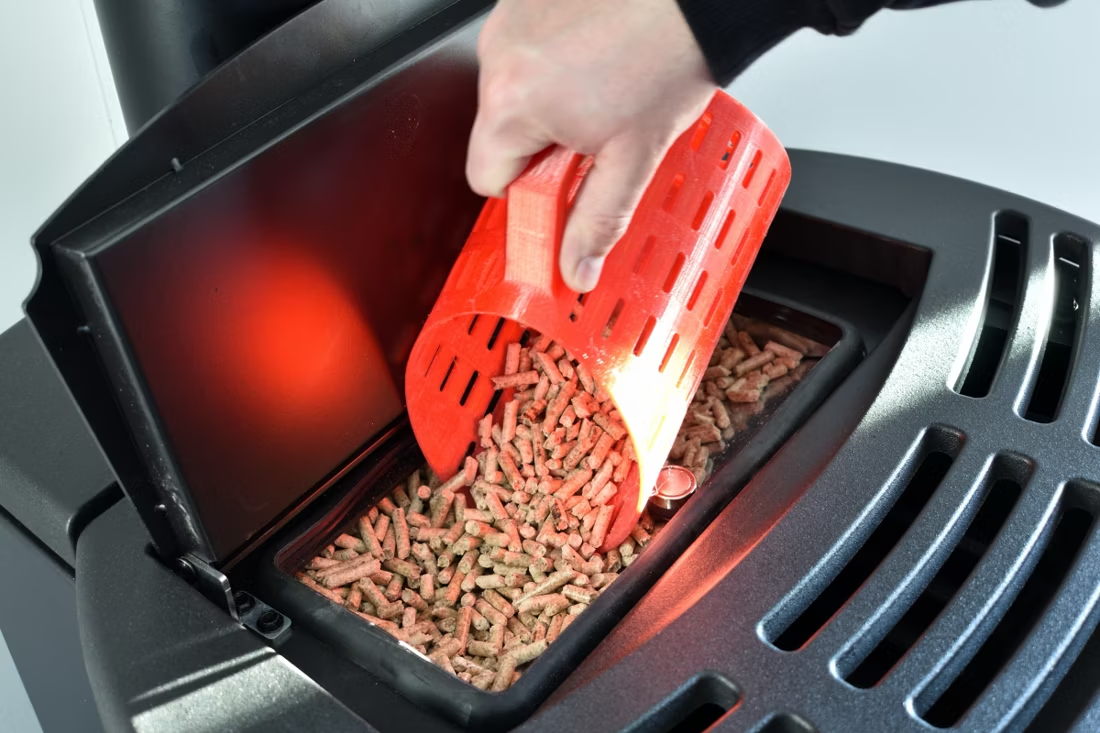
It genuinely can. I burned a pellet stove as my only heat source for years after a furnace died, and it kept the entire house warm. Pellets feed automatically from a hopper, so you get wood-heat economics with thermostat-style control. Two honest caveats: it needs weekly cleaning during the season, and most models need electricity to run—ask about battery backup if outages are a concern.
Can I install a fireplace myself?
If you're putting a fire in your house on purpose, it's best to work with an expert. Unless you're genuinely experienced in framing, gas line, vent pipe, and the national code on clearances to combustibles, have a professional do it—and ideally the same company that sells you the fireplace, so warranty, service, and liability all live under one roof.
What is an in-home preview and do I need one?
It's a visit where a hearth professional measures your space, confirms the model you picked actually works in your home, and walks the specs—framing, gas line, venting, finish work—before anything is ordered. Some details you just can't know until you see the house. Never make a down payment without one; it's the single most-skipped step that burns buyers.
Nearby Dealers
Hearth shops serving Fort Mill and the surrounding area.
Pellet Brands Stocked Around Fort Mill
Manufacturers will point you to the nearest stocking dealer.
Find your pellet stove in Fort Mill.
Tell us about your home and where you're trying to add heat, and we'll match you with a trusted local dealer and send over a free Project Guide & Parts List—including the right vent kit—for your Fort Mill pellet project.
Find Your Fireplace →