
Every fuel type, every town in York County.
Wood, gas, pellet, and electric fireplace resources for the whole county—from the older farmhouses around Clover and McConnells to the fast-growing subdivisions in Fort Mill and Tega Cay. Pick a fuel and get matched with a local dealer who actually installs it here.
Every Project Starts From One of These Five Situations
Mild Piedmont winters, 2,872 heating degree days, and a county still growing from Rock Hill to Lake Wylie.
York County sits in South Carolina's Piedmont, just south of Charlotte, North Carolina, and it's one of the fastest-growing counties in the state—population has climbed past 318,000 as Rock Hill, Fort Mill, and Tega Cay fill in with new subdivisions every year. Climate zone 3A and a winter low average of 33°F put the heating season here in a very different category than the northern-tier climates that drive most fireplace marketing: at 2,872 heating degree days, York County's heating load is roughly a third of what a home in Fargo, North Dakota carries, and the burn season generally runs from November through February rather than six or seven months. Oak, hickory, and pine—plentiful on the county's rural fringe toward Clover, McConnells, and Hickory Grove—remain the wood species most homeowners burn, whether as a primary fireplace in an older farmhouse or supplemental heat in a newer build.
There's no nonattainment designation or winter inversion pattern here—unlike parts of the mountain West, York County doesn't see curtailment days or seasonal burn bans tied to air quality, so the fuel decision comes down to house type, budget, and how much of the heating load a hearth needs to carry. Permitting runs through whichever jurisdiction you're in: Rock Hill, Fort Mill, York, Clover, and Tega Cay each issue their own building permits inside city limits, while York County's building department covers unincorporated areas like Lake Wylie and Sharon. Pellet stoves have a genuine regional presence too—Hamer Pellet Fuel is milled a few counties over in Hamer, SC, and Lignetics and Greenway Renewable Energy bags are both carried by regional retailers. This hub rolls up hearth retailers, service techs, and fuel suppliers across the whole county—pick your fuel below for local dealers, cost ranges, and unit recommendations specific to your town.
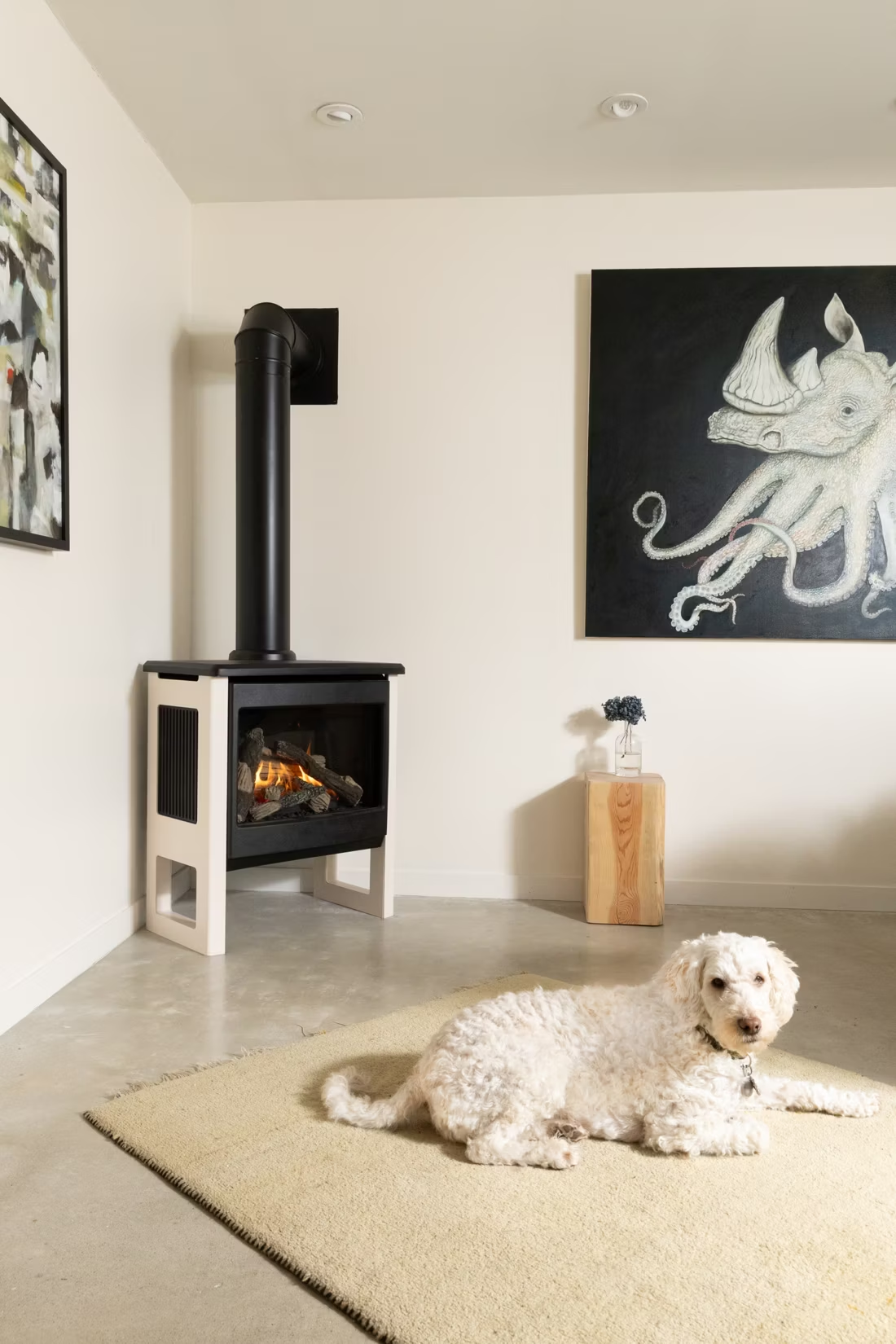
Four fuels. One honest answer for York County.
Three steps. No salesperson until you're ready.
Tell us about your project
Your zip code, your situation, and the fuel you're leaning toward—or let the answers point you to one.
See what's actually available
The brands dealers within 100 miles genuinely carry—real options, never a catalog mirage.
Get your dealer & Project Guide
A trusted local dealer, plus the free Project Guide & Parts List that names every component of the job.
Frequently Asked Questions
Which fireplace fuel makes the most sense in York County?
All four fuels work in York County, but which one fits best depends heavily on where you live. Wood remains the go-to for rural properties toward Clover, McConnells, and Hickory Grove, where oak and hickory are cheap or free to source and a decent secondary-burn stove can carry a whole evening at typical 33°F lows. Gas is the practical choice inside Rock Hill, Fort Mill, and Tega Cay where lines already reach most subdivisions—a direct-vent gas insert lights with a remote and needs no wood storage, which matters in newer HOA neighborhoods. Pellet stoves have a real niche here too, helped by Hamer Pellet Fuel being milled down the road in Hamer, SC, alongside Lignetics and Greenway Renewable Energy bags at regional retailers. Electric fireplaces are common as a secondary or ambiance unit—with only 2,872 heating degree days, a lot of York County homeowners don't need a primary heat source from their hearth at all, just supplemental warmth and a focal point.
Do I need a permit to install a wood stove, gas fireplace, or insert in York County?
Yes, in most cases, though which office you deal with depends on your address. Inside Rock Hill, Fort Mill, York, Clover, or Tega Cay city limits, the permit runs through that city's own building department; if you're in an unincorporated part of the county—Lake Wylie, Sharon, Newport—York County's building department handles it instead. New wood-burning inserts and stoves generally need an EPA-certified unit and an inspection of the chimney or venting, while gas fireplace installs need a licensed gas fitter to run and pressure-test the line before final inspection. Electric units almost never need a permit unless you're hardwiring a built-in and adding a dedicated circuit. Most hearth retailers we match homeowners with pull these permits as part of the installation, so it's rarely something you handle solo.
Are there any burn restrictions or air quality rules I should know about in York County?
No. York County has no nonattainment designation and no winter inversion pattern like you'd find in mountain basins out West, so there are no curtailment days or seasonal burn bans tied to air quality here. That said, some municipalities—particularly denser subdivisions in Fort Mill and Tega Cay—have their own nuisance ordinances around outdoor burning and smoke drifting onto neighboring lots, so it's worth a quick call to your city if you're planning an outdoor wood-burning feature. Indoor wood, gas, pellet, and electric installations aren't affected by any air-quality restriction in York County.
Is wood heat still practical with such mild winters?
It's still a genuinely popular choice, just not usually as a home's sole heat source. With winter lows averaging 33°F and a heating season running mostly November through February, a wood stove or fireplace insert in York County tends to work as a supplemental or primary-for-most-nights heater rather than something that has to survive a six-month cold stretch. Homeowners on larger rural lots toward McConnells or Hickory Grove often burn oak and hickory they've split themselves, keeping fuel cost close to zero, while in-town burners in Rock Hill or York typically buy seasoned cordwood locally. A stove sized for this county's actual heating load—rather than an oversized unit meant for a much colder climate—tends to burn cleaner and more efficiently.
What does a fireplace installation typically cost in York County?
Costs here track fairly closely with regional Southeast averages, since there's no extra cost driver like extreme cold-climate venting or high-elevation permitting. Wood stove or insert installs typically run $3,500–$7,500 depending on whether existing masonry can be reused. Gas fireplaces, inserts, and stoves run roughly $4,000–$9,000, with cost climbing if a new gas line has to be run from the street, which is common in newer Fort Mill and Tega Cay subdivisions built without a hearth pre-plumbed. Pellet stove or insert installs generally land around $3,500–$6,500. Electric fireplaces are the least expensive option—often $200–$2,500 for the unit, plus modest labor for anything beyond a plug-and-play placement. The county + fuel pages above break these numbers down further with local retailer pricing.
Can I find a retailer that carries more than one fuel type?
Most hearth retailers in York County carry at least two fuel types, and a fair number carry all four, since the county's growth has brought in both older rural homes running wood as primary heat and new subdivisions in Fort Mill and Tega Cay wanting a low-maintenance gas or electric unit. A multi-fuel dealer is useful if you're undecided—you can compare a wood insert against a direct-vent gas unit side by side and talk through what actually fits your house, your budget, and whether your neighborhood already has gas service run to it. We match you with the retailer whose fuel lineup and service area fit your project, rather than whichever showroom happens to be closest.
How much should I budget for a fireplace?
For an average home—covering the fireplace, the vent pipe, and basic installation—a budget between $3,900 and $5,500 gives you a lot of options across wood, gas, and pellet. By the time you add finish work, gas line, and electrical, the average complete installation lands between $5,000 and $12,000 all-in. In a remodel or new build, a good rule is to put about 2.5% of the total project cost toward the fireplace.
Can a fireplace actually lower my heating bill?
Yes—by creating a comfort zone. A furnace heats every square foot of the house just to warm the one room you're in; a gas fireplace on low burns roughly a sixth of the gas a typical furnace does. Set the furnace around 55–60 degrees as a baseline, then heat the rooms your family actually uses. Families who heat this way commonly save $20–$60 a month.
Can I install a fireplace myself?
If you're putting a fire in your house on purpose, it's best to work with an expert. Unless you're genuinely experienced in framing, gas line, vent pipe, and the national code on clearances to combustibles, have a professional do it—and ideally the same company that sells you the fireplace, so warranty, service, and liability all live under one roof.
Does a fireplace add value to my home?
On average, a fireplace adds back to the home about the same amount you spent installing it. Add the monthly savings from heating the rooms you actually use instead of the whole house—often hundreds of dollars a year—and the value case is strong before you even count what a fire does for how your family uses the room.
Stove and Fireplace Dealers in York County
Listings include WhyFire partner dealers, dealers we have verified as authorized for the brands we recommend, and established local businesses that carry hearth products. Every listing shows which one it is. The ones marked Preferred run on WhyFire's software, so they can show you real pricing and book your appointment right here. No manufacturer pays for placement. How we verify dealers →
Home Flame
York County Natural Gas
Viridien Patio + Fireplace
High Country Fireplaces
Charlotte Grill Co.
Ron Steel Plumbing
Edisto Gas- Chester
EarthCore Industries
Owens Chimney Systems, Inc
Carolinas Stone Marble And Granite
Fireplace Systems
Get matched with a local York County dealer.
Pick your fuel below and we'll put together a free Project Guide & Parts List—the right unit, the vent kit it needs, and the local dealer we recommend for your project.
Find Your Fireplace →