
Find the right electric fireplace for your York County home.
Mild Piedmont winters and fast-growing neighborhoods from Rock Hill to Fort Mill make electric fireplaces an easy, no-mess upgrade. Get matched with a trusted local dealer who can size and install it right.
Every Project Starts From One of These Five Situations
Ambiance and supplemental warmth for a mild climate.
York County sits in climate zone 3A, with a winter low averaging 33 degrees and only about 2,872 heating degree days a year—a fraction of what a place like Bozeman or Duluth logs in a single season. That's a climate where a furnace or heat pump handles the bulk of the work, and a wood or gas appliance capable of carrying whole-home heat load is often more than most homes actually need. Electric fireplaces fit naturally here: no chimney, no gas line, no combustion byproducts, and the flexibility to add real ambiance to a living room or primary suite in Rock Hill, Fort Mill, Tega Cay, or York without touching your home's structure.
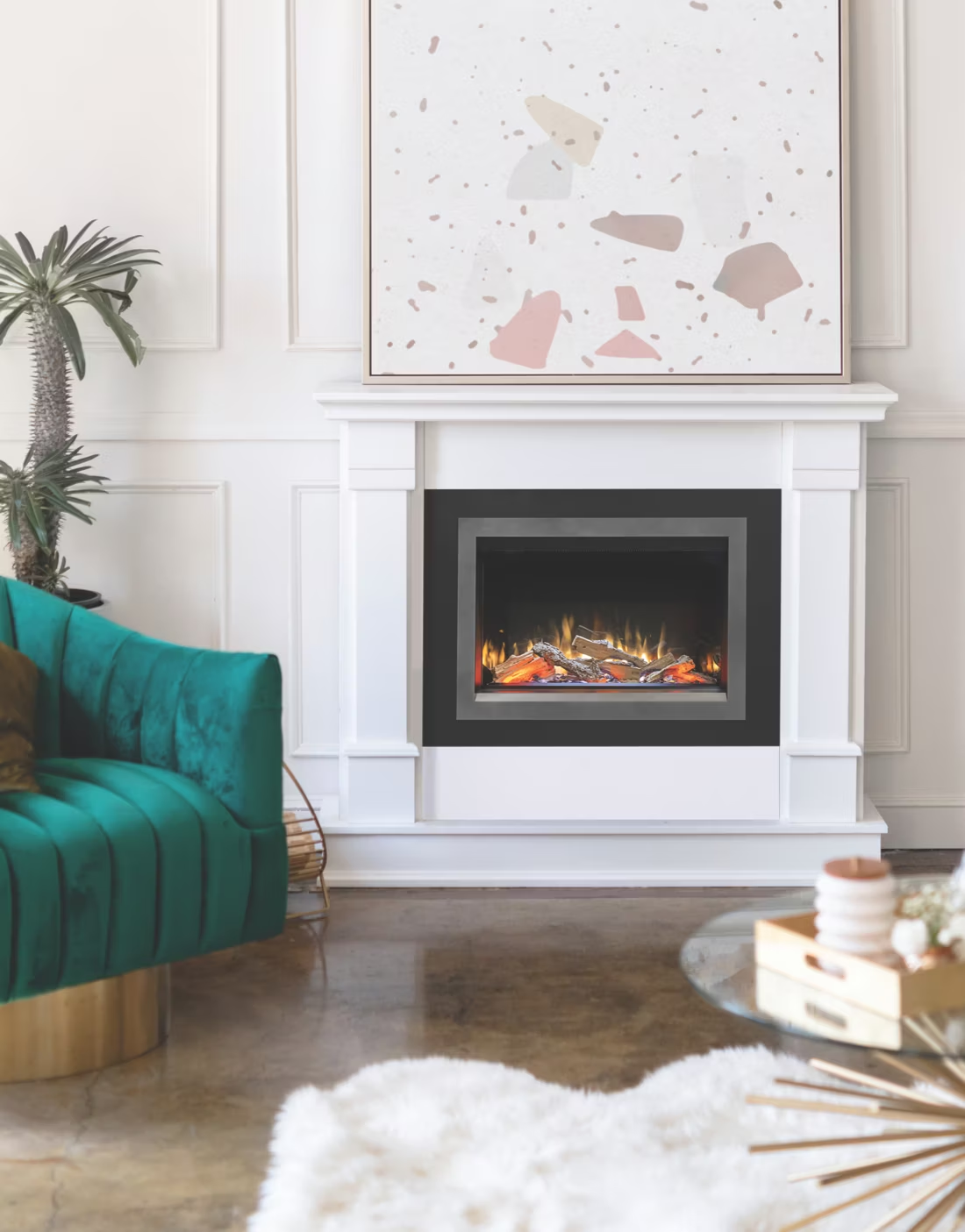
With York County's population topping 318,000 and still climbing fast, a lot of these installs are happening in new-construction townhomes and subdivisions where builders leave a wall-mount or built-in electric unit as a finishing touch, or homeowners add one later as a low-cost renovation. Because these units plug into a standard outlet or a dedicated 240V circuit for larger models, installation is quick and inexpensive compared to a vented wood or gas project—but sizing the circuit and choosing the right mounting method still matters, which is where a local dealer earns their keep.
Three steps. No salesperson until you're ready.
Tell us about your project
Your zip code, your situation, and the fuel you're leaning toward—or let the answers point you to one.
See what's actually available
The brands dealers within 100 miles genuinely carry—real options, never a catalog mirage.
Get your dealer & Project Guide
A trusted local dealer, plus the free Project Guide & Parts List that names every component of the job.
Frequently Asked Questions
How much does an electric fireplace installation cost in York County?
Most electric fireplace installations in York County run between $400 and $1,200. A basic plug-in insert or wall-mount unit sits at the low end—it just needs a standard outlet. Larger built-in units, especially ones that require a dedicated 240V circuit or custom framing into an existing masonry fireplace opening, land toward the higher end once an electrician is involved. Because there's no venting or gas line to run, electric installs are consistently the fastest and least expensive fireplace project in the county.
Do I need a permit to install an electric fireplace in York County?
In most cases, no separate building permit is required for a plug-in or wall-mounted electric fireplace, since there's no venting, gas line, or structural chimney work involved. If your installer needs to add a new dedicated circuit—common for larger built-in units—an electrical permit through your local municipality (Rock Hill, Fort Mill, York, or York County's unincorporated areas) may be required for that portion of the work. A licensed installer will know which jurisdiction applies and handle that paperwork if needed.
Can an electric fireplace actually heat a room in York County?
Yes, for supplemental heat. Most electric fireplaces are rated around 4,600–5,000 BTU and can comfortably take the edge off a single room—a bedroom, den, or home office—especially useful during York County's cold snaps when overnight lows dip into the 20s. They're not designed to replace a central heating system, but given the county's mild 2,872 heating-degree-day climate, a lot of homeowners find an electric unit is genuinely sufficient supplemental warmth for the handful of truly cold weeks each winter, without ever needing a wood or gas appliance sized for whole-home heat load.
What's the difference between an electric insert and a wall-mount electric fireplace?
An electric insert is built to slide into an existing fireplace opening—often replacing an old wood-burning firebox in an older Rock Hill or York home—using the existing mantel and surround. A wall-mount unit hangs directly on a wall like a flat-screen TV, with no fireplace opening required, which is common in newer Fort Mill and Tega Cay construction where the wall was never built with a firebox. Freestanding electric stoves are a third option, useful for renters or homeowners who want a mobile, no-installation unit. A local dealer can tell you which format fits your framing and outlet situation.
Do electric fireplaces work during a power outage?
No—electric fireplaces require power to run the heater and flame effect, so they go dark during an outage just like any other plugged-in appliance. For York County homeowners who want a backup heat source during ice storms or summer thunderstorm outages, a battery-backed gas unit or a wood-burning stove is a better complement. Many homes in the county actually pair the two: an electric fireplace for everyday ambiance and easy supplemental heat, and a gas or wood appliance elsewhere in the house for outage resilience.
What electric fireplace brands are available through local York County dealers?
Local hearth dealers in the Rock Hill and Fort Mill area typically carry a mix of mainstream electric fireplace lines, ranging from simple insert-style units to higher-end built-ins with realistic flame technology and heat-manages-independently-of-flame features. Because product lineups and in-stock models shift throughout the year, the most reliable way to see what's genuinely available and installable in your home is through an in-home or virtual consultation with a trusted local dealer rather than relying on a big-box showroom floor.
Is an electric fireplace a good fit for a York County rental or townhome?
Often, yes. With no venting, gas line, or masonry work required, electric fireplaces are one of the few hearth options that work in rented apartments, HOA-restricted townhomes, or condos common in the fast-growing Fort Mill and Tega Cay corridor. A freestanding electric stove can be unplugged and taken along at move-out, while a wall-mount unit is a straightforward addition for a homeowner looking to add value without altering the building envelope.
Electric vs. gas—which is right for my York County home?
Gas offers real heat output, the option to run during a power outage (with a battery-backed ignition system), and a closer approximation of a traditional fire. Electric offers a lower upfront cost, no venting or gas line requirements, and simpler installation—often in a single afternoon. For York County's mild winters, where a fireplace is more often about ambiance and light supplemental warmth than carrying the heating load, electric is frequently the practical choice, especially in newer construction. Homeowners who want a stronger backup heat option, or who already have gas service to the home, often lean gas instead.
Electric vs. wood—which makes more sense in York County?
Wood offers real radiant heat, works without electricity, and taps into the region's abundant oak, pine, and hickory supply—useful for the rare homeowner in rural York County who wants a self-sufficient backup heat source. But with no meaningful air quality restrictions in the county and a mild 2,872-HDD climate, most homeowners don't need wood's heat capacity for day-to-day living. Electric wins on convenience, cost, and simplicity for anyone who wants fireplace ambiance without chimney maintenance, firewood storage, or ash cleanup—which describes the majority of York County's electric fireplace buyers.
Can I put a TV above my fireplace?
Yes—with an asterisk. Fireplaces are hot and TVs don't like heat. Either put a mantel between them to deflect rising warmth, or choose a fireplace with heat-management technology that creates a cool zone on the wall above—the wall stays around 125 degrees, barely warm, while the room still gets full heat. If you like clean lines and don't want a mantel, heat management is the answer.
Does an electric fireplace need a vent or chimney?
No—that's its superpower. An electric fireplace needs a wall and an outlet, period. No vent pipe, no gas line, no clearances to design around, which is why it works in bedrooms, offices, apartments, and walls where venting a gas or wood unit would be impractical or impossible. Installation is typically the simplest and least expensive of any fireplace type.
Does a fireplace add value to my home?
On average, a fireplace adds back to the home about the same amount you spent installing it. Add the monthly savings from heating the rooms you actually use instead of the whole house—often hundreds of dollars a year—and the value case is strong before you even count what a fire does for how your family uses the room.
How much should I budget for a fireplace?
For an average home—covering the fireplace, the vent pipe, and basic installation—a budget between $3,900 and $5,500 gives you a lot of options across wood, gas, and pellet. By the time you add finish work, gas line, and electrical, the average complete installation lands between $5,000 and $12,000 all-in. In a remodel or new build, a good rule is to put about 2.5% of the total project cost toward the fireplace.
Stove and Fireplace Dealers in York County
Listings include WhyFire partner dealers, dealers we have verified as authorized for the brands we recommend, and established local businesses that carry hearth products. Every listing shows which one it is. The ones marked Preferred run on WhyFire's software, so they can show you real pricing and book your appointment right here. No manufacturer pays for placement. How we verify dealers →
Home Flame
York County Natural Gas
Viridien Patio + Fireplace
High Country Fireplaces
Charlotte Grill Co.
Ron Steel Plumbing
Edisto Gas- Chester
EarthCore Industries
Owens Chimney Systems, Inc
Carolinas Stone Marble And Granite
Fireplace Systems
Find your electric fireplace in York County.
Tell us a bit about your home and we'll match you with a trusted local dealer and send over a free Project Guide & Parts List—the exact parts your electric fireplace project needs and who locally can install it.
Find Your Fireplace →