
Keep Your Family Warm and Safe—No Matter What
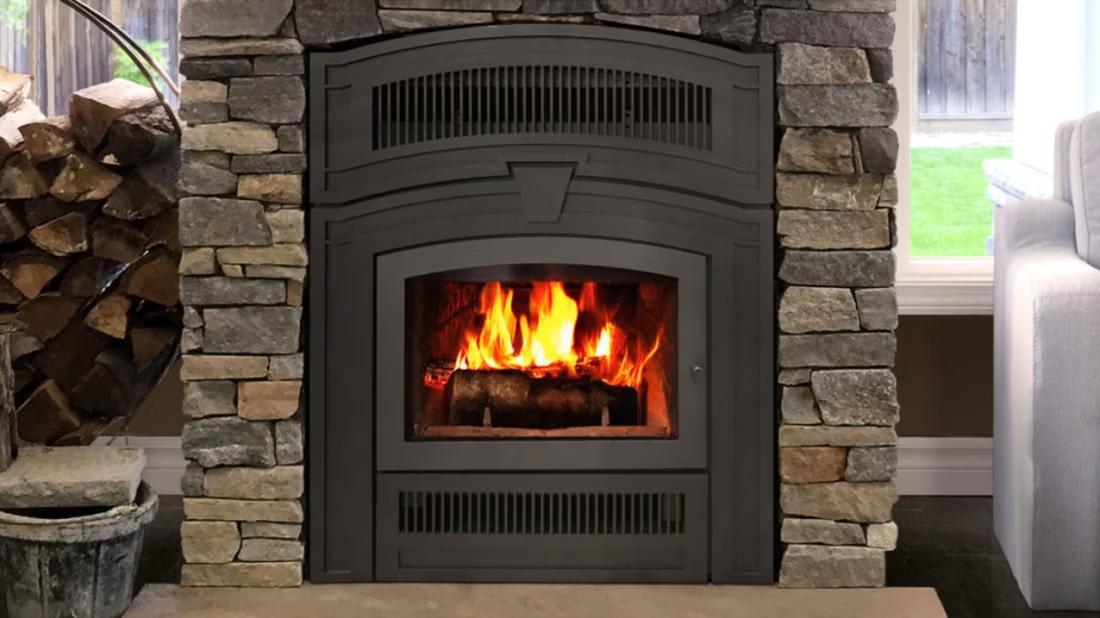
Natural gas reaches nearly every subdivision in this Columbus suburb, so wood stoves stay uncommon here—but for the homeowner who wants one, we'll match you with a local dealer who does it right.
Every Project Starts From One of These Five Situations
A suburb built for gas lines, not woodlots.
Hilliard sits at 932 feet in Franklin County with winter lows averaging around 21°F and a winter heating load a bit lighter than places like Columbus's coldest neighbors—cold, but nowhere near the sustained sub-zero stretches that push homeowners in true cold-climate markets like Madison, WI or Burlington, VT to keep a wood stove running as backup heat. Hilliard's winters are manageable with a furnace and a gas fireplace, which is exactly what most of the city's post-1980s subdivisions were built around.
Most Hilliard homes sit on smaller lots inside planned developments, many with HOA covenants that restrict exterior chimney additions, and natural gas service reaches nearly every street in the city. There's no national forest or public cutting land nearby—firewood here comes from local tree services and firewood dealers selling seasoned oak, hickory, maple, and cherry, not Forest Service permits. Wood heat still shows up occasionally: older farmhouse-era properties near Hoover Reservoir, larger rural-edge lots, and homeowners converting an existing masonry fireplace who want backup heat during an ice-storm outage or the ambiance a gas insert can't quite replicate. It's a niche choice in Hilliard, not a mainstream one, and that's worth knowing going in.
Three steps. No salesperson until you're ready.
Tell us about your project
Your zip code, your situation, and the fuel you're leaning toward—or let the answers point you to one.
See what's actually available
The brands dealers within 100 miles genuinely carry—real options, never a catalog mirage.
Get your dealer & Project Guide
A trusted local dealer, plus the free Project Guide & Parts List that names every component of the job.
Frequently Asked Questions
Is a wood stove even practical in Hilliard?
For most Hilliard homes, no—natural gas is available nearly everywhere in the city, winters average a manageable 21°F low, and many subdivisions carry HOA restrictions on new chimneys. That said, it's not impossible. A small number of homeowners on larger lots, in older farmhouse-style homes, or outside HOA jurisdiction install a wood stove or insert for emergency backup heat or the atmosphere of a real fire. If that's you, a local dealer can tell you quickly whether your lot, roofline, and homeowners association allow it before you spend money on planning.
How much does a wood stove installation cost in Hilliard?
Because wood installs are uncommon here, pricing isn't as standardized as it is for gas conversions, but a typical freestanding wood stove or insert project in a Franklin County home runs roughly $3,500 to $8,000, depending on whether you're inserting into an existing masonry fireplace or running new Class A chimney pipe through a roof that was never built for one. Homes with an existing 1990s-era masonry fireplace—common in Hilliard's older subdivisions—are usually on the lower end since the chimney chase already exists. New venting from scratch pushes toward the higher end.
Where do I get firewood in Hilliard?
There's no national forest or public cutting land near Franklin County, so self-cut permits aren't part of the picture here the way they are out West. Firewood comes from local tree services, landscape suppliers, and seasonal firewood dealers around Columbus, typically selling seasoned oak, hickory, maple, or cherry by the cord or half-cord. Oak and hickory are the most common—Franklin County's tree canopy and storm-damage cleanup keep supply fairly steady, and prices generally run in line with regional Ohio firewood rates.
Do I need a permit to install a wood stove in Hilliard?
Yes. New wood-burning installations require a building permit through the City of Hilliard Building Department (or Franklin County if you're just outside city limits), and the stove itself needs to meet current EPA 2020 NSPS emissions standards. If you're in a homeowners association—and a large share of Hilliard's newer subdivisions are—check your covenants before you commit. Some associations restrict or prohibit new exterior chimneys, which matters more here than the building permit itself in a lot of cases.
Can I add a wood stove if my home already has a fireplace?
Often, yes, and it's usually the more affordable path. Many Hilliard homes built since the 1980s already have a factory-built (zero-clearance) masonry-look fireplace. Converting that into a wood-burning insert reuses the existing chimney chase, which keeps costs down compared to running new venting from scratch. It's worth having a local dealer confirm your existing chimney and clearances can handle an insert before you buy one—not every factory fireplace is rated for a solid-fuel conversion.
Will a wood stove work during a power outage?
Yes—this is actually the main reason Hilliard homeowners who do install one choose wood. AEP Ohio (listed locally as Ohio Power Co) and the City of Columbus electric division both serve parts of Hilliard, and ice storms occasionally knock out power for a day or more in central Ohio. A wood stove keeps producing heat with zero electricity, unlike most furnaces and many gas fireplaces that rely on an electric blower or ignition. If backup heat during outages is your main goal, that's worth discussing directly with a local dealer.
Wood stove vs. pellet stove—does either make sense in Hilliard?
Honestly, neither is common here, and for similar reasons—Hilliard is a gas-first market with limited demand for solid-fuel heating appliances. Between the two, wood has one real edge: it works without electricity, which matters if backup heat during an outage is the goal. Pellet stoves need power to run the auger and blower, so they go dark exactly when a wood stove would keep working. If you're set on a solid-fuel option, wood is the more practical of the two for Hilliard's occasional ice-storm outages.
Wood vs. gas—which is right for my Hilliard home?
For the vast majority of Hilliard homeowners, gas wins—it's instant-on, requires no fuel storage or ash cleanup, and the city's gas infrastructure makes installation straightforward almost everywhere. Wood makes sense for a smaller group: homes with an existing masonry fireplace that want a genuine backup heat source, larger lots outside HOA restrictions, or homeowners who specifically want the experience of a real wood fire rather than a switch-flip flame. If you're not sure which fits your situation, a local dealer can walk through both options during an in-home visit.
Are there air quality restrictions on wood burning in Hilliard?
No—Franklin County doesn't carry the winter inversion or non-attainment designations that trigger burn bans in some Western cities, so there are no seasonal curtailment periods to plan around here. The main local hurdles are HOA covenants and the standard city building permit, not air quality rules. That said, any new stove still needs to meet current EPA emissions standards regardless of local air quality status.
Why is a fireplace insert so efficient?
An insert does two things: it seals the chimney completely, so you stop losing air you already paid to heat, and it radiates warmth into the room through the firebox and glass. Most add a heat-exchange fan that pulls cool room air underneath, wraps it around the hot firebox, and pushes it back out warm. Your home is more efficient before you've even lit the first fire.
What's the difference between an insert and a zero-clearance fireplace?
An insert is a fireplace that slides into a pre-existing wood-burning fireplace—if you don't have one, there's nothing to insert it into. A zero-clearance fireplace is built into a framed wall, which makes it the answer for remodels and new construction. Simple test: existing masonry fireplace means insert; blank or framed wall means zero-clearance.
Does a fireplace add value to my home?
On average, a fireplace adds back to the home about the same amount you spent installing it. Add the monthly savings from heating the rooms you actually use instead of the whole house—often hundreds of dollars a year—and the value case is strong before you even count what a fire does for how your family uses the room.
What is an in-home preview and do I need one?
It's a visit where a hearth professional measures your space, confirms the model you picked actually works in your home, and walks the specs—framing, gas line, venting, finish work—before anything is ordered. Some details you just can't know until you see the house. Never make a down payment without one; it's the single most-skipped step that burns buyers.
Nearby Dealers
Hearth shops serving Hilliard and the surrounding area.
Find your wood fireplace in Hilliard, Ohio.
Tell us about your home and your HOA situation, and we'll match you with a local Hilliard-area dealer and send over a free Project Guide & Parts List—the exact parts, vent kit included, for your specific project.
Find Your Fireplace →