
Find the right fireplace for your home in Franklin County.
Fireplace resources for Columbus and every surrounding community in Franklin County—from downtown high-rises to New Albany horse country. Find the right unit for your home and connect with a trusted local hearth retailer.
Every Project Starts From One of These Five Situations
Gas and electric fireplaces are the practical fit for a metro this size.
Franklin County is Ohio's largest county by population—nearly 2 million people packed into Columbus and its ring of suburbs: Dublin, Westerville, Hilliard, Grove City, Gahanna, Reynoldsburg, Upper Arlington, and more. Winters here sit in climate zone 5A, with an average low around 21°F and a winter heating load roughly on par with a colder-than-Louisville, milder-than-Minneapolis-or-Fargo season—enough to make heat a real annual line item. Natural gas service from Columbia Gas of Ohio reaches nearly every neighborhood in the county, which is a big part of why gas fireplaces and inserts dominate here. Electric units fill in everywhere gas doesn't reach—condos, downtown high-rises, rental townhomes, and finished basements across the metro.
Wood-burning stoves and pellet appliances are uncommon in Franklin County. This is a dense, heavily developed metro with small urban and suburban lot sizes, HOA-governed subdivisions, and a natural gas grid that already handles most of the heating load—the conditions that support widespread wood or pellet burning in rural Ohio (cheap local oak, hickory, maple, and cherry cordwood; room for storage and clearances) mostly don't exist inside I-270. A small number of homeowners on larger exurban parcels in southern and western townships still run wood stoves, and pellet appliances show up occasionally, but neither is the default choice here the way gas and electric are. Pick your fuel below—this hub covers local dealers, installation costs, and the resources that match your project, whether you're in a Short North condo or a farmhouse near Harrisburg.
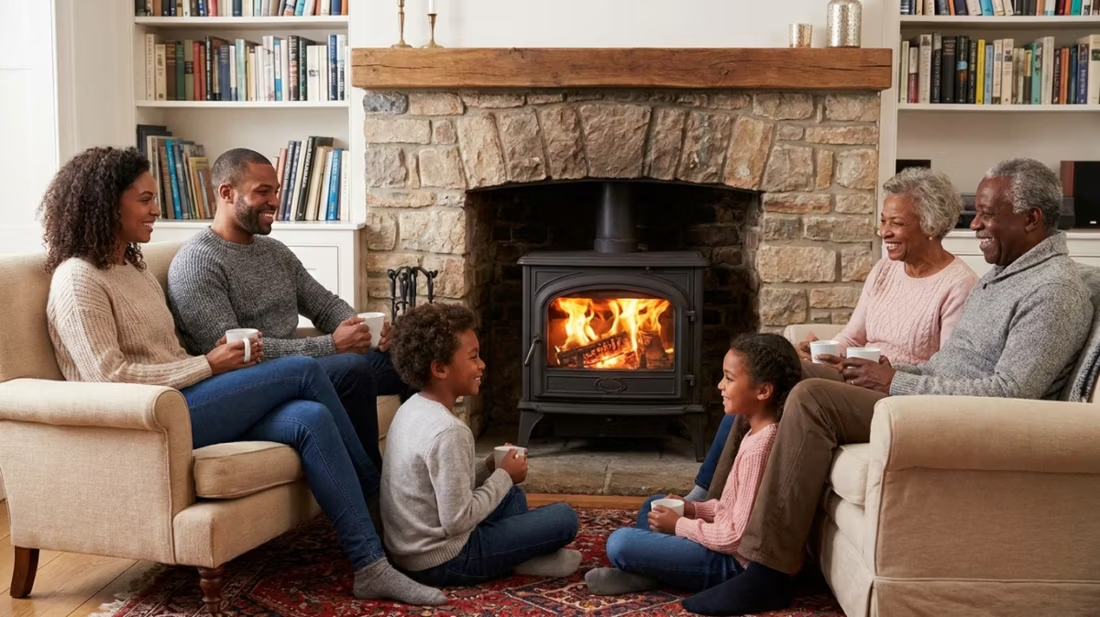
Four fuels. One honest answer for Franklin County.
Three steps. No salesperson until you're ready.
Tell us about your project
Your zip code, your situation, and the fuel you're leaning toward—or let the answers point you to one.
See what's actually available
The brands dealers within 100 miles genuinely carry—real options, never a catalog mirage.
Get your dealer & Project Guide
A trusted local dealer, plus the free Project Guide & Parts List that names every component of the job.
Frequently Asked Questions
Which fuel works best in Franklin County?
For most Franklin County homes, it's gas or electric. Natural gas service from Columbia Gas of Ohio reaches nearly every neighborhood in the county, and a gas fireplace or insert gives you instant heat with no chimney maintenance, which is why it's the dominant choice from Dublin to Grove City. Electric fireplaces are the answer wherever gas isn't practical or available—condos, downtown apartments, rental townhomes, and basement remodels where running a gas line isn't worth the cost. Wood stoves are genuinely uncommon here; Franklin County's lot sizes, HOA rules, and existing gas infrastructure don't favor them, though a handful of homeowners on larger parcels in the southern and western townships still burn local oak, hickory, and cherry. Pellet stoves are rarer still—residential pellet appliance demand in the county is small enough that most local retailers don't stock them regularly.
Do I need a permit to install a gas fireplace in Franklin County?
Yes, in almost every case. New gas fireplaces, gas inserts, and gas log sets require a building permit plus a separate gas line permit for the plumbing work, which has to be done by a licensed gas fitter. Within the city of Columbus, permits go through the Department of Building and Zoning Services; in the suburbs and townships—Dublin, Westerville, Hilliard, Grove City, and the rest—permits are issued through each municipality's own building department or, in unincorporated areas, the Franklin County Building Department. Electric fireplace installs typically skip the permit process unless it's a built-in unit that involves new wiring or a dedicated circuit, in which case an electrical permit is required. Most local hearth retailers handle this paperwork as part of the installation, so it's rarely something homeowners have to navigate on their own.
Are wood-burning fireplaces still allowed in Franklin County, or are they being phased out?
They're allowed—Franklin County has no active air quality restrictions or burn bans on wood stoves—but they're uncommon rather than banned. The county doesn't have the wildfire-smoke or inversion issues you'd see in a place like Klamath Falls; the reason wood heat is rare here is practical, not regulatory. Small urban and suburban lots, HOA covenants that limit exterior chimneys, and near-universal natural gas access inside I-270 mean most homeowners never consider it. If you're on a larger property in a southern or western township and want a wood stove for supplemental heat using local oak, hickory, maple, or cherry, a handful of hearth retailers in the county can still install one—it's just a smaller, more specialized part of their business than gas or electric.
Can one local dealer handle both gas and electric fireplaces in Franklin County?
Yes—most Franklin County hearth retailers that serve the Columbus metro carry both gas and electric units, since those are the two fuels that make up the vast majority of local demand. Some dealers lean more toward high-end gas fireplace and insert installations for single-family homes in suburbs like Dublin or Upper Arlington, while others focus on electric units suited to condos and apartment renovations downtown. A smaller number of retailers also carry wood stoves for the exurban and rural-township customers who want them, but that's typically a secondary line rather than the main business. If you're comparing gas against electric for a specific room, a multi-fuel dealer can walk you through both options with working displays.
How does installation work for condos and apartments common around downtown Columbus?
Electric fireplaces are usually the right call for condos, downtown high-rises, and rental townhomes across Franklin County, since they don't require venting, a chimney, or a gas line—most plug into a standard outlet, and built-in models need only a dedicated circuit. That makes them workable in buildings where HOA rules or building codes prohibit exterior venting or gas modifications. Gas fireplace installs are still possible in some condos with existing gas service and proper venting clearance, but they generally require HOA approval and coordination with the building's management before a retailer can pull a permit. If you're renting or in a building with strict alteration rules, a local dealer can tell you quickly whether gas is even an option before you spend time planning around it.
What's the typical cost range for gas and electric fireplace installation in Franklin County?
Gas fireplace, insert, or stove installation in Franklin County typically runs $4,500–$11,000, with the wide range driven mostly by whether a new gas line needs to be run from the meter—homes with existing gas service to the install location land toward the lower end. Electric fireplace installation runs $200–$3,000 for the unit itself, plus $400–$1,200 in labor for anything beyond a simple plug-and-play wall-mount, which covers most built-in and insert installs in condos and finished basements. Wood stove installs, where a homeowner in one of the county's less dense townships wants one, run $4,500–$9,000 given the chimney and clearance work involved. For details tied to specific local retailer pricing, see the county + fuel pages above.
What is an in-home preview and do I need one?
It's a visit where a hearth professional measures your space, confirms the model you picked actually works in your home, and walks the specs—framing, gas line, venting, finish work—before anything is ordered. Some details you just can't know until you see the house. Never make a down payment without one; it's the single most-skipped step that burns buyers.
Does a fireplace add value to my home?
On average, a fireplace adds back to the home about the same amount you spent installing it. Add the monthly savings from heating the rooms you actually use instead of the whole house—often hundreds of dollars a year—and the value case is strong before you even count what a fire does for how your family uses the room.
Wood, gas, pellet, or electric—how do I choose?
Match the fuel to your life, not the other way around. Wood: lowest fuel cost and total power-outage independence, but you're hauling and stacking. Gas: press a button, set a thermostat, no maintenance to speak of. Pellet: wood economics with automatic feeding, in exchange for weekly cleaning and a need for electricity. Electric: plugs in anywhere with honest supplemental heat. Nobody regrets the fuel that fits how they actually live.
Can a fireplace actually lower my heating bill?
Yes—by creating a comfort zone. A furnace heats every square foot of the house just to warm the one room you're in; a gas fireplace on low burns roughly a sixth of the gas a typical furnace does. Set the furnace around 55–60 degrees as a baseline, then heat the rooms your family actually uses. Families who heat this way commonly save $20–$60 a month.
Stove and Fireplace Dealers in Franklin County
Listings include WhyFire partner dealers, dealers we have verified as authorized for the brands we recommend, and established local businesses that carry hearth products. Every listing shows which one it is. The ones marked Preferred run on WhyFire's software, so they can show you real pricing and book your appointment right here. No manufacturer pays for placement. How we verify dealers →
Hamilton Parker Co
Reading Rock, Inc.
Reading Rock, Inc
Mid Ohio Hearth Products
Specialty Gas Services Inc.
Scioto Valley
Suburban Fireplace
Classic Chimney Care
Find your fireplace in Franklin County.
Tell us about your home and we'll match you with a trusted local dealer and send a free Project Guide & Parts List—the exact parts, including the vent kit, for your fireplace project in Franklin County.
Find Your Fireplace →