
Keep Your Family Warm and Safe—No Matter What
Columbus and its suburbs run overwhelmingly on natural gas and electric heat, so wood stoves here are a deliberate choice rather than the local default. If you're one of the homeowners who still wants one—for ambiance, backup heat, or an older fireplace upgrade—we'll match you with a dealer who actually installs them.
Every Project Starts From One of These Five Situations
Columbus runs on natural gas, not cordwood.
Franklin County is home to more than 1.9 million people across Columbus and its ring of suburbs—Dublin, Westerville, Grove City, Hilliard, Grandview Heights—almost all of it served by natural gas mains and modern forced-air systems. At climate zone 5A with a winter heating season comparable in length and intensity to a typical Ohio Valley winter, and average winter lows around 21°F, the county's winters are real but meaningfully milder than the deep cold of places like Minneapolis or Madison, WI, where wood heat has historically been a survival necessity rather than a lifestyle choice. That combination—dense infrastructure plus moderate cold—is exactly why wood stoves never became mainstream in this market the way they have in rural Appalachian Ohio or the upper Midwest.
That doesn't mean wood heat has no place here. Older housing stock in neighborhoods like German Village, Clintonville, and Bexley still has original masonry fireplaces that owners occasionally convert to wood-burning inserts for a real fire and better heat output. Out in the county's outer townships—around Plain City, Canal Winchester, and Blacklick—larger lots and a more rural feel make freestanding wood stoves practical for supplemental heat or storm backup. Franklin County has no air quality nonattainment designation and no winter burn curtailments, so there's no regulatory barrier to wood heat here; it's simply a matter of fit. Firewood sourcing reflects the urban setting too—with no national forest or public cutting-permit land nearby, most local wood comes from tree services and landscapers clearing oak, hickory, maple, and cherry rather than self-cut Forest Service permits.
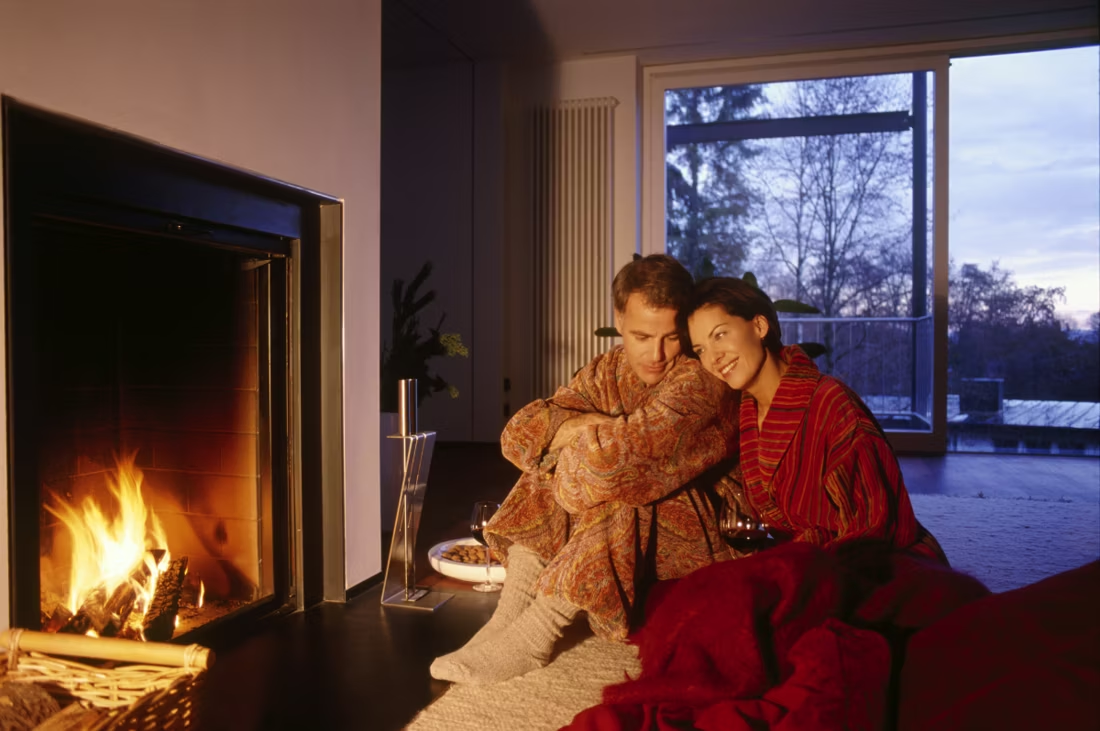
Three steps. No salesperson until you're ready.
Tell us about your project
Your zip code, your situation, and the fuel you're leaning toward—or let the answers point you to one.
See what's actually available
The brands dealers within 100 miles genuinely carry—real options, never a catalog mirage.
Get your dealer & Project Guide
A trusted local dealer, plus the free Project Guide & Parts List that names every component of the job.
Frequently Asked Questions
Are wood stoves common in Franklin County?
No—wood stoves are a distinct minority choice in Franklin County. The county's dense urban core and suburbs are built almost entirely around natural gas and electric heating, and most new construction doesn't include a masonry chimney at all. Wood stoves and inserts do still show up in specific pockets: older homes in Clintonville, German Village, and Bexley with existing fireplaces, and larger properties in outer townships like Plain City or Canal Winchester where owners want backup heat or a more rural, self-sufficient setup. If you're in one of those situations, a wood stove is absolutely still doable—you'll just want a dealer who actually stocks and installs them regularly, since it's not the volume business it is in colder, more rural counties.
What does a wood stove installation cost in Franklin County?
Because Franklin County doesn't have a large, established wood-heat market the way many rural or cold-climate counties do, pricing isn't as standardized locally. Dealers who do install wood stoves and inserts in the Columbus area generally quote in the same range seen across the broader Midwest—roughly $3,500 to $8,500—depending on whether you're inserting into an existing masonry chimney (lower end) or running new Class A pipe through a roof or wall in a home with no existing chimney (higher end). Homes in older neighborhoods with an intact but unlined chimney often need a stainless liner added, which affects the estimate. Get a firm, in-home quote before committing—the range is wide enough that a generic online price isn't useful here.
Where does firewood come from in Franklin County if there's no national forest nearby?
Unlike counties with public forest land and Forest Service cutting permits, Franklin County's firewood supply comes almost entirely from private sources—tree services and landscapers removing oak, hickory, maple, and cherry from residential and commercial properties, plus dedicated firewood sellers who split and season it for delivery. Oak and hickory are the most prized locally for their long, hot burn; cherry and maple are common secondary options. Expect to buy by the cord or half-cord already seasoned, since there's no equivalent to a self-cut Forest Service permit system in this part of Ohio.
Do I need a permit to install a wood stove in Franklin County?
Yes, and where you file depends on which of Franklin County's many jurisdictions you live in. Inside Columbus proper, permits go through the Columbus Department of Building and Zoning Services. Incorporated suburbs—Dublin, Westerville, Grove City, Hilliard, and others—generally run their own building departments and require their own permit and inspection. Unincorporated townships permit through the county building department. Any new wood-burning appliance also needs to meet current EPA emissions standards. Most dealers who install wood stoves in this market are used to navigating whichever jurisdiction you're in and will pull the permit as part of the job.
Should I get a wood stove or a wood insert for my Columbus-area home?
If you already have a working masonry fireplace—common in older Columbus neighborhoods like German Village, Clintonville, and parts of Bexley—a wood insert is usually the better fit. It slides into the existing opening, uses the chimney you already have with a new stainless liner, and turns a drafty, inefficient fireplace into a real heat source. If your home has no existing chimney, which is typical of newer construction throughout the suburbs, a freestanding wood stove with new Class A venting is the more realistic option, though it's a bigger project since you're building the venting path from scratch.
What's the best wood stove for Franklin County's climate?
With average winter lows around 21°F and a winter heating season that's real but far from the harshest around, Franklin County's cold is nowhere near what a stove has to handle in Minneapolis or Duluth. Because most wood stoves here serve as supplemental or backup heat rather than the primary source, a mid-size non-catalytic stove from a brand like Pacific Energy or Lopi is usually plenty—easier to operate for occasional use than a catalytic model built for 20-hour burns at sub-zero temperatures. If you're planning to actually lean on it during outages or for whole-home heat in an outer-township property, talk to your dealer about a catalytic option for longer, steadier burns.
How often should my chimney be inspected in a market like this?
The CSIA recommendation of an annual inspection still applies, and it matters even more in Franklin County because so much of the housing stock is old. Homes in neighborhoods like Clintonville and German Village often have original masonry chimneys that predate modern liner standards, and a stove or insert installed into one without a proper liner inspection is a real fire risk. If you're burning only occasionally for ambiance, you can sometimes stretch to inspection every other year, but any home relying on wood for regular backup heat should stick to the annual schedule.
Can I get firewood delivered, or do I need to cut my own?
Delivery is the norm here. With no national forest land in or near Franklin County, there's no self-cut permit system like you'd find in a wood-heavy Western or Appalachian county. Local firewood suppliers and tree services sell seasoned oak, hickory, maple, and cherry by the cord and deliver throughout Columbus and the surrounding suburbs. Prices vary by species and season, so it's worth asking specifically for oak or hickory if you want the longest, hottest burn—softer species like maple burn faster and need more frequent reloading.
Wood stove or pellet stove—does either make sense in Franklin County?
Both are genuinely niche choices here, for the same underlying reason: natural gas and electric heat dominate the county, so neither wood nor pellet is a mainstream local category the way it is in colder, more rural parts of Ohio. That said, regional pellet producers like Indeck Energy Services, Lignetics, and Somerset Pellet Fuel do supply the broader Ohio market, so pellets are available if you want the convenience of a thermostat-controlled hopper. Wood remains the better pick if you want a heat source that works without electricity during an outage—pellet stoves need power to run the auger and blower. If backup heat during a storm is the goal, wood wins; if convenience and lower ash are the priority and you have reliable power, pellet is worth a look.
What's the difference between an insert and a zero-clearance fireplace?
An insert is a fireplace that slides into a pre-existing wood-burning fireplace—if you don't have one, there's nothing to insert it into. A zero-clearance fireplace is built into a framed wall, which makes it the answer for remodels and new construction. Simple test: existing masonry fireplace means insert; blank or framed wall means zero-clearance.
Why won't my new wood stove get going like my old one?
New wood stoves are 70%+ efficient, so far less heat goes up the flue—which also means less draft to get a fire established. The rule: build a genuinely hot fire for about 45 minutes before you choke it down. Skip that and you get smoke in the room, creosote in the chimney, and a fire that never takes off. Most performance complaints trace straight back to this.
Does a fireplace add value to my home?
On average, a fireplace adds back to the home about the same amount you spent installing it. Add the monthly savings from heating the rooms you actually use instead of the whole house—often hundreds of dollars a year—and the value case is strong before you even count what a fire does for how your family uses the room.
What is an in-home preview and do I need one?
It's a visit where a hearth professional measures your space, confirms the model you picked actually works in your home, and walks the specs—framing, gas line, venting, finish work—before anything is ordered. Some details you just can't know until you see the house. Never make a down payment without one; it's the single most-skipped step that burns buyers.
Stove and Fireplace Dealers in Franklin County
Find your wood stove in Franklin County.
Tell us about your home and whether you're upgrading an existing fireplace or starting from scratch, and we'll send you a free Project Guide & Parts List—the right unit, the vent kit you'll need, and a trusted local dealer who actually installs wood stoves in this market.
Find Your Fireplace →