
Reliable Gas Heat for Hilliard's Cold Snaps.
With a solid, steady winter chill and lows averaging 21°F, Hilliard homes need dependable heat that doesn't depend on chopping wood. Find the right gas fireplace or insert and connect with a trusted local dealer.
Every Project Starts From One of These Five Situations
Convenience wins in Franklin County's suburbs.
Hilliard sits just northwest of Columbus in Franklin County, at about 932 feet elevation in climate zone 5A. Winters bring a solid, steady cold season with average lows around 21°F, enough cold to matter but not the kind of extreme that drives most homeowners toward a wood-burning setup. Hilliard's growth over the last few decades has been almost entirely newer subdivisions, and builders in those neighborhoods overwhelmingly spec zero-clearance gas fireplaces rather than masonry wood fireplaces—which is part of why wood-burning stoves are genuinely uncommon here.
Natural gas service through Columbia Gas of Ohio reaches nearly every Hilliard address, so adding or upgrading a gas fireplace is usually a matter of tapping an existing line rather than running new infrastructure. Electric service comes from Ohio Power Co (AEP Ohio) or the City of Columbus, at residential rates in the 11 to 14 cent per kWh range—a detail worth knowing if you're weighing a gas unit's pilot-light convenience against an electric fireplace's simpler installation. For most Hilliard homes, a direct-vent gas fireplace or insert delivers instant zone heat that pairs well with central HVAC on the coldest nights, without the ash, hauling, or chimney maintenance that comes with wood.
Three steps. No salesperson until you're ready.
Tell us about your project
Your zip code, your situation, and the fuel you're leaning toward—or let the answers point you to one.
See what's actually available
The brands dealers within 100 miles genuinely carry—real options, never a catalog mirage.
Get your dealer & Project Guide
A trusted local dealer, plus the free Project Guide & Parts List that names every component of the job.
Frequently Asked Questions
How much does a gas fireplace installation cost in Hilliard?
Most gas fireplace installations in Hilliard run somewhere between $4,000 and $10,000, depending on the unit, venting path, and whether a gas line already runs to the room. A direct-vent insert going into an existing masonry fireplace—common in the older ranch homes near Old Hilliard and Station 32—tends to land on the lower end since the chimney chase already exists. New construction or a remodel that requires framing a chase and running new gas line from a Columbia Gas of Ohio meter can push toward the higher end. A local dealer will give you a firm number after seeing the room.
Can I convert my existing wood fireplace to gas?
Yes, and it's a common project in Hilliard's older housing stock, particularly the brick ranches built in the 1960s through 1980s. A gas insert typically drops into the existing masonry opening with a stainless liner run up the original flue, and the job usually costs $4,000 to $8,500 depending on whether new gas line work is needed. Since wood-burning is genuinely rare in Hilliard's newer subdivisions, most conversion calls we hear about come from these established neighborhoods rather than newer builds, which almost never had a wood fireplace to begin with.
Do I need natural gas, or is propane an option in Hilliard?
Nearly every home in Hilliard has natural gas service through Columbia Gas of Ohio, so the vast majority of installations run on natural gas rather than propane. Propane shows up occasionally on the rural fringes of Franklin County where gas lines haven't been extended, but inside Hilliard's city limits it's the exception rather than the rule. If you already have a gas furnace, water heater, or range, adding a fireplace to that same line is usually straightforward.
Will my gas fireplace work during a power outage?
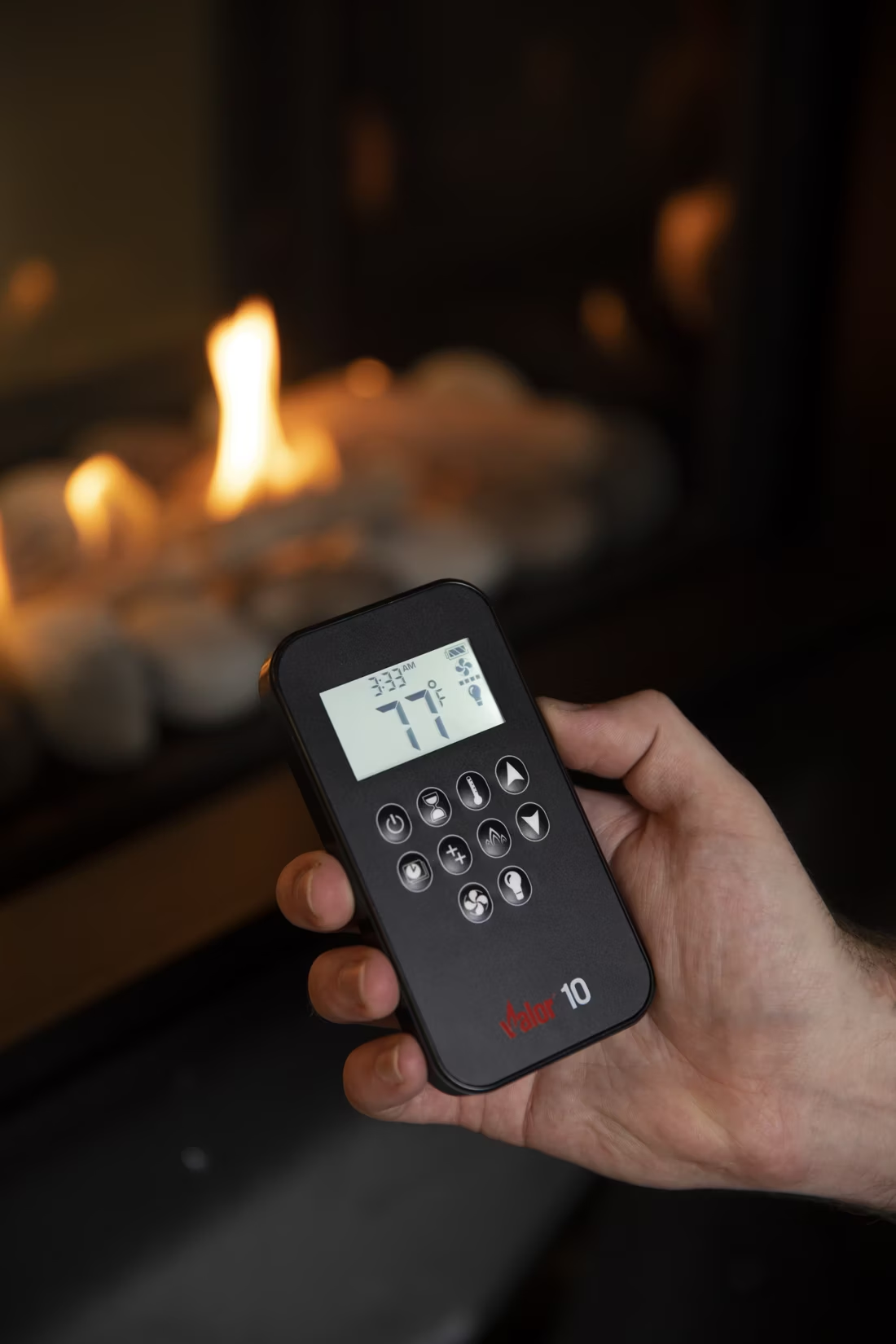
Most will, with the right ignition system. Units with IPI (intermittent pilot ignition) run on battery backup that kicks in automatically if AEP Ohio power drops during an ice storm or summer thunderstorm outage—a real consideration in central Ohio, where outages can stretch a day or more after a bad storm. Valor fireplaces take a different approach, generating their own electricity through the pilot's thermocouple so there's no battery to remember at all. Ask your local dealer which ignition system is on any unit you're considering.
What's the difference between a gas fireplace, gas insert, and gas stove?
A gas fireplace is a fully built-in, zero-clearance unit—the standard choice in Hilliard's newer subdivision homes, where it's typically installed during framing. A gas insert is sized to slide into an existing masonry firebox, which fits the older ranch and colonial homes closer to Old Hilliard. A gas stove is a freestanding cast-iron or steel unit that doesn't require an existing fireplace opening at all, useful for a basement or bonus room. Which one makes sense depends almost entirely on whether your home already has a fireplace opening to work with.
Do I need a permit to install a gas fireplace in Hilliard?
Yes—the City of Hilliard Building Department requires a permit for new gas fireplace installations, and any new gas line work needs to be done by a licensed gas-fitter and inspected. Most established hearth dealers in the area handle the permit application and inspection scheduling as part of the installation, so you're not coordinating separately with the city and a plumber.
What's the difference between vented and vent-free gas fireplaces?
Vented, direct-vent units draw combustion air from outside and exhaust it back outside through a sealed pipe—they're the safest option and the one most Hilliard installers default to. Vent-free (ventless) units burn gas directly into the room air without external venting; they're legal in Ohio but come with strict room-size minimums and require an oxygen depletion sensor. For a primary living space in a well-sealed newer Hilliard subdivision home, direct-vent is usually the better call for indoor air quality—vent-free tends to make more sense as supplemental heat in a garage or workshop.
How often should my gas fireplace be serviced?
Plan on an annual inspection, ideally before the heating season starts in October or November. A technician checks the burner, pilot assembly, venting, and any glass or gasket wear—this typically runs $125 to $200 in the Columbus metro area. It's a much smaller job than a wood chimney sweep, but skipping it is how pilot and ignition problems go unnoticed until the coldest night of the year.
Gas vs. wood—which makes sense for a Hilliard home?
For most Hilliard homeowners, gas is the practical answer. Wood-burning stoves are genuinely uncommon here—Hilliard's newer subdivisions were built with zero-clearance gas fireplaces from the start, lot sizes and HOA rules don't favor firewood storage, and there's no local tradition of cutting your own from oak, hickory, or maple the way there is in more rural parts of the state. Gas gives you instant, thermostat-like heat with none of that logistics burden. The exception is a handful of older homes near Old Hilliard with an original masonry fireplace still capable of burning wood—but even most of those owners end up converting to a gas insert for the convenience.
Is my gas fireplace wasting gas?
If it was installed more than 15 years ago, probably. Older gas fireplaces keep a standing pilot light burning all the time, and that little flame can cost a couple hundred dollars a year. Newer models use pilot-on-demand ignition—the pilot lights only when you use the fireplace and goes out when you turn it off.
Why is my open fireplace making my house colder?
Open fireplaces suck—literally. As the fire burns, it consumes air your furnace already paid to heat and pulls it out through the chimney, so the house is actually colder after the fire goes out than before you lit it. An insert fixes this: it seals the chimney, puts fixed glass across the front, and turns that hole in your house into a real heat source.
Can I install a fireplace myself?
If you're putting a fire in your house on purpose, it's best to work with an expert. Unless you're genuinely experienced in framing, gas line, vent pipe, and the national code on clearances to combustibles, have a professional do it—and ideally the same company that sells you the fireplace, so warranty, service, and liability all live under one roof.
How much should I budget for a fireplace?
For an average home—covering the fireplace, the vent pipe, and basic installation—a budget between $3,900 and $5,500 gives you a lot of options across wood, gas, and pellet. By the time you add finish work, gas line, and electrical, the average complete installation lands between $5,000 and $12,000 all-in. In a remodel or new build, a good rule is to put about 2.5% of the total project cost toward the fireplace.
Nearby Dealers
Hearth shops serving Hilliard and the surrounding area.
Find your gas fireplace in Hilliard.
Tell us a bit about your home and we'll match you with a trusted local dealer and send over a free Project Guide & Parts List—the exact parts, vent kit, and recommended installer for your Hilliard gas fireplace project.
Find Your Fireplace →