
Pellet heat, dialed in for Greene County winters.
Thermostat-controlled, hopper-fed heat for Greene County homes—from Xenia and Beavercreek to Fairborn, Cedarville, and Yellow Springs. Find the right pellet stove or insert and connect with a trusted local dealer.
Every Project Starts From One of These Five Situations
Clean-burning convenience without the wood-splitting work.
Greene County sits in Ohio's climate zone 5A, with roughly 5,432 heating degree days a year and winter lows that average around 20°F—real cold, though not the kind of sustained sub-zero stretch you'd get in Duluth or Fargo. Still, homes from Xenia along the Little Miami River to Beavercreek and Fairborn near Wright-Patterson Air Force Base see plenty of nights in the teens and single digits each winter. This is oak, hickory, maple, and cherry country—the same hardwood forests that have long supplied local sawmills also feed the pellet mills that turn scrap and sawdust into the fuel your stove burns.
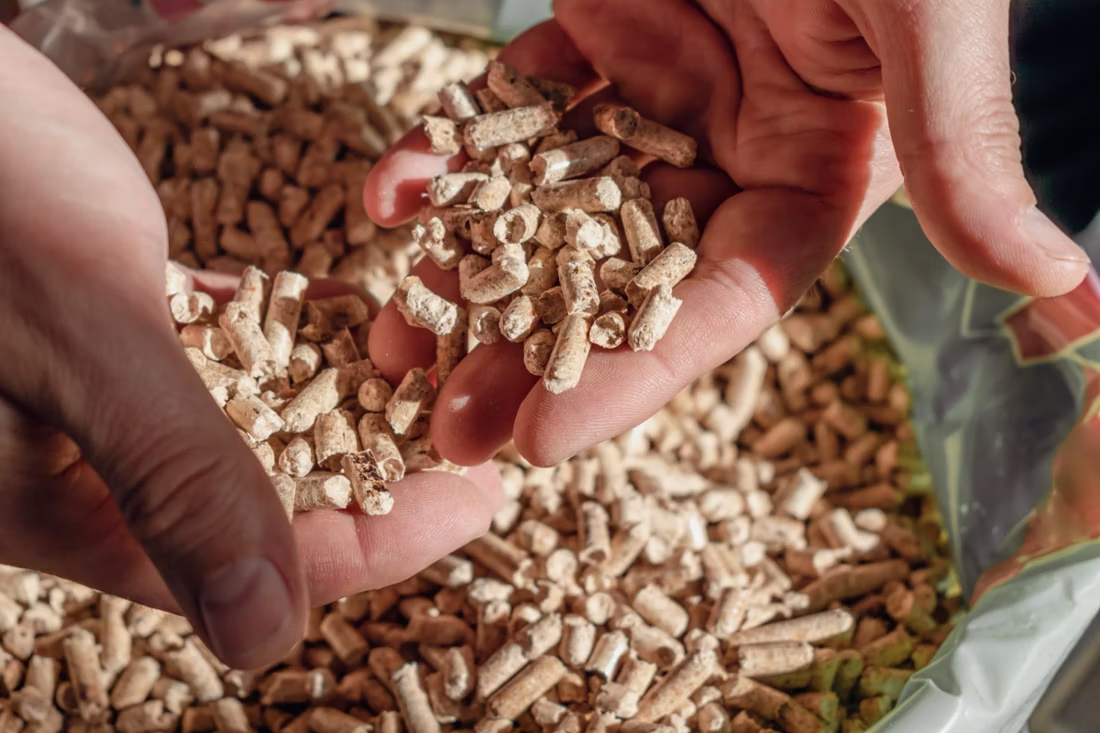
Greene County has no air quality non-attainment designation and no winter burn restrictions, which means pellet stove owners here don't deal with the curtailment periods some Ohio counties impose on solid-fuel appliances. That makes pellet heat an easy, low-hassle choice—set the thermostat, keep the hopper full, and let the auger do the work. It's a natural fit for newer subdivisions in Beavercreek and Fairborn as well as older homes in Yellow Springs and Cedarville where running a full masonry chimney isn't practical. Regional suppliers including Lignetics, Indeck Energy Services, and Somerset Pellet Fuel keep hardwood pellets in stock at farm stores and hearth retailers throughout the region, so fuel supply isn't a concern once you're set up.
Three steps. No salesperson until you're ready.
Tell us about your project
Your zip code, your situation, and the fuel you're leaning toward—or let the answers point you to one.
See what's actually available
The brands dealers within 100 miles genuinely carry—real options, never a catalog mirage.
Get your dealer & Project Guide
A trusted local dealer, plus the free Project Guide & Parts List that names every component of the job.
Frequently Asked Questions
How much does a pellet stove installation cost in Greene County?
Most pellet stove and insert installations in Greene County run in the $3,000 to $6,000 range, with the total driven by the unit itself, hopper size, and whether the vent run is a simple through-wall pellet vent or a longer, more complex path. A freestanding pellet stove venting straight out through an exterior wall—common in ranch-style homes around Beavercreek and Fairborn—tends to land on the lower end. A pellet insert going into an existing masonry fireplace in an older Xenia or Yellow Springs home, which requires a liner run up the existing chimney, typically costs more. A local dealer will give you a firm number after seeing your fireplace or install location in person.
Pellet stove vs. wood stove—which makes more sense in Greene County?
Wood stoves burn the oak, hickory, and cherry that's plentiful across Greene County, run without electricity, and give you the most heat per dollar if you're set up to season and store cordwood. Pellet stoves trade some of that self-sufficiency for convenience: load the hopper, set the thermostat, and the auger and igniter handle the rest, with far less ash and no chimney creosote to worry about. The catch is that pellet stoves need continuous electricity to run the auger, feed system, and combustion blower—during an extended outage, a wood stove keeps working and a pellet stove doesn't unless you have battery or generator backup. For most Greene County homes prioritizing hands-off, thermostatic heat over backup capability, pellet wins; for rural properties more concerned with outage resilience, wood is often the better call.
What size pellet stove do I need for my home?
Sizing comes down to square footage, insulation, and whether the stove is your primary heat source or a supplemental one. As a general guide for Greene County's zone 5A winters: smaller units (under 1,000 sq ft) suit a single room or open-concept ranch, mid-size stoves (1,000–2,000 sq ft) cover most main living areas in Xenia or Fairborn homes, and larger units with bigger hoppers handle whole-home heating in well-insulated properties. Hopper capacity matters as much as BTU output here—a larger hopper means fewer refills during the coldest stretches of January and February. A local dealer will walk your space and size it for free rather than guessing off a chart.
Where can I buy pellets in Greene County?
Hardwood pellets from brands like Lignetics, Indeck Energy Services, and Somerset Pellet Fuel are carried at farm and hearth supply stores throughout the Xenia-Fairborn-Beavercreek area, with feed stores and home improvement retailers restocking heavily each fall. Pellets are sold by the 40-pound bag or by the ton (roughly fifty bags), and buying by the ton ahead of the winter heating season is usually the better value. Premium hardwood pellets burn cleaner and leave less ash than economy blends, which matters if your stove sees heavy use through a full Greene County winter.
Do I need a permit to install a pellet stove in Greene County?
Yes—a new pellet stove or insert installation typically requires a building permit, whether that's through Greene County's building department for unincorporated areas or through the local permit office in Xenia, Beavercreek, or Fairborn if you're within city limits. The permit confirms proper clearances, venting, and—where applicable—an electrical connection for the unit. Most established hearth dealers handle the permit application as part of the installation, so it's rarely something homeowners have to navigate on their own.
What's the best pellet stove for Greene County's climate?
For zone 5A winters with lows regularly in the teens, look for a pellet stove with a larger hopper (40+ lbs) so you're not refilling every few hours during a cold snap, plus a reliable auto-ignition system and a thermostat that can hold steady overnight. Brands like Harman, Enviro, and US Stove Company are widely serviced across the Dayton–Springfield region and pair well with the hardwood pellets stocked locally. For a primary-heat setup in a larger Beavercreek or Fairborn home, size up the hopper and BTU output; for supplemental heat in a smaller Yellow Springs or Cedarville house, a mid-size unit is usually plenty. A local dealer can match hopper size and BTU rating to your actual square footage.
How much maintenance does a pellet stove need?
Pellet stoves need more frequent light maintenance than wood stoves but far less heavy cleaning. Plan on emptying the ash pan every few days to weekly depending on use, wiping the glass as needed, and vacuuming the burn pot and hopper periodically through the season. Once a year, before the heating season starts, have the exhaust venting, combustion blower, and auger system professionally inspected and cleaned—this is especially important given how many nights a Greene County winter runs the unit continuously. Skipping the annual service is the most common cause of feed jams and ignition failures mid-winter.
What happens to my pellet stove during a power outage?
Pellet stoves rely on electricity to run the auger, igniter, and combustion blower, so a standard unit stops working the moment power drops—a real consideration in Greene County, where winter storms occasionally knock out AES Ohio service for hours or longer. Homeowners who want pellet heat but also want outage resilience typically add a small battery backup system or a portable generator sized to run the stove's low electrical draw (most pellet stoves use well under 500 watts). If uninterrupted backup heat is your top priority regardless of grid status, a wood-burning stove or insert is worth considering as either your primary unit or a second appliance alongside a pellet stove.
Are there any burn restrictions on pellet stoves in Greene County?
No—Greene County has no air quality non-attainment designation and no winter curtailment periods that restrict solid-fuel appliances, unlike some other parts of Ohio and neighboring states where wood-burning can be limited during inversion events. Pellet stoves already burn cleaner than most wood-burning appliances thanks to the auger-fed, thermostatically controlled combustion process, so Greene County homeowners can run them through the full heating season without checking daily air quality advisories.
What's the difference between an insert and a zero-clearance fireplace?
An insert is a fireplace that slides into a pre-existing wood-burning fireplace—if you don't have one, there's nothing to insert it into. A zero-clearance fireplace is built into a framed wall, which makes it the answer for remodels and new construction. Simple test: existing masonry fireplace means insert; blank or framed wall means zero-clearance.
Why is my open fireplace making my house colder?
Open fireplaces suck—literally. As the fire burns, it consumes air your furnace already paid to heat and pulls it out through the chimney, so the house is actually colder after the fire goes out than before you lit it. An insert fixes this: it seals the chimney, puts fixed glass across the front, and turns that hole in your house into a real heat source.
Can I install a fireplace myself?
If you're putting a fire in your house on purpose, it's best to work with an expert. Unless you're genuinely experienced in framing, gas line, vent pipe, and the national code on clearances to combustibles, have a professional do it—and ideally the same company that sells you the fireplace, so warranty, service, and liability all live under one roof.
How much should I budget for a fireplace?
For an average home—covering the fireplace, the vent pipe, and basic installation—a budget between $3,900 and $5,500 gives you a lot of options across wood, gas, and pellet. By the time you add finish work, gas line, and electrical, the average complete installation lands between $5,000 and $12,000 all-in. In a remodel or new build, a good rule is to put about 2.5% of the total project cost toward the fireplace.
Pellet Brands Stocked Around Greene County
Manufacturers will point you to the nearest stocking dealer.
Find your pellet stove in Greene County.
Tell us a bit about your home and we'll match you with the right pellet stove or insert, plus a free Project Guide & Parts List—the exact parts, including the vent kit, and a recommended local Greene County dealer to install it.
Find Your Fireplace →