
Find out if a pellet stove fits your Xenia home.
Natural gas heats most homes in Greene County, so pellet stoves are the exception here—not the rule. If you're one of the homeowners weighing one anyway, we'll help you find out whether it's a good fit and connect you with a local dealer who actually carries them.
Every Project Starts From One of These Five Situations
A niche choice in natural-gas country.
Xenia sits in USDA climate zone 5A with a moderate winter heating season and winter lows that average 23°F—a real heating season, but nowhere near the extremes of Madison, WI or International Falls, MN. Most homes here run on natural gas furnaces, and with Dayton Power & Light delivering electricity at a comparatively low 8.54 cents per kWh, there's little market pressure toward alternative heat sources like pellet stoves. That's the honest picture: pellet stoves are uncommon in Xenia, not because the climate can't support them, but because gas and grid power already do the job cheaply for most households.
That doesn't mean pellet heat has no place here. Greene County has plenty of hardwood—oak, hickory, maple, and cherry are all common on local lots—and Ohio is home to pellet producers like Indeck Energy Services, Lignetics, and Somerset Pellet Fuel, so fuel supply isn't the obstacle. The homeowners who do install a pellet stove in Xenia are usually solving a specific problem: heating a detached garage or workshop, adding backup warmth for a finished basement, or wanting the low-maintenance, thermostatically controlled burn a pellet unit offers without the wood-stacking and chimney upkeep a cordwood stove requires. If that's you, a local dealer who actually stocks pellet equipment—rather than a big-box store that doesn't—makes the difference between a stove that works and one that sits unused.
Three steps. No salesperson until you're ready.
Tell us about your project
Your zip code, your situation, and the fuel you're leaning toward—or let the answers point you to one.
See what's actually available
The brands dealers within 100 miles genuinely carry—real options, never a catalog mirage.
Get your dealer & Project Guide
A trusted local dealer, plus the free Project Guide & Parts List that names every component of the job.
Frequently Asked Questions
How much does a pellet stove installation cost in Xenia?
Most pellet stove installations run $3,000 to $6,000 in a market like Xenia, covering the unit, venting (pellet stoves use a simpler PL-vent or 3-inch stainless pipe rather than a full masonry chimney), and a hearth pad if your floor isn't already rated for it. Because pellet stoves are a lower-volume product here compared to gas inserts or furnaces, expect fewer dealers to stock them locally—you may be working with a hearth retailer based in the greater Dayton area rather than one inside Xenia city limits. Get a firm quote after an in-home consultation; venting distance and electrical access for the auger and blower both affect the final number.
Why aren't pellet stoves more common in Xenia?
Natural gas is the default heating fuel across most of Greene County, and Dayton Power & Light's residential electric rate (about 8.5 cents per kWh) keeps electric heat and electric-assisted appliances affordable too. With gas furnaces already installed in most homes and no local air quality restrictions pushing people toward cleaner-burning alternatives, there's simply less demand pulling pellet stoves into the local market compared to, say, a rural area without gas service. It's a market-fit issue, not a climate one—Xenia's moderate winter heating season would support a pellet stove just fine.
Who actually installs a pellet stove in a place like Xenia?
The homeowners we hear from most are heating spaces the main furnace doesn't reach well—a detached garage, a finished basement, a converted workshop—or they want a backup heat source that's cleaner and easier to manage day-to-day than a cordwood stove. A few are on properties at the edge of Greene County where extending a gas line isn't practical. It's a smaller, more specific buyer than in a wood-heat region, but the stoves themselves work exactly the same way regardless of how common they are locally.
Where do pellets come from if I install a stove in Xenia?
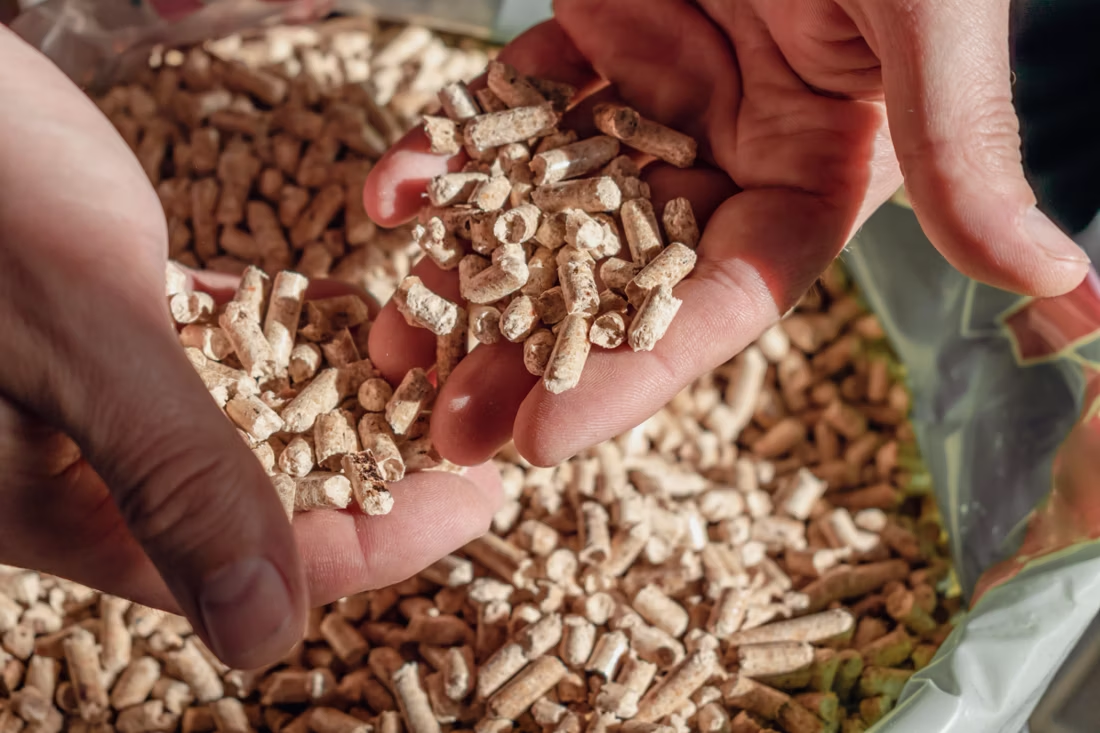
Ohio has its own pellet supply chain, including regional producers like Indeck Energy Services, Lignetics, and Somerset Pellet Fuel. You won't need to have pellets shipped in from out of state—hardware stores, farm supply retailers, and hearth dealers in the Dayton-Xenia corridor typically carry bagged pellets by the ton, especially heading into fall. Pricing tracks the regional average, generally in the $250-$300 per ton range depending on the brand and softwood-versus-hardwood pellet blend.
Do pellet stoves work during a power outage?
Not without a backup power source. Pellet stoves rely on an electric auger to feed fuel and a blower to distribute heat and exhaust combustion gases, so they shut down when Dayton Power & Light service goes out—unlike a wood stove, which keeps burning with no electricity at all. If backup heat during outages is your main goal, a small generator or battery inverter sized for the stove's low wattage draw solves this, or you may want to compare a wood-burning option instead.
Pellet stove or gas fireplace—which makes more sense in Xenia?
For most Xenia homes already on natural gas, a gas fireplace or insert is the more conventional upgrade—it ties into infrastructure you likely already have, requires no fuel storage, and can run during a power outage with a basic battery-backup ignition system. A pellet stove makes more sense when you're heating a space without gas service, want a self-contained unit that doesn't need a gas line, or prefer the visual of a real flame with actual fuel loading. Cost-wise the two land in a similar range for a straightforward install, so the decision usually comes down to what utilities already reach the room you're heating.
Pellet stove vs. wood stove—how do they compare here?
Both are genuinely uncommon primary heat choices in Xenia given how available natural gas is, but they solve different problems. A wood stove burns cordwood—plentiful locally given the oak, hickory, maple, and cherry that grow throughout Greene County—and keeps working with zero electricity, which matters during a winter outage. A pellet stove burns manufactured pellets, needs power to run the auger and blower, but requires far less day-to-day labor: no splitting, stacking, or chimney creosote buildup to manage. If off-grid reliability matters most, wood wins. If low-maintenance convenience matters most, pellet wins.
Do I need a permit to install a pellet stove in Xenia?
Yes—a building permit is standard practice for any new solid-fuel appliance installation, whether that's through the City of Xenia or Greene County's building department depending on your address. Most hearth dealers who install pellet stoves professionally will pull the permit as part of the job. Because pellet stoves are less common here than gas appliances, it's worth confirming your installer has actually pulled a pellet-stove permit before—not every gas-focused contractor has.
What size pellet stove do I need for my Xenia home?
Pellet stove output is usually rated by BTU and roughly matched to square footage: a small unit (around 40,000 BTU) suits a single room, garage, or basement in the 800-1,200 sq ft range, while a larger unit (50,000+ BTU) can supplement heat for 1,500-2,000 sq ft in a climate zone 5A home like most in Xenia. Since the winter heating season here is moderate rather than extreme, oversizing is a common mistake—a unit sized for International Falls-style cold will run at a low, inefficient smolder most of the winter in Xenia. A local dealer can size it properly to the actual space you're heating.
Why is a fireplace insert so efficient?
An insert does two things: it seals the chimney completely, so you stop losing air you already paid to heat, and it radiates warmth into the room through the firebox and glass. Most add a heat-exchange fan that pulls cool room air underneath, wraps it around the hot firebox, and pushes it back out warm. Your home is more efficient before you've even lit the first fire.
Why is my open fireplace making my house colder?
Open fireplaces suck—literally. As the fire burns, it consumes air your furnace already paid to heat and pulls it out through the chimney, so the house is actually colder after the fire goes out than before you lit it. An insert fixes this: it seals the chimney, puts fixed glass across the front, and turns that hole in your house into a real heat source.
Can a fireplace actually lower my heating bill?
Yes—by creating a comfort zone. A furnace heats every square foot of the house just to warm the one room you're in; a gas fireplace on low burns roughly a sixth of the gas a typical furnace does. Set the furnace around 55–60 degrees as a baseline, then heat the rooms your family actually uses. Families who heat this way commonly save $20–$60 a month.
How much should I budget for a fireplace?
For an average home—covering the fireplace, the vent pipe, and basic installation—a budget between $3,900 and $5,500 gives you a lot of options across wood, gas, and pellet. By the time you add finish work, gas line, and electrical, the average complete installation lands between $5,000 and $12,000 all-in. In a remodel or new build, a good rule is to put about 2.5% of the total project cost toward the fireplace.
Pellet Brands Stocked Around Xenia
Manufacturers will point you to the nearest stocking dealer.
Find your pellet stove in Xenia.
Tell us about the space you're heating and we'll put together a free Project Guide & Parts List—the exact equipment, venting, and a trusted local dealer who actually installs pellet stoves in the Xenia area.
Find Your Fireplace →