
Add Real Warmth to Any Room in Greene County—No Chimney Required.
From Beavercreek condos to Xenia farmhouses without an existing flue, electric fireplaces give you flame and heat in an afternoon. Find the right unit for your room and get matched with a local dealer who can install it correctly.
Every Project Starts From One of These Five Situations
Zone heat and real ambiance, without touching a wall.
Greene County sits in climate zone 5A, with an average winter low around 20°F and a solid Midwest heating season lasting into spring—a real Midwest winter, but nowhere near the extremes of somewhere like Duluth or Fargo. Most homes here, from the ranch subdivisions around Beavercreek and Fairborn to older housing stock near Wright-Patterson AFB and downtown Xenia, already run on gas or forced-air furnaces for whole-home heat. Electric fireplaces fill a different role: supplemental warmth and visible flame in a specific room—a finished basement, a primary suite, a sunroom addition—without opening a wall or running a flue through the roof.
Because there's no combustion, no venting, and generally no burn restrictions to worry about (Greene County has no air quality non-attainment issues that affect indoor appliances), electric is often the fastest path to a working fireplace. A plug-in unit runs on a standard 120V outlet the same afternoon it arrives. A built-in linear model or full mantel package typically needs a dedicated circuit, which is where a licensed local electrician and your utility, AES Ohio, come into the picture. It's also the practical answer for condos in Beavercreek, rental units near Wright State University in Fairborn, and older Cedarville or Yellow Springs homes that were never built with a masonry chimney to begin with.
Three steps. No salesperson until you're ready.
Tell us about your project
Your zip code, your situation, and the fuel you're leaning toward—or let the answers point you to one.
See what's actually available
The brands dealers within 100 miles genuinely carry—real options, never a catalog mirage.
Get your dealer & Project Guide
A trusted local dealer, plus the free Project Guide & Parts List that names every component of the job.
Frequently Asked Questions
How much does an electric fireplace cost to install in Greene County?
Plug-in freestanding or wall-mount units are the least expensive route—many run $200 to $700 for the unit itself, plug into an existing 120V outlet, and require no professional install at all. Built-in linear models or full mantel packages cost more, typically $1,500 to $4,500 installed once you factor in the unit, a dedicated circuit if one isn't already in place, and any surround or finishing carpentry. A licensed local electrician handles the circuit work; the fireplace dealer or a finish carpenter typically handles the surround. Because there's no venting or gas line involved, electric installs in Greene County are usually faster and less invasive than a wood or gas project.
Will an electric fireplace actually heat my room, or is it just for looks?
Most electric fireplaces include a built-in heater in the 4,600 to 9,000 BTU range, which is enough to noticeably warm a single room—a den, a finished basement, a primary bedroom—but not enough to replace a furnace on a 20°F Greene County night. Think of it as zone heat: turn the flame on for ambiance year-round, and use the heater setting to take the chill off a specific space so you can turn the thermostat down elsewhere in the house. If you're trying to heat an entire addition or an uninsulated garage conversion, a local dealer can help you figure out whether one larger unit or a couple of smaller ones makes more sense for the square footage.
Do I need a permit for an electric fireplace in Greene County?
A simple plug-in unit generally doesn't require a permit—it's no different than plugging in a space heater. If you're installing a built-in unit that needs a new dedicated circuit or breaker, that electrical work typically does require a permit through your local jurisdiction (Xenia, Beavercreek, and Fairborn each handle their own building permits; unincorporated areas go through Greene County). A licensed electrician working with your dealer will usually pull that permit as part of the job, so it's worth confirming during your consultation rather than after the wiring is already run.
Can I install an electric fireplace in a home with no chimney?
Yes—this is the main reason electric is popular in Greene County's newer subdivisions and condo developments. Because there's no combustion and no exhaust to vent, an electric fireplace can go into an interior wall, a finished basement with no flue access, or a room addition that was never built with a hearth. Ranch-style homes around Beavercreek and newer construction near Fairborn often add one this way, framing a shallow recessed box for a linear unit rather than building out a full masonry surround.
How much does it cost to run an electric fireplace in Greene County?
Running costs depend on your AES Ohio electric rate and how often you use the heater setting versus just the flame effect. On flame-only mode, most units draw very little power—comparable to a few LED bulbs. With the heater running on high, expect it to draw roughly as much as a space heater, which adds a noticeable but modest amount to a monthly bill if used for a few hours a day during winter. For most Greene County homeowners, an electric fireplace is used to supplement a gas furnace on the coldest evenings rather than as a full-time heat source, which keeps the operating cost manageable.
What's the difference between a plug-in, a built-in, and an insert?
A plug-in unit is freestanding or wall-mounted and works out of the box with any standard outlet—the simplest option for renters or anyone who doesn't want electrical work done. A built-in (or linear) unit is recessed into a framed wall opening for a more custom, seamless look, and usually needs a dedicated circuit. An electric insert is sized to slide into an existing masonry fireplace opening—a common choice for older Xenia or Yellow Springs homes with a fireplace that's no longer used for wood but still has the opening. A local dealer can measure your existing opening and tell you which insert sizes will actually fit.
Are electric fireplaces safe for kids and pets?
Generally, yes, and it's one of the strongest arguments for electric over wood or gas in a house with young kids. There's no open flame, no hot glass surface on most models (many use LED and mist or crystal effects rather than a heating element visible at the glass), and no combustion byproducts to worry about. Some models do have a heating element that can get warm to the touch during heater mode, so check the specific unit's surface temperature rating if that's a priority—a local dealer can point you toward child-safe models.
Should I get an electric fireplace or a space heater?
A space heater is cheaper and more portable, but an electric fireplace adds visible ambiance—a real selling point in living rooms, primary suites, or basements where you want the look of a fire without the mess. Many electric fireplace models also let you run the flame effect without the heat, which a standard space heater can't do. If heat output is your only concern, a space heater is more efficient dollar-for-dollar; if you want a permanent-feeling focal point in the room, an electric fireplace is generally worth the difference for Greene County homeowners upgrading a room.
Electric vs. wood—which makes sense for my Greene County home?
Wood is still a real option here—Greene County has no air quality non-attainment issues, and oak, hickory, maple, and cherry are all common local firewood species for anyone who wants an authentic fire and doesn't mind the maintenance. But wood requires a chimney, clearances, and annual sweeping, and it isn't practical in a condo, a basement without a flue, or a rental. Electric skips all of that: no venting, no permitting hassle beyond a possible electrical circuit, and it can go virtually anywhere in the house. For a primary heat source or a cabin experience, wood wins. For a fast, low-maintenance upgrade to a specific room, electric is usually the better fit.
Can I put a TV above my fireplace?
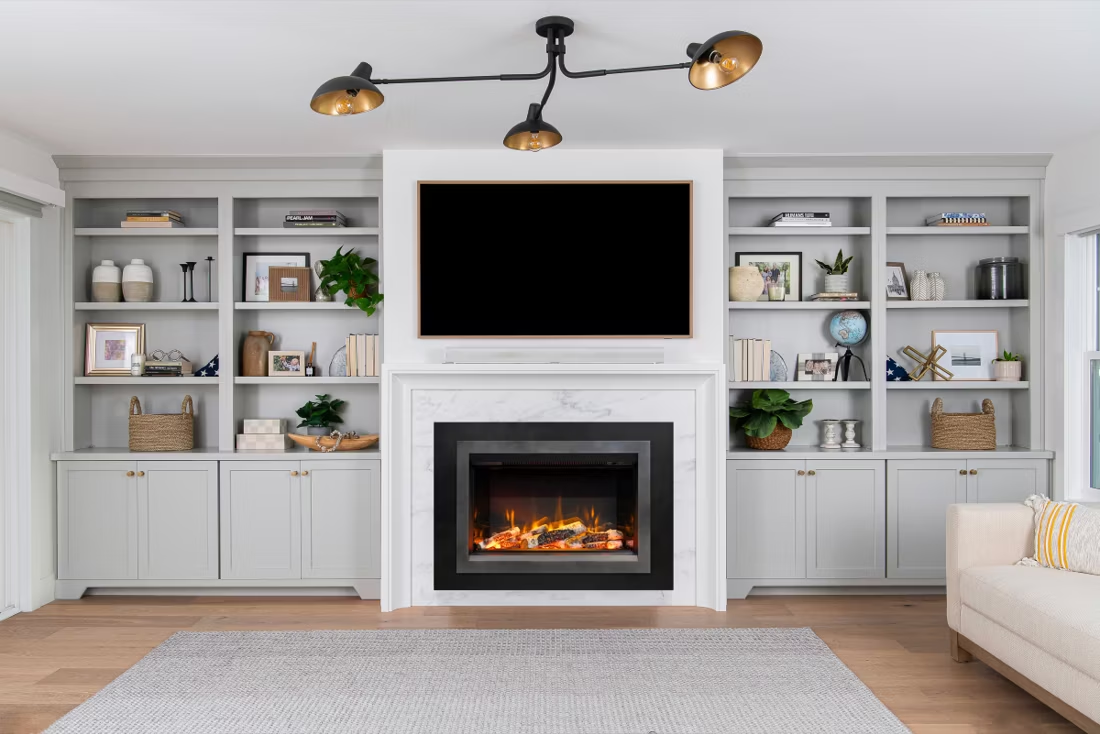
Yes—with an asterisk. Fireplaces are hot and TVs don't like heat. Either put a mantel between them to deflect rising warmth, or choose a fireplace with heat-management technology that creates a cool zone on the wall above—the wall stays around 125 degrees, barely warm, while the room still gets full heat. If you like clean lines and don't want a mantel, heat management is the answer.
Does an electric fireplace need a vent or chimney?
No—that's its superpower. An electric fireplace needs a wall and an outlet, period. No vent pipe, no gas line, no clearances to design around, which is why it works in bedrooms, offices, apartments, and walls where venting a gas or wood unit would be impractical or impossible. Installation is typically the simplest and least expensive of any fireplace type.
Can a fireplace actually lower my heating bill?
Yes—by creating a comfort zone. A furnace heats every square foot of the house just to warm the one room you're in; a gas fireplace on low burns roughly a sixth of the gas a typical furnace does. Set the furnace around 55–60 degrees as a baseline, then heat the rooms your family actually uses. Families who heat this way commonly save $20–$60 a month.
What is an in-home preview and do I need one?
It's a visit where a hearth professional measures your space, confirms the model you picked actually works in your home, and walks the specs—framing, gas line, venting, finish work—before anything is ordered. Some details you just can't know until you see the house. Never make a down payment without one; it's the single most-skipped step that burns buyers.
Find your electric fireplace in Greene County.
Tell us a bit about your room and we'll match you with the right electric fireplace or insert, plus a free Project Guide & Parts List and a trusted local dealer to install it.
Find Your Fireplace →