
Pellet Heat Is the Exception, Not the Rule in Beavercreek.
Most Beavercreek homes heat with natural gas, so pellet stoves are a niche choice here—but for backup heat, a converted garage, or a supplemental hearth, the right unit still makes sense. We'll connect you with a trusted local dealer who can tell you straight whether it fits your home.
Every Project Starts From One of These Five Situations
A niche fit in a gas-heated Dayton suburb.
Beavercreek is a Greene County suburb of about 46,500 people just east of Dayton and Wright-Patterson Air Force Base, sitting at a modest 875 feet with a moderate winter heating load—a moderate cold climate, noticeably milder than Buffalo, NY, which has a much heavier winter heating load in a typical winter. Winters here bring average lows around 20°F, cold enough for real heating demand, but nothing like the sustained deep-freeze stretches that drive wood and pellet culture in the upper Midwest or interior Northwest. With extensive natural gas service already built into the neighborhoods around Beavercreek, most homeowners simply don't have the same incentive to install a pellet appliance that a rural, off-grid, or gas-poor area would.
That's why pellet stoves show up here as a deliberate, secondary choice rather than a default. The homeowners who install one are usually after backup heat for outages tied to Dayton Power & Light's service territory, a supplemental heat source for a finished basement or converted garage, or the cleaner-burning, lower-maintenance alternative to a wood stove for a hearth room. Fuel sourcing isn't a real obstacle—regional suppliers including Indeck Energy Services, Lignetics, and Somerset Pellet Fuel all distribute bagged pellets into the greater Dayton market, so availability isn't the barrier. It's simply that gas is already there, already convenient, and already the path of least resistance for most Beavercreek homes.
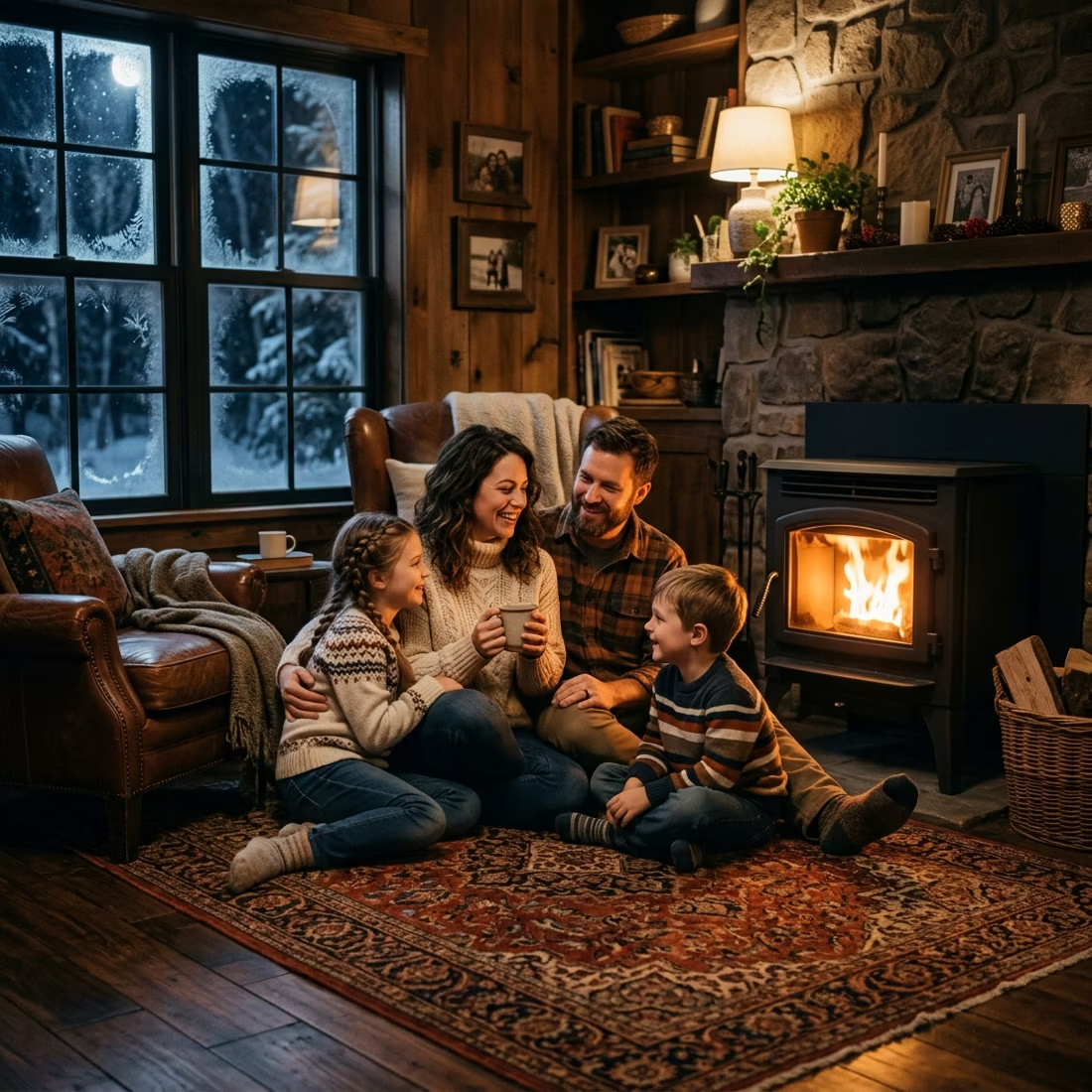
Three steps. No salesperson until you're ready.
Tell us about your project
Your zip code, your situation, and the fuel you're leaning toward—or let the answers point you to one.
See what's actually available
The brands dealers within 100 miles genuinely carry—real options, never a catalog mirage.
Get your dealer & Project Guide
A trusted local dealer, plus the free Project Guide & Parts List that names every component of the job.
Frequently Asked Questions
Are pellet stoves actually a good fit for a Beavercreek home?
For most primary heating needs, no—Beavercreek sits in a part of Greene County with well-established natural gas infrastructure, and gas fireplaces or furnaces are the default here for good reason: lower install complexity and no fuel storage. Where a pellet stove does make sense is as a secondary or backup heat source—a finished basement without gas run to it, a detached garage or workshop, or a household that wants a hedge against winter power and gas-supply disruptions. If that's your use case, a pellet stove is a legitimate option; if you're just looking for your home's main heat source, a local dealer will likely steer you toward gas first.
How much does a pellet stove installation cost in Beavercreek?
Plan on roughly $3,500 to $7,000 for a typical freestanding pellet stove installation, including the unit, a code-compliant hearth pad, vent kit, and a dedicated electrical outlet for the auger and blower motor (pellet stoves require power to run, unlike a wood stove). Pellet inserts installed into an existing masonry fireplace tend to land in a similar range, sometimes slightly less if the flue is already lined. Because pellet installs are uncommon locally, it's worth getting a quote from a dealer who has actually done a handful of them rather than one who mostly installs gas—venting and clearance details differ enough to matter.
Will a pellet stove keep working during a power outage?
No, not without a workaround. Pellet stoves rely on an electric auger to feed fuel and a blower to circulate heat, so a Dayton Power & Light outage—the kind that occasionally follows an Ohio ice storm—will shut the unit down along with everything else. Some homeowners pair a pellet stove with a small battery backup or portable generator sized for the stove's low wattage draw specifically to keep it running through an outage. If uninterrupted backup heat with zero electrical dependency is the priority, a wood stove or a battery-backed gas fireplace is a more reliable choice for that specific job.
Where can I buy pellet fuel near Beavercreek?
Bagged pellets from regional suppliers like Indeck Energy Services, Lignetics, and Somerset Pellet Fuel are distributed through hardware stores, farm supply outlets, and hearth dealers throughout the greater Dayton area. Expect to pay in the neighborhood of $5 to $6.50 per 40-pound bag depending on the brand and time of year—buying a season's supply (roughly 100–150 bags for a typical secondary-heat setup) ahead of winter usually gets a better per-bag price than buying as you go. Because pellet stoves are a minority appliance here, not every hardware store stocks them year-round, so it's worth confirming supply with your dealer before committing to pellet over another fuel.
What's the difference between a pellet stove and a pellet insert?
A pellet stove is a freestanding appliance that sits on a hearth pad and vents through a wall or existing chimney chase—it can go almost anywhere with power and a vent path, which makes it the more common choice for a basement or garage retrofit in Beavercreek. A pellet insert is built to slide into an existing masonry fireplace opening, using the chimney (typically relined) as part of the vent system. Since wood-burning fireplaces aren't especially common in this area's housing stock to begin with, most Beavercreek pellet installs end up being freestanding stoves rather than inserts.
Do I need a permit to install a pellet stove in Beavercreek?
Yes—a new solid-fuel appliance install, pellet included, typically requires a building permit through the City of Beavercreek's Building and Zoning Division (or the Greene County building department for unincorporated addresses), covering the venting path, clearances, and the hearth pad. Most established hearth dealers pull this permit as part of the installation rather than leaving it to the homeowner. Because pellet installs are less routine here than gas, it's worth confirming your installer has pulled permits for solid-fuel appliances before, not just gas line work.
Pellet vs. gas—which makes more sense for my Beavercreek home?
For most homes here, gas wins on convenience: it's already the standard fuel in this part of Greene County, installation is usually simpler since gas lines are already run to most houses, and there's no fuel storage or hopper to manage. Pellet's advantage is narrower but real—it doesn't depend on a gas utility line, burns cleanly with minimal ash compared to wood, and gives you a fuel you can store in bags rather than a tank. If your home already has gas service, that's usually the simpler and more common path. If you specifically want an appliance independent of the gas utility for backup or a detached space, pellet is worth a look, with the caveat that it still needs electricity to run.
What size pellet stove do I need for a basement or garage in Beavercreek?
Most pellet stove sizing runs on the same square-footage logic as wood stoves: smaller units (under 1,000 sq ft) suit a single finished basement room or a garage workshop, while mid-size units (1,000–1,800 sq ft) can supplement heat across a larger open basement or an addition. Given that Beavercreek's winters average around 20°F rather than the sub-zero extremes of the upper Midwest, most secondary-heat installs here don't need to reach for the largest available units—oversizing just means more cycling and unnecessary pellet consumption. A local dealer can size it properly with a quick look at the space.
Since wood and pellet aren't common heating choices here, why would anyone still choose pellet over just adding a space heater?
A pellet stove puts out real, sustained radiant heat—typically 40,000 to 50,000 BTUs from a mid-size unit—which outperforms a plug-in space heater by a wide margin and can genuinely take the edge off a Dayton-area cold snap in a basement or garage without running up the electric bill the way resistance heaters do at Dayton Power & Light's residential rate. It also gives you a visible flame and the ambiance of a real hearth, which a space heater doesn't. The tradeoff is the upfront installation cost and the need to keep pellets on hand—worthwhile for a room that gets regular use, less so for occasional supplemental warmth in a space you rarely occupy.
What's the difference between an insert and a zero-clearance fireplace?
An insert is a fireplace that slides into a pre-existing wood-burning fireplace—if you don't have one, there's nothing to insert it into. A zero-clearance fireplace is built into a framed wall, which makes it the answer for remodels and new construction. Simple test: existing masonry fireplace means insert; blank or framed wall means zero-clearance.
Why is my open fireplace making my house colder?
Open fireplaces suck—literally. As the fire burns, it consumes air your furnace already paid to heat and pulls it out through the chimney, so the house is actually colder after the fire goes out than before you lit it. An insert fixes this: it seals the chimney, puts fixed glass across the front, and turns that hole in your house into a real heat source.
How much should I budget for a fireplace?
For an average home—covering the fireplace, the vent pipe, and basic installation—a budget between $3,900 and $5,500 gives you a lot of options across wood, gas, and pellet. By the time you add finish work, gas line, and electrical, the average complete installation lands between $5,000 and $12,000 all-in. In a remodel or new build, a good rule is to put about 2.5% of the total project cost toward the fireplace.
Can a fireplace actually lower my heating bill?
Yes—by creating a comfort zone. A furnace heats every square foot of the house just to warm the one room you're in; a gas fireplace on low burns roughly a sixth of the gas a typical furnace does. Set the furnace around 55–60 degrees as a baseline, then heat the rooms your family actually uses. Families who heat this way commonly save $20–$60 a month.
Pellet Brands Stocked Around Beavercreek
Manufacturers will point you to the nearest stocking dealer.
Find your pellet stove in Beavercreek.
Tell us about your space and how you plan to use it, and we'll put together a free Project Guide & Parts List—the right pellet stove or insert, the vent kit it needs, and a trusted local Beavercreek-area dealer to install it.
Find Your Fireplace →