
Keep Your Family Warm and Safe—No Matter What
Grand Forks sits in the coldest climate zone in the Lower 48, but flat Red River Valley farmland and reliable natural gas keep wood stoves a niche choice here. If you want one anyway, here's how to do it right.
Every Project Starts From One of These Five Situations
The Red River Valley isn't wood country—but a few homeowners still choose it.
At 834 feet elevation in North Dakota's Red River Valley, Grand Forks is classified climate zone 7—the coldest zone in the continental U.S. Winter lows average around -1°F, and the city has a brutally long, cold heating season, putting it in the same company as International Falls, Minnesota, for sustained cold. But the landscape here is flat prairie farmland, not forest. There's no national forest bordering Grand Forks County, no cutting-permit desk to visit, and no long-standing wood-heat culture like you'd find in the Rockies or the Northwoods. What firewood exists comes mostly from river-bottom trees along the Red and Red Lake Rivers—oak, cottonwood, and ash.
Because of that, the overwhelming majority of Grand Forks homes heat with natural gas or electricity, served by Northern States Power (Xcel Energy), Otter Tail Power, or Nodak Electric Cooperative depending on the neighborhood. Wood stoves still make sense for a specific group of homeowners: acreage properties outside city limits, cabins, garages and shops, or anyone who wants heat that doesn't depend on the grid during a prairie blizzard power outage. If that's your situation, the fundamentals still matter—a correctly sized, EPA-certified stove, proper hearth and chimney clearances, and a dealer who can actually source parts and service a stove in a climate this severe.
Three steps. No salesperson until you're ready.
Tell us about your project
Your zip code, your situation, and the fuel you're leaning toward—or let the answers point you to one.
See what's actually available
The brands dealers within 100 miles genuinely carry—real options, never a catalog mirage.
Get your dealer & Project Guide
A trusted local dealer, plus the free Project Guide & Parts List that names every component of the job.
Frequently Asked Questions
Are wood stoves actually common in Grand Forks?
Not really, and it's worth saying plainly: wood is not the default heating fuel here the way it is in forested mountain regions. Grand Forks' extreme cold (a brutally long, cold heating season) actually works against wood as a primary heat source, because the flat, largely treeless Red River Valley doesn't have the firewood supply chain that colder forested regions rely on. Most owners who install a wood stove here are on acreage outside city limits, running a shop or garage, or want a non-electric backup for winter storm outages—not replacing their furnace.
How much does a wood stove installation cost in Grand Forks?
Because demand is low, there are fewer dedicated wood-stove installers in Grand Forks than in cities where wood heat is standard—most are hearth or HVAC companies that also handle gas fireplaces. Expect to pay roughly $3,500 to $8,000 for a stove, hearth pad, and Class A chimney running through the roof, with the low end for a straightforward install into an unfinished garage or shop and the high end for a fully finished living space with masonry hearth work. Get quotes from at least two local dealers—pricing varies more here than in markets with more installer competition.
Do I need a permit to install a wood stove in Grand Forks?
Yes. Even though wood heat is uncommon locally, the same rules apply as anywhere in the state: new solid-fuel appliances need a building permit through the City of Grand Forks Building Inspections Department (or Grand Forks County if you're outside city limits), and the stove itself needs to meet current EPA 2020 NSPS emissions standards. Because this isn't a high-volume permit category here, it's worth confirming directly with the building department rather than assuming your installer has handled dozens of these—ask them how many wood stove permits they've pulled in the past year.
What firewood species are actually available around Grand Forks?
Local firewood comes mainly from river-bottom hardwoods along the Red and Red Lake Rivers—oak, ash, and cottonwood. Oak and ash burn hot and long and are the preferred choices for a stove doing real heating work; cottonwood is softer, burns faster, and is better suited to shoulder-season fires than sustained sub-zero nights. Because there's no national forest nearby with cutting permits, most owners buy delivered cordwood from regional tree services or farm operations rather than cutting their own—expect to pay in the neighborhood of $150 to $250 per cord depending on species and season.
Will a wood stove actually keep up with a Grand Forks winter?
A well-sized catalytic stove can hold a long, steady burn overnight, which matters when actual lows (not the -1°F average) can drop well below zero with wind chill deep into negative double digits. But most Grand Forks homeowners who install one are using it as supplemental or backup heat, not a replacement for their gas furnace—with a brutally long, cold heating season, asking a single wood stove to carry a whole house through a Red River Valley winter is a tall order unless the home is small and well-insulated.
What's the difference between a wood stove and a pellet stove here?
Both are uncommon in Grand Forks for similar reasons, but the practical trade-off is the same everywhere: wood stoves run without electricity, which matters if a winter storm knocks out power to Northern States Power, Otter Tail Power, or Nodak Electric Cooperative lines for a day or more. Pellet stoves need electricity to run the auger and blower, so they go dark in an outage unless you add a battery backup. Regional pellet brands like Lignetics are available through hearth dealers, but given how rarely either fuel is chosen locally, talk through your specific use case—backup heat, shop heat, or ambiance—before picking one.
Where can I buy firewood in Grand Forks?
There's no Forest Service permit office to point you to here—firewood instead comes from regional tree services, farm operations, and seasonal vendors working river-bottom oak, ash, and cottonwood. Prices typically run $150 to $250 per cord delivered. Because supply is smaller and less organized than in forested states, it's worth lining up a supplier before the stove goes in, especially if you're planning to rely on it during winter storms when demand (and prices) can spike.
Is a wood stove a good fit for new construction in Grand Forks?
Most new homes built in Grand Forks are designed around a central gas furnace, and adding a wood stove means budgeting extra for a proper hearth pad and Class A chimney that wasn't part of the original plan. It's a more common addition on acreage or rural builds outside city limits, where owners have the space and want a non-electric heat option. Inside city limits, check with the Building Inspections Department early in the design process if you want one—retrofitting clearances after framing is done costs more than planning for them.
Wood vs. gas—which makes more sense for backup heat in Grand Forks?
Gas fireplaces here are standard, affordable to run, and some models with intermittent pilot ignition include battery backup that keeps them working in an outage. Wood requires no electricity or battery at all, which is the real advantage during a prairie blizzard that takes down power lines for days at a time. Since natural gas is cheap and widely available through the local utility infrastructure, most homeowners choosing wood in Grand Forks aren't doing it to save on fuel costs—they're doing it for genuine off-grid resilience. If that's your priority, wood wins; if convenience and lower upfront cost matter more, gas is the more typical local choice.
Why is a fireplace insert so efficient?
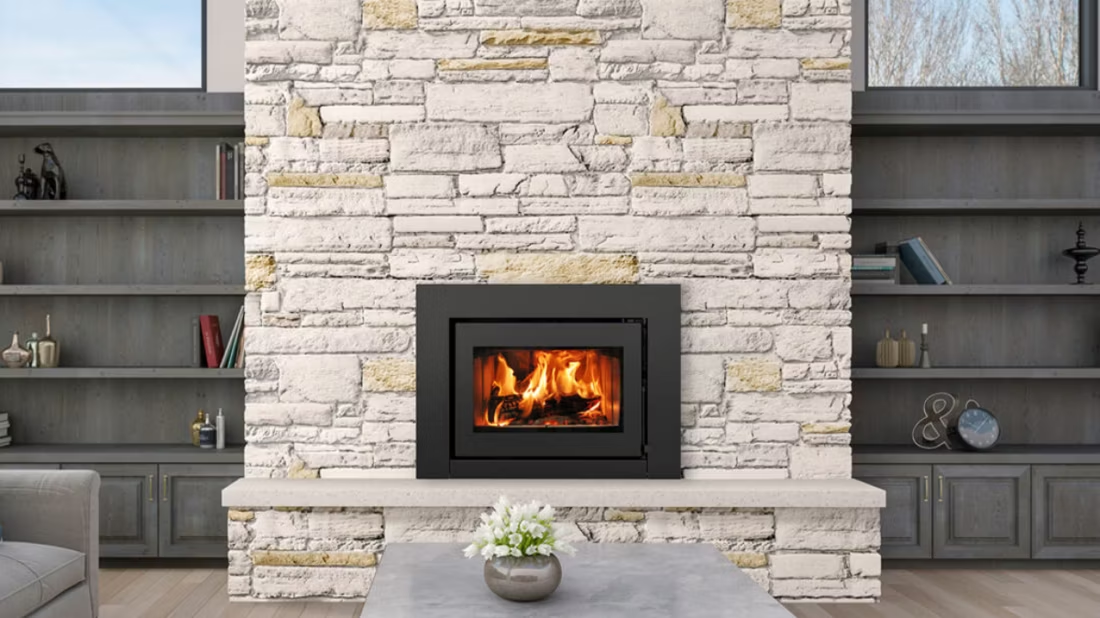
An insert does two things: it seals the chimney completely, so you stop losing air you already paid to heat, and it radiates warmth into the room through the firebox and glass. Most add a heat-exchange fan that pulls cool room air underneath, wraps it around the hot firebox, and pushes it back out warm. Your home is more efficient before you've even lit the first fire.
Why won't my new wood stove get going like my old one?
New wood stoves are 70%+ efficient, so far less heat goes up the flue—which also means less draft to get a fire established. The rule: build a genuinely hot fire for about 45 minutes before you choke it down. Skip that and you get smoke in the room, creosote in the chimney, and a fire that never takes off. Most performance complaints trace straight back to this.
How much should I budget for a fireplace?
For an average home—covering the fireplace, the vent pipe, and basic installation—a budget between $3,900 and $5,500 gives you a lot of options across wood, gas, and pellet. By the time you add finish work, gas line, and electrical, the average complete installation lands between $5,000 and $12,000 all-in. In a remodel or new build, a good rule is to put about 2.5% of the total project cost toward the fireplace.
Can I install a fireplace myself?
If you're putting a fire in your house on purpose, it's best to work with an expert. Unless you're genuinely experienced in framing, gas line, vent pipe, and the national code on clearances to combustibles, have a professional do it—and ideally the same company that sells you the fireplace, so warranty, service, and liability all live under one roof.
Nearby Dealers
Hearth shops serving Grand Forks and the surrounding area. Every listing shows whether it is a WhyFire partner, a dealer we have verified as authorized for the brands we recommend, or a local business carrying hearth products. No manufacturer pays for placement. How we verify dealers →
Sunrooms Plus Inc.
Country Fireplaces Nd
Structural Materials
Hebron Brick Supply
Geroy's Home & Appliance
Find your wood stove option in Grand Forks.
Tell us about your home and how you plan to use a wood stove—backup heat, a shop, or an acreage property—and we'll match you with a local dealer and send a free Project Guide & Parts List sized for Grand Forks' cold.
Find Your Fireplace →