
Instant heat for Red River Valley winters that don't quit.
With one of the toughest, longest heating seasons in the country, Grand Forks needs heat it can trust at the flip of a switch. Find the right gas fireplace or insert and get matched with a trusted local dealer.
Every Project Starts From One of These Five Situations
Heat you can count on when it's twenty below.
Grand Forks sits at just 834 feet on the flat Red River Valley floor, but the elevation is misleading—this is Climate Zone 7, one of the coldest zones in the Lower 48, with a heating season as demanding as any in the country. That puts Grand Forks in the same company as International Falls, Minnesota, for sheer heating load. Average winter lows sit around -1°F, but Alberta clippers and open-prairie wind push real feel temperatures well below zero for days at a time, and ground blizzards can knock out visibility and power in the same afternoon.
Because the flat terrain west of the Red River offers little wood lot access compared to forested parts of the state, wood and pellet heat see limited use here, and most homes lean on gas or electric for both furnace backup and supplemental zone heat. Natural gas service reaches most in-city neighborhoods in Grand Forks, while homes out toward the county line more often run on propane delivered by regional suppliers. Either way, a properly sized gas fireplace or insert gives you real, immediate heat in the room you're actually using—without waiting on a furnace cycle—and some models keep running even when a January storm takes the power out.
Three steps. No salesperson until you're ready.
Tell us about your project
Your zip code, your situation, and the fuel you're leaning toward—or let the answers point you to one.
See what's actually available
The brands dealers within 100 miles genuinely carry—real options, never a catalog mirage.
Get your dealer & Project Guide
A trusted local dealer, plus the free Project Guide & Parts List that names every component of the job.
Frequently Asked Questions
How much does a gas fireplace installation cost in Grand Forks?
Most gas fireplace and insert installations in Grand Forks run $4,500 to $10,500, depending on the unit, the venting run, and whether new gas line work is needed. A direct-vent insert going into an existing masonry fireplace with gas already nearby sits toward the lower end. New construction or a fireplace added to a home addition—where you're framing an enclosure, running a fresh gas line, and installing a full venting system rated for sub-zero exterior temperatures—runs toward the higher end. Given how cold Grand Forks gets, installers here pay close attention to venting terminations that won't ice over or get buried by drifting snow.
Can I convert my existing wood-burning fireplace to gas?
Yes, and it's a common request from owners of older homes near downtown Grand Forks and the University of North Dakota area, where original masonry fireplaces are more likely to show up than in newer subdivisions. A gas insert typically drops into the existing masonry opening with a stainless liner run up the flue, and the job usually runs $4,000 to $8,500 depending on chimney condition and whether a gas line already reaches that wall. Given how little wood heat gets used as a primary source here, most owners doing this conversion are after convenience and consistent heat, not backup capability.
Is natural gas available everywhere in Grand Forks, or do I need propane?
Natural gas service covers most of the city proper, including the 58201 and 58203 zip codes, so if your home already has a gas furnace or water heater, adding a fireplace is usually a straightforward tie-in. Once you're outside city limits in rural Grand Forks County, propane is the more typical fuel, supplied by a tank on the property and refilled by a regional delivery service. Nearly every gas fireplace and insert on the market can be set up for either fuel—your installer just configures the correct orifice and regulator for whichever you have.
Will my gas fireplace still work if the power goes out during a blizzard?
It depends on the ignition system, and in Grand Forks this is worth getting right. Ground blizzards and ice loading on lines can take out power across the valley for hours at a stretch, and electric providers here range from Xcel Energy (Northern States Power) at roughly 17 cents per kWh to Otter Tail Power around 11 cents and Nodak Electric Cooperative near 12 cents, depending on which part of the metro or county you're in—none of that keeps your furnace's blower running without backup power. Gas fireplaces with a millivolt or standing-pilot system don't need household electricity to light and run at all. Units with intermittent pilot ignition (IPI) use a battery backup that kicks in automatically when the power drops. Either setup will keep putting out real heat in a room during an outage—a genuine consideration here, not a nice-to-have.
What's the difference between a gas fireplace, insert, and stove?
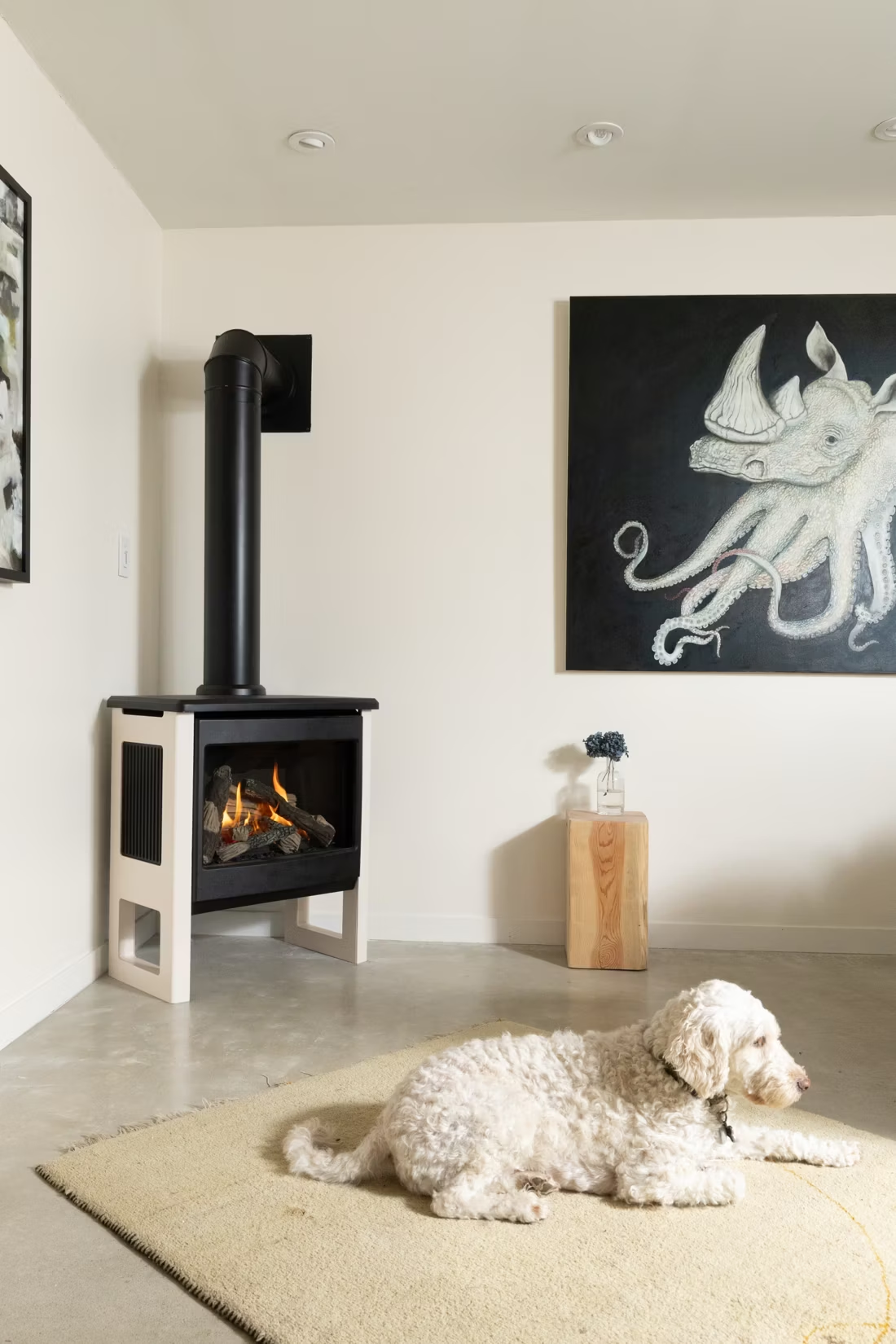
A gas fireplace is a fully built-in, framed unit—the right call for new construction or a remodel where you're building the wall around it. A gas insert is sized to slide into an existing masonry fireplace opening and uses your chimney as the vent chase, which fits a lot of the 1960s–80s ranch-style housing common around Grand Forks. A gas stove is freestanding, sits on the floor on a hearth pad, and can go almost anywhere with the right clearances—a good option for a basement rec room or an addition without an existing fireplace. Local dealers can walk your specific space and tell you which format actually works with your framing and venting.
Do I need a permit to install a gas fireplace in Grand Forks?
Yes. Installations inside city limits go through the City of Grand Forks building and permitting office, and county properties go through Grand Forks County. Because a gas line is involved, the work also needs to be done or signed off by a licensed gas-fitter—this is one of the main reasons to use an established local hearth dealer rather than a general handyman, since they coordinate the gas line, venting, and inspection sign-off as one job instead of leaving you to manage separate trades.
Should I get a vented or vent-free gas fireplace in Grand Forks?
Vented, direct-vent units are the clear default here. They draw combustion air from outside and exhaust it back outside through sealed pipe, so they don't add moisture or combustion byproducts to the room. Vent-free units are technically legal in North Dakota, but in a climate this cold, tightly sealed modern homes already run high indoor humidity in winter, and adding a vent-free unit's water vapor output can worsen window condensation and even contribute to frost buildup on cold surfaces. For the heating load Grand Forks actually needs—real BTUs on the coldest nights—direct-vent units also perform more consistently than vent-free models, which are limited in output by design.
How often does a gas fireplace need to be serviced?
Plan on an annual inspection, ideally in early fall before the heating season ramps up. A technician checks the burner, pilot or ignition system, venting, and gas connections, and cleans the glass and interior—this typically runs $150 to $250 locally. Given how many months out of the year a gas fireplace or insert actually gets used here, skipping a season isn't a big risk, but going two or more years without a check is where problems with pilot systems and venting tend to show up.
Should I get a gas fireplace or an electric one?
Electric fireplaces cost far less to install—often $400 to $1,200 since there's no venting or gas line involved—and they run on whatever electric utility already serves your address, whether that's Xcel Energy, Otter Tail Power, or Nodak Electric Cooperative. But electric units are fundamentally supplemental; their heat output can't match a gas unit's BTU rating, which matters when actual temperatures drop well below the -1°F winter average. Gas is the better fit if you want a unit that can meaningfully offset furnace load or serve as real backup heat during a power outage. Electric makes more sense for ambiance in a room that's already well-heated by your furnace, or for renters who can't run a gas line.
What's the difference between an insert and a zero-clearance fireplace?
An insert is a fireplace that slides into a pre-existing wood-burning fireplace—if you don't have one, there's nothing to insert it into. A zero-clearance fireplace is built into a framed wall, which makes it the answer for remodels and new construction. Simple test: existing masonry fireplace means insert; blank or framed wall means zero-clearance.
Is my gas fireplace wasting gas?
If it was installed more than 15 years ago, probably. Older gas fireplaces keep a standing pilot light burning all the time, and that little flame can cost a couple hundred dollars a year. Newer models use pilot-on-demand ignition—the pilot lights only when you use the fireplace and goes out when you turn it off.
Can I install a fireplace myself?
If you're putting a fire in your house on purpose, it's best to work with an expert. Unless you're genuinely experienced in framing, gas line, vent pipe, and the national code on clearances to combustibles, have a professional do it—and ideally the same company that sells you the fireplace, so warranty, service, and liability all live under one roof.
What is an in-home preview and do I need one?
It's a visit where a hearth professional measures your space, confirms the model you picked actually works in your home, and walks the specs—framing, gas line, venting, finish work—before anything is ordered. Some details you just can't know until you see the house. Never make a down payment without one; it's the single most-skipped step that burns buyers.
Nearby Dealers
Hearth shops serving Grand Forks and the surrounding area. Every listing shows whether it is a WhyFire partner, a dealer we have verified as authorized for the brands we recommend, or a local business carrying hearth products. No manufacturer pays for placement. How we verify dealers →
Sunrooms Plus Inc.
Country Fireplaces Nd
Structural Materials
Hebron Brick Supply
Geroy's Home & Appliance
Find your gas fireplace in Grand Forks.
Tell us about your home and heating needs, and we'll match you with a trusted local Grand Forks dealer and send you a free Project Guide & Parts List—the exact parts, including the vent kit, for your gas fireplace project.
Find Your Fireplace →