
Not the go-to heat here—but it still has a place.
Grand Forks runs on natural gas furnaces and electric heat, not biomass. If a pellet stove still makes sense for your shop, cabin, or supplemental heat, we'll connect you with a local dealer who actually stocks and services them.
Every Project Starts From One of These Five Situations
Why pellet stoves are the exception here, not the rule.
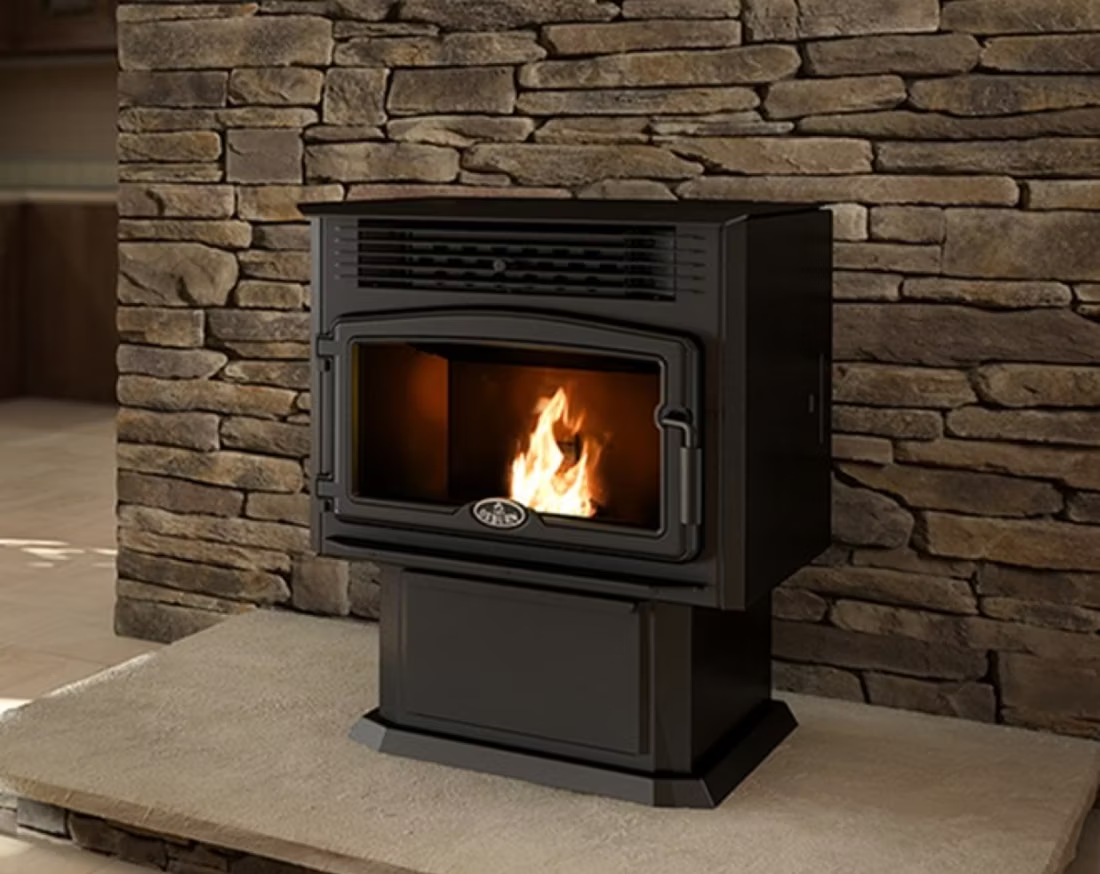
Grand Forks sits in climate zone 7 with a long, demanding winter heating season and an average winter low around -1°F—cold on par with International Falls, MN, one of the harshest heating climates in the Lower 48. That kind of sustained cold calls for continuous, whole-house BTU output, and most Grand Forks homes get it from central natural gas furnaces or electric heat, not a point-source pellet appliance. A single pellet stove, typically rated 40,000-50,000 BTU, can comfortably supplement one room or an open living area, but it's not built to be the sole heat source through a Red River Valley winter.
There's also a supply-and-service reality here. The Red River Valley around Grand Forks is flat farmland with historically limited native forest—the oak, cottonwood, and ash along the riverbanks never supported the kind of wood-and-pellet culture you'd find in a heavily forested state. Regional pellet brands like Lignetics and Indeck Energy Services do reach this market, but you'll find far fewer dedicated hearth dealers stocking and servicing pellet equipment than you would in a wooded region. That said, some homeowners here still choose pellet—for a detached shop, a farmhouse outbuilding off the main gas line, a lake cabin, or simply the ambiance of a real flame with easier loading than cordwood. If that's your situation, matching with the right local dealer matters even more, because your options are genuinely narrower.
Three steps. No salesperson until you're ready.
Tell us about your project
Your zip code, your situation, and the fuel you're leaning toward—or let the answers point you to one.
See what's actually available
The brands dealers within 100 miles genuinely carry—real options, never a catalog mirage.
Get your dealer & Project Guide
A trusted local dealer, plus the free Project Guide & Parts List that names every component of the job.
Frequently Asked Questions
Does a pellet stove even make sense for Grand Forks winters?
As a whole-house heat source, generally no—with a winter season that runs long and deep and average lows near -1°F, most Grand Forks homes need the continuous output of a central natural gas furnace or electric system to stay comfortable through January and February. A pellet stove can work well as supplemental heat for a finished basement, an addition, or a detached garage or shop, where it can carry that specific space without being asked to fight the whole house against prairie wind chill. If your goal is primary heat for the entire home, a pellet stove usually isn't the right tool for this climate.
How much does a pellet stove installation cost in Grand Forks?
Nationally, a typical pellet stove installation—unit, venting kit, and hearth pad—runs roughly $3,500 to $6,500. In Grand Forks, expect quotes toward the higher end of that range, since there are fewer dedicated hearth dealers in the area than you'd find in a more wood-heat-oriented state, and travel or specialty service call fees can factor into the total. Get a quote from a local dealer who actually installs pellet equipment regularly rather than a general HVAC contractor unfamiliar with hopper and auger systems.
Where can I buy pellet fuel in Grand Forks?
Pellet fuel isn't stocked on every store shelf here the way it is in more forested states—Grand Forks doesn't have the same density of hearth and hardware retailers carrying bagged pellets. Regional brands like Lignetics and Indeck Energy Services do supply the Upper Midwest, but you may need to order by the pallet (typically 50 forty-pound bags) through an ag supply store, a farm co-op, or a hearth dealer rather than picking up a bag at a time. If you go with a pellet stove, plan on buying and storing a season's worth at once rather than restocking as you go.
Do I need a permit to install a pellet stove in Grand Forks?
Yes—any new solid-fuel appliance venting through an exterior wall typically requires a building permit through the City of Grand Forks Building Inspections Department (or the county equivalent outside city limits). Because pellet installations are relatively uncommon locally compared to furnace replacements, it's worth confirming permit requirements directly with your dealer or installer before work begins rather than assuming the process mirrors a gas appliance swap.
What size pellet stove do I need for my home?
For supplemental heat in a Grand Forks home, sizing depends on the specific space you're heating rather than total square footage—a mid-size unit (around 40,000 BTU) can typically carry an open living area or finished basement of 1,000-1,500 square feet even at -1°F design temperatures, but it won't keep pace with whole-home demand on the coldest nights. Because pellet stoves here are almost always installed as a secondary heat source, a local dealer will size the unit to the specific room or zone, not the whole house.
How does pellet stove venting hold up in Grand Forks' extreme cold?
Pellet stoves vent horizontally through an exterior wall using a small-diameter PVC or stainless pipe with an intake/exhaust pair, unlike the taller Class A chimney a wood stove needs. In a climate with winter lows regularly at or below zero, condensation inside that venting can be a real issue if the kit isn't sized and pitched correctly, so it matters that your installer uses cold-climate-rated venting components and follows the manufacturer's specific clearance and pitch requirements rather than a generic install.
Will a pellet stove work if the power goes out?
No—pellet stoves rely on an electric auger to feed the hopper and a blower to distribute heat, so they shut down in a power outage just like your furnace. Grand Forks households are served by Northern States Power (Xcel Energy), Otter Tail Power, or Nodak Electric Cooperative depending on location, with residential rates roughly $0.11 to $0.17 per kWh—worth factoring into your operating cost math, but also a reminder that if backup heat during an ice storm or grid outage is a priority, a pellet stove doesn't cover that need the way a wood stove would.
What maintenance does a pellet stove need?
Pellet stoves need the burn pot and ash cleaned roughly every few days to weekly depending on use, the hopper and auger checked periodically for jams, and a full professional service—inspecting the exhaust blower, gaskets, and venting—once a year, ideally before the burning season starts each fall. Because pellet equipment is less common here than gas furnaces, it's worth confirming with your dealer up front that they (or a technician they recommend) actually service pellet appliances locally, rather than discovering a service gap after your first winter.
Pellet vs. gas—which makes more sense for a Grand Forks home?
For most Grand Forks homes, natural gas is the dominant and most practical choice—it's the standard here, delivers continuous whole-house heat without hopper refills, and doesn't depend on stockpiling fuel ahead of a Red River Valley winter. A pellet stove makes more sense as a secondary, zone-heat option: a finished basement, a detached shop, or a space where you want supplemental warmth and don't mind loading pellets and running periodic maintenance yourself. If you're deciding between the two for primary heat, gas is the more climate-appropriate answer at this latitude and in a climate this demanding.
Why is a fireplace insert so efficient?
An insert does two things: it seals the chimney completely, so you stop losing air you already paid to heat, and it radiates warmth into the room through the firebox and glass. Most add a heat-exchange fan that pulls cool room air underneath, wraps it around the hot firebox, and pushes it back out warm. Your home is more efficient before you've even lit the first fire.
Why is my open fireplace making my house colder?
Open fireplaces suck—literally. As the fire burns, it consumes air your furnace already paid to heat and pulls it out through the chimney, so the house is actually colder after the fire goes out than before you lit it. An insert fixes this: it seals the chimney, puts fixed glass across the front, and turns that hole in your house into a real heat source.
What is an in-home preview and do I need one?
It's a visit where a hearth professional measures your space, confirms the model you picked actually works in your home, and walks the specs—framing, gas line, venting, finish work—before anything is ordered. Some details you just can't know until you see the house. Never make a down payment without one; it's the single most-skipped step that burns buyers.
Can I install a fireplace myself?
If you're putting a fire in your house on purpose, it's best to work with an expert. Unless you're genuinely experienced in framing, gas line, vent pipe, and the national code on clearances to combustibles, have a professional do it—and ideally the same company that sells you the fireplace, so warranty, service, and liability all live under one roof.
Nearby Dealers
Hearth shops serving Grand Forks and the surrounding area. Every listing shows whether it is a WhyFire partner, a dealer we have verified as authorized for the brands we recommend, or a local business carrying hearth products. No manufacturer pays for placement. How we verify dealers →
Sunrooms Plus Inc.
Country Fireplaces Nd
Structural Materials
Hebron Brick Supply
Geroy's Home & Appliance
Pellet Brands Stocked Around Grand Forks
Manufacturers will point you to the nearest stocking dealer.
Find your pellet stove or insert in Grand Forks.
Tell us about your space and how you plan to use it, and we'll match you with a local dealer who actually carries and services pellet equipment here—plus a free Project Guide & Parts List with the exact venting kit and components your Grand Forks install needs.
Find Your Fireplace →