
Reliable heat built for a Grand Forks winter.
Grand Forks County averages -1°F winter lows and racks up over 9,300 heating degree days a season—some of the harshest cold in the Lower 48. Fireplaces do the heavy lifting here; find the right unit and a trusted local dealer for your home.
Every Project Starts From One of These Five Situations
Prairie cold, high heating demand in Grand Forks County, North Dakota.
Grand Forks County sits in the flat, treeless expanse of the Red River Valley, where winter arrives early and stays late. Climate Zone 7 territory, an average winter low of -1°F, and roughly 9,314 heating degree days per season put this county in the same cold-climate tier as Duluth, Minnesota or International Falls—homes here need heat that runs hard and reliably for six months straight, not just an occasional evening fire. Cottonwood, ash, and oak grow along the Red River bottomlands, but this is farm country, not forest country—there's no national forest cutting permit tradition here, and firewood has never been the backbone of home heating the way it is in wooded parts of the upper Midwest.
That's why this hub leans toward gas and electric—the two fuels that actually carry the load across Grand Forks County's cities and rural townships, from Grand Forks itself out to Thompson, Larimore, Northwood, and Emerado. Wood stoves and pellet stoves show up occasionally as a secondary heat source or backup during ice storms, but they're the exception, not the rule. Pick your fuel below to see local dealers, typical installed costs, and the resources that match how homes here actually heat.
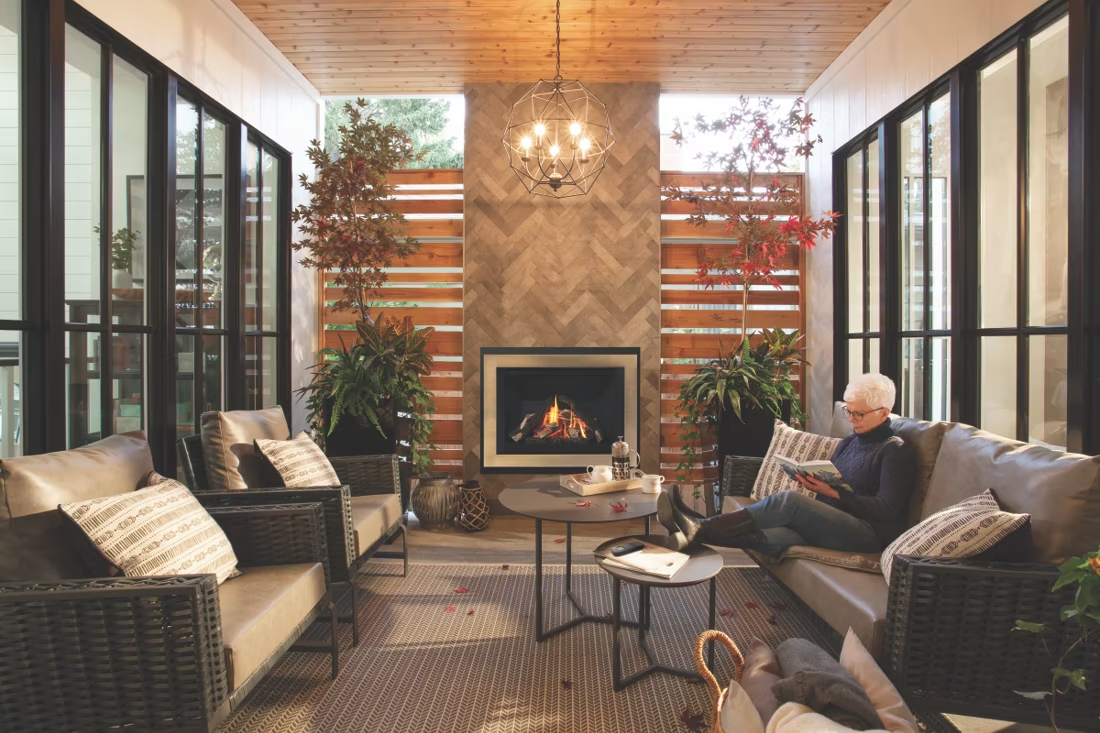
Four fuels. One honest answer for Grand Forks County.
Wood
58 models available near Grand Forks County.
Find your wood stove →Gas
104 models available near Grand Forks County.
Find your gas fireplace →Pellet
See what's available near Grand Forks County.
Find your pellet stove →Electric
See what's available near Grand Forks County.
Find your electric fireplace →Three steps. No salesperson until you're ready.
Tell us about your project
Your zip code, your situation, and the fuel you're leaning toward—or let the answers point you to one.
See what's actually available
The brands dealers within 100 miles genuinely carry—real options, never a catalog mirage.
Get your dealer & Project Guide
A trusted local dealer, plus the free Project Guide & Parts List that names every component of the job.
Frequently Asked Questions
Which fuel works best for a home in Grand Forks County?
For most homes here, it's gas or electric. Natural gas fireplaces and inserts deliver continuous, thermostat-controlled heat that can run all winter without attention—a real advantage when you're facing six months of sub-freezing weather and heating degree days north of 9,300. Electric fireplaces are common as supplemental heat in bedrooms, basements, and additions, or in homes without gas service, though they're not built to be a primary heat source at -1°F average lows. Wood and pellet stoves exist in the county but are genuinely uncommon—this is Red River Valley farmland, not forest country, and there's no local firewood or pellet retail infrastructure to support wood heat the way you'd find in a wooded state like Minnesota or Wisconsin.
Do I need a permit to install a fireplace in Grand Forks County?
Yes, in almost every case. Gas fireplace and insert installations require a building permit and typically a separate gas-line permit, plus a licensed gas fitter for the connection—inside city limits that runs through the City of Grand Forks Building Inspections office, and in the townships it runs through the Grand Forks County Building Department. Electric fireplace installs usually skip the permit unless you're hardwiring a built-in unit or adding a new circuit. If you do end up looking at a wood stove—for a cabin, a shop, or a rural property off the gas line—expect it to need a permit too, plus a UL-listed chimney system sized for the appliance. Most local dealers handle the permit paperwork as part of the installation quote.
Why is wood heat so uncommon in Grand Forks County?
It comes down to geography. The Red River Valley is flat, cultivated farmland with very little standing timber—the cottonwood, ash, and oak you see are mostly windbreak plantings and riverbank groves, not a managed woodlot or forest system that supports a firewood supply chain. There's no national forest cutting permit program nearby the way there is in the Rockies or Cascades, and few local dealers stock wood stoves or firewood commercially. A small number of rural homeowners still run a wood stove as backup heat for ice storms and power outages, but it's a minority setup, not the default.
Are pellet stoves a realistic option here?
Not really, at least not through local retail. Lignetics and Indeck Energy Services both have a presence in the broader region, but their pellet supply is aimed largely at agricultural and industrial buyers, not residential hearth retailers. If you want a pellet stove in Grand Forks County, plan on ordering the appliance through a distant dealer and sourcing bagged pellets by the pallet online or through a farm supply store—there isn't a network of local pellet stove shops the way there is in pellet-heavy regions of the Pacific Northwest or New England.
What does a gas or electric fireplace installation typically cost in Grand Forks County?
Gas fireplace, insert, or stove installations generally run $4,000–$9,500, depending on whether you're tying into existing gas service or running new gas line and venting through an exterior wall. Direct-vent units built for continuous winter operation cost more upfront but hold up better through a Grand Forks heating season than units rated for occasional use. Electric fireplaces run $200–$3,000 for the unit itself, with $400–$1,200 in labor for anything beyond a plug-and-play insert—most wall-mount and built-in electric installs fall in that labor range. Ask your local dealer whether a unit is rated for continuous winter duty, not just occasional ambiance, before you buy.
How does the extreme cold here affect which fireplace to choose?
Grand Forks County's -1°F average winter low and roughly 9,314 heating degree days mean a fireplace here needs to function as real supplemental heat, not just ambiance—closer to how homes in Fargo or Bismarck use their gas hearths than how they're used in milder climates. Gas fireplaces need to be sized and vented for sustained operation, with venting components rated for the cold and gas lines protected against freeze-related pressure issues. Electric units, meanwhile, are best treated as zone heat for a single room rather than a whole-house solution—the local electric utility can size your circuit, but no electric fireplace is going to carry a Grand Forks living room through a January cold snap on its own.
What is an in-home preview and do I need one?
It's a visit where a hearth professional measures your space, confirms the model you picked actually works in your home, and walks the specs—framing, gas line, venting, finish work—before anything is ordered. Some details you just can't know until you see the house. Never make a down payment without one; it's the single most-skipped step that burns buyers.
Wood, gas, pellet, or electric—how do I choose?
Match the fuel to your life, not the other way around. Wood: lowest fuel cost and total power-outage independence, but you're hauling and stacking. Gas: press a button, set a thermostat, no maintenance to speak of. Pellet: wood economics with automatic feeding, in exchange for weekly cleaning and a need for electricity. Electric: plugs in anywhere with honest supplemental heat. Nobody regrets the fuel that fits how they actually live.
Can a fireplace actually lower my heating bill?
Yes—by creating a comfort zone. A furnace heats every square foot of the house just to warm the one room you're in; a gas fireplace on low burns roughly a sixth of the gas a typical furnace does. Set the furnace around 55–60 degrees as a baseline, then heat the rooms your family actually uses. Families who heat this way commonly save $20–$60 a month.
What are the biggest mistakes people make buying a fireplace?
Five come up constantly: budgeting for the unit but not the full job (vent, gas line, electrical, finish work); drowning in options instead of starting from style and fuel; buying without an in-home preview; handing installation to a handyman instead of a pro; and giving up out of sheer indecision. Every one is avoidable with a clear plan—step one, step two, step three.
Stove and Fireplace Dealers in Grand Forks County
Listings include WhyFire partner dealers, dealers we have verified as authorized for the brands we recommend, and established local businesses that carry hearth products. Every listing shows which one it is. The ones marked Preferred run on WhyFire's software, so they can show you real pricing and book your appointment right here. No manufacturer pays for placement. How we verify dealers →
Sunrooms Plus Inc.
Country Fireplaces Nd
Structural Materials
Hebron Brick Supply
Find your fireplace in Grand Forks County.
Tell us about your home and I'll match you with a trusted local dealer and send over a free Project Guide & Parts List—the parts, the venting, and the recommended installer for your specific gas or electric fireplace project in Grand Forks County.
Find Your Fireplace →