
Pellet stoves are the exception in Westchester County, not the rule.
With natural gas reaching most of the county's 450 square miles—from Yonkers to Bedford—pellet heat plays a small, specific role rather than a mainstream one. We'll help you find out if your home is one of the exceptions, and connect you with a local dealer who can size it right.
Every Project Starts From One of These Five Situations
Natural gas covers most of the county—pellet fills a narrow gap.
Westchester County sits in climate zone 4A with roughly 5,119 heating degree days and average winter lows near 23°F—a real but moderate cold-climate profile, noticeably milder than the sustained sub-zero stretches you'd see in Burlington, VT or Duluth, MN. That matters for fuel choice: the long, unattended overnight burns that make pellet stoves attractive in harsher climates aren't as decisive a factor here, and most of the county's housing stock—from the dense villages around White Plains and Yonkers to the estate neighborhoods of Scarsdale and Bedford—was built with natural gas or oil in mind from the start.
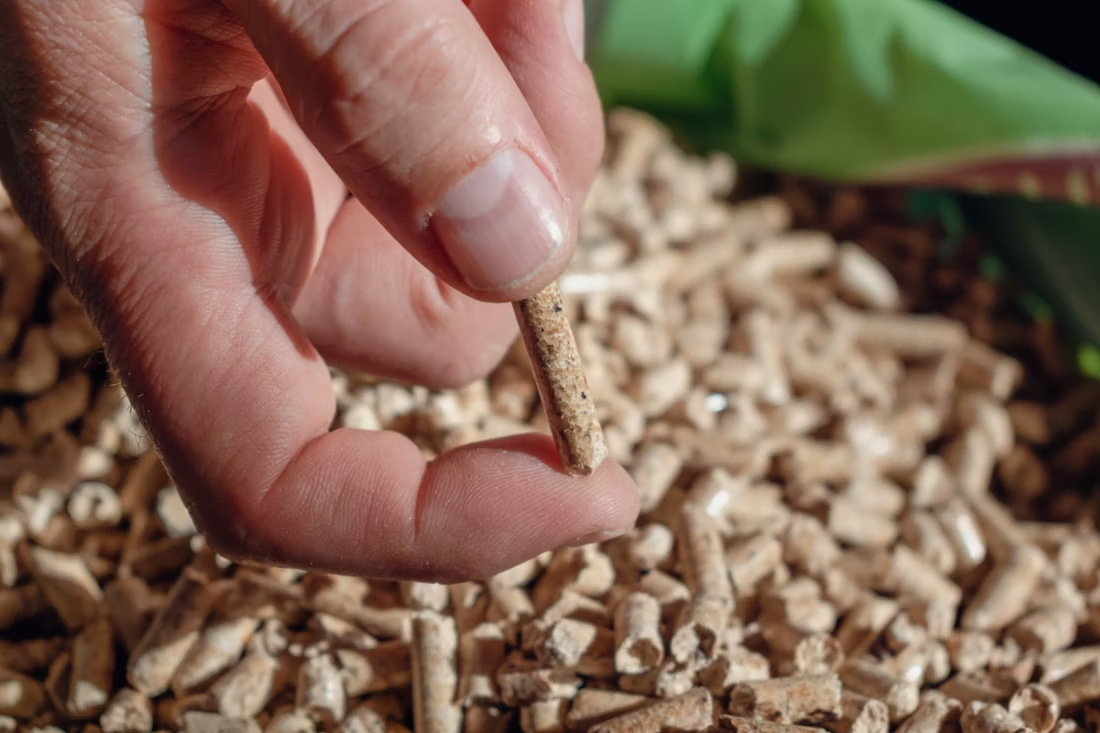
Con Edison serves natural gas to most of central and southern Westchester, with Orange & Rockland Utilities covering parts of the northern towns, so the majority of homeowners already have a clean, code-simple heating option without touching an exterior vent or a pellet hopper. Pellet stoves genuinely make sense in a smaller set of cases: homes in the county's less-served rural pockets—North Salem, Pound Ridge, Somers, parts of Katonah—that currently run on fuel oil and are weighing an alternative, or homeowners who specifically want a hopper-fed backup heat source. Regional hardwood pellet brands like Energex, Hamer Pellet Fuel, and Greene Team Pellet Fuel are sold through Hudson Valley farm and hardware suppliers, so fuel is available if you go this route—it's just not the default choice most Westchester homeowners land on.
Three steps. No salesperson until you're ready.
Tell us about your project
Your zip code, your situation, and the fuel you're leaning toward—or let the answers point you to one.
See what's actually available
The brands dealers within 100 miles genuinely carry—real options, never a catalog mirage.
Get your dealer & Project Guide
A trusted local dealer, plus the free Project Guide & Parts List that names every component of the job.
Frequently Asked Questions
How much does a pellet stove installation cost in Westchester County?
Expect a typical pellet stove installation to run in the $3,500 to $7,000 range, depending on the unit and whether you're venting through an exterior wall versus an existing chimney chase. Because pellet stoves are a niche request in Westchester compared to gas fireplace conversions, fewer local dealers stock and install them regularly—which can mean a slightly longer lead time to find someone with hands-on pellet experience versus the dozens of gas-focused installers working the county. A trusted local dealer will walk you through venting options and give you a firm number after seeing your space.
Why aren't pellet stoves more common in Westchester County?
It comes down to infrastructure and housing stock. Con Edison and Orange & Rockland Utilities put natural gas within reach of most Westchester neighborhoods, so homeowners upgrading a fireplace typically default to a gas insert rather than adding a pellet appliance that needs its own electrical circuit, hopper storage, and periodic bag deliveries. Add in the county's density—co-ops, condos, and tightly packed lots in places like New Rochelle and Mount Vernon—and you get a market where pellet simply isn't the path of least resistance the way it is in more rural, off-gas-grid counties upstate.
Where can I buy pellet fuel in Westchester County?
Hardwood pellets from regional producers like Energex, Hamer Pellet Fuel, and Greene Team Pellet Fuel show up at farm-supply and hardware retailers throughout the lower Hudson Valley, and many Westchester homeowners who do run a pellet stove order by the ton for winter delivery rather than buying bag by bag. Because pellet stoves are a smaller market here, availability can be seasonal—it's worth confirming stock with a supplier in late summer before the first cold snap rather than waiting until January.
Can I install a pellet stove in a Westchester condo or co-op?
This is one of the biggest practical hurdles in the county. Pellet stoves need a wall or roof penetration for venting, and co-op and condo boards throughout Westchester's denser buildings—common in Yonkers, New Rochelle, and White Plains—often restrict or flatly prohibit exterior venting changes. Single-family homeowners in the towns and villages generally have more flexibility, subject to local building department sign-off. If you're in a co-op or condo, check with your board before you get attached to a specific unit; it can save you from a costly dead end.
Do I need a permit to install a pellet stove in Westchester County?
Yes. Westchester's towns and villages each administer their own building permits—there's no single countywide office—so you'll go through whichever local building department covers your address, whether that's the Town of Bedford, the City of Peekskill, or another jurisdiction. Because pellet stoves run on electricity for the auger and blower, an electrical permit is typically required alongside the mechanical permit for the appliance itself. Most local installers handle this paperwork as part of the job.
What size pellet stove do I need for my Westchester home?
Given Westchester's moderate 5,119 heating-degree-day climate, most homes don't need a maximum-output unit the way a home in Duluth or Burlington might. A small stove (rated for up to roughly 1,000 sq ft) suits a single room or supplemental setup; a medium stove (1,000-1,800 sq ft) handles an open living area; larger units are usually overkill unless you're heating an entire older farmhouse with poor insulation as a primary source. A local dealer can size this properly during an in-home visit rather than by square footage alone.
Will a pellet stove work during a power outage in Westchester?
Not without backup power. Unlike a wood stove, a pellet stove's auger and combustion blower run on electricity, so a standard unit goes dark the moment the power does—a real consideration in a county that sees regular nor'easter and summer-storm outages. Some homeowners pair a pellet stove with a small battery backup or generator specifically to keep it running through an outage. If reliable off-grid heat during storms is your priority, a wood-burning or vented gas unit with a battery-backed ignition is usually the more dependable choice for Westchester's power-outage pattern.
Pellet vs. gas fireplace—which makes more sense in Westchester County?
For most Westchester homeowners, gas wins on convenience and infrastructure fit: natural gas service is already at the curb in most towns, installation is a well-worn path for local dealers, and a direct-vent gas insert can go into an existing masonry fireplace with minimal disruption. Pellet makes more sense if you're specifically outside the natural gas footprint, want to move off fuel oil, or want a hopper-fed appliance that isn't tied to a gas line. If you already have gas service to your home, it's worth seriously weighing a gas insert before committing to pellet.
Who in Westchester County actually ends up choosing a pellet stove?
In practice, it's a specific homeowner: someone in one of the county's less gas-served areas—parts of North Salem, Pound Ridge, or rural Somers—currently paying for fuel oil delivery and looking for a lower-cost, self-contained alternative, or someone adding supplemental heat to a detached space like a converted barn or guest cottage where running a gas line isn't practical. If that sounds like your situation, a local dealer can confirm whether pellet is genuinely the better fit for your address versus a gas or electric option.
What's the difference between an insert and a zero-clearance fireplace?
An insert is a fireplace that slides into a pre-existing wood-burning fireplace—if you don't have one, there's nothing to insert it into. A zero-clearance fireplace is built into a framed wall, which makes it the answer for remodels and new construction. Simple test: existing masonry fireplace means insert; blank or framed wall means zero-clearance.
How often does a pellet stove need cleaning?
A clean pellet stove is a happy pellet stove. Plan on cleaning the burn pot about once a week when you're burning regularly—ash and clinkers gum up the air holes just like a pellet barbecue. Most pellet stove problems trace back to skipped cleaning that nobody explained up front. Some designs make it easy with a trapdoor burn pot: pull a lever and the gunk drops into the ash pan.
Can a fireplace actually lower my heating bill?
Yes—by creating a comfort zone. A furnace heats every square foot of the house just to warm the one room you're in; a gas fireplace on low burns roughly a sixth of the gas a typical furnace does. Set the furnace around 55–60 degrees as a baseline, then heat the rooms your family actually uses. Families who heat this way commonly save $20–$60 a month.
Can I install a fireplace myself?
If you're putting a fire in your house on purpose, it's best to work with an expert. Unless you're genuinely experienced in framing, gas line, vent pipe, and the national code on clearances to combustibles, have a professional do it—and ideally the same company that sells you the fireplace, so warranty, service, and liability all live under one roof.
Stove and Fireplace Dealers in Westchester County
Pellet Brands Stocked Around Westchester County
Manufacturers will point you to the nearest stocking dealer.
See if a pellet stove is the right call for your Westchester County home.
Tell us about your home and we'll be straight with you about whether pellet makes sense for your address—and if it does, match you with a trusted local dealer and a free Project Guide & Parts List covering the exact parts, vent kit, and install plan for your project.
Find Your Fireplace →