
Find the right hearth fit for your Westchester County, New York home.
Gas and electric are the two fuels that actually work for most Westchester County homes, co-ops, and condos. Legacy wood fireplaces and rare pellet installs get their due too. Find a trusted local retailer serving your town.
Every Project Starts From One of These Five Situations
How suburban density shapes heating choices in Westchester County.
Westchester County stretches from the Hudson River waterfront cities of Yonkers, New Rochelle, and Mount Vernon up through dozens of towns and villages—Scarsdale, Bedford, Somers, Katonah—toward the Putnam County line. Climate zone 4A and a solid seven-month heating season mean a real winter, with average lows around 23°F, though nowhere near the totals you'd see in Duluth MN or International Falls MN. What actually drives fuel choice here isn't the climate—it's the housing stock and lot sizes. Dense co-ops and condos near the southern border, tight single-family lots in the cities, and building-board approval processes all push most projects toward gas or electric rather than solid fuel.
What you'll find on this hub: hearth retailers, service technicians, and fuel suppliers covering the county's cities, towns, and villages—from Yonkers and White Plains to Rye, Peekskill, and the smaller northern towns. Gas and electric get the deepest coverage since they're what most local dealers actually install here. Wood and pellet are acknowledged where they're relevant—mostly legacy masonry fireplaces in older Colonial and Tudor homes, and the occasional rural pellet install using regional brands like Energex, Hamer Pellet Fuel, and Greene Team Pellet Fuel. Pick your fuel below, or browse your town directly.
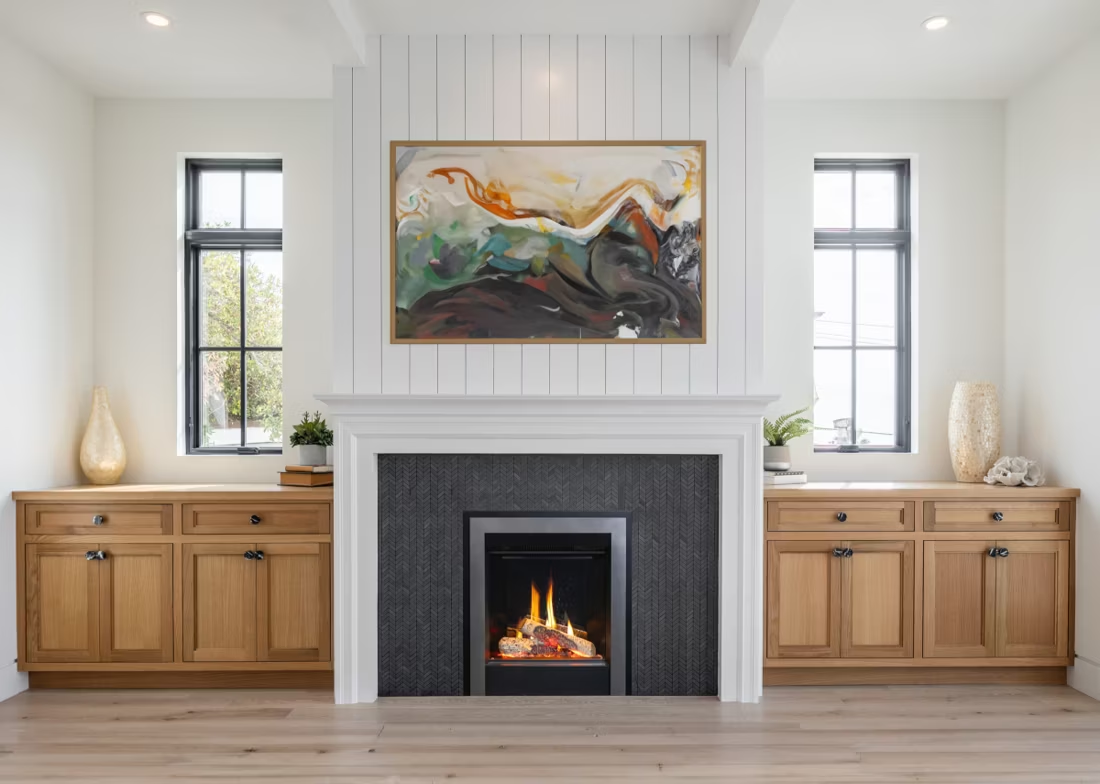
Four fuels. One honest answer for Westchester County.
Wood
81 models available near Westchester County.
Find your wood stove →Gas
365 models available near Westchester County.
Find your gas fireplace →Pellet
See what's available near Westchester County.
Find your pellet stove →Electric
11 models available near Westchester County.
Find your electric fireplace →Three steps. No salesperson until you're ready.
Tell us about your project
Your zip code, your situation, and the fuel you're leaning toward—or let the answers point you to one.
See what's actually available
The brands dealers within 100 miles genuinely carry—real options, never a catalog mirage.
Get your dealer & Project Guide
A trusted local dealer, plus the free Project Guide & Parts List that names every component of the job.
Frequently Asked Questions
Which fireplace fuel makes sense for a home in Westchester County?
For most Westchester County homeowners, it's gas or electric. Natural gas service from Con Edison covers most of the county's cities and denser towns, making direct-vent gas fireplaces and inserts the practical upgrade for both single-family homes and co-op or condo renovations where venting options are limited. Electric fireplaces are the go-to for apartments and any unit where running a new gas line isn't feasible—plug into a standard outlet, no permit needed for freestanding units. Wood-burning fireplaces exist mostly as legacy features in the county's older Colonial and Tudor-era housing stock—oak, maple, birch, and ash are the traditional local firewood species—but new wood stove installs are uncommon given lot sizes and clearance requirements in most municipalities. Pellet stoves are rarer still: bulk pellet delivery and storage don't fit well with condo living or tight suburban lots, though brands like Energex, Hamer Pellet Fuel, and Greene Team Pellet Fuel supply the handful of freestanding-home installs that do exist in the county's more rural northern towns.
Do I need a permit to install a fireplace in Westchester County?
Yes, in almost every case. Westchester County doesn't have one central building department—its cities, towns, and villages each issue their own permits, so a gas fireplace install in Yonkers goes through a different office than one in Bedford or Rye. Gas installations typically need both a building permit and a separate gas-line permit pulled by a licensed gas-fitter. Electric installs usually don't require a permit for plug-in units, but built-in electric fireplaces involving new wiring or a dedicated circuit do. If you're in a co-op or condo, add another layer: most buildings require board approval before any gas line, venting, or electrical work, on top of the municipal permit. Local hearth retailers who work regularly in the county typically manage the permit paperwork and know which offices move fast.
Can I still install a wood-burning fireplace or stove in Westchester County?
In some municipalities, yes, but it's the exception. Dense lots in cities like Yonkers, Mount Vernon, and New Rochelle often can't meet clearance and setback requirements for a new wood stove, and many co-op and condo buildings prohibit solid-fuel appliances outright. Homes with existing masonry fireplaces—common in the county's older Colonial and Tudor housing stock—can typically keep burning oak, maple, birch, or ash without issue, and a certified insert is sometimes possible where the chimney allows it. But for new construction or renovation in the denser cities, gas or electric is the realistic path; most local retailers steer new-build conversations toward direct-vent gas rather than a new wood installation.
Can one local retailer handle both gas and electric fireplace projects?
Yes—most hearth retailers serving Westchester County carry both gas and electric lines, since those are the two fuels that actually move in this market. Dealers who regularly work co-op and condo jobs in the southern part of the county, near Yonkers, New Rochelle, and White Plains, usually have strong electric and direct-vent gas offerings suited to tight spaces and board-approval requirements. Dealers based farther north, closer to Somers, Katonah, or Bedford, may also stock the occasional wood insert or pellet unit for the county's larger rural lots, but gas and electric remain the primary business for nearly every retailer countywide.
How does installation and service work in a county with so many small municipalities?
Most hearth retailers and service techs serving Westchester County are based in one of the larger cities—White Plains, Yonkers, or Peekskill—and travel countywide, which in a county this dense usually means short drive times even between towns. The bigger scheduling factor is often the building, not the distance: co-op and condo jobs typically require advance notice to the property manager or board, sometimes weeks ahead, before a gas or electrical crew can even get on-site. Single-family jobs in the towns generally move faster. If you're in a managed building, start the board approval process before you request a retailer quote—it's usually the longest lead time in the project.
What's the typical cost range for fireplace installation across fuel types in Westchester County?
Costs run higher here than the national average, largely due to labor rates and permit complexity in the New York metro area. Gas fireplace, insert, or stove: roughly $5,500–$13,000, with co-op and condo jobs often landing at the higher end once gas-line work and board-mandated contractor requirements are factored in. Electric fireplace: $300–$3,500 for the unit, plus $500–$1,500 in labor for anything beyond a plug-in wall-mount, more for a built-in requiring new wiring. Existing masonry wood fireplace inserts, where the chimney allows it: $4,500–$9,000. Pellet stove installs are infrequent enough in the county that pricing varies project to project—expect a similar range to gas once venting and any structural work is included.
How much should I budget for a fireplace?
For an average home—covering the fireplace, the vent pipe, and basic installation—a budget between $3,900 and $5,500 gives you a lot of options across wood, gas, and pellet. By the time you add finish work, gas line, and electrical, the average complete installation lands between $5,000 and $12,000 all-in. In a remodel or new build, a good rule is to put about 2.5% of the total project cost toward the fireplace.
What is an in-home preview and do I need one?
It's a visit where a hearth professional measures your space, confirms the model you picked actually works in your home, and walks the specs—framing, gas line, venting, finish work—before anything is ordered. Some details you just can't know until you see the house. Never make a down payment without one; it's the single most-skipped step that burns buyers.
Can I install a fireplace myself?
If you're putting a fire in your house on purpose, it's best to work with an expert. Unless you're genuinely experienced in framing, gas line, vent pipe, and the national code on clearances to combustibles, have a professional do it—and ideally the same company that sells you the fireplace, so warranty, service, and liability all live under one roof.
Wood, gas, pellet, or electric—how do I choose?
Match the fuel to your life, not the other way around. Wood: lowest fuel cost and total power-outage independence, but you're hauling and stacking. Gas: press a button, set a thermostat, no maintenance to speak of. Pellet: wood economics with automatic feeding, in exchange for weekly cleaning and a need for electricity. Electric: plugs in anywhere with honest supplemental heat. Nobody regrets the fuel that fits how they actually live.
Stove and Fireplace Dealers in Westchester County
Listings include WhyFire partner dealers, dealers we have verified as authorized for the brands we recommend, and established local businesses that carry hearth products. Every listing shows which one it is. The ones marked Preferred run on WhyFire's software, so they can show you real pricing and book your appointment right here. No manufacturer pays for placement. How we verify dealers →
Westchester Fireplace
Fireplace And Outdoor Living
County Woodstoves Inc
Westfair Pool & Spa Inc
Flue Tech
Mcnamara Fireplace And Stove
Aida Design Build
Agi Supply Inc
Light N Grid
Nordic Stove And Fireplace Center
Fire Glow Distributors, Inc.
Kjb Fireplaces
Fireplaces By Design
The Valley Fireplace
Hocon Gas Of Norwalk
All Shore Appliance
Big Apple Fireplaces
Get matched with a hearth dealer in Westchester County.
Pick your fuel below and we'll match you with a trusted local dealer serving your town—plus a free Project Guide & Parts List with the exact parts, venting, and recommended dealer for your Westchester County project.
Find Your Fireplace →