
Find your electric fireplace in Westchester County.
No chimney, no gas line, no landmark-board headaches—just plug-in or hardwired warmth that works in a Bronxville colonial, a Yonkers co-op, or a new build in Yorktown. Find the right unit and connect with a trusted local dealer.
Every Project Starts From One of These Five Situations
The heat that fits where venting can't.
Westchester County packs over 736,000 residents into roughly 450 square miles of dense inner suburbs, prewar apartment buildings, and historic villages between the Hudson and Long Island Sound. Winters bring about 5,119 heating degree days and lows around 23°F—a real season, though milder than places like Madison, WI, where HDD tops 7,800. Wood stoves and pellet stoves are essentially off the table here: co-ops and condos in Yonkers and New Rochelle don't have chimneys to work with, small lots in Scarsdale and Mamaroneck leave little room for wood storage or clearances, and many of the county's roughly 45 individual municipalities have zoning or fire codes that make new solid-fuel installations impractical outside a handful of older single-family homes.
Electric fills that gap without a fight. A plug-in electric fireplace needs nothing more than a standard outlet, which makes it the only realistic hearth option in a rental apartment or a co-op board's rulebook. Built-in wall units and larger inserts typically run on a dedicated 240-volt circuit, which means an electrician and, in most of Westchester's municipalities, a straightforward electrical permit through the local building department—no chimney, no gas line, no venting inspection. That also makes electric the go-to choice for landmark and historic-district homes in places like Rye, Bronxville, and Katonah, where exterior alterations for venting are often restricted or prohibited outright. Con Edison serves electric to most of the county, with NYSEG covering a handful of towns in the northeast corner near North Salem and Somers—either way, power is the only utility hookup involved.
Three steps. No salesperson until you're ready.
Tell us about your project
Your zip code, your situation, and the fuel you're leaning toward—or let the answers point you to one.
See what's actually available
The brands dealers within 100 miles genuinely carry—real options, never a catalog mirage.
Get your dealer & Project Guide
A trusted local dealer, plus the free Project Guide & Parts List that names every component of the job.
Frequently Asked Questions
How much does an electric fireplace installation cost in Westchester County?
A plug-in freestanding electric fireplace or a wall-mount unit that uses an existing outlet typically runs $150 to $600 installed, since there's no wiring or permit involved beyond hanging the unit. Built-in electric fireplaces or larger inserts that require a dedicated 240-volt circuit run higher—usually $1,200 to $3,000—once you factor in the electrician's time to run new wiring and the local building department's electrical permit. Costs trend toward the higher end in older housing stock in places like Bronxville and Larchmont, where knob-and-tube or outdated panels sometimes need upgrading before a new circuit can be added.
Why isn't wood or pellet heat common in Westchester County?
It's mostly a housing-stock and density issue rather than a climate one. A large share of Westchester's population lives in co-ops, condos, and multi-family buildings in Yonkers, New Rochelle, and White Plains that were never built with chimneys, and many single-family lots in the county's older villages are too tight for the clearances and wood storage a stove needs. Local fire codes and, in some villages, air quality or nuisance-smoke ordinances add another layer of friction. Pellet stoves face the same structural problem—no chimney or exterior wall penetration path in most multi-family buildings—plus the added need for bagged pellet storage that few co-op units have room for. Electric sidesteps all of it.
Do I need a permit to install an electric fireplace in Westchester County?
It depends on the unit and your municipality. Westchester doesn't have a single county building department—each of its roughly 45 cities, towns, and villages issues its own permits, so requirements in Rye differ slightly from Ossining or Mount Kisco. As a rule, a plug-in unit that uses an existing outlet needs no permit at all. A built-in or wall-mounted unit that requires a new dedicated circuit typically needs an electrical permit pulled by a licensed electrician through your local building department. If you live in a co-op or condo, you'll also usually need board approval before any hardwired installation, even though no venting or structural work is involved.
Electric vs. gas fireplace—which is right for my Westchester home?
Gas is the better choice if you want real, substantial heat output and have access to natural gas service, which is standard in most of Con Edison's Westchester territory. A direct-vent gas fireplace can meaningfully offset a furnace on a cold January night. Electric wins on flexibility and simplicity: no gas line, no venting, and it works in buildings where gas or wood simply isn't an option, like a Yonkers high-rise co-op or a landmarked home in Rye's historic district where exterior venting is restricted. Many Westchester homeowners with gas heat elsewhere in the house still add an electric unit to a bedroom, basement, or den where running a gas line isn't practical.
What size or style of electric fireplace works best for my home?
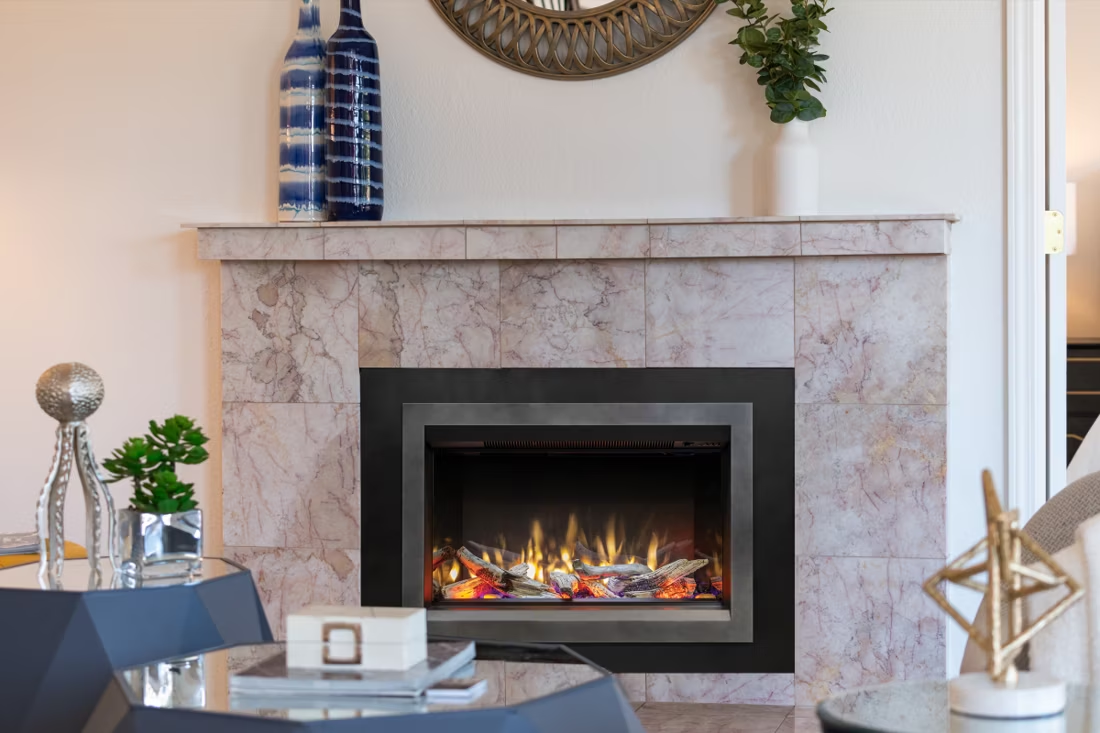
Electric units are sized more by room and aesthetic than by BTU math, since most are meant as supplemental or ambiance heat rather than a home's primary source. Wall-mounted linear units suit the open-concept renovations common in newer Somers and Yorktown construction, while built-in models set into a mantel surround fit naturally into the prewar colonials and Tudors found throughout Scarsdale and Bronxville. Freestanding stove-style units are popular in co-ops and rentals precisely because they need no installation at all—just an outlet. Local dealers carrying Dimplex, Napoleon, and SimpliFire can walk through sizing and placement based on your room and whether you want any real heat output or purely visual flame effect.
Can I install an electric fireplace in a co-op or condo?
In most cases, yes—and it's one of the most common electric fireplace projects in Westchester, particularly in the co-op and condo buildings concentrated in Yonkers, New Rochelle, and White Plains. Because there's no venting, gas line, or structural modification, boards are generally far more receptive to electric installations than to any other fireplace type. Plug-in units usually need no approval at all. Built-in or hardwired units typically require board sign-off since they involve adding a dedicated circuit, so it's worth checking your building's alteration agreement before ordering one.
Will an electric fireplace work in my historic or landmarked home?
Electric is usually the easiest fireplace option for landmarked properties, precisely because it requires no exterior alteration. In villages like Rye, Bronxville, and Katonah, where historic district or landmarks commissions review any change visible from the street—including new chimneys or vent terminations—an electric unit installed inside an existing fireplace opening or along an interior wall typically doesn't trigger that review at all, since nothing changes on the building's exterior. It's worth confirming with your local historic preservation office before work begins, but electric removes the single biggest obstacle these homes usually face with gas or wood installs.
How much heat will an electric fireplace actually put out?
Most electric fireplaces top out around 5,000 to 5,200 BTU (roughly 1,500 watts), which is enough to warm a single room but won't meaningfully offset whole-home heating during Westchester's real winter stretch from December through February, when overnight lows regularly sit in the 20s. Think of it as zone heat for a den, bedroom, or finished basement rather than a substitute for your furnace. If you're looking for a unit that can genuinely contribute to your heating bill during a Westchester winter, gas is the stronger option—electric's advantage is flexibility and installation simplicity, not raw heat output.
What does an electric fireplace cost to run in Westchester County?
At a typical Con Edison residential rate, running a 1,500-watt electric fireplace on high for several hours a day adds a noticeable amount to a monthly bill—often more per BTU than natural gas, since electricity rates in the Con Edison and NYSEG service territories both run above the national average. Most Westchester homeowners use electric units intermittently for ambiance or targeted warmth in one room rather than running them continuously, which keeps the operating cost modest. If a room needs consistent daily heat through the winter, it's worth discussing with a local dealer whether a gas option makes more financial sense for that particular space.
Can I put a TV above my fireplace?
Yes—with an asterisk. Fireplaces are hot and TVs don't like heat. Either put a mantel between them to deflect rising warmth, or choose a fireplace with heat-management technology that creates a cool zone on the wall above—the wall stays around 125 degrees, barely warm, while the room still gets full heat. If you like clean lines and don't want a mantel, heat management is the answer.
Do electric fireplaces actually produce heat?
Yes—most put out around 4,800–5,000 BTUs from a standard outlet, which comfortably warms a bedroom, office, or den as a comfort-zone heater. What they won't do is carry a whole house the way wood, gas, or pellet can. Think of electric as ambiance-first with honest supplemental heat: flames on with no heat in July, flames plus warmth in January.
Can I install a fireplace myself?
If you're putting a fire in your house on purpose, it's best to work with an expert. Unless you're genuinely experienced in framing, gas line, vent pipe, and the national code on clearances to combustibles, have a professional do it—and ideally the same company that sells you the fireplace, so warranty, service, and liability all live under one roof.
Does a fireplace add value to my home?
On average, a fireplace adds back to the home about the same amount you spent installing it. Add the monthly savings from heating the rooms you actually use instead of the whole house—often hundreds of dollars a year—and the value case is strong before you even count what a fire does for how your family uses the room.
Stove and Fireplace Dealers in Westchester County
Find your electric fireplace in Westchester County.
Tell us about your home—co-op, colonial, or new build—and we'll put together a free Project Guide & Parts List for your electric fireplace project, matched with a trusted local Westchester County dealer.
Find Your Fireplace →