
Find a pellet stove dealer serving Staten Island—if a pellet stove is actually right for your home.
Pellet heat is uncommon across Richmond County's rowhouses and semi-attached blocks, but a smaller set of south shore homes with detached construction and basement or garage space do use them. We'll tell you honestly whether it fits, then match you with a trusted local dealer.
Every Project Starts From One of These Five Situations
On Staten Island, pellet stoves are the exception—not the default.
Richmond County is New York City's most suburban borough, but it's still governed by NYC Department of Buildings code and dominated by attached and semi-attached housing—rowhouses in New Springville, semi-detached homes in Great Kills, multi-family and co-op buildings near the North Shore. That housing stock makes pellet stove installation genuinely difficult: most units lack an exterior wall with clear venting access, shared walls complicate clearance requirements, and co-op or condo boards frequently restrict any appliance requiring a through-wall vent. Add in a mild climate—Zone 4A, a moderate winter heating load, and a winter low averaging 26°F—and the case for a pellet stove as primary heat mostly disappears when National Grid natural gas service already reaches most of the borough.
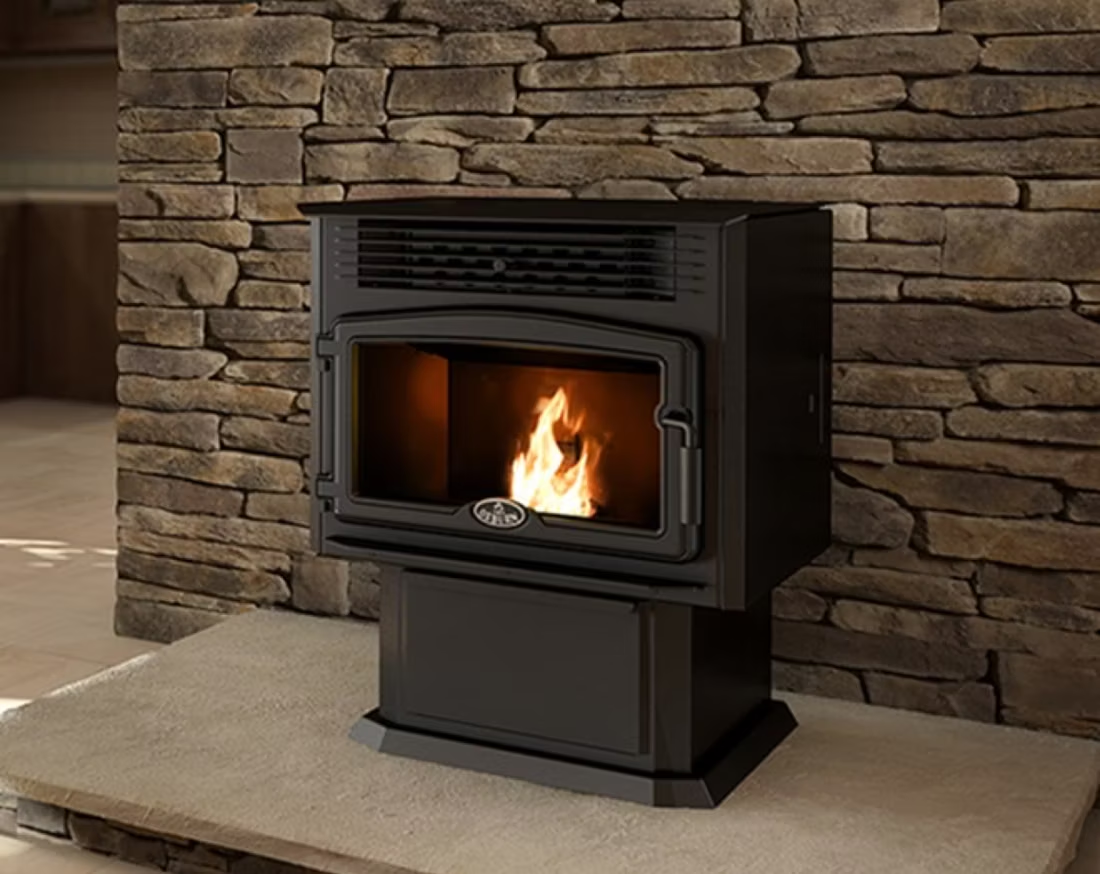
That said, a small number of homeowners do install pellet stoves—mostly in detached single-family homes on the South Shore, in neighborhoods like Tottenville, Annadale, and Eltingville, where a basement or attached garage gives room for a hopper, a stovepipe run, and pellet storage. Regional brands like Energex, Hamer Pellet Fuel, and Greene Team Pellet Fuel are sold through heating supply retailers across the metro area, though dealer density on Staten Island itself is thin—most buyers source pellets from Long Island or New Jersey suppliers with delivery routes into the borough. If that's your situation, we'll match you with a dealer who actually installs and services these units locally, rather than sending you to a big-box aisle with no follow-up support.
Three steps. No salesperson until you're ready.
Tell us about your project
Your zip code, your situation, and the fuel you're leaning toward—or let the answers point you to one.
See what's actually available
The brands dealers within 100 miles genuinely carry—real options, never a catalog mirage.
Get your dealer & Project Guide
A trusted local dealer, plus the free Project Guide & Parts List that names every component of the job.
Frequently Asked Questions
Are pellet stoves actually available on Staten Island?
Yes, but they're a minority option. Richmond County's housing mix—attached rowhouses, semi-detached homes, co-ops, and condos—makes pellet stove installation impractical for most residents because of shared walls, limited exterior venting access, and building board restrictions. The homes where pellet stoves make sense are almost always detached single-family properties on the South Shore (Tottenville, Annadale, Eltingville, Charleston) with a basement or garage that can accommodate the unit, its vent run, and pellet bag storage. If you're in an attached rowhouse or a multi-unit building, a pellet stove is unlikely to be feasible—we'll tell you that directly rather than sending you down a dead end.
Why don't more people install pellet stoves in Richmond County if pellets are supposed to be efficient?
Efficiency isn't the limiting factor—access is. Pellet stoves need a dedicated vent path through an exterior wall or roof, plus indoor space for a pellet hopper and storage bags. In a borough built mostly of rowhouses and semi-attached homes, that combination is hard to find. National Grid natural gas service also reaches most of Staten Island, so residents who want efficient, low-maintenance heat generally reach for a gas insert or gas fireplace instead—no fuel bags, no auger motor, no hopper refills. Pellet stoves remain a niche choice reserved for detached homes with the physical space to support one.
Do I need a permit to install a pellet stove on Staten Island?
Yes. Any pellet stove installation in Richmond County requires a permit through the New York City Department of Buildings, since Staten Island falls under NYC's citywide building code rather than a separate county authority. The permit covers the venting installation, hearth clearances, and electrical connection for the stove's auger and blower motor. In co-ops and condos, you'll also need board approval before a DOB permit even makes sense—building management often has stricter rules than the code itself. A local installer familiar with NYC DOB filings can save you real time here; this isn't a project to self-permit.
Pellet vs. gas—which makes more sense for a Staten Island home?
For the vast majority of Richmond County homes, gas wins. National Grid natural gas service is widely available across the borough, a direct-vent gas insert or fireplace installs into tighter spaces than a pellet stove requires, and there's no hopper to refill or ash pan to empty. Pellet only makes sense if you have a detached home with basement or garage space, want the visual and heat character of a real flame without stacking cordwood, and don't mind that pellet stoves require electricity to run the auger and blower—meaning they won't provide heat during a power outage, a real consideration on Staten Island given past storm-related outages. If backup heat during outages matters most, talk to a local dealer about a gas unit with battery-backed ignition instead.
Where do I buy pellets on Staten Island?
Dealer density on the island itself is thin, since pellet stoves are uncommon here. Most Richmond County pellet stove owners source bags from heating supply retailers in New Jersey or on Long Island that deliver into the borough, or they stock up seasonally from regional brands like Energex, Hamer Pellet Fuel, and Greene Team Pellet Fuel when visiting suppliers off-island. If you're considering a pellet stove, ask your installer about a reliable delivery source before you commit—running out of pellets mid-winter with no nearby retailer is a real logistics problem here that it isn't in more rural parts of the state.
Will a pellet stove keep my home warm if the power goes out?
No—this is one of the biggest misconceptions about pellet stoves, and it matters on Staten Island specifically given the borough's history with storm-related outages. Pellet stoves rely on an electric auger to feed fuel and an electric blower to circulate heat; without power, the stove won't run at all, even with a full hopper of pellets. Some models accept a battery backup for short outages, but that's not universal. If backup heat during a multi-day outage is your priority, a battery-backed direct-vent gas fireplace is generally a better fit for this borough than a pellet stove—ask a local dealer to walk you through the ignition options.
What size pellet stove do I need for a Staten Island home?
Richmond County's mild climate—Zone 4A, a moderate winter heating load, winter lows averaging around 26°F—means most homes need less raw heat output than colder parts of upstate New York. A small to mid-size pellet stove (rated for 1,000 to 1,800 square feet) is usually sufficient for supplemental heat in a South Shore single-family home, even one with a finished basement. Sizing should still account for how open or closed off the space is—a stove in an open basement rec room will need less capacity than one trying to heat a fully finished, compartmentalized lower level. A local installer can size this properly during an in-home visit.
I live in a co-op or condo on Staten Island—can I still get a pellet stove?
It's unlikely, and worth knowing upfront. Most co-op and condo boards restrict or outright prohibit appliances requiring exterior venting through shared walls, which rules out pellet stoves in nearly all multi-unit Richmond County buildings. If you want supplemental heat with real flame and don't have board approval realistic in your future, a vented or vent-free gas log set, or a high-end electric fireplace insert, is typically the workable alternative—neither requires the same structural venting changes. We can point you toward dealers who handle these co-op-friendly options directly.
How do I find a pellet stove installer who actually knows Staten Island housing?
Look for an installer with direct NYC Department of Buildings permit experience and a track record working in Richmond County's detached South Shore homes specifically—not just general Long Island or New Jersey pellet stove work. Because pellet installations are uncommon here, plenty of general contractors have never pulled a DOB permit for one. A dealer who has actually navigated the borough's code requirements and vent-access constraints will save you from a stalled or rejected permit application. We match homeowners with installers who've done this specific work locally, rather than a generic regional listing.
Why is my open fireplace making my house colder?
Open fireplaces suck—literally. As the fire burns, it consumes air your furnace already paid to heat and pulls it out through the chimney, so the house is actually colder after the fire goes out than before you lit it. An insert fixes this: it seals the chimney, puts fixed glass across the front, and turns that hole in your house into a real heat source.
How often does a pellet stove need cleaning?
A clean pellet stove is a happy pellet stove. Plan on cleaning the burn pot about once a week when you're burning regularly—ash and clinkers gum up the air holes just like a pellet barbecue. Most pellet stove problems trace back to skipped cleaning that nobody explained up front. Some designs make it easy with a trapdoor burn pot: pull a lever and the gunk drops into the ash pan.
Can I install a fireplace myself?
If you're putting a fire in your house on purpose, it's best to work with an expert. Unless you're genuinely experienced in framing, gas line, vent pipe, and the national code on clearances to combustibles, have a professional do it—and ideally the same company that sells you the fireplace, so warranty, service, and liability all live under one roof.
How much should I budget for a fireplace?
For an average home—covering the fireplace, the vent pipe, and basic installation—a budget between $3,900 and $5,500 gives you a lot of options across wood, gas, and pellet. By the time you add finish work, gas line, and electrical, the average complete installation lands between $5,000 and $12,000 all-in. In a remodel or new build, a good rule is to put about 2.5% of the total project cost toward the fireplace.
Stove and Fireplace Dealers in Richmond County
Pellet Brands Stocked Around Richmond County
Manufacturers will point you to the nearest stocking dealer.
Find your pellet stove in Richmond County—or the honest alternative.
Tell us about your home on Staten Island and we'll give you a straight answer on whether a pellet stove fits, match you with a trusted local dealer, and send you a free Project Guide & Parts List with the exact parts—including the vent kit—for your project. ,
Find Your Fireplace →