
Real heat, no chimney required, for Staten Island homes.
From St. George brownstones to New Dorp ranches, electric fireplaces give Richmond County homeowners real zone heat and ambiance without a flue, a gas line, or a board fight over venting. Find the right unit and connect with a trusted local installer.
Every Project Starts From One of These Five Situations
Where flues and gas lines aren't an option, electric wins by default.
Richmond County—Staten Island—is NYC's most residential borough, and its housing stock tells the story: Victorian rowhouses in St. George and Tompkinsville, mid-century ranches and split-levels in New Dorp and Great Kills, and dense co-op and condo developments scattered across the island. At climate zone 4A with winters comparable to a long, solidly cold Northeast season and winter lows averaging 26°F, the borough needs real supplemental heat in winter, but a lot of that housing stock was never built with a chimney chase, and a lot of it is co-op or condo owned, where board approval for anything involving venting or gas is its own project.
Wood-burning appliances are essentially off the table here—NYC's fire code and the clearance requirements for solid-fuel stoves don't work in attached construction or on the small lots common across the island, and most co-op and condo boards won't approve them regardless. Gas fireplaces are workable in many single-family homes with National Grid service, but they still require a new gas line, venting approval, and often a licensed plumber alongside the installer. Electric skips all of that: no exterior venting, no gas permit, and in most cases just a dedicated outlet or a straightforward electrical hookup. That's why electric inserts and built-ins have become the default upgrade for Staten Island homeowners who want real heat and a real-looking flame without touching the building's venting or gas infrastructure.
Three steps. No salesperson until you're ready.
Tell us about your project
Your zip code, your situation, and the fuel you're leaning toward—or let the answers point you to one.
See what's actually available
The brands dealers within 100 miles genuinely carry—real options, never a catalog mirage.
Get your dealer & Project Guide
A trusted local dealer, plus the free Project Guide & Parts List that names every component of the job.
Frequently Asked Questions
How much does an electric fireplace installation cost in Richmond County?
A plug-in electric insert or mantel unit that just needs a standard 120V outlet typically runs $300 to $900 installed, including a basic surround. A recessed, built-in wall unit that requires a licensed electrician to run a dedicated circuit—common in Staten Island rowhouses and co-op renovations—usually lands between $800 and $2,000 depending on wall access and whether drywall or trim work is needed. Custom mantel surrounds or linear units set into existing masonry fireplace openings in older St. George or Tottenville homes can push toward the higher end once carpentry is factored in.
What type of electric fireplace fits my Staten Island home?
For homes with an existing masonry fireplace opening—common in older Victorian houses around Historic Richmond Town or St. George—an electric insert slides directly into the firebox with no venting changes needed. For rowhouses and apartments with no chimney at all, a wall-mounted or recessed built-in unit works well in a living room or bedroom. Freestanding electric stoves are a good fit for basements or finished attic spaces in New Dorp or Great Kills homes where a portable, plug-and-play unit makes more sense than permanent wall work.
Do I need a permit or an electrician to install an electric fireplace?
A standard plug-in unit that draws 1,500 watts or less usually just needs a properly grounded outlet—no permit required. A built-in or recessed unit wired to a dedicated circuit is electrical work that should go through a licensed electrician, and depending on the scope, may require an NYC Department of Buildings electrical permit. If you're in a co-op or condo—and a large share of Richmond County housing is—check with your building's board before any hardwired install, even though electric units don't touch venting or the building's gas system.
Will my co-op or condo board approve an electric fireplace?
Electric is generally the easiest fuel type to get approved in Staten Island's co-op and condo buildings, precisely because there's no venting, no flue penetration, and no gas line to review. Boards that would reject a wood stove outright or require extensive review for a gas fireplace often approve electric units without much friction, especially plug-in models that don't touch the building's wiring. If you're in a landmarked property near the St. George Historic District, the same logic applies—Landmarks Preservation Commission review is triggered by exterior changes like venting, and electric units don't require any.
Electric vs. gas fireplace—which is right for my Richmond County home?
Gas fireplaces are available to most Staten Island homes through National Grid service, and they deliver more heat output for whole-room use—but installation means a new gas line, venting work, and typically a permit from both the gas utility and the city. Electric fireplaces install faster, cost less upfront, and work in attached rowhouses, condos, and apartments where gas venting isn't practical. For single-family homes with existing gas service and a good spot to vent, gas is worth considering. For everyone else—especially co-op and condo owners—electric is the more realistic path.
How much room will an electric fireplace actually heat?
Most electric fireplace inserts are rated to comfortably heat 400 to 1,000 square feet as supplemental zone heat—think a single living room or open-concept first floor, not the whole house. Given Richmond County's solidly long, cold winter season and winter lows in the mid-20s, electric units work best paired with your existing central heat rather than replacing it. They're most useful for taking the edge off a chilly room, cutting your thermostat setpoint elsewhere in the house, or providing backup warmth if the furnace has an off day.
What does it cost to run an electric fireplace with Con Edison rates?
Con Edison electric rates in New York City run higher than the national average, so operating cost is worth factoring in. A typical 1,500-watt electric fireplace running on high heat for four hours costs roughly $2 to $4 a day at current Con Edison rates—noticeably less than heating an entire home with electric resistance heat, but not free. Most owners run these units for a few hours in the evening in one room rather than all day, which keeps the cost reasonable compared to the alternative of raising the whole-house thermostat.
What brands or models work well for Staten Island homes?
For recessed built-ins in living rooms or bedrooms, Dimplex and Napoleon make well-regarded linear and traditional units with realistic flame effects that hold up in daily use. SimpliFire and Amantii are common choices for insert-style units that fit into existing masonry openings in older rowhouses. For a freestanding option in a basement or finished attic, a stove-style electric unit from Dimplex or ClassicFlame gives you a portable option without wall modification. A local installer can steer you toward the model that fits your specific opening or wall setup.
Why don't more Staten Island homes have wood stoves?
Wood-burning appliances are rare in Richmond County, and for good reason—NYC fire code clearance requirements are difficult to meet on the borough's smaller lots and in attached construction, and most co-op and condo boards won't approve solid-fuel appliances at all. A handful of detached single-family homes with existing masonry chimneys, particularly older properties near Historic Richmond Town, could technically support a wood stove or insert, but it's an exception rather than the norm. For the vast majority of Richmond County's housing stock—rowhouses, co-ops, condos, and attached homes—electric is the practical way to get real fireplace heat and ambiance without a chimney.
Can I put a TV above my fireplace?
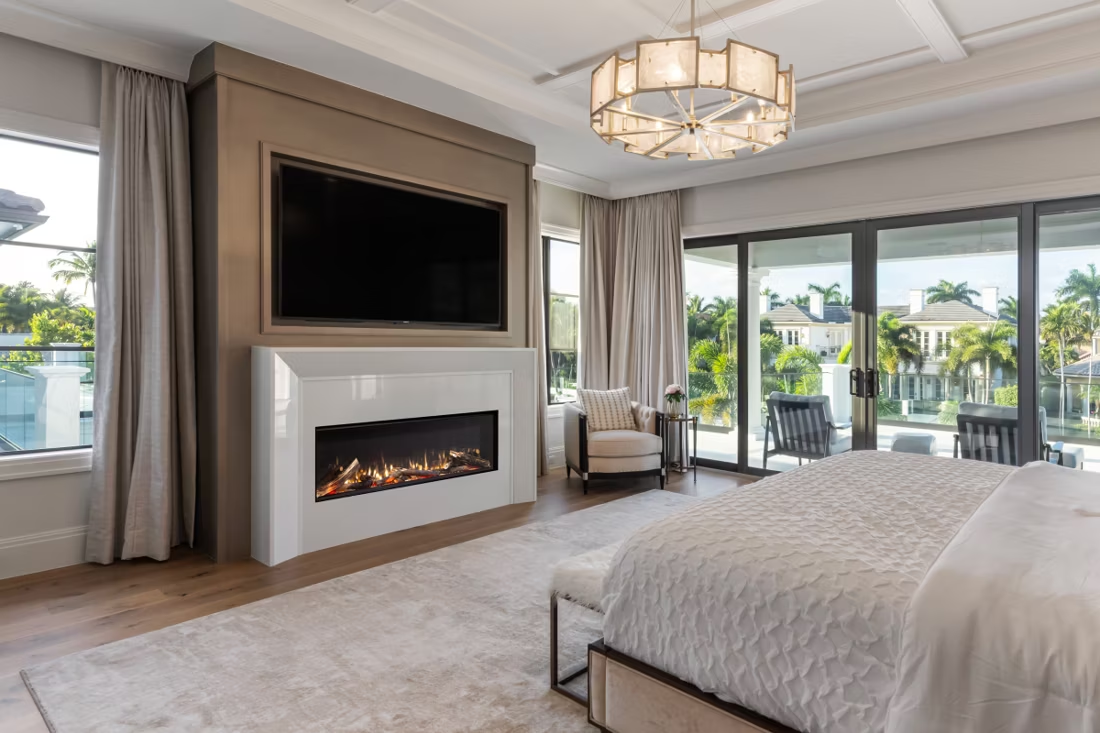
Yes—with an asterisk. Fireplaces are hot and TVs don't like heat. Either put a mantel between them to deflect rising warmth, or choose a fireplace with heat-management technology that creates a cool zone on the wall above—the wall stays around 125 degrees, barely warm, while the room still gets full heat. If you like clean lines and don't want a mantel, heat management is the answer.
Do electric fireplaces actually produce heat?
Yes—most put out around 4,800–5,000 BTUs from a standard outlet, which comfortably warms a bedroom, office, or den as a comfort-zone heater. What they won't do is carry a whole house the way wood, gas, or pellet can. Think of electric as ambiance-first with honest supplemental heat: flames on with no heat in July, flames plus warmth in January.
Does a fireplace add value to my home?
On average, a fireplace adds back to the home about the same amount you spent installing it. Add the monthly savings from heating the rooms you actually use instead of the whole house—often hundreds of dollars a year—and the value case is strong before you even count what a fire does for how your family uses the room.
What is an in-home preview and do I need one?
It's a visit where a hearth professional measures your space, confirms the model you picked actually works in your home, and walks the specs—framing, gas line, venting, finish work—before anything is ordered. Some details you just can't know until you see the house. Never make a down payment without one; it's the single most-skipped step that burns buyers.
Stove and Fireplace Dealers in Richmond County
Find your electric fireplace in Richmond County.
Tell us a bit about your home—rowhouse, co-op, condo, or detached—and we'll put together a free Project Guide & Parts List for your electric fireplace project, including the exact unit and parts, and match you with a trusted local dealer or electrician in Richmond County.
Find Your Fireplace →