
Clean gas heat that fits Staten Island's home style.
Natural gas service from National Grid reaches most of Richmond County, from St. George to Tottenville, with propane filling the gaps in areas off the main lines. Find the right fireplace, insert, or stove for your rowhouse, Cape Cod, or colonial—and get matched with a trusted local dealer.
Every Project Starts From One of These Five Situations
Gas heat matches how Staten Island actually lives.
Richmond County—Staten Island—is home to nearly 496,000 people packed into roughly 58 square miles, with housing stock ranging from early-1900s masonry rowhouses near St. George to postwar Cape Cods in New Springville to newer colonials on the South Shore. The borough sits in climate zone 4A with a moderately long heating season and winter lows averaging 26°F—colder than coastal Brooklyn but nowhere near the much longer, harsher winters of a place like Buffalo NY. That moderate cold, combined with dense housing and strict NYC fire code, is exactly why gas—not wood—is the dominant hearth fuel here.
National Grid supplies natural gas to most of the borough, and homeowners with existing gas service (a furnace or range hookup) usually have the easiest path to a gas fireplace or insert. In pockets of the South Shore and some waterfront areas without a nearby main, propane fills the gap. Either way, the borough's NYC Department of Buildings office handles the permitting, and any gas line work requires a licensed master plumber—which is part of why working with a hearth dealer who coordinates trades, rather than piecing it together yourself, matters on Staten Island.
Three steps. No salesperson until you're ready.
Tell us about your project
Your zip code, your situation, and the fuel you're leaning toward—or let the answers point you to one.
See what's actually available
The brands dealers within 100 miles genuinely carry—real options, never a catalog mirage.
Get your dealer & Project Guide
A trusted local dealer, plus the free Project Guide & Parts List that names every component of the job.
Frequently Asked Questions
How much does a gas fireplace installation cost in Richmond County?
Installed cost on Staten Island typically runs $5,000 to $12,000, with the spread driven by whether you're converting an existing masonry fireplace, running new gas line, or building out a direct-vent unit in a room that never had a hearth. A gas insert into an existing rowhouse fireplace with gas already run to the floor is usually on the lower end. New direct-vent installations in a South Shore colonial—where gas line has to be extended and venting run through an exterior wall—land in the middle to upper range. NYC DOB permit and inspection fees add a modest amount on top; your local dealer will typically fold those into the quote.
Can I convert my existing fireplace to gas?
Yes, and it's one of the most common projects on the island given how many rowhouses and prewar homes in St. George, Tompkinsville, and New Brighton have old masonry fireboxes that were never great performers to begin with. A gas insert slides into the existing opening, uses a stainless liner run up your existing chimney (or a new direct-vent path through the wall, depending on the unit), and typically costs $4,500 to $9,500 depending on whether gas is already run to that room. The conversion keeps the original mantel and surround while replacing the smoky, inefficient firebox with a sealed, code-compliant unit.
Do I need natural gas, or can I use propane?
Either works, but which one is available depends on where in Richmond County you live. National Grid's natural gas mains cover most of the borough's older, denser neighborhoods—St. George, Stapleton, West Brighton—so if your home already has a gas range or furnace, adding a fireplace is usually a straightforward tie-in. In parts of the South Shore and some waterfront pockets where mains don't reach every block, propane is the standard fallback, either from an existing tank or a new one set by a local propane supplier. Most fireplace models can be configured for either fuel with the right orifice kit.
Will my gas fireplace work if the power goes out?
Most modern gas fireplaces will, which matters on an island where nor'easters and coastal storms can knock out power for days. Units with intermittent pilot ignition (IPI) carry a battery backup—typically AA batteries in the unit—that keeps the igniter working when the grid drops. Valor fireplaces take a different approach: their pilot assembly generates its own electricity through the thermocouple, so there are no batteries to remember at all. Either system will light on demand during an outage; a standing-pilot model with no electronics also works, though it's less common in newer units. Ask your local dealer which ignition system is on any model you're considering.
What's the difference between a gas fireplace, insert, and stove?
A gas fireplace is a fully built-in unit framed into a wall—the standard choice for new construction or a room that never had a hearth, common in newer South Shore colonials. A gas insert is built to drop into an existing masonry fireplace opening, which is why it's the go-to for Staten Island's older rowhouses and Capes that already have a firebox. A gas stove is a freestanding unit that sits out on a hearth pad like a wood stove but runs on gas—less common on the island but occasionally used in finished basements or converted porches. For most Richmond County homeowners with an existing fireplace, an insert is the simplest and most cost-effective route.
Do I need a permit to install a gas fireplace in Richmond County?
Yes. Any gas fireplace installation in Richmond County requires a permit through the NYC Department of Buildings, and any new or modified gas line must be installed by a licensed master plumber and inspected before the gas is turned on. This is one of the more heavily regulated corners of home renovation in New York City, and it's exactly why most homeowners let their hearth dealer coordinate the permit, the plumber, and the DOB inspection as one package rather than managing three separate trades themselves.
Vented vs. vent-free gas fireplaces—what's allowed on Staten Island?
Vented (direct-vent or B-vent) gas fireplaces draw combustion air from outside and exhaust it back outside through a sealed pipe—they're the standard, code-friendly choice throughout Richmond County and work in nearly any room, including interior rooms without a chimney. Vent-free units burn directly into the room air and face tighter restrictions under New York City's fuel gas code, including room-size minimums and required oxygen-depletion sensors—many NYC inspectors and dealers steer homeowners toward direct-vent models instead, which deliver comparable heat without the indoor air tradeoffs. If you're set on a vent-free unit, confirm with your dealer and the DOB inspector before you buy.
How often should a gas fireplace be serviced?
Plan on an annual inspection—a technician checks the burner, pilot assembly, venting, and gas connections, and cleans the glass and interior. It's a quicker, less involved visit than a wood chimney sweep would be, but just as important, especially in rowhouses where the venting run to the exterior wall is short and any blockage (bird nests, debris) shows up fast. Expect to pay roughly $150 to $250 for a standard annual service call from a local hearth technician.
Gas vs. wood—which makes sense for a Staten Island home?
Wood is genuinely rare as a primary heat source in Richmond County—dense housing, tight lot lines, and NYC fire code make wood-burning installations uncommon compared to the rest of the state, and most of the borough's older fireplaces were built for occasional use, not serious heat output. Where wood does show up, it's usually decorative or tied to a second home upstate rather than year-round heat. Gas, by contrast, fits how the borough actually lives: instant on-off operation, no ash or creosote in a rowhouse basement, and heat output that holds up fine through Staten Island's moderate 4A winters without the wood storage or venting challenges that come with dense urban lots.
Why is a fireplace insert so efficient?
An insert does two things: it seals the chimney completely, so you stop losing air you already paid to heat, and it radiates warmth into the room through the firebox and glass. Most add a heat-exchange fan that pulls cool room air underneath, wraps it around the hot firebox, and pushes it back out warm. Your home is more efficient before you've even lit the first fire.
Can I put a TV above my fireplace?
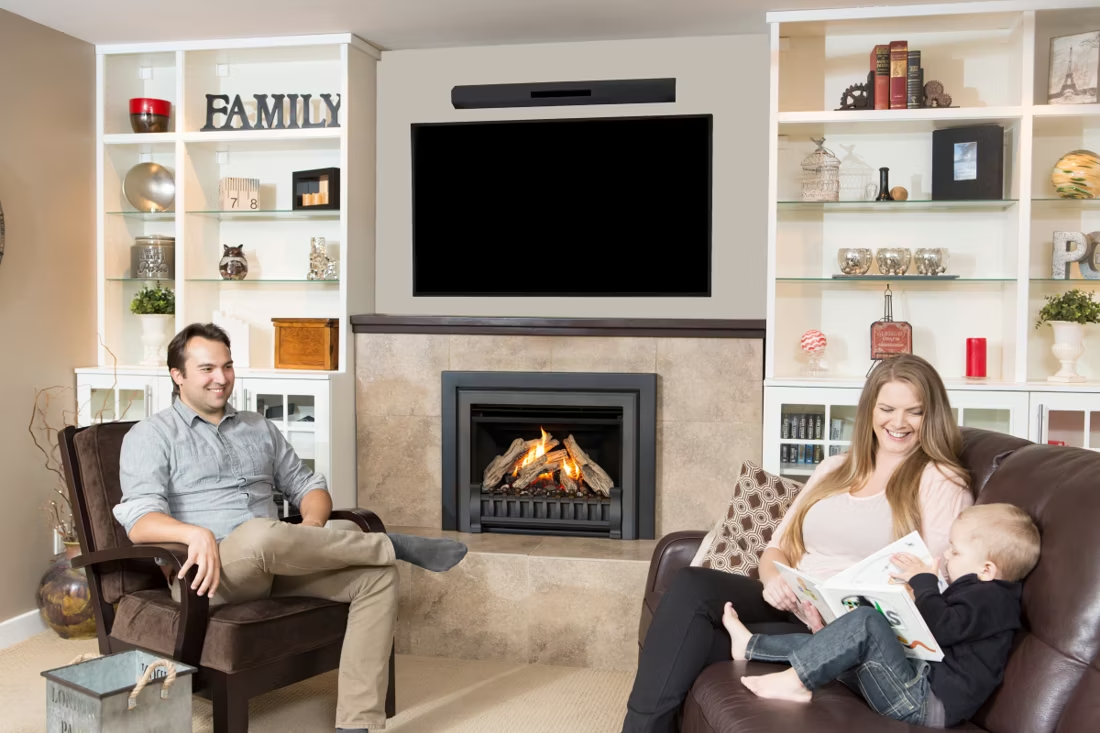
Yes—with an asterisk. Fireplaces are hot and TVs don't like heat. Either put a mantel between them to deflect rising warmth, or choose a fireplace with heat-management technology that creates a cool zone on the wall above—the wall stays around 125 degrees, barely warm, while the room still gets full heat. If you like clean lines and don't want a mantel, heat management is the answer.
Can I install a fireplace myself?
If you're putting a fire in your house on purpose, it's best to work with an expert. Unless you're genuinely experienced in framing, gas line, vent pipe, and the national code on clearances to combustibles, have a professional do it—and ideally the same company that sells you the fireplace, so warranty, service, and liability all live under one roof.
Does a fireplace add value to my home?
On average, a fireplace adds back to the home about the same amount you spent installing it. Add the monthly savings from heating the rooms you actually use instead of the whole house—often hundreds of dollars a year—and the value case is strong before you even count what a fire does for how your family uses the room.
Stove and Fireplace Dealers in Richmond County
Find your gas fireplace in Richmond County.
Tell us a bit about your home and we'll match you with the right gas fireplace, insert, or stove—plus a free Project Guide & Parts List with the exact parts, vent kit, and your recommended local Staten Island dealer.
Find Your Fireplace →