
Clean Heat for Staten Island's Coldest Nights, Without the Woodpile.
Staten Island's single-family housing stock and moderate winters make pellet stoves a practical supplemental heat source. Find the right unit and connect with a trusted local dealer.
Every Project Starts From One of These Five Situations
Convenience without the cordwood.
Staten Island is the one NYC borough where wood heat culture never really took hold—there's no national forest land nearby, no cutting permits to speak of, and most lots are too tight to stack cords of oak or maple even if you wanted to. What Staten Island does have is a lot of detached and semi-attached single-family homes with basements, attached garages, and finished lower levels, which is exactly the kind of housing stock where a pellet stove makes sense: no chimney required, no wood to split, and fuel that arrives in 40-pound bags instead of a dump truck.
At 160 feet of elevation with average winter lows around 26°F and roughly 4,700 heating degree days, Staten Island's climate zone (4A) is far milder than genuinely cold-climate markets like Burlington, VT or Duluth, MN—most homeowners here are running central heat or steam and looking for supplemental warmth in a specific room, not a primary heat source for a whole house. That's a pellet stove's strong suit. It's also worth noting that Con Edison's residential electric rate runs about 34 cents per kWh, among the highest in the country—a pellet stove's auger and blower draw only 100 to 400 watts, so running one costs a fraction of what electric resistance heat would in the same room.
Three steps. No salesperson until you're ready.
Tell us about your project
Your zip code, your situation, and the fuel you're leaning toward—or let the answers point you to one.
See what's actually available
The brands dealers within 100 miles genuinely carry—real options, never a catalog mirage.
Get your dealer & Project Guide
A trusted local dealer, plus the free Project Guide & Parts List that names every component of the job.
Frequently Asked Questions
How much does a pellet stove installation cost on Staten Island?
A typical pellet stove or insert installation on Staten Island runs roughly $4,500 to $8,500, with NYC-area labor rates pushing costs a bit higher than in less dense markets. The lower end applies to a freestanding stove venting through an exterior wall with PL pipe in a basement or garage—the most common setup on the Island. The higher end applies to insert conversions into an existing masonry fireplace, or installs requiring longer horizontal venting runs through brick or block walls common in Staten Island's older homes.
Do I need a permit to install a pellet stove on Staten Island?
Yes. Because Staten Island falls under NYC jurisdiction, installations go through the NYC Department of Buildings rather than a county building office, and the work typically requires a filing and inspection tied to the solid-fuel appliance. FDNY also has oversight of solid-fuel burning equipment in the five boroughs, and reputable installers carry the relevant Certificate of Fitness credentials. Most local hearth dealers who work regularly in Staten Island handle this paperwork as part of the installation, which is one good reason to avoid a big-box install crew unfamiliar with NYC code.
What size pellet stove do I need for a Staten Island home?
Most Staten Island homes are capes, colonials, and semi-attached rowhouses in the 1,200 to 2,500 square foot range, and most homeowners here are installing a pellet stove as zone heat for a basement, den, or finished garage rather than whole-house heat. A small to mid-size unit (40,000–50,000 BTU) is usually plenty for a single level or finished basement. Whole-home heating with pellet is less common here given the area's milder winters and existing central heat, but larger units exist for homes that want to offset oil or gas heating costs significantly. A local dealer can size the unit to your actual square footage and layout during an in-home visit.
Where do I buy pellet fuel on Staten Island?
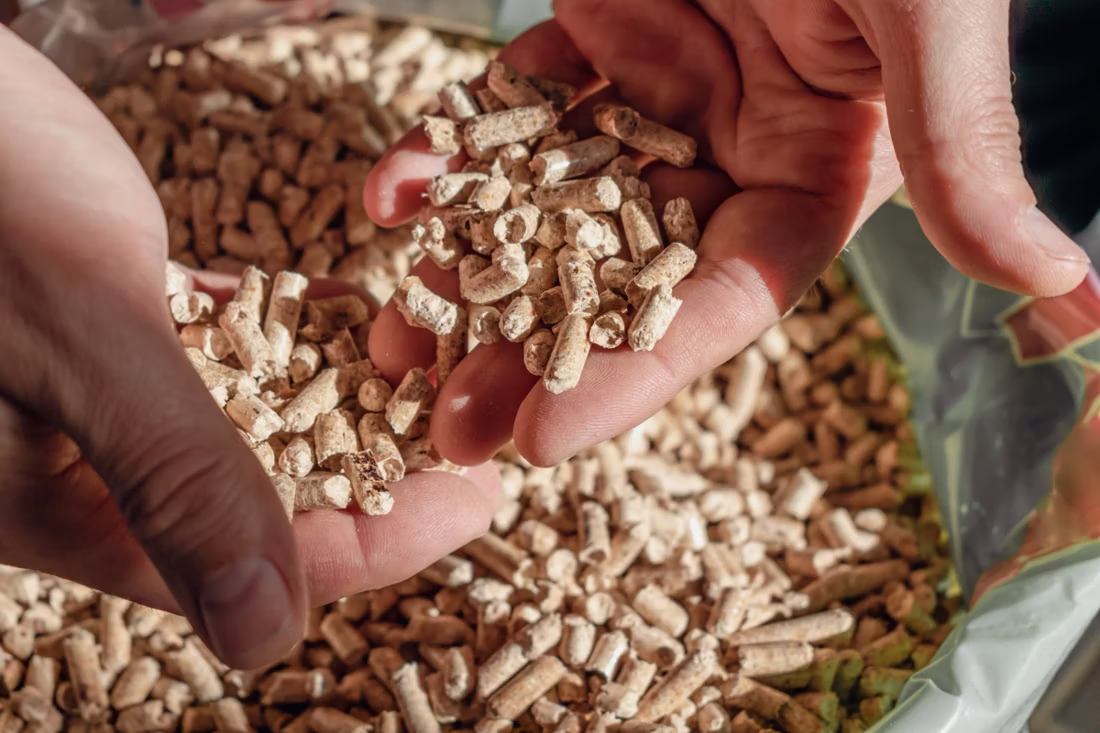
Regional brands like Energex, Hamer Pellet Fuel, and Greene Team Pellet Fuel are commonly stocked at hardware stores and hearth dealers serving the Island, along with national brands carried at big-box retailers. Hardwood pellets typically run $300 to $400 per ton, and most homeowners buy a season's supply (roughly 2 to 3 tons for a supplemental-heat setup) in the fall before pricing rises with demand. Because pellets come in bagged pallets rather than delivered cordwood, storage is far simpler in a garage or basement than stacking firewood—a real advantage on Staten Island's smaller lots.
Why choose pellet instead of wood on Staten Island?
Wood heat is genuinely impractical for most Staten Island properties—there's no nearby public land for cutting permits, lot sizes rarely accommodate seasoned cordwood storage, and most homes weren't built with masonry chimneys sized for a wood stove. Pellet solves both problems: fuel arrives in stackable bags, and venting runs through a small-diameter PL pipe out a side wall instead of requiring a full chimney. There are no local air quality restrictions on solid-fuel burning here, so pellet stoves can run whenever you want them to, without the curtailment periods some wood-burning regions impose.
Will my pellet stove work if the power goes out?
No—pellet stoves rely on an electric auger to feed fuel and a blower to move heat, so a power outage stops the stove. Some Staten Island homeowners pair their unit with a small battery backup or generator specifically for this reason, especially after storms like Sandy and Ida made prolonged Con Edison outages a real concern on the Island. If backup heat during outages is your top priority, a wood stove or a pellet stove with a battery backup kit are the two paths worth discussing with a local dealer.
How is a pellet stove vented in a Staten Island home?
Most pellet stoves vent horizontally through an exterior wall using PL (pellet vent) pipe, which is far less invasive than the masonry chimney a wood stove needs. That makes pellet a good fit for Staten Island's brick and vinyl-sided capes and colonials, where cutting a new chimney chase isn't practical. For homes with an existing masonry fireplace, a pellet insert can use the existing flue with a liner, though a direct through-wall vent is usually simpler and cheaper when there's an accessible exterior wall nearby.
How much maintenance does a pellet stove need?
Pellet stoves need more frequent light maintenance than wood stoves but far less heavy cleaning. Plan on emptying the ash pan every few days during regular use, wiping the glass weekly, and vacuuming the burn pot and hopper area every couple of weeks. An annual professional service—checking the auger motor, blower, gaskets, and venting—runs a few hundred dollars and is worth scheduling before the fall burning season. Several hearth service companies serving Staten Island offer this as a standard fall tune-up.
What's the best pellet stove for Staten Island's climate?
Given the Island's relatively mild winters (average lows around 26°F) and typical use as supplemental zone heat, mid-size units from Harman, Quadra-Fire, or Englander tend to be a good match—efficient, reliable, and sized for a single room or finished basement rather than an entire house. Homeowners looking to offset a bigger share of their oil or gas heating bill can size up, but for most Staten Island installs, a well-built 40,000–50,000 BTU stove covers the intended space comfortably. A local dealer can walk through specific models based on your room size and venting path.
Why is my open fireplace making my house colder?
Open fireplaces suck—literally. As the fire burns, it consumes air your furnace already paid to heat and pulls it out through the chimney, so the house is actually colder after the fire goes out than before you lit it. An insert fixes this: it seals the chimney, puts fixed glass across the front, and turns that hole in your house into a real heat source.
How often does a pellet stove need cleaning?
A clean pellet stove is a happy pellet stove. Plan on cleaning the burn pot about once a week when you're burning regularly—ash and clinkers gum up the air holes just like a pellet barbecue. Most pellet stove problems trace back to skipped cleaning that nobody explained up front. Some designs make it easy with a trapdoor burn pot: pull a lever and the gunk drops into the ash pan.
What is an in-home preview and do I need one?
It's a visit where a hearth professional measures your space, confirms the model you picked actually works in your home, and walks the specs—framing, gas line, venting, finish work—before anything is ordered. Some details you just can't know until you see the house. Never make a down payment without one; it's the single most-skipped step that burns buyers.
Can I install a fireplace myself?
If you're putting a fire in your house on purpose, it's best to work with an expert. Unless you're genuinely experienced in framing, gas line, vent pipe, and the national code on clearances to combustibles, have a professional do it—and ideally the same company that sells you the fireplace, so warranty, service, and liability all live under one roof.
Preferred Dealer in Staten Island
Marked Preferred because they run on WhyFire's software—so they can show you real pricing and book your appointment right here. No manufacturer pays for placement. How we verify dealers →
Pellet Brands Stocked Around Staten Island
Manufacturers will point you to the nearest stocking dealer.
Find your pellet stove in Staten Island.
Tell us a bit about your home and we'll match you with the right pellet stove or insert, plus a free Project Guide & Parts List with your exact vent kit and a trusted local Staten Island dealer.
Find Your Fireplace →