
Pellet heat, sized for Nassau County's small lots and older homes.
Pellet stoves are a minority choice on Long Island, but for the right detached home in Massapequa, Garden City, or Port Washington, one can still make sense. Find a local dealer who'll tell you honestly whether it fits your house.
Every Project Starts From One of These Five Situations
Pellet stoves are the exception, not the rule, on Long Island.
Nassau County is one of the most densely built suburban counties in the country—three towns (Hempstead, North Hempstead, Oyster Bay) and dozens of incorporated villages packed onto a stretch of Long Island where lot sizes are small and housing stock is largely attached, semi-attached, or built close to the property line. Winters here are mild by national standards: Climate Zone 4A, an average winter low around 28°F, and a comparatively light heating season—a fraction of what a place like Burlington, VT or Duluth, MN sees in a typical season. Between the tight clearances and the modest heating load, biomass appliances simply aren't the default here the way they are upstate or in colder inland regions.
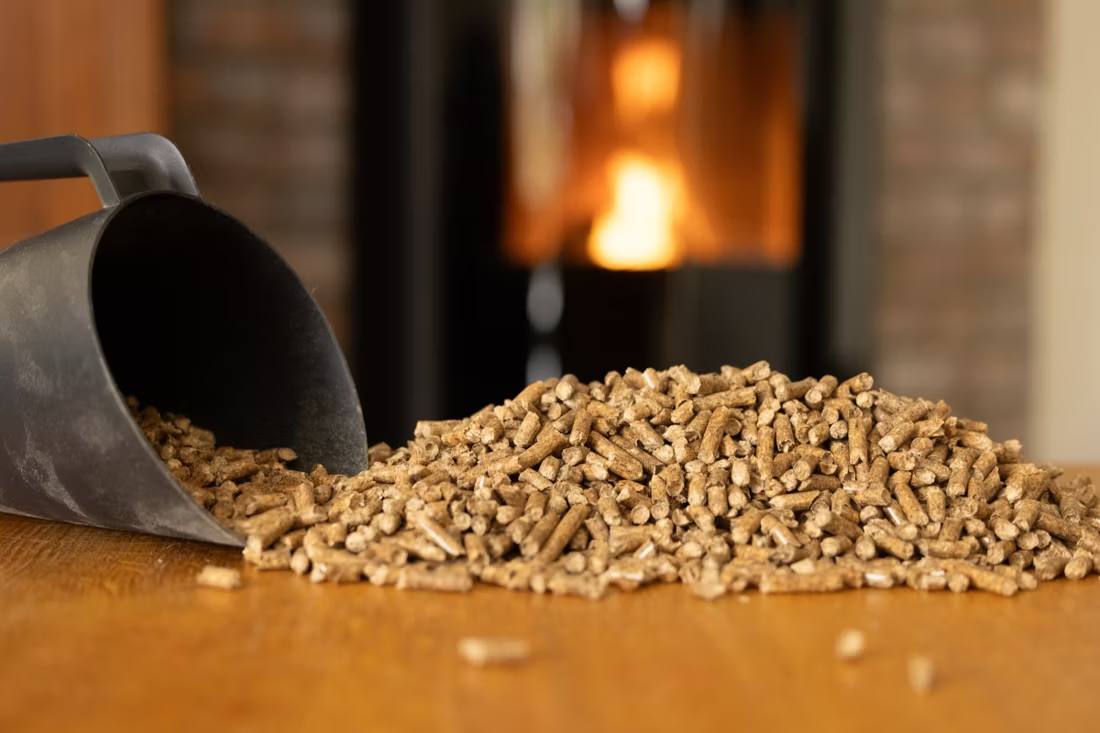
Natural gas service through National Grid reaches most of Nassau County, and that infrastructure—paired with mild winters—is why gas and electric are the standard heating fuels across the county. Pellet stoves still show up in a small number of detached, single-family homes, usually as supplemental heat, storm-season backup, or simply for the look of a real flame without stacking cordwood. Regional pellet brands like Energex, Hamer Pellet Fuel, and Greene Team Pellet Fuel are sold through local hardware and farm-supply outlets for the homeowners who do go this route, but it's a smaller, more deliberate purchase here than in a wood-and-pellet-heavy market.
Three steps. No salesperson until you're ready.
Tell us about your project
Your zip code, your situation, and the fuel you're leaning toward—or let the answers point you to one.
See what's actually available
The brands dealers within 100 miles genuinely carry—real options, never a catalog mirage.
Get your dealer & Project Guide
A trusted local dealer, plus the free Project Guide & Parts List that names every component of the job.
Frequently Asked Questions
How much does a pellet stove installation cost in Nassau County?
Most pellet stove or insert installations in Nassau County run in the $3,000 to $6,000 range, depending on the unit, whether venting can run through an existing wall or chimney, and how much clearance work is needed. Because so much of the county's housing stock consists of attached homes, semi-attached homes, and Capes and Colonials built close together, venting placement often needs extra attention to meet clearance-to-combustibles rules—that's frequently the line item that pushes a quote toward the higher end. Detached single-family homes with a straightforward exterior wall for venting tend to land on the lower end.
Are pellet stoves actually common in Nassau County?
No, and it's worth being direct about that. Pellet stoves are a minority heating choice here—natural gas from National Grid and electric heat cover most Nassau County homes, and the county's mild winters (an average low near 28°F, with a heating season that's comparatively light) don't create the kind of sustained cold that drives biomass heating demand in colder parts of the Northeast. The homeowners who do install pellet stoves in Nassau County are almost always in detached single-family homes and are choosing it for supplemental heat, storm-season backup, or the ambiance of a real flame—not as a primary heat source.
Do I need a permit to install a pellet stove in Nassau County?
Yes. Nassau County doesn't have a single unified building department—permitting runs through whichever town or village you live in. That means the Town of Hempstead, the Town of North Hempstead, the Town of Oyster Bay, or one of the county's many incorporated villages, each with its own code enforcement office and its own inspection process. A licensed local installer will know which jurisdiction applies to your address and will typically handle the permit application, venting inspection, and final sign-off as part of the job.
Where can I buy pellets in Nassau County?
Bagged pellets from regional brands like Energex, Hamer Pellet Fuel, and Greene Team Pellet Fuel are available through hardware stores and farm-supply retailers serving Long Island, and some suppliers offer pallet delivery (typically 50 forty-pound bags per pallet) for homeowners who burn through more than a bag or two a week. Because pellet heating is a smaller market here than in upstate New York or New England, expect fewer dedicated pellet-fuel retailers and more general hardware or heating-supply stores carrying a rotating stock—buying a pallet or two in early fall before cold weather hits is the safer play.
Will a pellet stove work if the power goes out?
Not without a battery backup. Pellet stoves rely on an electric auger to feed fuel and a blower to distribute heat and exhaust combustion gases—cut the power and the stove stops, full stop. That matters on Long Island, where nor'easters and hurricane remnants regularly knock out power for days at a stretch through PSEG Long Island's service territory. If backup heat during outages is your main goal, a battery backup unit (sized to run the stove for a set number of hours) is worth budgeting for, or you may want to compare notes with a local dealer on wood-burning alternatives, which don't need electricity to produce heat.
Pellet stove or wood stove—which makes more sense in Nassau County?
Honestly, neither is a mainstream choice here, and it's worth weighing both carefully rather than assuming either is the obvious answer. Wood-burning appliances face the same lot-size and clearance challenges as pellet stoves, plus the added logistics of storing and sourcing cordwood (oak, maple, birch, and ash are the common species regionally) in a county where most homeowners don't have space for a woodpile. Pellet stoves solve the storage problem with bagged fuel but lose function during power outages. If a real fire and true off-grid backup heat matter more to you, wood is worth a look; if convenience and a set-it-and-adjust thermostat matter more, pellet is the easier day-to-day appliance—assuming your home has room for it.
How should I store pellets in a humid Long Island climate?
Pellets absorb moisture quickly, and Nassau County's Zone 4A climate brings enough humidity—especially in summer—that improperly stored pellets can swell, crumble, or clog an auger. Keep bags off concrete floors (a pallet or shelving works), store them in a dry garage, basement, or shed rather than an uncovered outdoor space, and avoid buying more than a season's worth if you don't have climate-controlled storage. A few compromised bags are usually a storage problem, not a fuel-quality problem—check for moisture exposure before assuming a stove issue.
What's a good pellet stove for a Nassau County home?
For the detached, single-family homes where pellet stoves make the most sense here, mid-size units from established manufacturers like Harman, Quadra-Fire, or England's Stove Works cover most needs—Nassau County's mild winters mean you rarely need a stove sized for extreme cold. A local dealer will size the unit to your actual square footage and venting path rather than to a worst-case climate scenario, which matters in a market where every stove installed is a more custom fit than in a colder region with standardized setups.
How often does a pellet stove need to be serviced?
Plan on cleaning the burn pot and ash area every few days to weekly during regular use, a full cleaning of the exhaust venting and hopper system once a season, and an annual professional inspection to check the auger motor, blower, and venting seals. Because pellet stoves are less common in Nassau County, it's worth confirming with your dealer at time of purchase that they also handle ongoing service—you'll want that relationship in place before you need it, rather than searching for a pellet-specific technician mid-winter.
Why is my open fireplace making my house colder?
Open fireplaces suck—literally. As the fire burns, it consumes air your furnace already paid to heat and pulls it out through the chimney, so the house is actually colder after the fire goes out than before you lit it. An insert fixes this: it seals the chimney, puts fixed glass across the front, and turns that hole in your house into a real heat source.
Why is a fireplace insert so efficient?
An insert does two things: it seals the chimney completely, so you stop losing air you already paid to heat, and it radiates warmth into the room through the firebox and glass. Most add a heat-exchange fan that pulls cool room air underneath, wraps it around the hot firebox, and pushes it back out warm. Your home is more efficient before you've even lit the first fire.
Does a fireplace add value to my home?
On average, a fireplace adds back to the home about the same amount you spent installing it. Add the monthly savings from heating the rooms you actually use instead of the whole house—often hundreds of dollars a year—and the value case is strong before you even count what a fire does for how your family uses the room.
What is an in-home preview and do I need one?
It's a visit where a hearth professional measures your space, confirms the model you picked actually works in your home, and walks the specs—framing, gas line, venting, finish work—before anything is ordered. Some details you just can't know until you see the house. Never make a down payment without one; it's the single most-skipped step that burns buyers.
Stove and Fireplace Dealers in Nassau County
Costello's Hearth & Spa - Garden City Park
Pellet Brands Stocked Around Nassau County
Manufacturers will point you to the nearest stocking dealer.
Find your pellet stove in Nassau County.
Tell us about your home—lot size, venting options, and where you're located in Nassau County—and we'll match you with a local dealer and send over a free Project Guide & Parts List covering the exact parts, including the vent kit, for your specific setup.
Find Your Fireplace →