
Pellet Heat Isn't Common Here—But It Still Has a Place.
Rockville Centre runs on natural gas and a busy municipal power grid. Pellet stoves are a niche choice here, but for the right home they solve a real problem. We'll help you figure out if yours is one of them.
Every Project Starts From One of These Five Situations
A straight answer about pellet stoves in a village built on natural gas.
Rockville Centre is a dense village on Nassau County's south shore—25,000 people packed into just over two square miles, with most homes on modest lots close to their neighbors. Winters here are mild by national standards, with average lows around 26°F and a heating season similar to what you'd see in parts of coastal New Jersey rather than anything like Buffalo or Duluth. Natural gas service is widely available throughout the village, and it's the default heating and fireplace fuel for most homeowners. Wood burning is uncommon too—small lots, close-set houses, and village fire code make cutting and storing cordwood impractical for most residents.
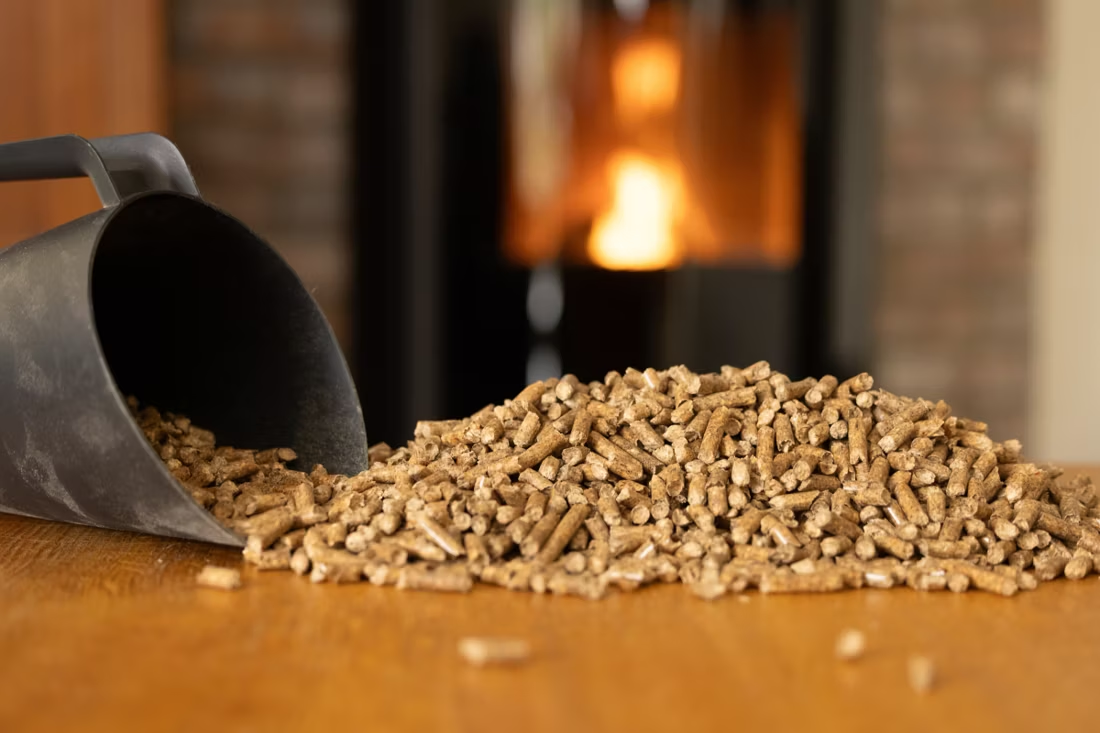
Against that backdrop, pellet stoves are a genuine niche product here, not a mainstream category. The handful of Rockville Centre homeowners who do install one are usually solving a specific problem: backup heat for when Nor'easters knock out power, a supplemental heat source for a finished basement or sunroom that the gas system doesn't reach well, or a wood-look fire experience without the chimney and cordwood logistics a real wood stove requires. Pellets themselves are easy to source regionally—brands like Energex, Hamer Pellet Fuel, and Greene Team Pellet Fuel are all sold through Northeast distributors—so fuel supply isn't the obstacle. Finding a dealer who regularly installs and services pellet equipment in a market this gas-dominant is the harder part, and it's exactly where a local match matters.
Three steps. No salesperson until you're ready.
Tell us about your project
Your zip code, your situation, and the fuel you're leaning toward—or let the answers point you to one.
See what's actually available
The brands dealers within 100 miles genuinely carry—real options, never a catalog mirage.
Get your dealer & Project Guide
A trusted local dealer, plus the free Project Guide & Parts List that names every component of the job.
Frequently Asked Questions
Are pellet stoves actually available or supported in Rockville Centre?
Yes, but it's a smaller market than gas. Most Rockville Centre hearth dealers sell primarily direct-vent gas fireplaces and inserts because that's what the majority of village homes are set up for. A smaller number of Long Island dealers carry pellet stoves and inserts and can service them going forward—that servicing piece matters more with pellet equipment than gas, since the auger, hopper, and exhaust blower are mechanical parts that need periodic attention. We match homeowners here with dealers who genuinely stock and support pellet units rather than a big-box retailer that sells one and disappears.
Why don't more homes in Rockville Centre use pellet stoves?
A few reasons stack up. Natural gas is available through most of the village, and a direct-vent gas insert gives instant, thermostat-controlled heat without any fuel handling—for most homeowners that's simply more convenient. Village lots are also small, and pellet bags need dry, accessible storage, which is a harder ask in an attached garage or a tight basement than it is on a rural property. None of this is about air quality restrictions—Rockville Centre has no burn-ban or non-attainment issues—it's really about convenience and available space favoring gas.
When does a pellet stove make sense here despite being uncommon?
The strongest case is backup heat. Long Island sees regular winter storm outages, and both LIPA and the Village of Rockville Centre's own municipal electric system can be knocked out for a day or more during a bad Nor'easter. A pellet stove needs electricity to run its auger and blower, so it isn't fully outage-proof on its own—but paired with a small battery backup or generator, it's a far more manageable heat source during an extended outage than trying to run central heat off a generator. It also makes sense for a finished basement, sunroom, or addition that the existing gas system doesn't heat well, where running new gas line isn't practical.
What does a pellet stove installation typically cost in a village like this?
Because installers here are less specialized in pellet equipment than in gas, expect installation quotes to run on the higher side of typical Northeast pricing—commonly $4,500 to $8,000 depending on the unit, whether it's a freestanding stove or an insert into an existing fireplace, and the venting path through an exterior wall. Get quotes from a dealer who actually installs pellet units regularly rather than a gas specialist bidding an unfamiliar job—the venting and clearance details differ enough that experience matters for a clean, code-compliant install.
Where does pellet fuel come from if I install a stove in Rockville Centre?
You won't find pellets at every hardware store the way you might upstate, but regional brands including Energex, Hamer Pellet Fuel, and Greene Team Pellet Fuel are distributed throughout the Northeast and are typically available through hearth dealers, some hardware chains, and seasonal delivery services on Long Island. Because demand is lower here than in colder, more rural parts of the state, it's worth confirming a nearby, reliable supply source before you commit to a pellet stove rather than assuming you can pick up bags anywhere locally.
Do I need a permit to install a pellet stove in the Village of Rockville Centre?
Yes—pellet stove and insert installations require a building permit through the Village of Rockville Centre's building department, since the unit needs code-compliant venting through an exterior wall or existing chimney and proper clearances to combustibles. Most established local dealers handle the permit application and inspection scheduling as part of the installation, which is one more reason to work with a dealer who's done this specific type of install in the village before rather than a contractor unfamiliar with local code.
How does a pellet stove compare to a gas insert for a Rockville Centre home?
Gas is the more natural fit for most homes here—with village-wide natural gas service, a direct-vent gas insert gives instant on-off heat, no fuel storage, and none of the ash or hopper maintenance that comes with pellets. A pellet stove's real advantage is that it runs on stored fuel rather than a piped utility, which matters if you're specifically planning around power and gas-line outages during storms rather than everyday convenience. For most homeowners weighing the two purely on comfort and ease, gas wins; for the specific goal of an independent backup heat source, pellet is worth a serious look.
Will a pellet stove work during a Long Island Power Authority outage?
Not without a plan for backup power. Pellet stoves rely on an electric auger to feed fuel and a blower to distribute heat and exhaust combustion air, so a straight power loss will shut the unit down, whether your electricity comes from LIPA or the Village of Rockville Centre's own municipal system. Homeowners who install a pellet stove specifically for storm-outage backup typically pair it with a small inverter generator or battery backup sized for the stove's modest draw—usually well under what a whole-house generator needs—which keeps the unit running through a multi-day outage.
Should I consider a wood stove instead of pellet in Rockville Centre?
Generally no. Wood stoves are even less practical here than pellet units—village lots rarely have space to store and season cordwood, and sourcing firewood locally means buying it rather than cutting your own, since there's no nearby public land with cutting permits the way there is upstate. If you're drawn to a real wood-look fire with true heat output, a pellet insert or a gas unit with a realistic log set will serve a Rockville Centre home far better than trying to make wood work on a small suburban lot.
Why is my open fireplace making my house colder?
Open fireplaces suck—literally. As the fire burns, it consumes air your furnace already paid to heat and pulls it out through the chimney, so the house is actually colder after the fire goes out than before you lit it. An insert fixes this: it seals the chimney, puts fixed glass across the front, and turns that hole in your house into a real heat source.
What do I measure to size a fireplace insert?
Four numbers tell you what fits: the front width, the front height, the back width, and the overall depth of your existing fireplace opening. Grab a tape measure, jot those down, and snap a photo of the wall—those two things do more to move your project forward than anything else you can do today.
Can a fireplace actually lower my heating bill?
Yes—by creating a comfort zone. A furnace heats every square foot of the house just to warm the one room you're in; a gas fireplace on low burns roughly a sixth of the gas a typical furnace does. Set the furnace around 55–60 degrees as a baseline, then heat the rooms your family actually uses. Families who heat this way commonly save $20–$60 a month.
Can I install a fireplace myself?
If you're putting a fire in your house on purpose, it's best to work with an expert. Unless you're genuinely experienced in framing, gas line, vent pipe, and the national code on clearances to combustibles, have a professional do it—and ideally the same company that sells you the fireplace, so warranty, service, and liability all live under one roof.
Nearby Dealers
Hearth shops serving Rockville Centre and the surrounding area.
Costello's Hearth & Spa - Garden City Park
Pellet Brands Stocked Around Rockville Centre
Manufacturers will point you to the nearest stocking dealer.
Find your pellet stove in Rockville Centre.
Tell us about your home and your goals—backup heat, a hard-to-heat room, or something else—and we'll send a free Project Guide & Parts List with the right unit, venting, and a trusted local dealer who actually installs pellet equipment in this market.
Find Your Fireplace →