
Pellet Stoves Are Rare in Long Beach—Here's Where They Still Work.
On a barrier island of co-ops, condos, and flood-zone construction, pellet heat is the exception, not the rule. If your home is one of the exceptions, we'll connect you with a local dealer who knows the difference.
Every Project Starts From One of These Five Situations
Pellet stoves face real obstacles on the barrier island.
Long Beach sits at 7 feet of elevation on a narrow barrier island in Nassau County, with mild coastal winters—an average low of 26°F and roughly 5,041 heating degree days, well short of the cold-climate demand that drives pellet stove adoption inland. Most of the city's housing stock is attached: co-ops, condos, and multi-family buildings clustered close to the boardwalk and canals, where exterior wall penetrations, dedicated venting, and a place to store 40-pound pellet bags simply aren't part of the building. A gas fireplace or an electric unit fits these buildings far more easily than a pellet appliance does.
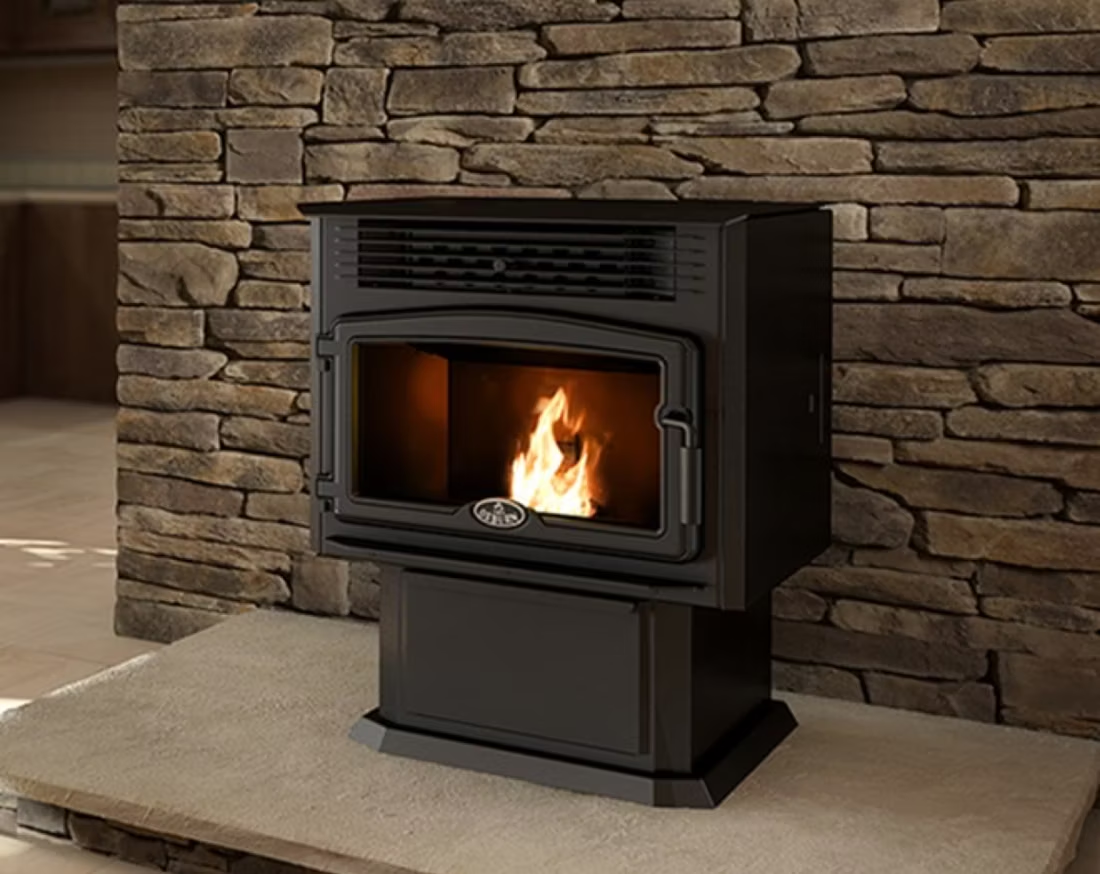
That doesn't mean pellet heat is impossible here—it means it's a niche fit. A detached single-family home on the west end or in one of the island's non-flood-adjacent pockets can absolutely support a pellet stove, provided there's a dry, elevated spot for fuel storage that isn't at ground level in a flood zone. Regional suppliers like Energex, Hamer Pellet Fuel, and Greene Team Pellet Fuel serve the greater Long Island market, so fuel is available if you know where to look. But for the majority of Long Beach households, natural gas and electric fireplaces remain the practical default, and that's the honest starting point for this project.
Three steps. No salesperson until you're ready.
Tell us about your project
Your zip code, your situation, and the fuel you're leaning toward—or let the answers point you to one.
See what's actually available
The brands dealers within 100 miles genuinely carry—real options, never a catalog mirage.
Get your dealer & Project Guide
A trusted local dealer, plus the free Project Guide & Parts List that names every component of the job.
Frequently Asked Questions
Does it make sense to install a pellet stove in Long Beach at all?
For most Long Beach residents, no—not as a first choice. The city's housing stock is dominated by co-ops, condos, and attached homes where cutting an exterior vent penetration and finding storage space for pellet bags is difficult or against building rules. If you own a detached single-family home, especially one set back from the immediate flood-prone canals and boardwalk blocks, a pellet stove can work as a supplemental heat source. We'd rather tell you that upfront than pretend pellet is as common here as it is in upstate New York or New England.
What does a pellet stove installation typically cost in Long Beach?
Costs run higher here than in a typical inland install because of the extra work involved: cutting and flashing an exterior wall penetration on a coastal home, meeting City of Long Beach building code for wall clearances, and in some cases addressing flood-zone requirements for where mechanical equipment can sit. A trusted local dealer will walk your specific home before quoting, since venting complexity—not the stove itself—usually drives the price difference between a straightforward install and a difficult one.
Do I need a permit to install a pellet stove in Long Beach?
Yes. Any new fuel-burning appliance, including a pellet stove with its exterior vent termination, requires a permit through the City of Long Beach Building Department. Because Long Beach is built almost entirely within FEMA-mapped flood zones, permitting often also touches on where mechanical equipment and fuel storage can be located relative to base flood elevation. A local installer who has pulled these permits before will know how to navigate both the building code and the flood-zone rules in the same application.
Can I store pellet fuel safely in a Long Beach home given the flood risk?
This is one of the biggest practical hurdles here. Bagged pellets are combustible and moisture-sensitive, and ground-level or below-grade storage—a garage floor or basement—is exactly the space most exposed to storm surge and tidal flooding on this barrier island. Homeowners who do install pellet stoves in Long Beach typically store fuel on an elevated first floor or main-level utility space, away from any area that has flooded historically. If your home doesn't have that kind of space, that alone is often reason enough to look at gas instead.
My building is a co-op or condo—can I still get a pellet stove?
Almost certainly not, and it's worth knowing that before you spend time pricing units. Pellet stoves need a dedicated exterior vent through an exterior wall, which co-op and condo boards in Long Beach generally won't approve because it affects the building's facade and shared systems. Residents in these buildings are much better served by a vented gas fireplace insert (if gas service and board approval allow) or an electric fireplace, which requires no venting at all and is the most board-friendly option available.
Where does pellet fuel come from if I do install a stove here?
There's no local pellet mill on Long Island, so bagged fuel is trucked in from regional producers. Energex, Hamer Pellet Fuel, and Greene Team Pellet Fuel all distribute into the greater Long Island market and are the brands most likely to show up at hardware stores and hearth dealers serving Nassau County. Buying a season's supply (typically delivered by pallet, 50 bags per pallet) in late summer or early fall, before demand and price both climb, is the standard approach for the handful of Long Beach homeowners who burn pellets.
How does a pellet stove compare to a gas fireplace for a Long Beach home?
Gas is the more natural fit for this city. Long Beach has standard gas service and mild coastal winters, so a direct-vent gas fireplace or insert delivers instant, thermostat-controlled heat without any fuel storage, hopper loading, or ash cleanup—and it's far easier to get approved in an attached or multi-unit building. A pellet stove offers a real flame and lower ongoing fuel cost per BTU in a cold climate, but Long Beach's HDD load (around 5,041) doesn't demand that kind of heavy heating input, and the venting and storage tradeoffs rarely pencil out against gas here.
What about electric fireplaces instead of pellet?
Electric is the easiest install in Long Beach by a wide margin—no venting, no fuel storage, no permit complications, and it's the option almost every co-op and condo board will approve without objection. The tradeoff is operating cost: Long Island Power Authority's residential rate runs around $0.2457 per kWh, noticeably above the national average, so an electric unit used as a primary heat source costs more to run than a pellet stove would. For occasional ambiance or supplemental zone heat in an apartment or condo, though, electric remains the practical choice for most Long Beach households.
Does the salt air on the barrier island affect a pellet stove's venting or components?
Yes, more than it would inland. Long Beach's ocean-adjacent air accelerates corrosion on unprotected metal venting, exterior termination caps, and hardware, so any pellet stove installed here should use stainless steel vent components rather than standard galvanized pipe, and the exterior cap should be inspected each season for salt-related wear. This is a detail a local dealer familiar with coastal installs will already build into the plan—it's not something a big-box installer working from a generic spec sheet is likely to catch.
What's the difference between an insert and a zero-clearance fireplace?
An insert is a fireplace that slides into a pre-existing wood-burning fireplace—if you don't have one, there's nothing to insert it into. A zero-clearance fireplace is built into a framed wall, which makes it the answer for remodels and new construction. Simple test: existing masonry fireplace means insert; blank or framed wall means zero-clearance.
Why is a fireplace insert so efficient?
An insert does two things: it seals the chimney completely, so you stop losing air you already paid to heat, and it radiates warmth into the room through the firebox and glass. Most add a heat-exchange fan that pulls cool room air underneath, wraps it around the hot firebox, and pushes it back out warm. Your home is more efficient before you've even lit the first fire.
What is an in-home preview and do I need one?
It's a visit where a hearth professional measures your space, confirms the model you picked actually works in your home, and walks the specs—framing, gas line, venting, finish work—before anything is ordered. Some details you just can't know until you see the house. Never make a down payment without one; it's the single most-skipped step that burns buyers.
Can a fireplace actually lower my heating bill?
Yes—by creating a comfort zone. A furnace heats every square foot of the house just to warm the one room you're in; a gas fireplace on low burns roughly a sixth of the gas a typical furnace does. Set the furnace around 55–60 degrees as a baseline, then heat the rooms your family actually uses. Families who heat this way commonly save $20–$60 a month.
Nearby Dealers
Hearth shops serving Long Beach and the surrounding area.
Costello's Hearth & Spa - Garden City Park
Pellet Brands Stocked Around Long Beach
Manufacturers will point you to the nearest stocking dealer.
Get a straight answer for your Long Beach home.
Tell us about your home—co-op, condo, or detached house—and we'll match you with a trusted local dealer and send you a free Project Guide & Parts List for whichever fuel actually makes sense for your building, including the vent kit and exact parts needed.
Find Your Fireplace →