
Pellet Heat Is Uncommon in Freeport—Let's Talk About Why.
On tight village lots with gas and electric already at the curb, pellet stoves are a niche choice in Freeport. If one still makes sense for your home, we'll connect you with a local dealer who can tell you straight.
Every Project Starts From One of These Five Situations
Why pellet stoves are the exception here, not the rule.
Freeport is a tightly built incorporated village on Long Island's South Shore—about 44,000 people packed into roughly 2.8 square miles, much of it 40-by-100-foot lots and close-set homes near the Nautical Mile and Freeport's canals. Winters here are moderate by national standards: an average low around 26°F and a fairly short, mild heating season, well short of the cold that drives serious pellet-stove demand in places like Burlington, VT or Duluth, MN. Between the mild climate and the density of the housing stock, there simply isn't much room—literally or functionally—for a hopper-fed appliance that needs a pellet bag storage area and clearance for exterior venting.
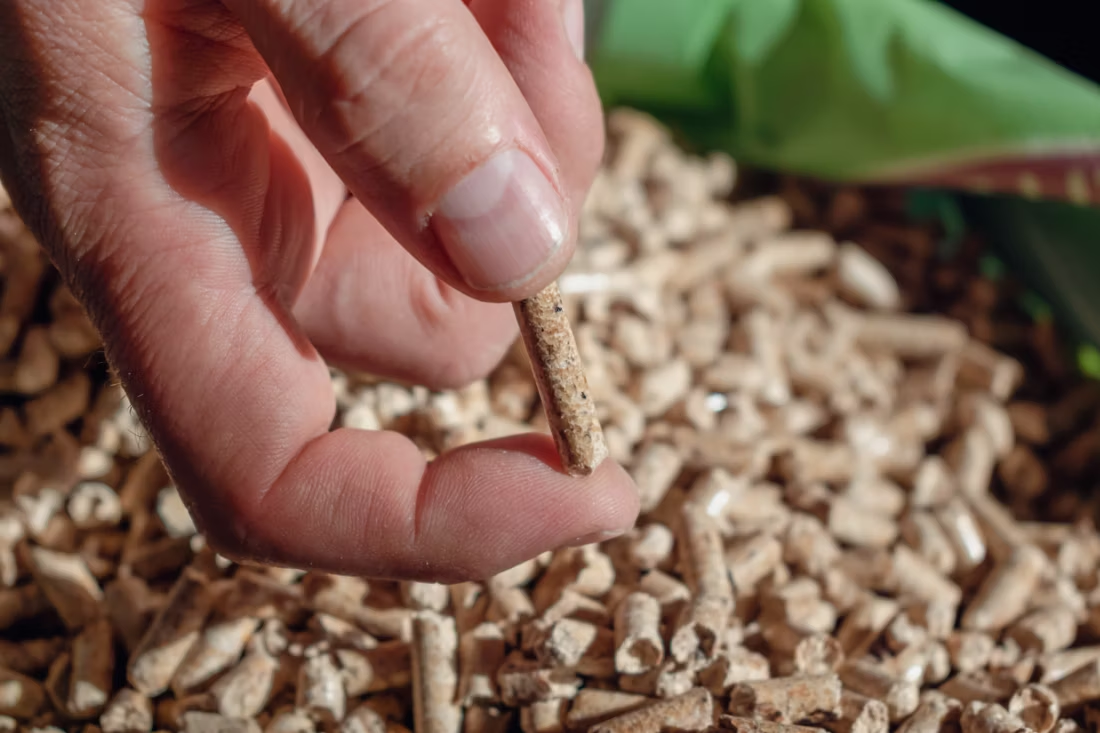
Natural gas is standard here, and both the Village of Freeport's own municipal electric utility and the Long Island Power Authority serve the village, so most homeowners already have a gas line or reliable electric service that makes a gas insert or electric unit the simpler install. Pellet brands like Energex, Hamer Pellet Fuel, and Greene Team Pellet Fuel are sold across the broader New York region, but on Long Island they're a far more common sight upstate or in the North Country than in Nassau County. That said, a small number of Freeport homeowners still install pellet stoves—usually in a finished basement, garage, or detached structure—for supplemental radiant heat or as a hedge against outages. If that's you, a local dealer can tell you honestly whether your space works.
Three steps. No salesperson until you're ready.
Tell us about your project
Your zip code, your situation, and the fuel you're leaning toward—or let the answers point you to one.
See what's actually available
The brands dealers within 100 miles genuinely carry—real options, never a catalog mirage.
Get your dealer & Project Guide
A trusted local dealer, plus the free Project Guide & Parts List that names every component of the job.
Frequently Asked Questions
Are pellet stoves actually a good fit for a home in Freeport?
For most Freeport homes, probably not as a primary heat source—and it's worth saying that plainly rather than pretending otherwise. Freeport's winters are mild (a fairly short, mild heating season, average lows around 26°F), natural gas is already standard in most of the village, and lot sizes leave little room for pellet bag storage or a dedicated hopper-loading routine. Where pellet stoves do work in Freeport is as supplemental heat in a finished basement, garage, or detached workshop where a homeowner wants radiant heat without running a new gas line. If that describes your situation, it's worth a conversation with a local dealer before ruling it out.
If I still want a pellet stove in Freeport, what does installation cost?
Because pellet stoves are a niche request on Long Island's South Shore, pricing isn't as standardized locally as it is for gas or electric units, but a straightforward freestanding pellet stove with through-wall venting typically runs in the $3,500 to $6,500 range nationally, including the unit and installation. Expect the estimate to shift based on whether you need new electrical for the hopper motor and blower, and whether the vent run has to clear a neighboring structure given how close Freeport's lots are set. Because dedicated pellet installers are thin on the ground here, it's common to work with a hearth dealer who covers Nassau and Suffolk counties rather than one based in the village itself.
Why don't more homes in Freeport use pellet stoves?
Three things work against pellet stoves here: density, infrastructure, and climate. Freeport's housing stock is close-set on small village lots, which leaves little space for the exterior venting clearances and dry pellet storage a stove needs. Natural gas service already reaches most of the village, and between the Village of Freeport's municipal electric utility and LIPA, electric service is reliable enough that homeowners default to gas fireplaces or electric units instead. And Freeport's winters—averaging a 26°F low with a fairly short, mild heating season—don't create the kind of sustained deep cold that makes a 40-pound bag of pellets feel like a heating necessity the way it does in colder inland climates.
Where would I even buy pellets if I install a stove in Freeport?
Regional brands like Energex, Hamer Pellet Fuel, and Greene Team Pellet Fuel are distributed across New York and New England, and hardware and hearth retailers serving Nassau and Suffolk counties typically carry at least one of them, especially by early fall. Don't expect the pallet-stacked pellet depots you'd find in a heavy pellet-heat market like International Falls, MN or Caribou, ME—on Long Island, pellets are more of a seasonal stock item than a year-round staple, so it's worth confirming supply with a dealer before committing to a stove as your primary heat.
Do I need a permit to install a pellet stove in Freeport?
Yes. Any new solid-fuel or pellet-burning appliance requires a building permit through the Village of Freeport Building Department, and the installation has to meet clearance and venting code for the through-wall exhaust. Given how close many Freeport homes sit to their property lines, the vent placement is often the trickiest part of the permit review—a local installer familiar with village lot setbacks will know how to route it without a variance. Most hearth dealers who take on pellet jobs here handle the permit paperwork as part of the install.
I don't have much extra space—does a pellet stove still make sense?
Space is the real constraint in Freeport, more than climate or cost. A pellet stove needs somewhere dry to store bagged fuel—ideally a basement corner, garage, or shed—since pellets that absorb moisture swell and jam the auger. On a typical 40-by-100-foot Freeport lot, that usually means a finished basement or an outbuilding rather than a coat closet. If you don't have that kind of dry storage available, an electric fireplace or a gas insert (both well-supported here through the Village's electric utility and existing gas lines) will generally be the more practical route.
Would gas or electric make more sense for my Freeport home instead?
For most Freeport homeowners, yes. Natural gas is standard in the village, and a direct-vent gas insert or fireplace gives you instant, thermostat-controlled heat without fuel storage or hopper loading. Electric fireplaces are also a strong option here, particularly since Freeport runs its own municipal electric utility alongside LIPA service—residential rates run roughly $0.14 to $0.25 per kWh depending on which utility serves your address, and electric units need no venting at all, which suits a village where exterior wall space is at a premium. Pellet remains a reasonable third option mainly for homeowners who specifically want the ambiance and radiant heat of a real flame without a gas hookup.
How does pellet stove venting compare to a wood stove or gas fireplace in a village home like mine?
Pellet stoves vent through a small-diameter PL pipe run through an exterior wall, which is simpler than the full masonry or Class A chimney a wood stove needs—a real plus on a Freeport lot where a chimney chase competing with a neighbor's setback isn't practical. It's a bit more involved than a direct-vent gas fireplace, though, since the pellet stove's venting also has to accommodate the exhaust blower and combustion air intake. Because Freeport homes are built close together, your installer will need to confirm the vent termination clears property lines and any nearby windows or intakes per code before pulling the building permit.
What maintenance does a pellet stove need if I decide to install one?
Pellet stoves need more routine attention than a gas unit but less than a wood-burning chimney system. Plan on emptying and vacuuming the ash pot every few days during regular use, wiping the glass weekly, and having the exhaust vent and hopper mechanism professionally serviced once a year—typically $150 to $250 for a full inspection and cleaning. Because certified pellet-stove technicians are less common on Long Island's South Shore than gas service techs, it's worth confirming your installing dealer offers ongoing service before you buy, rather than assuming you can find a local specialist afterward.
Why is my open fireplace making my house colder?
Open fireplaces suck—literally. As the fire burns, it consumes air your furnace already paid to heat and pulls it out through the chimney, so the house is actually colder after the fire goes out than before you lit it. An insert fixes this: it seals the chimney, puts fixed glass across the front, and turns that hole in your house into a real heat source.
What's the difference between an insert and a zero-clearance fireplace?
An insert is a fireplace that slides into a pre-existing wood-burning fireplace—if you don't have one, there's nothing to insert it into. A zero-clearance fireplace is built into a framed wall, which makes it the answer for remodels and new construction. Simple test: existing masonry fireplace means insert; blank or framed wall means zero-clearance.
What is an in-home preview and do I need one?
It's a visit where a hearth professional measures your space, confirms the model you picked actually works in your home, and walks the specs—framing, gas line, venting, finish work—before anything is ordered. Some details you just can't know until you see the house. Never make a down payment without one; it's the single most-skipped step that burns buyers.
Does a fireplace add value to my home?
On average, a fireplace adds back to the home about the same amount you spent installing it. Add the monthly savings from heating the rooms you actually use instead of the whole house—often hundreds of dollars a year—and the value case is strong before you even count what a fire does for how your family uses the room.
Nearby Dealers
Hearth shops serving Freeport and the surrounding area.
Costello's Hearth & Spa - Garden City Park
Pellet Brands Stocked Around Freeport
Manufacturers will point you to the nearest stocking dealer.
Find out if pellet heat makes sense for your Freeport home.
Tell us about your home and we'll give you an honest read on pellet versus gas or electric, then match you with a trusted local dealer and a free Project Guide & Parts List—the exact parts, vent kit included, for whichever option actually fits your lot.
Find Your Fireplace →