
Pellet heat: a niche choice in a natural-gas county.
Morris County sees real winters—comparable to Madison, WI and average lows around 21°F—but natural gas infrastructure covers most of the county, so pellet stoves stay a specialty pick rather than the default. If one fits your home, we'll connect you with a dealer who actually carries and installs them.
Every Project Starts From One of These Five Situations
Natural gas already does the heavy lifting here.
Morris County is home to over 304,000 residents across a mix of dense suburbs and quieter western townships, sitting in climate zone 5A with winters comparable to Madison, WI and winter lows averaging 21°F—a real but not extreme cold, closer to Madison, WI than to International Falls, MN. Unlike counties built around national forest land and a cutting-permit culture, Morris County's housing stock was largely built around natural gas service from utilities like PSE&G and JCP&L, and that infrastructure covers the great majority of towns from Morristown to Parsippany to Randolph. There's no wildfire smoke advisory, no winter inversion problem, and no local air quality reason driving households toward biomass heat—which means pellet stoves never developed the foothold here that they have in more rural, off-grid-leaning parts of the Northeast.
That said, pellet stoves aren't nonexistent in Morris County. Homeowners in older houses without a gas line—some pockets of Chester, Mendham, and Mount Olive still run on oil or propane—sometimes choose a pellet insert as a cleaner, lower-maintenance alternative to cordwood. Regional pellet brands including Energex, Hamer Pellet Fuel, and Greene Team Pellet Fuel supply the wider mid-Atlantic market and are available through hearth retailers who serve New Jersey, so fuel sourcing isn't the obstacle—installer availability and buyer demand are the real limiting factors. If you're one of the households where pellet makes sense, it's worth working with a dealer who installs them regularly rather than as an occasional side project.
Three steps. No salesperson until you're ready.
Tell us about your project
Your zip code, your situation, and the fuel you're leaning toward—or let the answers point you to one.
See what's actually available
The brands dealers within 100 miles genuinely carry—real options, never a catalog mirage.
Get your dealer & Project Guide
A trusted local dealer, plus the free Project Guide & Parts List that names every component of the job.
Frequently Asked Questions
How much does a pellet stove installation cost in Morris County?
Nationally, a pellet stove installation typically runs $3,000 to $6,500 depending on the unit, whether it's a freestanding stove or an insert into an existing fireplace, and whether new venting or an electrical outlet needs to be added near the appliance. In Morris County specifically, expect the estimate to skew toward the higher end of that range in practice—because so few local retailers stock and install pellet units regularly, there's less price competition than you'd find for gas or electric fireplace work. Get quotes from at least two dealers before committing, and ask directly how many pellet installs they've completed in the past year.
Why are pellet stoves so uncommon in Morris County compared to other parts of the Northeast?
The short answer is natural gas. Most of Morris County—Morristown, Parsippany, Denville, Rockaway, and the towns along the Route 10 and I-80 corridors—has natural gas service already run to the home, so a gas insert or fireplace is almost always the simpler, cheaper upgrade path than adding a pellet appliance and its fuel storage. Pellet stoves tend to take hold in areas that either lack gas infrastructure or have a strong existing wood-burning culture that pellet naturally extends. Morris County has neither in a big way, so pellet stays a specialty option rather than a mainstream one, even though winters here (comparable to Madison, WI) are cold enough to justify serious supplemental heat for the households that want it.
Where can I buy pellet fuel in Morris County?
Because pellet stoves are a minority appliance locally, pellet fuel isn't stocked at every hardware store the way it might be in New England. Regional brands like Energex, Hamer Pellet Fuel, and Greene Team Pellet Fuel supply the broader mid-Atlantic and Northeast market and are typically available through hearth and stove retailers, farm supply stores, and some big-box locations during heating season. If you're considering a pellet stove, ask your installer where they source pellets locally and whether they recommend buying a season's supply in the fall—availability can tighten up mid-winter when demand spikes.
Do I need a permit to install a pellet stove in Morris County?
Yes. New Jersey handles construction permitting at the municipal level under the Uniform Construction Code, so you'll go through your local township or borough's construction code office—Morristown, Parsippany, Chatham, and every other Morris County municipality issues its own permits rather than routing through a single county office. A pellet stove installation typically requires a mechanical or construction permit covering the appliance and venting, and possibly an electrical permit if a new outlet is needed for the unit's auger and blower. Most established hearth dealers handle this paperwork as part of the install.
What's the difference between a pellet stove and a pellet insert?
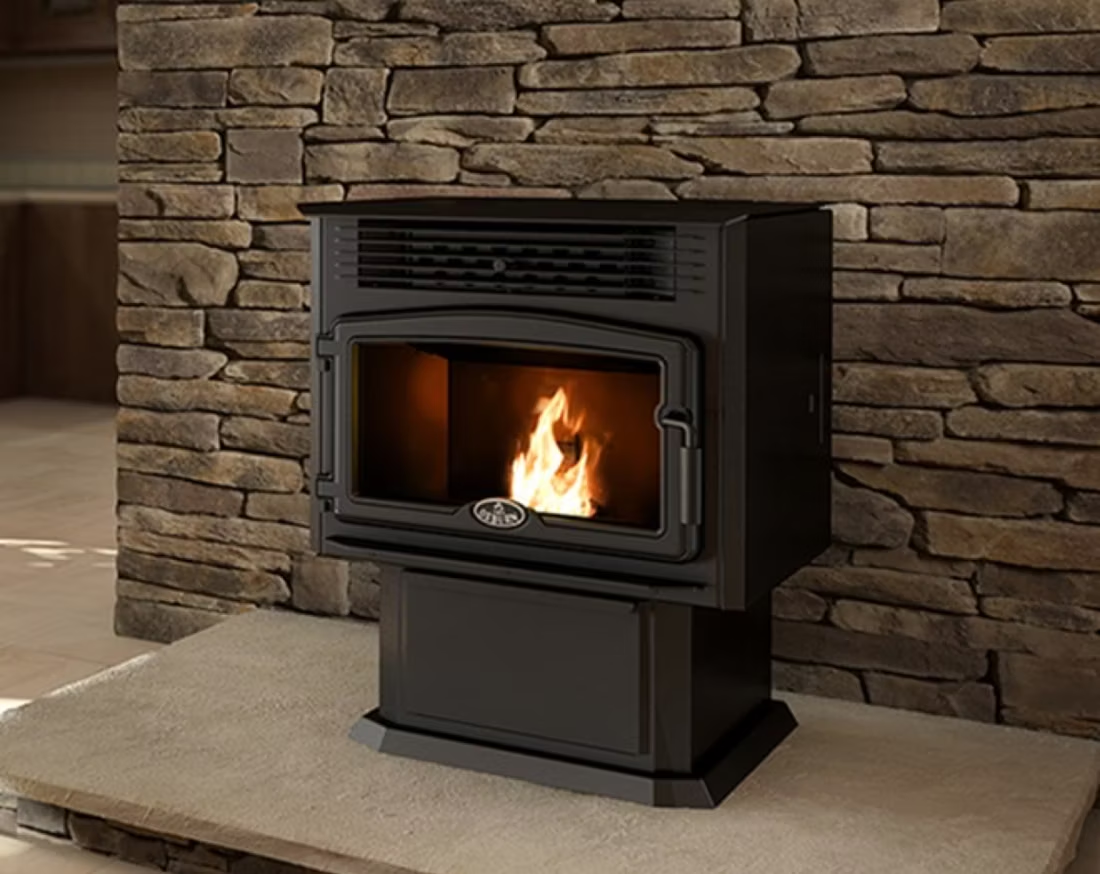
A pellet stove is a freestanding appliance that sits on a hearth pad and vents through a wall or existing chimney chase—it can go almost anywhere with the right clearances. A pellet insert is built to slide into an existing masonry fireplace opening, using a liner run up the old chimney for venting. For the small number of Morris County homes without gas service that still have an older wood fireplace, an insert is often the more visually seamless option since it uses the opening you already have rather than adding a new freestanding unit to the room.
Will a pellet stove work during a power outage?
Not without a backup power source. Pellet stoves rely on an electric auger to feed fuel and a blower to distribute heat, so they shut down when the power goes out—unlike a wood stove, which burns independent of electricity. If backup heat during outages is your priority in Morris County, a battery backup or small generator sized for the stove's low wattage draw can keep it running, but that's an added cost and complexity worth discussing with your installer before you buy.
What pellet stove models work well for Morris County's climate?
With winter lows averaging around 21°F and winters comparable to Madison, WI, Morris County homes need genuine heat output from a pellet appliance, not just ambiance. Mid-size pellet stoves from brands like Harman and Lopi, rated for 1,500 to 2,200 square feet, cover most single-zone heating needs in the county's typical colonial and split-level housing stock. Because so few local dealers specialize in pellet, ask specifically about parts availability and service response time for whichever brand you're considering—a stove that's hard to service locally becomes a liability by its second or third winter.
Pellet vs. gas—which makes more sense for a Morris County home?
For the overwhelming majority of Morris County homes, gas is the more practical choice. Natural gas service already runs to most properties, gas fireplaces and inserts install faster and with a wider dealer network, and there's no fuel storage or delivery to manage. Pellet only tends to win out for the specific case of an older home without a gas line where the owner wants a cleaner-burning, lower-maintenance alternative to cordwood—otherwise, the convenience and dealer support around gas make it the default recommendation for this county.
Pellet vs. electric fireplace—which is the better fit here?
Electric fireplaces install almost anywhere with just a standard outlet, cost far less upfront ($400–$1,200 is typical), and produce zero emissions—but they provide supplemental, not primary, heat. Pellet stoves cost more to install and require a fuel supply chain that's thinner in Morris County than in pellet-heavy regions, but they can meaningfully heat a room or zone during real cold. If you want ambiance and light supplemental warmth with minimal hassle, electric usually wins here. If you specifically need a wood-adjacent heat source and don't have gas access, pellet is worth a serious look—just go in knowing it's a specialty install, not a commodity one.
Why is a fireplace insert so efficient?
An insert does two things: it seals the chimney completely, so you stop losing air you already paid to heat, and it radiates warmth into the room through the firebox and glass. Most add a heat-exchange fan that pulls cool room air underneath, wraps it around the hot firebox, and pushes it back out warm. Your home is more efficient before you've even lit the first fire.
How often does a pellet stove need cleaning?
A clean pellet stove is a happy pellet stove. Plan on cleaning the burn pot about once a week when you're burning regularly—ash and clinkers gum up the air holes just like a pellet barbecue. Most pellet stove problems trace back to skipped cleaning that nobody explained up front. Some designs make it easy with a trapdoor burn pot: pull a lever and the gunk drops into the ash pan.
How much should I budget for a fireplace?
For an average home—covering the fireplace, the vent pipe, and basic installation—a budget between $3,900 and $5,500 gives you a lot of options across wood, gas, and pellet. By the time you add finish work, gas line, and electrical, the average complete installation lands between $5,000 and $12,000 all-in. In a remodel or new build, a good rule is to put about 2.5% of the total project cost toward the fireplace.
Can I install a fireplace myself?
If you're putting a fire in your house on purpose, it's best to work with an expert. Unless you're genuinely experienced in framing, gas line, vent pipe, and the national code on clearances to combustibles, have a professional do it—and ideally the same company that sells you the fireplace, so warranty, service, and liability all live under one roof.
Stove and Fireplace Dealers in Morris County
Pellet Brands Stocked Around Morris County
Manufacturers will point you to the nearest stocking dealer.
See if a pellet stove fits your Morris County home.
Pellet heat is uncommon in Morris County, so matching with the right dealer matters more here, not less. Tell us about your home and we'll connect you with a local pro experienced in pellet installs, plus a free Project Guide & Parts List—including the vent kit—so you know exactly what the project involves before you commit.
Find Your Fireplace →