
Fireplaces Built for Morris County Winters.
Fireplace resources for every town in Morris County—from Morristown and Parsippany to Chatham, Madison, Mendham, and Denville. Find the right unit and connect with a trusted local hearth retailer.
Every Project Starts From One of These Five Situations
Suburban heating in Morris County, New Jersey.
Morris County sits in climate zone 5A, with winter lows averaging 21°F and a heating season that runs long but real—noticeably milder than what a place like Buffalo, NY sees most winters. Natural gas service from PSE&G and Elizabethtown Gas reaches most of the county's denser towns, which is a big part of why gas fireplaces and inserts dominate new installs here. Oak, hickory, and maple are the common local hardwoods, and plenty of older homes in Morristown, Mendham, and Chatham still have a wood-burning fireplace original to the house—but new wood stove installations are uncommon across most of the county. Lot sizes in towns like Madison, Florham Park, and Chatham are tight enough that chimney clearance and setback rules under the NJ Uniform Construction Code make wood stove retrofits impractical for a lot of homeowners, and with reliable gas and electric service already in place, most people don't need to go that route.
What you'll find on this hub: hearth retailers, service technicians, and fuel suppliers serving every community in the county—from Morristown and Parsippany-Troy Hills in the east to Chester, Mendham, and Long Valley out west. The focus here is gas and electric fireplace resources, since those are the fuels that fit most Morris County homes; we'll also flag where wood or pellet still makes sense for a specific property. Pick your fuel below to drill into local dealers, installation costs, and recommended units for your project.
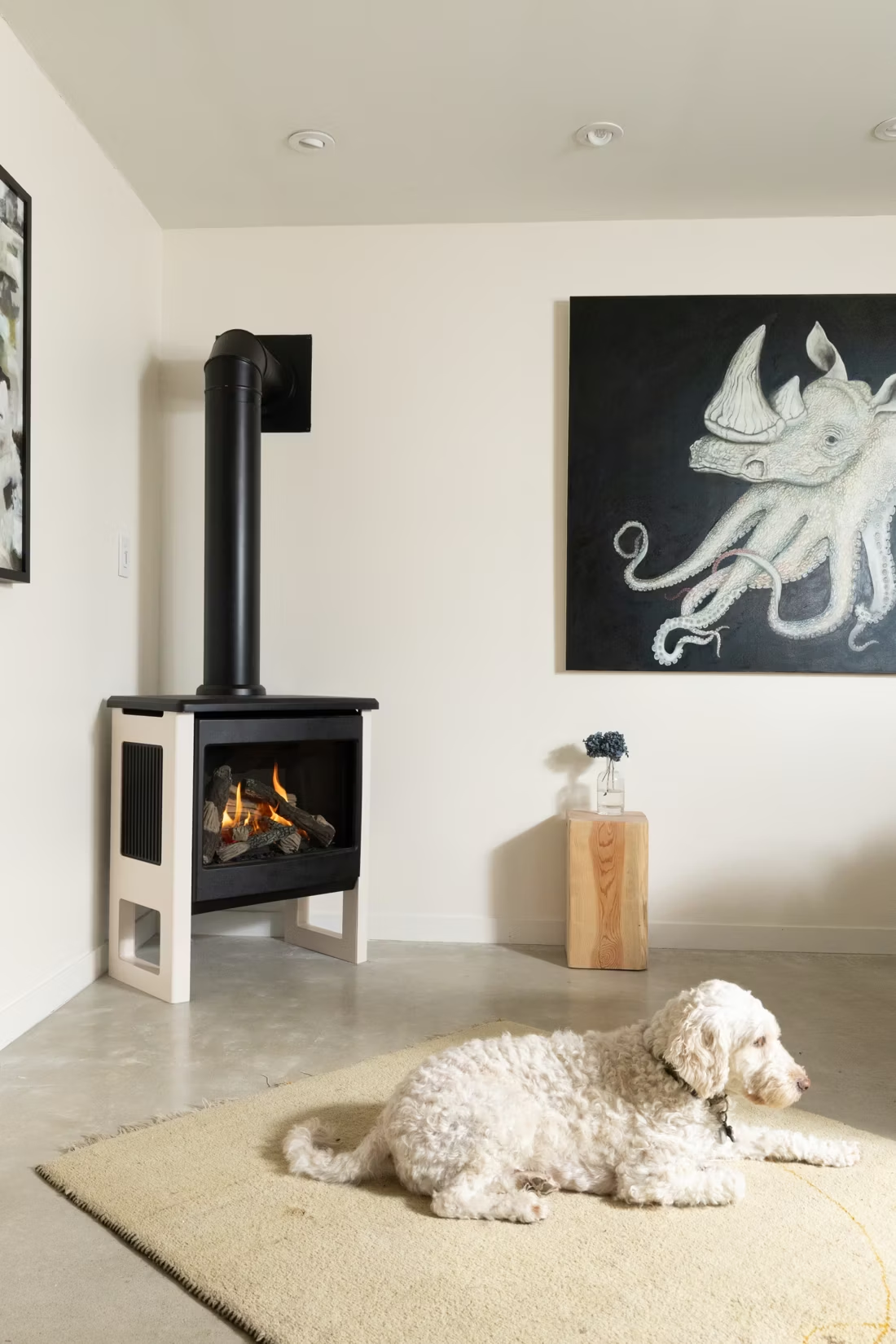
Four fuels. One honest answer for Morris County.
Three steps. No salesperson until you're ready.
Tell us about your project
Your zip code, your situation, and the fuel you're leaning toward—or let the answers point you to one.
See what's actually available
The brands dealers within 100 miles genuinely carry—real options, never a catalog mirage.
Get your dealer & Project Guide
A trusted local dealer, plus the free Project Guide & Parts List that names every component of the job.
Frequently Asked Questions
Which fuel works best in Morris County?
For most Morris County homes, it's gas. PSE&G and Elizabethtown Gas natural gas lines reach most of the denser towns—Morristown, Parsippany, Randolph, Denville—making gas fireplaces and inserts the easiest, lowest-maintenance option: instant heat, no chimney sweeping, no fuel storage. Electric is a strong secondary choice for bedrooms, finished basements, and condos where venting isn't an option, or in townhome communities where an outside vent isn't permitted. Wood fireplaces still exist in a lot of older homes—plenty of Colonial-era houses in Mendham and Morristown have one original to the house—but new wood stove installations are rare given lot sizes and clearance rules. Pellet is niche too, mostly limited to rural western towns like Chester and Long Valley where propane or oil heat make a pellet stove a useful supplemental source.
Do I need a permit to install a fireplace in Morris County?
Yes, in nearly every case. Each Morris County municipality—Morristown, Parsippany, Randolph, and the rest—runs its own construction code office under the NJ Uniform Construction Code, and gas fireplace or insert installs require a building permit plus a separate gas line permit pulled by a licensed gas fitter. Electric fireplaces are usually permit-free for plug-in units, but built-in electric fireplaces that involve new wiring or a dedicated circuit need an electrical permit. If you're one of the fewer homeowners installing a new wood stove, expect additional review for chimney clearances given how close homes sit together in towns like Madison and Chatham. Most local hearth retailers pull these permits as part of the installation, so you're not filing paperwork yourself.
Are wood-burning fireplaces or stoves still practical in Morris County?
For most of the county, not really—and that's fine, it's just not what the housing stock and infrastructure are built for. Air quality here isn't a concern the way it is in a lot of Western basins; Morris County has no non-attainment designation and no wood-burning advisories. The bigger limiting factor is lot size and setback rules—towns like Madison, Chatham, and Florham Park have homes close enough together that new wood stove clearance requirements are hard to meet. Where wood does still make sense, it's usually a legacy fireplace in an older Morristown or Mendham home, burned occasionally with local oak, hickory, or maple for ambiance rather than as a primary heat source. If you're set on wood heat, a rural property in Chester or Long Valley with more acreage is where it's most workable.
What about pellet stoves—are they an option in Morris County?
They're an option, but a niche one. Most of Morris County has natural gas access, which makes pellet stoves a harder sell economically than in areas that rely on propane or oil. Where pellet does show up is in the rural western part of the county—Chester, Mendham, Long Valley—where some homes on oil or propane heat use a pellet stove as a supplemental source for the main living space. Regional suppliers in the area carry Energex, Hamer Pellet Fuel, and Greene Team Pellet Fuel bags, so fuel isn't hard to find if you go this route—it's just a smaller market than gas or electric.
Can one local dealer handle both my gas and electric fireplace needs?
Yes—most Morris County hearth retailers carry both gas and electric lines, since those are the two fuels that fit the majority of local homes. A dealer showing you a working gas insert display can usually also walk you through electric wall-mount and built-in options in the same visit, which is useful if you're deciding between a vented gas unit and a no-venting electric one for a room like a finished basement or a condo where running a flue isn't practical. If you're one of the smaller number of homeowners looking at wood or pellet, ask directly—not every retailer stocks those lines, since demand for them is lower across the county.
What's the typical cost range for gas and electric fireplace installation in Morris County?
Gas fireplace, insert, or stove: roughly $4,000–$10,000 depending on whether you're converting an existing masonry fireplace, running new gas line, or building out venting for a new install. Direct-vent inserts into an existing chimney tend to land on the lower end of that range. Electric fireplace: $200–$3,000 for the unit itself, plus $400–$1,200 in labor for anything beyond a plug-and-play wall unit—built-ins with new wiring or a dedicated circuit run toward the higher end. For the smaller number of wood or pellet projects in the county, expect costs closer to $4,500–$9,000 for a wood stove or insert install with chimney work, or $4,500–$7,500 for a pellet stove. See the county + fuel pages above for retailer-specific pricing.
What is an in-home preview and do I need one?
It's a visit where a hearth professional measures your space, confirms the model you picked actually works in your home, and walks the specs—framing, gas line, venting, finish work—before anything is ordered. Some details you just can't know until you see the house. Never make a down payment without one; it's the single most-skipped step that burns buyers.
Can a fireplace actually lower my heating bill?
Yes—by creating a comfort zone. A furnace heats every square foot of the house just to warm the one room you're in; a gas fireplace on low burns roughly a sixth of the gas a typical furnace does. Set the furnace around 55–60 degrees as a baseline, then heat the rooms your family actually uses. Families who heat this way commonly save $20–$60 a month.
I know I want a fireplace—where do I actually start?
Do two things today: snap a photo of the wall or fireplace you want to transform, and take a tape measure to the space—width, height, depth. Those two artifacts answer most of a hearth professional's first questions. Then settle fuel (wood, gas, pellet, or electric) and set a realistic budget: $3,900–$5,500 covers fireplace, vent, and basic install for most homes.
Can I install a fireplace myself?
If you're putting a fire in your house on purpose, it's best to work with an expert. Unless you're genuinely experienced in framing, gas line, vent pipe, and the national code on clearances to combustibles, have a professional do it—and ideally the same company that sells you the fireplace, so warranty, service, and liability all live under one roof.
Stove and Fireplace Dealers in Morris County
Listings include WhyFire partner dealers, dealers we have verified as authorized for the brands we recommend, and established local businesses that carry hearth products. Every listing shows which one it is. The ones marked Preferred run on WhyFire's software, so they can show you real pricing and book your appointment right here. No manufacturer pays for placement. How we verify dealers →
Fire Design
Timberline Speciality Products
Timberline Stoves
Costello's Hearth & Spa - Bernardsville
N & N Services
Chimney Sweep Energy Barn
Fireplaces R Us
S.o.s Wood Stoves, Inc
Firefox Energy Concepts
Paradise Pool & Spa Inc.
Highland Chimney Sweep
Kjb Fireplaces
Valley Mason Supply
Find your fireplace in Morris County.
Pick your fuel below and I'll match you with a trusted local Morris County dealer, plus send you a free Project Guide & Parts List—the exact parts, vent kit, and recommended installer for your home.
Find Your Fireplace →