
Warm, reliable heat for Morris County's suburban homes.
PSE&G natural gas reaches most of Morris County's 304,000-plus residents, with propane filling in where mains don't run—from Morristown to the rolling hills near Chester and Mendham. Find the right gas fireplace or insert, and connect with a trusted local dealer.
Every Project Starts From One of These Five Situations
Clean, on-demand heat built for suburban New Jersey winters.
Morris County sits in climate zone 5A, with winter lows averaging 21°F and a solidly cold, multi-month heating season—enough cold to make a reliable heat source matter, but not the extreme, off-grid conditions that push families toward wood as primary heat. The county has real oak, hickory, and maple forest cover around the Great Swamp and the Highlands, but between dense residential zoning in towns like Parsippany-Troy Hills and Randolph, local ordinances limiting open burning, and near-universal access to the gas grid, wood and pellet stoves are genuinely uncommon here—a handful of rural or wooded-lot homeowners install them, but they're the exception rather than the rule.
PSE&G is the dominant natural gas utility across most of Morris County, serving Morristown, Parsippany, Madison, Dover, and the county's denser eastern and central towns. In the more rural western fringe—around Chester, Mendham, Long Valley, and parts of Washington Township—homes off the gas mains typically run on propane, delivered and stored in an above-ground or buried tank. Either way, a gas fireplace or insert gives Morris County homeowners instant, thermostatic heat without wood handling, ash cleanup, or chimney maintenance—a fit that suits the county's mix of historic colonials and modern subdivisions alike.
Three steps. No salesperson until you're ready.
Tell us about your project
Your zip code, your situation, and the fuel you're leaning toward—or let the answers point you to one.
See what's actually available
The brands dealers within 100 miles genuinely carry—real options, never a catalog mirage.
Get your dealer & Project Guide
A trusted local dealer, plus the free Project Guide & Parts List that names every component of the job.
Frequently Asked Questions
How much does a gas fireplace installation cost in Morris County?
A gas insert installed into an existing masonry fireplace with a gas line already nearby typically runs $4,500 to $8,500 in Morris County. A new direct-vent gas fireplace built into a wall or addition—with fresh gas line runs and venting through an exterior wall—usually falls between $8,000 and $12,000. Homes that need a new propane tank installed, common in the western part of the county away from PSE&G's mains, should budget extra for tank delivery and setup. Local dealers will size up your specific project with an in-home visit before quoting a firm number.
Can I convert my wood-burning fireplace to gas?
Yes, and it's one of the more common projects for Morris County's older colonial and Victorian homes, many of which still have their original masonry fireplace. A gas insert slides into the existing firebox and vents through a stainless liner run up your current chimney, so you keep the look of the original opening while gaining real heat output and a switch-flip start. Cost typically lands between $4,500 and $9,000 depending on whether you're on PSE&G natural gas or need a propane line run, and whether the existing chimney needs relining work first.
Is natural gas available everywhere in Morris County, or do I need propane?
It depends on where you are. PSE&G's natural gas mains cover most of the county's population centers—Morristown, Parsippany, Denville, Dover, Madison, and the townships around them. Once you get into the more rural western half of the county—Chester, Mendham, Long Valley, and parts of Washington Township—many homes sit beyond the gas mains and run on propane instead, typically from a tank installed by a local propane supplier. Most gas fireplace models can be configured for either fuel, so the choice usually comes down to what's already running to your house.
Will my gas fireplace still work if the power goes out?
Most modern direct-vent gas fireplaces are built to keep working during an outage. Units with intermittent pilot ignition (IPI) run on a small battery backup that kicks in the moment power drops, so the fireplace lights on demand just as it normally would. It's worth checking those batteries once a year so they're fresh when you actually need them. Valor fireplaces solve this differently—their pilot's thermocouple generates its own electricity, so there's no battery to remember at all. For Morris County winter storms, when PSE&G or JCP&L outages can stretch for a day or more, that kind of self-powered ignition is worth asking your local dealer about.
What's the difference between a gas fireplace, gas insert, and gas stove?
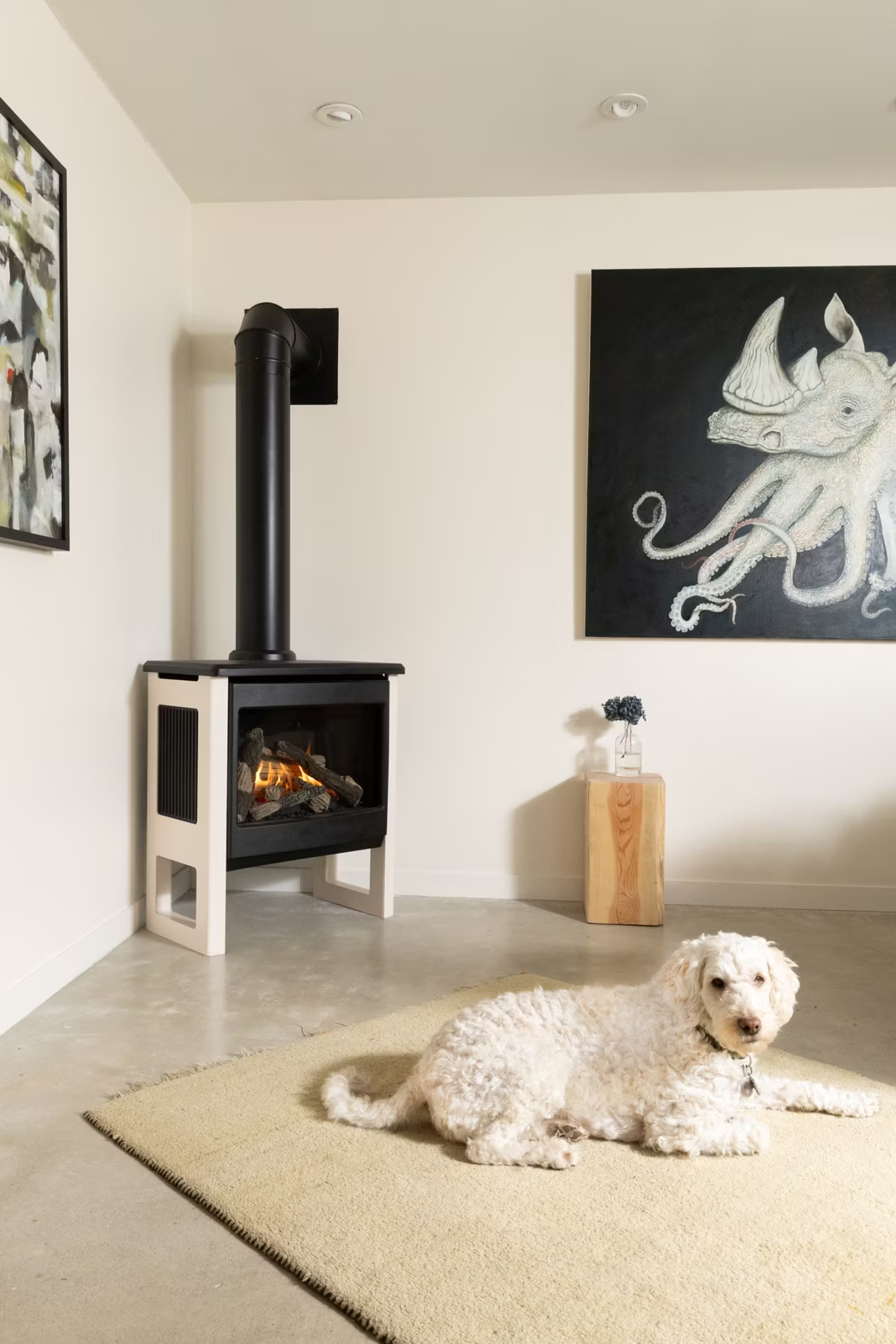
A gas fireplace is a fully built-in unit framed into a wall—the right choice for new construction or a remodel without an existing masonry opening. A gas insert is sized to slide into an existing wood-burning fireplace and use the chimney you already have, which is why it's so common in Morris County's older colonial-style homes. A gas stove is a freestanding cast-iron or steel unit that sits on the floor on its own hearth pad, often chosen for a den, sunroom, or finished basement without a nearby chimney. Most local dealers carry all three and will walk you through which fits your specific room.
Do I need a permit to install a gas fireplace in Morris County?
Yes—but in New Jersey, permits are issued at the municipal level rather than through one countywide office, since each Morris County town runs its own construction department under the state's Uniform Construction Code. That means your permit goes through Morristown's, Parsippany-Troy Hills', Randolph's, or whichever local construction office covers your address, and it typically covers both the building work and the gas line. Most established local hearth dealers handle this paperwork as part of the installation, coordinating the gas-fitter and the inspection so you don't have to manage multiple trades yourself.
Should I get a vented (direct-vent) or vent-free gas fireplace?
Direct-vent units draw combustion air from outside and exhaust it back outside through a sealed pipe, so no combustion byproducts enter the room—and they put out more usable heat, which matters given Morris County's solidly cold, multi-month heating season and winter lows around 21°F. Vent-free units burn without any external venting and are permitted in New Jersey in limited room sizes and configurations, but most local dealers steer homeowners toward direct-vent for a primary heat source, reserving vent-free for smaller supplemental spaces like a den or finished attic. Ask a local dealer to walk through both for your specific room.
How often does a gas fireplace need to be serviced?
Plan on an annual inspection, ideally before the heating season starts in the fall. A technician checks the burner, pilot assembly, venting, gas connections, and any electronic ignition components, and cleans the glass and interior—most Morris County service providers charge in the $150 to $250 range for this visit. It's a much lighter lift than sweeping a wood chimney, but skipping it is still the most common cause of pilot and ignition problems homeowners run into mid-winter.
Why don't more Morris County homes use wood or pellet stoves?
The county has plenty of oak, hickory, and maple in its wooded pockets, but wood and pellet stoves are genuinely rare here—most Morris County residents already have access to PSE&G's gas grid, and dense municipal zoning in towns like Parsippany, Randolph, and Madison makes wood-burning installations impractical or restricted for many properties. Add in the lack of any local cutting-permit infrastructure, unlike wooded counties out west with national forest access, and gas simply wins on convenience for the overwhelming majority of homes here. A small number of rural, larger-lot homeowners still install wood stoves for backup heat or ambiance, but it's the exception rather than the norm.
What's the difference between an insert and a zero-clearance fireplace?
An insert is a fireplace that slides into a pre-existing wood-burning fireplace—if you don't have one, there's nothing to insert it into. A zero-clearance fireplace is built into a framed wall, which makes it the answer for remodels and new construction. Simple test: existing masonry fireplace means insert; blank or framed wall means zero-clearance.
Why is a fireplace insert so efficient?
An insert does two things: it seals the chimney completely, so you stop losing air you already paid to heat, and it radiates warmth into the room through the firebox and glass. Most add a heat-exchange fan that pulls cool room air underneath, wraps it around the hot firebox, and pushes it back out warm. Your home is more efficient before you've even lit the first fire.
How much should I budget for a fireplace?
For an average home—covering the fireplace, the vent pipe, and basic installation—a budget between $3,900 and $5,500 gives you a lot of options across wood, gas, and pellet. By the time you add finish work, gas line, and electrical, the average complete installation lands between $5,000 and $12,000 all-in. In a remodel or new build, a good rule is to put about 2.5% of the total project cost toward the fireplace.
Does a fireplace add value to my home?
On average, a fireplace adds back to the home about the same amount you spent installing it. Add the monthly savings from heating the rooms you actually use instead of the whole house—often hundreds of dollars a year—and the value case is strong before you even count what a fire does for how your family uses the room.
Stove and Fireplace Dealers in Morris County
Find your gas fireplace in Morris County.
Tell us a bit about your home and we'll match you with the right gas fireplace, insert, or stove—plus a free Project Guide & Parts List with the exact parts, including your vent kit, and your recommended local Morris County dealer.
Find Your Fireplace →