
Fireplace ambiance for Morris County homes, no chimney required.
From Morristown's colonial-era homes to the condos and townhomes lining Parsippany and Rockaway, electric fireplaces give Morris County homeowners real flame look and genuine supplemental heat without masonry work, gas lines, or venting. Find the right unit and connect with a trusted local dealer or electrician.
Every Project Starts From One of These Five Situations
The easiest upgrade for historic homes and modern condos alike.
Morris County spans 39 municipalities across northern New Jersey's NYC commuter belt—from the pre-Revolutionary stone and clapboard homes of Morristown and Madison to the mid-century split-levels of Denville and Randolph and the newer townhome and condo developments around Parsippany and Rockaway. Winters here sit in climate zone 5A, with an average winter low around 21°F and a solidly cold heating season most of the year—a season with real cold stretches, though nowhere near what Burlington, Vermont sees over a comparable winter. Most homes here run on oil or gas central heat, with a fireplace serving as a supplemental or ambiance feature rather than the primary heat source.
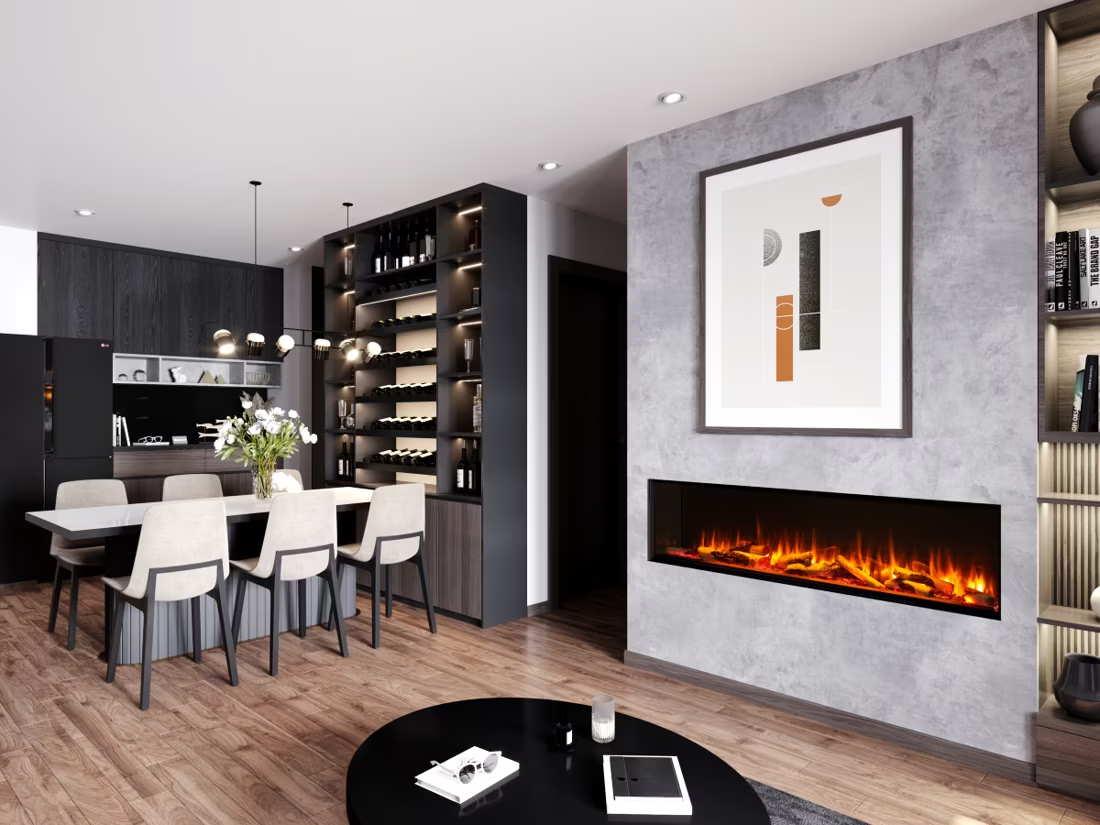
That's exactly the role electric fireplaces play so well. A lot of Morris County's older housing stock—particularly in Morristown's historic district and the pre-war homes scattered through Chatham and Madison—has decorative fireboxes that were bricked up decades ago or never properly vented for solid fuel, and many condo and townhome associations in Parsippany, Rockaway, and Denville simply don't allow chimneys or gas lines at all. Electric solves both problems: a plug-in insert or wall-mounted linear unit installs with zero clearance, no venting, and in most cases no permit—just power from the local grid, whether that's JCP&L or PSE&G depending on your township. It won't replace your furnace on a January night, but it adds real, thermostat-controlled zone heat to a den or bonus room and the kind of flame effect that gas logs or an open masonry fireplace can't match for cost or simplicity.
Three steps. No salesperson until you're ready.
Tell us about your project
Your zip code, your situation, and the fuel you're leaning toward—or let the answers point you to one.
See what's actually available
The brands dealers within 100 miles genuinely carry—real options, never a catalog mirage.
Get your dealer & Project Guide
A trusted local dealer, plus the free Project Guide & Parts List that names every component of the job.
Frequently Asked Questions
How much does an electric fireplace installation cost in Morris County?
Plug-in electric stoves and freestanding inserts run $300 to $1,500 installed, and most require nothing more than an existing outlet—no permit, no electrician. Built-in wall units and linear fireplaces that need a dedicated 120V or 240V circuit typically run $1,500 to $4,000 once you add a licensed electrician's time and any drywall or mantel work. Custom media wall installations with a linear electric unit, floating shelves, and tile or shiplap surround can push toward $5,000-$6,000 in Morris County's higher-end towns like Chatham, Madison, and Mendham. Local dealers and electricians can quote a firm number after seeing your wall and electrical panel.
What size electric fireplace do I need for my room?
Electric fireplaces are rated more for zone heat than whole-room heating, so sizing is really about matching the heater output and the visual scale to your space. Most units put out 5,000 to 9,000 BTU, which comfortably takes the chill off a 300-400 square foot den, home office, or bonus room—common additions in the finished basements and converted attics found throughout Denville, Randolph, and Rockaway. For larger open-concept living rooms common in newer Parsippany and Hanover construction, you'll want a wider linear unit primarily for the flame effect and treat the heater as a bonus rather than your main source of warmth.
Who installs electric fireplaces in Morris County—do I need a certified electrician?
Plug-in units don't require an electrician at all—anyone can set one on the hearth or slide it into an existing firebox. But any unit that needs a dedicated circuit, a new outlet behind a mantel, or 240V wiring for a larger linear model should go through a New Jersey-licensed electrician. Most hearth dealers serving Morris County—with showrooms around Morristown and Succasunna—either employ licensed electricians directly or work with a small network of local trades, which keeps the install, the warranty, and the code sign-off under one roof.
What's the difference between an electric insert, a wall-mounted unit, and a mantel package?
An electric insert is built to slide into an existing masonry firebox—a common retrofit for the older homes around Morristown, Madison, and Chatham that have a fireplace opening but no working chimney or gas line. A wall-mounted linear unit recesses into or sits flush against a wall, often as the centerpiece of a media wall or new construction feature wall—popular in the newer townhomes going up around Parsippany and Hanover. A mantel package pairs a smaller electric insert or stove-style unit with a freestanding mantel surround, which works well when you want fireplace styling but don't have an existing firebox or wall cavity to work with.
Do I need a permit to install an electric fireplace in Morris County?
In most of Morris County's 39 municipalities, a plug-in electric fireplace or insert that uses an existing outlet doesn't require any permit—it's treated like any other appliance. If your installation involves adding a new dedicated circuit or an electrician running new wiring behind a wall, that work needs an electrical permit through your local building department, whether that's Morristown, Madison, Parsippany, or another township, under New Jersey's Uniform Construction Code. Your electrician will typically pull that permit as part of the job.
What's the best electric fireplace for a Morris County home?
Since most Morris County homes rely on gas or oil for primary heat, look for units that pair a strong flame display with genuine, thermostat-controlled heat output—brands like Dimplex, Napoleon, and SimpliFire are common recommendations from local dealers for exactly that reason. For a retrofit into an existing masonry firebox in an older Morristown or Madison home, an insert-style unit with adjustable trim kits fits cleanest. For a new media wall in a Parsippany or Hanover townhome, a wide linear unit with multi-color flame settings tends to get the most use for ambiance, with the heater reserved for the coldest stretches when the average low dips toward 21°F.
Do electric fireplaces need any ongoing maintenance?
Far less than wood or gas. There's no chimney to sweep and no gas line to inspect. Plan on dusting the glass front and vent grilles a few times a season, cleaning or replacing the air filter on units that have one, and swapping LED lights on older models once they eventually dim after years of use—most LED arrays are rated for 20,000+ hours, so this is a rare event. If the heater fan stops running but the flame effect still works, that's usually a simple, inexpensive fix rather than a full unit replacement.
Can I convert my existing masonry fireplace to electric?
Yes, and it's one of the more common projects local dealers handle in Morris County's older housing stock. An electric insert slides into the existing firebox opening—no chimney liner, no gas line, and usually no permit if it's plug-in. This is a popular option in Morristown's historic district and the older colonial and Victorian homes around Madison and Chatham, where the original masonry fireplace is either non-functional or where local historic preservation rules make chimney or venting changes difficult. You keep the look of the original opening and mantel while gaining a maintenance-free, on-demand flame.
Electric vs. gas fireplace—which is right for my Morris County home?
Gas fireplaces, common throughout Morris County given widespread natural gas service, deliver real heat output that can genuinely supplement a furnace on the coldest nights and don't rely on the electrical grid, which matters during the ice storms and nor'easters that occasionally knock out power here. Electric fireplaces cost far less to install, need no gas line or venting at all, and work in condos, townhomes, and historic homes where gas or wood installations are restricted or impractical—which is why electric is the more common answer in the townhome developments around Parsippany and Rockaway. Worth noting: wood-burning fireplaces, despite oak, hickory, and maple being the native firewood species in this part of New Jersey, are increasingly rare as new installations countywide, mostly due to HOA rules, insurance requirements, and the tight lot sizes in newer Morris County developments. For most homeowners choosing between electric and gas, it comes down to whether you already have gas service and want real backup heat, or want the simplest, lowest-cost install with maximum placement flexibility.
Can I put a TV above my fireplace?
Yes—with an asterisk. Fireplaces are hot and TVs don't like heat. Either put a mantel between them to deflect rising warmth, or choose a fireplace with heat-management technology that creates a cool zone on the wall above—the wall stays around 125 degrees, barely warm, while the room still gets full heat. If you like clean lines and don't want a mantel, heat management is the answer.
Does an electric fireplace need a vent or chimney?
No—that's its superpower. An electric fireplace needs a wall and an outlet, period. No vent pipe, no gas line, no clearances to design around, which is why it works in bedrooms, offices, apartments, and walls where venting a gas or wood unit would be impractical or impossible. Installation is typically the simplest and least expensive of any fireplace type.
Can a fireplace actually lower my heating bill?
Yes—by creating a comfort zone. A furnace heats every square foot of the house just to warm the one room you're in; a gas fireplace on low burns roughly a sixth of the gas a typical furnace does. Set the furnace around 55–60 degrees as a baseline, then heat the rooms your family actually uses. Families who heat this way commonly save $20–$60 a month.
How much should I budget for a fireplace?
For an average home—covering the fireplace, the vent pipe, and basic installation—a budget between $3,900 and $5,500 gives you a lot of options across wood, gas, and pellet. By the time you add finish work, gas line, and electrical, the average complete installation lands between $5,000 and $12,000 all-in. In a remodel or new build, a good rule is to put about 2.5% of the total project cost toward the fireplace.
Stove and Fireplace Dealers in Morris County
Find your electric fireplace in Morris County.
Tell us a bit about your home and we'll match you with the right electric fireplace, insert, or wall unit—and connect you with a trusted local dealer or electrician for a free Project Guide & Parts List.
Find Your Fireplace →