
Add fireplace warmth to any room in Mercer County—no chimney required.
From Trenton rowhomes to new construction in West Windsor and Robbinsville, electric fireplaces plug into the outlets and walls you already have. Tell us about your room and we'll match you with a trusted local dealer.
Every Project Starts From One of These Five Situations
The no-construction path to real fireplace warmth.
Mercer County sits in climate zone 5A with a fairly long, cold heating season and an average winter low near 23°F—cold enough that most homes here run supplemental heat from late fall through March, but not so extreme that a room heater can't keep pace. That's a good fit for electric fireplaces, and it shows in the housing stock: historic masonry rowhomes in Trenton and Princeton, mid-century ranches in Hamilton and Ewing, and newer townhome and single-family construction in West Windsor, Robbinsville, and East Windsor all have very different fireplace needs, and electric units adapt to nearly all of them without touching a chimney or running a gas line.
Wood-burning is largely a legacy feature here rather than a current install category—Mercer's older homes do have masonry fireboxes that historically burned oak, hickory, and maple, but this is a dense Trenton-to-Princeton corridor, not a rural wood-lot county, and most owners with an old firebox are looking to convert it, not feed it. Pellet stoves face the same reality: regional brands like Energex, Hamer Pellet Fuel, and Greene Team Pellet Fuel are sold across New Jersey, but pellet appliances are uncommon in Mercer's tighter urban and suburban footprints. Electric fills that gap—an insert that drops into an existing firebox in a Princeton colonial, or a zero-clearance wall unit built into new cabinetry in a West Windsor great room, both wired through PSE&G's grid, which serves the bulk of the county.
Three steps. No salesperson until you're ready.
Tell us about your project
Your zip code, your situation, and the fuel you're leaning toward—or let the answers point you to one.
See what's actually available
The brands dealers within 100 miles genuinely carry—real options, never a catalog mirage.
Get your dealer & Project Guide
A trusted local dealer, plus the free Project Guide & Parts List that names every component of the job.
Frequently Asked Questions
How much does an electric fireplace installation cost in Mercer County?
A plug-in freestanding or insert-style electric fireplace typically runs $150 to $600 for the unit itself, with no permit and no electrician needed if it plugs into an existing standard outlet. A built-in wall unit or a hardwired insert into an existing masonry firebox usually runs $800 to $2,500 once you factor in a licensed electrician to run a dedicated circuit, and any surround or trim carpentry. Costs at the higher end are more common in Princeton and Hopewell homes with older electrical panels that need upgrading to support a new circuit, or in new-construction builds in West Windsor and Robbinsville where the unit is designed into a custom mantel wall from the start.
Can I put an electric insert into my existing wood-burning fireplace?
Yes, and it's one of the more common projects local dealers handle in Mercer County's older housing stock—Trenton rowhomes, Princeton colonials, and Hopewell farmhouses often have a masonry firebox that hasn't burned a real fire in years. An electric insert slides into that opening, and in most cases you don't need to touch the chimney beyond sealing the damper shut to stop drafts. It's a straightforward way to bring an old fireplace back to life without cutting a flue liner or coordinating a masonry contractor.
Do electric fireplaces actually put out heat, or just look like fire?
Most units sold today do both. A typical electric fireplace includes a 1,500-watt heater rated around 4,000 to 5,000 BTU, enough to noticeably warm a single room—a den, bedroom, or finished basement—and the flame effect can run independently of the heater if you just want ambiance in warmer months. Given Mercer County's average winter low near 23°F and a fairly long, cold heating season, that output is realistic as zone heat to take the edge off a room during the coldest stretch, but it's not sized to replace a home's central furnace or boiler.
Do I need a permit to install an electric fireplace in Mercer County?
A plug-in unit that uses an existing outlet needs no permit at all. A hardwired built-in or wall unit that requires a new dedicated circuit typically needs an electrical permit, pulled through your local municipal construction office—Trenton, Hamilton, Ewing, Lawrence, Princeton, and the other Mercer County townships each run their own permitting, so the process varies slightly by address. Most licensed electricians and hearth dealers handle this paperwork as part of the installation, so it's rarely something the homeowner has to manage directly.
What's the difference between an electric insert, a wall-mounted unit, and a freestanding electric fireplace?
An electric insert is built to slide into an existing masonry firebox, matching the depth and opening of a standard fireplace—the most common choice for Mercer's older Trenton and Princeton homes with an unused wood-burning fireplace. A wall-mounted or built-in unit sits flush in a framed wall or custom cabinetry, popular in newer construction in West Windsor and Robbinsville where there's no existing fireplace to work with. A freestanding electric stove or mantel unit needs no installation at all beyond a nearby outlet, which makes it the right call for renters in Trenton apartments or anyone who wants heat and ambiance without any construction.
Electric vs. gas fireplace—which makes more sense for my Mercer County home?
Gas is a standard, well-established option throughout Mercer County and delivers more usable heat output, which matters if you want a fireplace to meaningfully offset a heating bill during the county's roughly five-month heating season. Electric wins on installation simplicity—no gas line, no venting, no combustion byproducts to manage—and on flexibility, since a unit can go anywhere there's power, including interior walls, basements, and condos in Princeton or apartments in Trenton where running gas simply isn't an option. If you already have gas service and want real supplemental heat, gas is usually the better long-term fit. If you want ambiance and modest warmth with zero construction, electric is hard to beat.
Will an electric fireplace noticeably raise my power bill?
Run at full heat, a standard 1,500-watt unit costs roughly 20 to 25 cents an hour on typical PSE&G residential rates, which serve most of Mercer County. Used a few hours a day during the cold months, that adds up to a modest but real increase—usually well under what the same square footage would cost to heat with electric baseboard or resistance heat, since you're only heating the one room you're in rather than the whole house. Many owners run the flame effect without the heater engaged for ambiance on mild evenings, which draws only a few watts.
What are the best electric fireplace brands for a Mercer County home?
Dimplex, Napoleon, and Amantii are all well-represented among dealers serving the county and cover the range from insert conversions to full wall-built linear units. For a firebox conversion in an older Princeton or Hopewell home, look for an insert model with adjustable trim kits, since older masonry openings rarely match modern standard sizes exactly. For new-construction builds in West Windsor or Robbinsville, a linear built-in gives the cleanest look when the fireplace wall is being designed from scratch. A local dealer can match a specific model to your firebox dimensions or wall framing.
Why don't more Mercer County homes use wood or pellet stoves?
Mercer is a dense corridor between Philadelphia and New York—Trenton, Hamilton, Ewing, Lawrence, and Princeton are built at suburban-to-urban densities without the wood-lot access or rural infrastructure that supports wood heat as a primary fuel elsewhere in the state. Older homes here do have masonry fireboxes that historically burned local oak, hickory, and maple, but that's largely a decorative legacy now rather than an active heating strategy. Pellet stoves face a similar gap—brands like Energex, Hamer Pellet Fuel, and Greene Team Pellet Fuel sell well across New Jersey generally, but pellet appliances require venting and hopper maintenance that most Mercer homeowners simply don't have a use case for. Electric and gas cover the vast majority of new fireplace installs in the county as a result.
Do electric fireplaces actually produce heat?
Yes—most put out around 4,800–5,000 BTUs from a standard outlet, which comfortably warms a bedroom, office, or den as a comfort-zone heater. What they won't do is carry a whole house the way wood, gas, or pellet can. Think of electric as ambiance-first with honest supplemental heat: flames on with no heat in July, flames plus warmth in January.
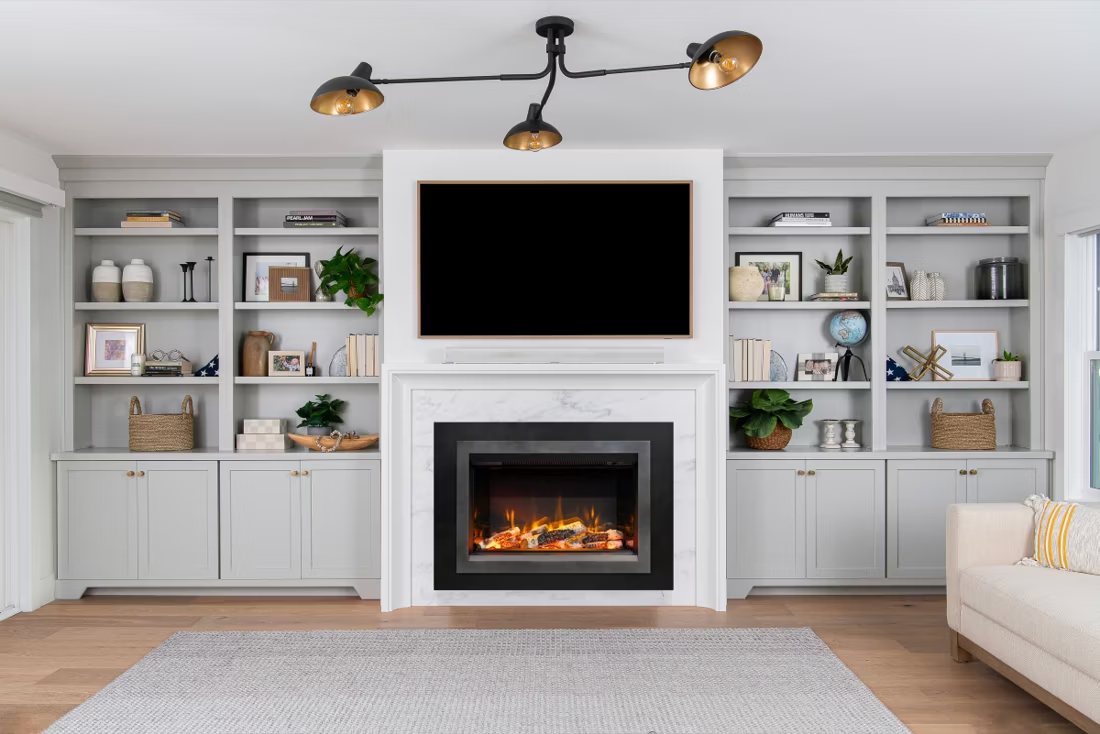
Can I put a TV above my fireplace?
Yes—with an asterisk. Fireplaces are hot and TVs don't like heat. Either put a mantel between them to deflect rising warmth, or choose a fireplace with heat-management technology that creates a cool zone on the wall above—the wall stays around 125 degrees, barely warm, while the room still gets full heat. If you like clean lines and don't want a mantel, heat management is the answer.
How much should I budget for a fireplace?
For an average home—covering the fireplace, the vent pipe, and basic installation—a budget between $3,900 and $5,500 gives you a lot of options across wood, gas, and pellet. By the time you add finish work, gas line, and electrical, the average complete installation lands between $5,000 and $12,000 all-in. In a remodel or new build, a good rule is to put about 2.5% of the total project cost toward the fireplace.
Can a fireplace actually lower my heating bill?
Yes—by creating a comfort zone. A furnace heats every square foot of the house just to warm the one room you're in; a gas fireplace on low burns roughly a sixth of the gas a typical furnace does. Set the furnace around 55–60 degrees as a baseline, then heat the rooms your family actually uses. Families who heat this way commonly save $20–$60 a month.
Stove and Fireplace Dealers in Mercer County
Listings include WhyFire partner dealers, dealers we have verified as authorized for the brands we recommend, and established local businesses that carry hearth products. Every listing shows which one it is. The ones marked Preferred run on WhyFire's software, so they can show you real pricing and book your appointment right here. No manufacturer pays for placement. How we verify dealers →
Better Homes Hearth & Patio
E & E Stoves & Fireplaces
Appliance Brokers, Ltd.
Tri County Hearth & Awning
Estates Chimney & Fireplace
Rattan Patio & Fireplace Shoppe
Island Renovations
Flemington Supply Co. Inc
Plumbarama Co. Inc.
Hearth & Stove LLC
My Deck, Llc
Fireside Pros/Awning Design
Central Jersey Masonry & Chimney Sweep
Kester Fireplace
Tor Chimney & Fireplace
Find your electric fireplace in Mercer County.
Tell us about your room and your home, and we'll match you with a trusted local Mercer County dealer and send over a free Project Guide & Parts List—a plan for your project with the exact parts and a recommended installer.
Find Your Fireplace →