
Instant ambiance for Lawrenceville homes—no chimney, no venting.
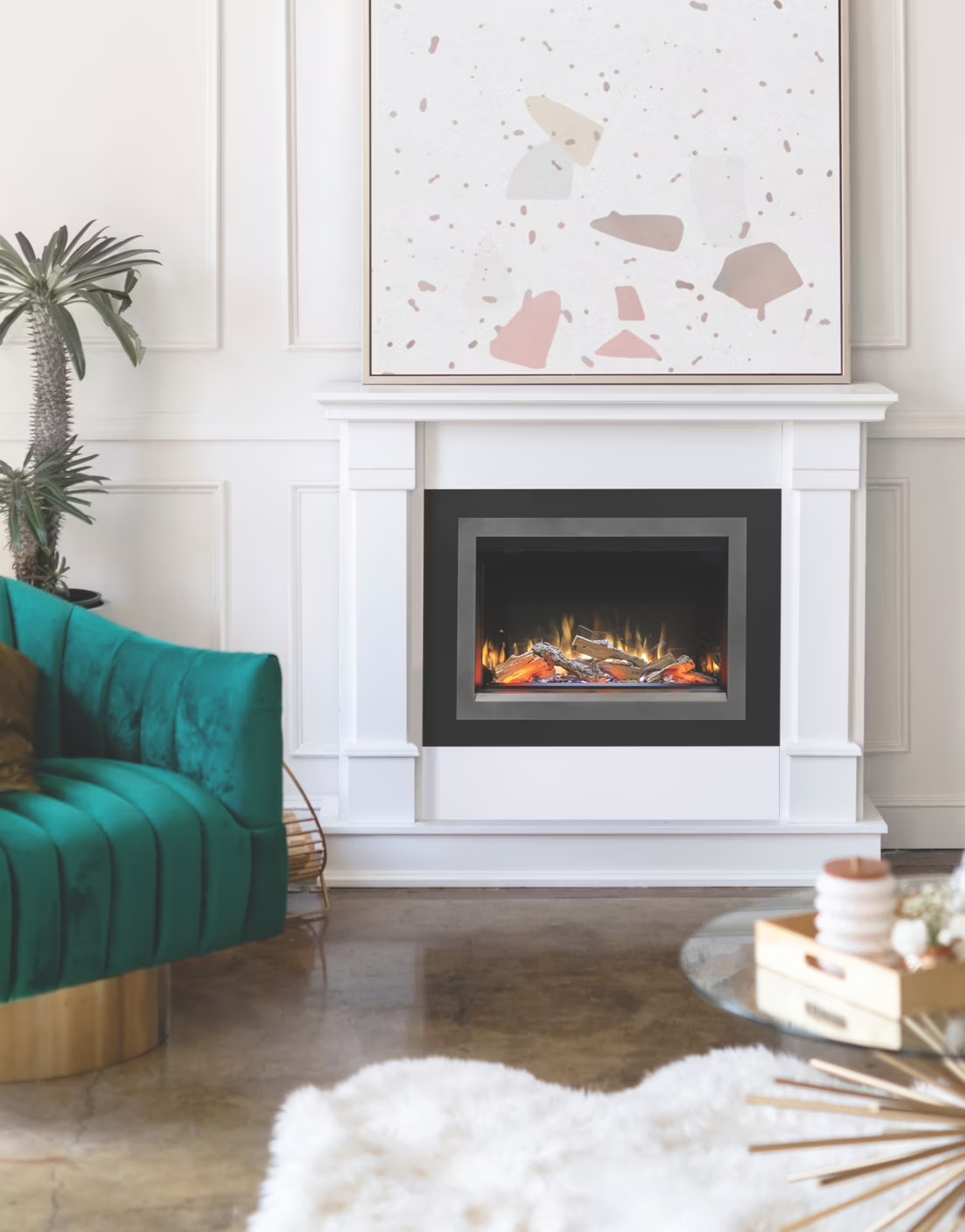
For the historic homes and townhomes around Lawrenceville School, an electric fireplace adds real flame-look warmth without touching a wall or running a flue. Find the right unit and connect with a trusted local dealer.
Every Project Starts From One of These Five Situations
The easiest upgrade for Lawrenceville's historic homes.
Lawrenceville is a small Quaker-founded village inside Lawrence Township, dense with 18th- and 19th-century homes near the Lawrenceville School and Route 206 corridor. With winters bringing an average low of 23°F over a fairly long heating season, the cold here is real but nowhere near the extremes of Buffalo, NY or Burlington, VT—this is a climate built for supplemental zone heat, not a wood-burning survival setup.
Public Service Electric & Gas serves nearly every home in town, and at a residential rate of $0.1981/kWh, running an electric fireplace a few hours a night is genuinely affordable compared to firing up central heat for the whole house. Because many Lawrenceville properties sit in or near a historic district with limits on exterior wall penetrations and new masonry, electric units—which need no chimney, no gas line, and no venting—have become the practical fix for adding a fireplace to a period home without a permit fight.
Three steps. No salesperson until you're ready.
Tell us about your project
Your zip code, your situation, and the fuel you're leaning toward—or let the answers point you to one.
See what's actually available
The brands dealers within 100 miles genuinely carry—real options, never a catalog mirage.
Get your dealer & Project Guide
A trusted local dealer, plus the free Project Guide & Parts List that names every component of the job.
Frequently Asked Questions
How much does an electric fireplace installation cost in Lawrenceville?
Most Lawrenceville installs fall between $400 and $1,800. A plug-in freestanding or mantel unit on the low end just needs a standard outlet and can be set up in an afternoon. A built-in wall unit or insert that requires a dedicated 20-amp circuit, an electrician to run new wiring, and trim-out carpentry to frame it into an existing opening lands toward the higher end. Retrofitting an old, unused masonry fireplace with an electric insert is one of the more popular Lawrenceville projects because it keeps the mantel and surround intact while eliminating the drafty, unused flue behind it.
What does it actually cost to run an electric fireplace on PSE&G rates?
At PSE&G's residential rate of $0.1981/kWh, a typical 1,500-watt unit running on its heater setting costs roughly $0.30 an hour to operate—about $2.40 for an 8-hour evening. Many owners run the flame effect alone without the heater for ambiance, which draws only 20-30 watts and costs pennies per hour. Compared to running central heat in an older Lawrenceville home to warm one room, zone-heating with an electric unit in the space you're actually using is usually the cheaper option, even at New Jersey's above-average electric rates.
Do I need a permit to install an electric fireplace in Lawrenceville?
A plug-in freestanding or mantel unit that uses an existing outlet doesn't require a permit. If you're installing a built-in unit that needs a new dedicated circuit, an electrical permit through the Lawrence Township Construction Office is required, and the wiring work should be done by a licensed electrician. For homes inside Lawrenceville's historic district, there's good news: because electric units don't require any exterior venting, chimney work, or masonry alteration, they typically avoid the historic preservation review that a new gas flue or chimney installation would trigger.
Will an electric fireplace actually heat my Lawrenceville home?
It will comfortably heat the room it's in, but it's not designed to replace central heat across a fairly long Mercer County winter. Most electric fireplaces top out around 5,000 BTU (roughly 1,500 watts), which is enough to noticeably warm a 300-400 sq ft living room or bedroom but won't carry an entire house through a 23°F night. Think of it as zone heating: turn down the thermostat, heat the room you're actually sitting in, and let the electric unit do double duty as both ambiance and a real utility-bill saver.
Electric vs. gas fireplace—which makes more sense for my Lawrenceville home?
Natural gas service is widely available in Lawrenceville through PSE&G, so a gas fireplace or insert is a genuine option here, and it delivers more heat output for a whole-room primary heat source. Electric wins on install simplicity and cost—no gas line, no venting, no combustion byproducts—and it's the far easier path for historic-district homes or condos where running new gas piping or venting isn't practical. If you want real supplemental heat output and already have gas at the house, a gas insert is worth comparing; if you want a fast, low-disruption upgrade with flexible placement, electric is usually the better fit.
What's the difference between an electric insert, a built-in, and a freestanding unit?
An electric insert is sized to slide into an existing masonry fireplace opening, instantly modernizing an old wood-burning hearth without touching the surround. A built-in unit is designed to be framed into a wall during a remodel, giving you a flush, linear look with no visible cabinet. A freestanding or mantel unit is furniture-style—plug it in, place it against any wall, and it's done, no construction involved. For Lawrenceville's older homes with an existing fireplace opening, the insert is usually the simplest and most visually seamless choice.
What are the best electric fireplace brands to ask a local dealer about?
Dimplex and Napoleon are the two most established names and both make inserts sized for standard masonry openings common in older Lawrenceville homes. Amantii and Touchstone are popular for linear, built-in wall installations in newer construction or remodels. Flame realism, heater wattage, and app or remote control features vary meaningfully between models—a local dealer can show you the flame effect in person and match the size to your actual fireplace opening or wall space, which matters more than brand name alone.
Are electric fireplaces safe to install in an older Lawrenceville home?
Yes—electric units produce no combustion, no carbon monoxide, and no open flame, which makes them one of the lowest-risk hearth options for older homes with aging or unlined chimneys that a homeowner may not want to run gas or wood through. Many Lawrenceville buyers with a fireplace opening that's structurally sound but not safe to burn in choose an electric insert specifically to avoid a costly chimney relining project while still getting a lit hearth look in the room.
Will my electric fireplace work if the power goes out?
No—electric fireplaces stop working the moment the power does, which is worth knowing given that Mercer County sees ice storms and nor'easters that can knock out PSE&G service for hours or longer. Wood heat isn't a realistic backup here—it's not a common or practical fuel type for Lawrenceville's lot sizes and historic-district homes—so if backup heat during outages matters to you, a gas fireplace with a battery-backed ignition system, or a home generator sized to run your electric unit, are the more realistic solutions. Most owners treat the electric fireplace purely as everyday ambiance and supplemental heat rather than storm-proofing.
Does an electric fireplace need a vent or chimney?
No—that's its superpower. An electric fireplace needs a wall and an outlet, period. No vent pipe, no gas line, no clearances to design around, which is why it works in bedrooms, offices, apartments, and walls where venting a gas or wood unit would be impractical or impossible. Installation is typically the simplest and least expensive of any fireplace type.
Do electric fireplaces actually produce heat?
Yes—most put out around 4,800–5,000 BTUs from a standard outlet, which comfortably warms a bedroom, office, or den as a comfort-zone heater. What they won't do is carry a whole house the way wood, gas, or pellet can. Think of electric as ambiance-first with honest supplemental heat: flames on with no heat in July, flames plus warmth in January.
Can I install a fireplace myself?
If you're putting a fire in your house on purpose, it's best to work with an expert. Unless you're genuinely experienced in framing, gas line, vent pipe, and the national code on clearances to combustibles, have a professional do it—and ideally the same company that sells you the fireplace, so warranty, service, and liability all live under one roof.
What is an in-home preview and do I need one?
It's a visit where a hearth professional measures your space, confirms the model you picked actually works in your home, and walks the specs—framing, gas line, venting, finish work—before anything is ordered. Some details you just can't know until you see the house. Never make a down payment without one; it's the single most-skipped step that burns buyers.
Nearby Dealers
Hearth shops serving Lawrenceville and the surrounding area. Every listing shows whether it is a WhyFire partner, a dealer we have verified as authorized for the brands we recommend, or a local business carrying hearth products. No manufacturer pays for placement. How we verify dealers →
Better Homes Hearth & Patio
E & E Stoves & Fireplaces
Tri County Hearth & Awning
Flemington Supply Co. Inc
My Deck, Llc
Hearth & Stove LLC
Estates Chimney & Fireplace
Plumbarama Co. Inc.
Rattan Patio & Fireplace Shoppe
Appliance Brokers, Ltd.
Island Renovations
Tor Chimney & Fireplace
Kester Fireplace
Maple Glen Mechanical
Electric Service in Lawrenceville
An electric fireplace's heater draws about 1,500 watts—pennies per hour at local rates.
Public Service Elec & Gas Co
Find your electric fireplace in Lawrenceville.
Tell us a bit about your home and we'll match you with a trusted local Lawrenceville dealer and send over a free Project Guide & Parts List—sized to your fireplace opening or wall, with the exact parts and a recommended installer.
Find Your Fireplace →