
Electric heat that fits Princeton's historic homes.
No flue, no gas line, no exterior venting to clear with the historic district. Just plug in or hardwire, and get real zone heat and ambiance in a Nassau Street colonial, a Palmer Square condo, or anywhere in between.
Every Project Starts From One of These Five Situations
Heat that installs without touching your walls.
Princeton sits in climate zone 5A with a solid Northeast winter and average winter lows around 21°F—real cold, though nothing like Duluth, MN's much harsher, far longer winters. What makes Princeton distinct isn't the weather so much as the housing stock: pre-1900 colonials and Victorians near Nassau Street, brick rowhouses in the Witherspoon-Jackson Historic District, and a steady supply of university-affiliated apartments and condos near campus. Many of these homes have no working chimney, plaster walls that make new venting a headache, or landlords who won't allow a wood or gas retrofit. Electric fireplaces sidestep all of it—no flue, no combustion, no exterior penetration for a historic preservation review to weigh in on.
Public Service Electric & Gas (PSE&G) serves Princeton for both electric and gas, and the residential electric rate here runs about $0.1981 per kWh—noticeably above the roughly $0.16 national average. That math matters: electric fireplaces make sense as supplemental zone heat for a study, sunroom, or bedroom, not as a way to cut your whole-house heating bill. A typical 1,500-watt unit run four hours an evening costs around $1.20 in electricity, or roughly $35 a month with regular evening use—cheap for the ambiance and comfort it adds, expensive if you tried to heat the whole first floor with one.
Three steps. No salesperson until you're ready.
Tell us about your project
Your zip code, your situation, and the fuel you're leaning toward—or let the answers point you to one.
See what's actually available
The brands dealers within 100 miles genuinely carry—real options, never a catalog mirage.
Get your dealer & Project Guide
A trusted local dealer, plus the free Project Guide & Parts List that names every component of the job.
Frequently Asked Questions
How much does it cost to install an electric fireplace in Princeton?
A freestanding plug-in stove or a media-console insert runs $300 to $800 for the unit itself and typically needs nothing more than an existing outlet—no permit, no electrician. A built-in wall-mount or recessed unit that draws more than 1,500 watts usually needs its own dedicated 20-amp circuit, which means an electrician and a rough-in cost of $500 to $1,200 on top of the unit. A full mantel package with a custom surround, common in Princeton's older colonials where homeowners want to fill an existing fireplace opening, runs $2,000 to $5,000 installed. Local dealers will tell you within minutes which category your project falls into.
What will it actually cost to run, given PSE&G's rates?
At PSE&G's residential rate of about $0.1981 per kWh, a standard 1,500-watt electric fireplace costs roughly $0.30 an hour to run on high heat. Used for ambiance with the heater off, most units draw under 100 watts and cost pennies per hour. For an evening ritual of about four hours a night, expect around $35 to $40 a month in heating season—reasonable for warming a den or bedroom, but not a substitute for your furnace on Princeton's coldest nights, when lows can dip into the single digits.
Do I need a permit to install an electric fireplace in Princeton?
Plug-in freestanding units and TV-stand inserts need no permit at all—they're appliances, not fixed installations. A built-in wall unit that requires a new dedicated circuit does need an electrical permit through Princeton's Municipal Building construction office, since it involves running new wiring. If you're in the Witherspoon-Jackson or Nassau Street historic districts, the good news is that electric fireplaces don't require the exterior venting changes that trigger a historic preservation review—that's one of the main reasons homeowners in older Princeton houses choose electric over wood or gas in the first place.
How is an electric fireplace different from a space heater?
A space heater is a utilitarian appliance; an electric fireplace is designed to look and feel like a real hearth while doing similar work. Most models pair a realistic LED flame effect (adjustable independent of the heat) with a 1,500-watt heating element, a thermostat, and safety features like cool-touch glass fronts that matter if you have kids or pets. Many double as furniture—mantel packages, media consoles that hold a TV, or recessed wall units that read as architectural rather than seasonal. For a Princeton living room or a grad-student apartment near campus, that dual purpose is often the deciding factor over a plain heater.
Can an electric fireplace heat my whole house?
No—and this is the most important expectation to set. Most electric fireplaces top out around 5,000 to 9,000 BTUs, enough to comfortably heat a single room of 300 to 400 square feet, not a whole floor. With Princeton's solid Northeast winter and winter lows averaging 21°F, your furnace or heat pump still needs to carry the load on real cold nights. Think of an electric fireplace as zone heat for the room you're actually sitting in—it lets you turn the thermostat down elsewhere in the house while staying warm where you are.
What's the best option for renters or condo owners near campus?
Freestanding electric stoves and mantel-style units are the go-to choice for renters in Princeton's apartment buildings and condos near Nassau Street and the university—they plug into a standard outlet, require no modification to the unit, and move with you when the lease ends. For owners in a condo association, a recessed or built-in wall unit is possible but usually requires association approval for the electrical work; a freestanding unit sidesteps that entirely. Either way, no venting, no gas line, and no landlord conversation about a chimney.
Should I get electric or gas—PSE&G serves Princeton for both?
PSE&G supplies both electric and natural gas across most of Princeton, so fuel availability isn't the deciding factor here—it usually comes down to the house. Gas fireplaces put out more real heat (20,000+ BTUs for a direct-vent unit) and can genuinely offset your heating bill, but they need a gas line and venting, which is a bigger project in an older home with plaster walls or a historic district review to navigate. Electric fireplaces install almost anywhere with no venting and no gas work, but they're supplemental heat, not a furnace replacement. Many Princeton homeowners end up with gas in the main living area and electric in a bedroom or home office where a gas line isn't practical.
What size electric fireplace do I need for my room?
For a bedroom or home office up to 150 square feet, a compact 26–33 inch insert or wall-mount unit is usually enough. For a den or living room in the 200–400 square foot range typical of Princeton's older housing stock, a 40–50 inch unit or a media console model gives you both heat and visual presence. Ceiling height and how open the room is to adjoining spaces matter too—an open floor plan connecting to a kitchen will dilute the heating effect faster than a closed room. A local dealer can size the unit to your specific room during a quick in-home or virtual consult.
Are electric fireplaces safe to install in an older Princeton home with older wiring?
Plug-in units are generally safe in any home with a functioning outlet, since they draw the same load as a hair dryer or space heater. The question comes up more with built-in wall units on a dedicated circuit—many of Princeton's pre-1950s homes have electrical panels that have already been upgraded, but some haven't, especially in homes that still have some original knob-and-tube wiring in unrenovated sections. A licensed electrician should evaluate your panel capacity before a built-in install; this is standard practice and most local dealers coordinate it directly rather than leaving you to find your own electrician.
Can I put a TV above my fireplace?
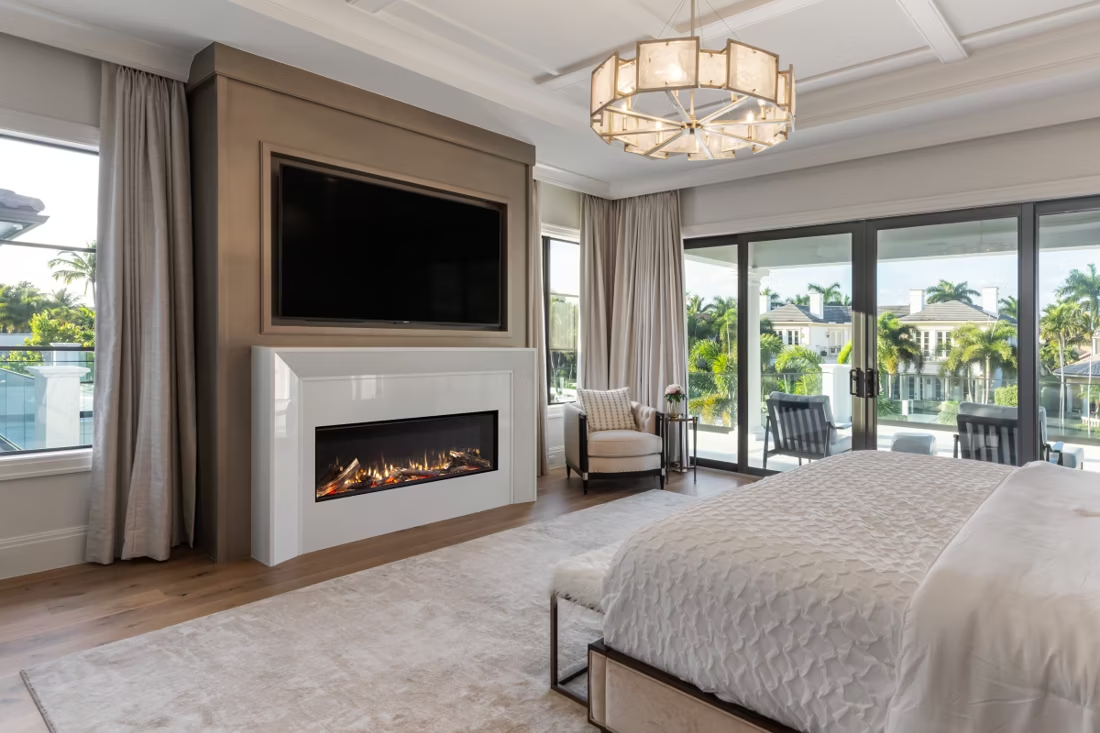
Yes—with an asterisk. Fireplaces are hot and TVs don't like heat. Either put a mantel between them to deflect rising warmth, or choose a fireplace with heat-management technology that creates a cool zone on the wall above—the wall stays around 125 degrees, barely warm, while the room still gets full heat. If you like clean lines and don't want a mantel, heat management is the answer.
Do electric fireplaces actually produce heat?
Yes—most put out around 4,800–5,000 BTUs from a standard outlet, which comfortably warms a bedroom, office, or den as a comfort-zone heater. What they won't do is carry a whole house the way wood, gas, or pellet can. Think of electric as ambiance-first with honest supplemental heat: flames on with no heat in July, flames plus warmth in January.
What is an in-home preview and do I need one?
It's a visit where a hearth professional measures your space, confirms the model you picked actually works in your home, and walks the specs—framing, gas line, venting, finish work—before anything is ordered. Some details you just can't know until you see the house. Never make a down payment without one; it's the single most-skipped step that burns buyers.
Can I install a fireplace myself?
If you're putting a fire in your house on purpose, it's best to work with an expert. Unless you're genuinely experienced in framing, gas line, vent pipe, and the national code on clearances to combustibles, have a professional do it—and ideally the same company that sells you the fireplace, so warranty, service, and liability all live under one roof.
Nearby Dealers
Hearth shops serving Princeton and the surrounding area. Every listing shows whether it is a WhyFire partner, a dealer we have verified as authorized for the brands we recommend, or a local business carrying hearth products. No manufacturer pays for placement. How we verify dealers →
Flemington Supply Co. Inc
My Deck, Llc
Better Homes Hearth & Patio
E & E Stoves & Fireplaces
Appliance Brokers, Ltd.
Tri County Hearth & Awning
Island Renovations
Hearth & Stove LLC
Estates Chimney & Fireplace
Fireside Pros/Awning Design
Plumbarama Co. Inc.
Rattan Patio & Fireplace Shoppe
Fireplaces R Us
Central Jersey Masonry & Chimney Sweep
Tor Chimney & Fireplace
Electric Service in Princeton
An electric fireplace's heater draws about 1,500 watts—pennies per hour at local rates.
Public Service Elec & Gas Co
Find your electric fireplace in Princeton.
Tell us about your room and your home's wiring, and we'll match you with a trusted local Princeton-area dealer and send over a free Project Guide & Parts List—sized to your space, with no guesswork on the electrical.
Find Your Fireplace →