
Find the right fireplace in Mercer County.
From Trenton and Hamilton to Princeton and Pennington, most Mercer County homes run on piped natural gas—so gas and electric fireplaces make up the bulk of local installs. We'll also point you to what's realistic if you're working with an existing wood-burning fireplace in an older home.
Every Project Starts From One of These Five Situations
Dense, gas-served, and moderately cold—Mercer County, New Jersey.
Mercer County runs from the state capital in Trenton up through Hamilton, Ewing, Lawrence, and West Windsor to Princeton and the smaller boroughs around Hopewell and Pennington. At climate zone 5A with a heating season on par with places like Columbus, OH and average winter lows around 23°F, it's a meaningfully cold season—colder than most of the Mid-Atlantic but nowhere near the deep-freeze territory of a Duluth or a Fargo. PSE&G's natural gas network covers nearly all of the county's incorporated towns, which is a big part of why gas fireplaces and inserts, not wood stoves, are the default upgrade here.
Wood and pellet appliances are genuinely uncommon in Mercer County—small suburban lot sizes, municipal zoning in towns like Princeton and West Windsor, and the near-universal reach of piped gas mean most retailers don't stock them, and new installs are rare. That said, plenty of colonial-era and mid-century homes in Hopewell, Pennington, and Princeton still have working masonry fireplaces, and this hub covers what's realistic for those—whether that's a gas insert conversion or keeping the wood-burning setup as-is. Pick your fuel below for local dealers, install costs, and the resources that fit your specific home.
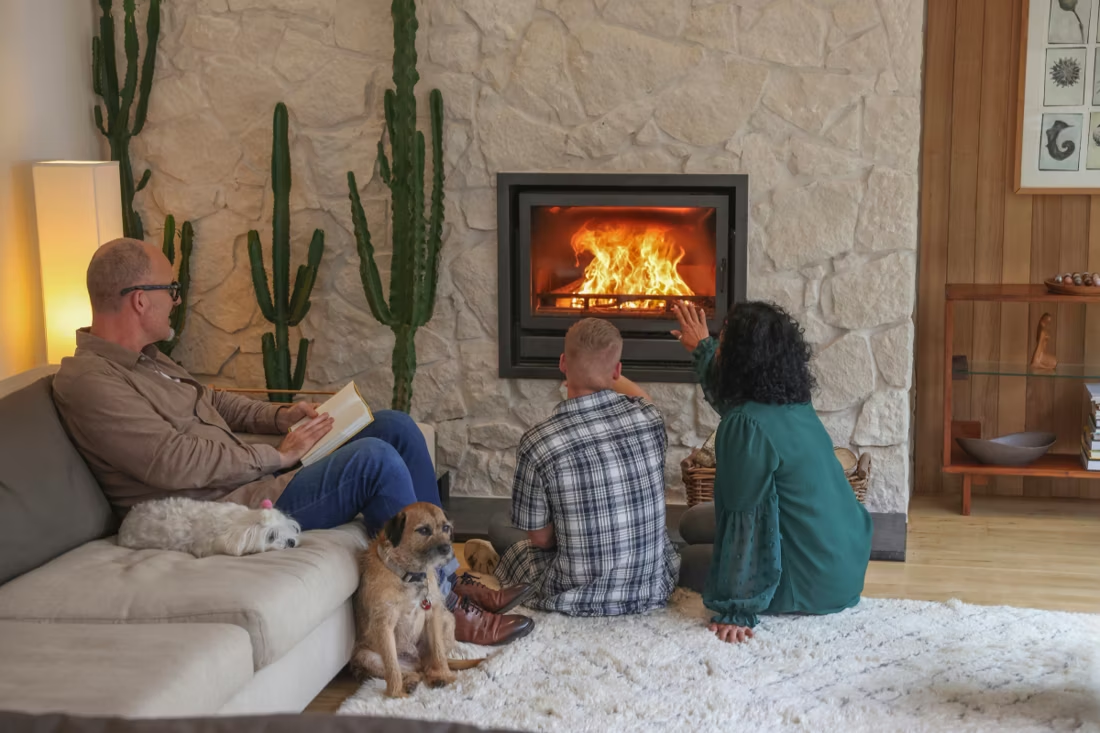
Four fuels. One honest answer for Mercer County.
Three steps. No salesperson until you're ready.
Tell us about your project
Your zip code, your situation, and the fuel you're leaning toward—or let the answers point you to one.
See what's actually available
The brands dealers within 100 miles genuinely carry—real options, never a catalog mirage.
Get your dealer & Project Guide
A trusted local dealer, plus the free Project Guide & Parts List that names every component of the job.
Frequently Asked Questions
Which fuel works best in Mercer County?
For the vast majority of Mercer County homes, it's gas. PSE&G's natural gas network reaches nearly every incorporated town in the county, and gas fireplaces and inserts give you instant heat with none of the wood storage or ash cleanup that doesn't fit well on a typical Hamilton or Ewing suburban lot. Electric is a strong secondary option—good for bedrooms, finished basements, and older Princeton or Pennington homes where running a new gas line isn't practical. Wood and pellet are genuinely uncommon here; if you have an existing masonry fireplace in an older home, most homeowners either keep it for occasional use or convert it to a gas insert rather than installing a new wood-burning unit.
Do I need a permit to install a fireplace in Mercer County?
Yes. New Jersey's Uniform Construction Code (UCC) applies statewide, and each Mercer County municipality—Trenton, Hamilton, Princeton, Lawrence, and the rest—runs its own construction office that issues the permits. Gas fireplace and insert installs require a permit plus a licensed plumber or gas fitter for the line work; electrical permits apply to hardwired built-in electric units. If you're converting an existing wood-burning masonry fireplace to gas, expect both a mechanical permit for the insert and an inspection of the flue liner. Most local retailers handle the permit filing as part of the installation, so you generally don't have to deal with the municipal office directly.
Are there air quality restrictions on wood burning in Mercer County?
Not in any significant way—Mercer County isn't a non-attainment area for wood smoke and doesn't deal with the winter temperature inversions that trigger burn advisories in mountain or valley regions out west. New Jersey's DEP does regulate outdoor wood-fired boilers statewide, but that's a narrow category and rarely comes up here given how few homes burn wood as primary heat. In practice, the bigger constraint on wood burning in Mercer County isn't air quality policy—it's that dense suburban and urban lots in towns like Trenton, Hamilton, and Princeton simply aren't set up for firewood storage or new chimney construction.
Can one local hearth retailer handle all four fuel types?
Most Mercer County retailers concentrate on gas and electric, since that's what the vast majority of homeowners are asking for. A smaller number also handle wood-to-gas insert conversions for the older masonry fireplaces you'll find in Hopewell, Pennington, and parts of Princeton, but few stock new wood stoves or pellet units—demand simply isn't there given how thoroughly PSE&G's gas network covers the county. If you do have an existing pellet stove and need fuel, brands like Energex and Hamer Pellet Fuel show up at regional hardware and farm-supply stores rather than at dedicated hearth retailers.
I have an old wood-burning fireplace in an older Mercer County home—what are my options?
This comes up a lot in Princeton, Hopewell, and Pennington, where colonial-era and early-20th-century homes often have original masonry fireplaces. You have three realistic paths: keep it wood-burning for occasional ambiance (have the flue inspected and swept even if it's used only a few times a year), convert it to a gas insert if a gas line can be run to the hearth, or install a vent-free or electric insert if gas access is impractical. Given how few local retailers stock new wood-burning equipment, most homeowners going this route end up talking to a dealer who specializes in insert conversions rather than shopping for a standalone wood stove.
What's the typical cost range for fireplace installation across fuel types in Mercer County?
Gas fireplace, insert, or stove: roughly $4,500–$11,000 depending on whether a new gas line has to be run or existing service can be tapped—conversions of an existing masonry fireplace to a gas insert tend to land on the lower end. Electric fireplace: $200–$3,000 for the unit itself, plus $400–$1,200 in labor for anything beyond a simple plug-and-play install. Wood or pellet installs are uncommon enough in Mercer County that pricing varies more by contractor availability than by a standard local rate—expect to pay a premium if you're one of the few homeowners pursuing a new wood-burning install rather than working with an existing fireplace.
What is an in-home preview and do I need one?
It's a visit where a hearth professional measures your space, confirms the model you picked actually works in your home, and walks the specs—framing, gas line, venting, finish work—before anything is ordered. Some details you just can't know until you see the house. Never make a down payment without one; it's the single most-skipped step that burns buyers.
Can I install a fireplace myself?
If you're putting a fire in your house on purpose, it's best to work with an expert. Unless you're genuinely experienced in framing, gas line, vent pipe, and the national code on clearances to combustibles, have a professional do it—and ideally the same company that sells you the fireplace, so warranty, service, and liability all live under one roof.
Should the dealer who sells my fireplace also install it?
Ideally, yes. A fireplace project involves vent pipe, gas line, electrical, and often tile or stone. Hire three or four separate trades and you own the liability and the game of telephone between them. One company selling and installing means one accountable party, start to finish—ask about factory training, on-time completion records, and what happens if an inspection fails.
How much should I budget for a fireplace?
For an average home—covering the fireplace, the vent pipe, and basic installation—a budget between $3,900 and $5,500 gives you a lot of options across wood, gas, and pellet. By the time you add finish work, gas line, and electrical, the average complete installation lands between $5,000 and $12,000 all-in. In a remodel or new build, a good rule is to put about 2.5% of the total project cost toward the fireplace.
Stove and Fireplace Dealers in Mercer County
Listings include WhyFire partner dealers, dealers we have verified as authorized for the brands we recommend, and established local businesses that carry hearth products. Every listing shows which one it is. The ones marked Preferred run on WhyFire's software, so they can show you real pricing and book your appointment right here. No manufacturer pays for placement. How we verify dealers →
Better Homes Hearth & Patio
E & E Stoves & Fireplaces
Appliance Brokers, Ltd.
Tri County Hearth & Awning
Estates Chimney & Fireplace
Rattan Patio & Fireplace Shoppe
Island Renovations
Flemington Supply Co. Inc
Plumbarama Co. Inc.
Hearth & Stove LLC
My Deck, Llc
Fireside Pros/Awning Design
Central Jersey Masonry & Chimney Sweep
Kester Fireplace
Tor Chimney & Fireplace
Find your fireplace fit in Mercer County.
Tell us about your home and we'll match you with a trusted local dealer and send a free Project Guide & Parts List—the exact parts, including the vent kit, and the dealer we recommend for your project.
Find Your Fireplace →