
Find a pellet stove dealer in Mercer County.
Pellet stoves are a niche choice here—most of Trenton, Hamilton, and Princeton run on PSE&G natural gas—but for the right home, a pellet insert still makes sense. We'll connect you with a local dealer who actually installs them.
Every Project Starts From One of These Five Situations
A rare heat source in a natural-gas county.
Mercer County sits in climate zone 5A with a moderate winter heating season and average winter lows near 23°F—cold enough to matter, but nowhere near the extremes of places like Duluth or Fargo. Between Trenton, Hamilton Township, Princeton, Ewing, and Lawrence, the county is densely built out, and PSE&G's natural gas network reaches the overwhelming majority of homes. That combination—moderate winters plus near-universal gas access—is exactly why pellet stoves never became common here the way they have in more rural, off-grid-adjacent parts of the Northeast.
That doesn't mean pellet stoves are absent—they're just a minority choice. A homeowner in a Hopewell Township farmhouse without a gas line, or someone in East Windsor who wants supplemental zone heat in a family room without the mess of cordwood, is a realistic pellet-stove customer here. Regional bagged pellets from Energex, Hamer Pellet Fuel, and Greene Team Pellet Fuel are available through hearth dealers serving central New Jersey, so the fuel supply exists—it's the installed base and the dealer specialization that's thinner than in colder, less gas-connected counties.
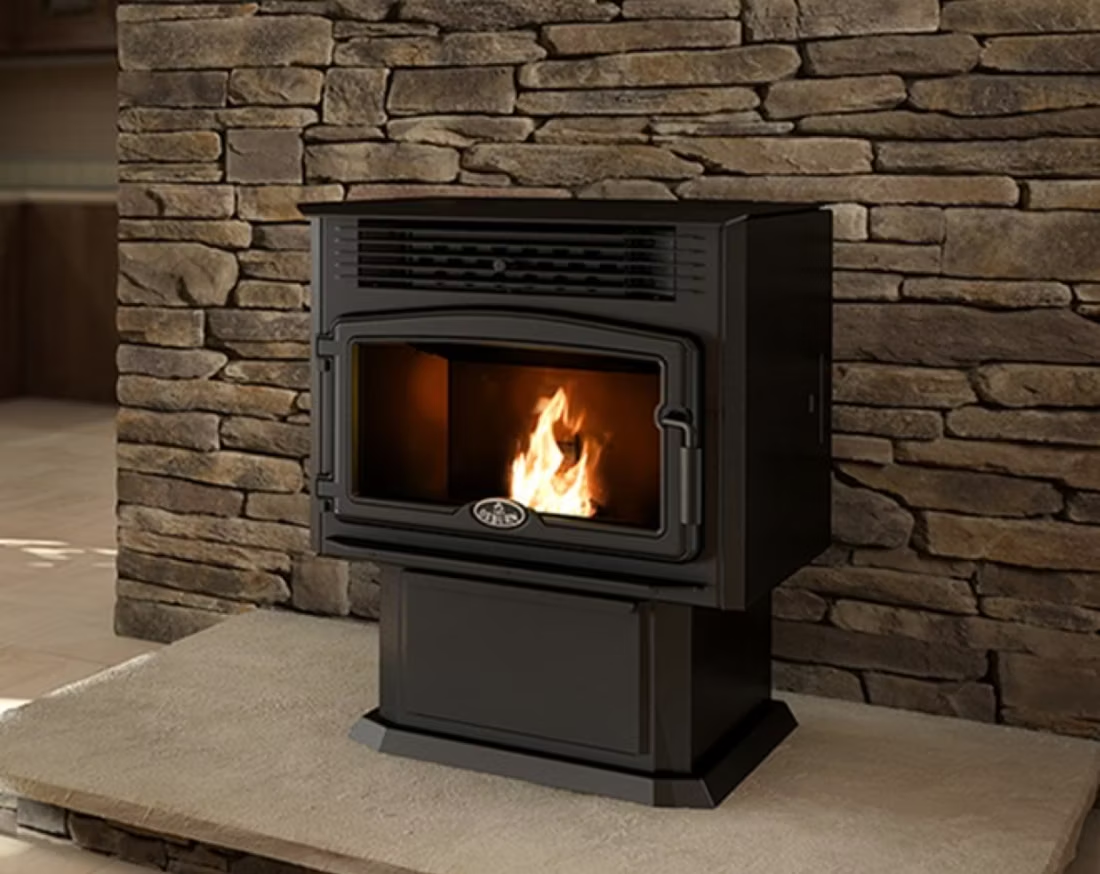
Three steps. No salesperson until you're ready.
Tell us about your project
Your zip code, your situation, and the fuel you're leaning toward—or let the answers point you to one.
See what's actually available
The brands dealers within 100 miles genuinely carry—real options, never a catalog mirage.
Get your dealer & Project Guide
A trusted local dealer, plus the free Project Guide & Parts List that names every component of the job.
Frequently Asked Questions
How much does a pellet stove installation cost in Mercer County?
Because pellet stoves are a niche appliance here, there isn't the deep pool of competing local quotes you'd find for a gas insert conversion. As a general range, a pellet stove or insert installation—including the unit, wall-thimble venting, and a basic hearth pad—typically runs $3,000 to $6,500 in the central New Jersey market, with inserts into an existing masonry fireplace usually landing on the lower end since they reuse the chimney chase. Homes without an existing fireplace or exterior venting path (common in Hamilton and Ewing's postwar developments) run higher once wall penetration and electrical work for the auger and blower are added.
Why are pellet stoves so rare in Mercer County compared to other heating options?
Two things work against pellet stoves in Mercer County. First, PSE&G natural gas service covers most of Trenton, Hamilton, Princeton, Ewing, and Lawrence, so homeowners who want supplemental or zone heat usually reach for a gas insert instead—no pellet bags to store, no auger to maintain. Second, the county's winters, while real, aren't severe enough with a moderate winter heating season and 23°F average lows to push many households toward a dedicated solid-fuel backup system the way they might in a place with harsher, longer winters. Where pellet stoves do show up, it's usually in older homes in Hopewell Township or rural pockets of East Windsor that never had gas service extended to the property.
Do I need a permit to install a pellet stove in Mercer County?
Yes—a building permit is required through your local municipality's building department, whether that's Trenton, Hamilton Township, Princeton, or Ewing, since each municipality issues and inspects its own permits rather than routing through a single county office. The good news is that Mercer County has no wood-smoke air quality restrictions or curtailment periods—it isn't a non-attainment area—so pellet stove permitting here is a straightforward code and clearance review rather than the emissions-driven approval process you'd see in parts of the West. Most hearth dealers handle the permit paperwork as part of the installation.
What size pellet stove do I need for a Mercer County home?
Sizing depends more on floor plan than on Mercer County's relatively moderate climate. A small pellet stove (under 1,000 square feet of coverage) suits a single family room or finished basement in a Hamilton or Ewing rowhouse-style home. A medium unit (1,000–1,800 square feet) is the common choice for a colonial-style detached home in Lawrence or West Windsor looking for whole-first-floor supplemental heat. Larger, rural properties in Hopewell Valley without gas service sometimes size up further if the pellet stove is meant to carry more of the heating load. A local dealer will factor in ceiling height, insulation, and open floor plan before recommending a model.
Will a pellet stove keep my home warm during a power outage?
Not on its own, and this matters in a county that sees nor'easters and occasional summer derechos knock out power for days. Pellet stoves rely on an electric auger to feed fuel and a blower to distribute heat—no power, no fire. If backup heat during outages is your main goal, a small battery backup system or a generator sized for the stove's low wattage draw is the workaround most Mercer County pellet owners use. If outage resilience is the top priority and you don't already have a generator, it's worth discussing that tradeoff with your dealer before choosing pellet over another option.
What pellet brands are available near Mercer County?
Regional hardwood and softwood pellets from Energex, Hamer Pellet Fuel, and Greene Team Pellet Fuel are the brands most commonly stocked by hearth dealers and farm-supply retailers serving central New Jersey and the nearby Bucks County, PA border. Bagged pellet pricing across the region generally runs in the $280–$330 per ton range, though availability can tighten during peak winter demand since Mercer County isn't a high-volume pellet market compared to more rural parts of the Northeast. Buying a season's supply early in the fall is the common local workaround.
Pellet stove vs. gas insert—which fits a Mercer County home better?
For most Mercer County homes, gas wins on convenience: PSE&G natural gas reaches the majority of Trenton, Hamilton, Princeton, and Ewing, and a direct-vent gas insert gives instant, thermostat-controlled heat with no fuel storage. Pellet makes more sense specifically where gas service doesn't reach—some rural stretches of Hopewell Township or East Windsor—or for a homeowner who specifically wants the look and radiant feel of a real flame with less mess than cordwood. If your home already has a gas line or is on a block with gas service, that's usually the deciding factor before pellet even comes up.
Where can I find a dealer who actually installs pellet stoves near me?
Because pellet is a smaller share of the Mercer County hearth market, not every local fireplace shop carries or installs them regularly—some specialize almost entirely in gas. The dealers worth calling are the ones who can show you an installed pellet unit and speak specifically to venting through an exterior wall, hopper capacity, and auger maintenance, not just quote you a box price. That's the matching problem we solve: we connect you with a trusted local dealer who genuinely stocks and installs pellet equipment in Mercer County, rather than one who'll steer you toward gas because that's what they sell most.
Is a pellet stove a good fit for an older farmhouse in Hopewell Township without gas service?
Yes, this is one of the more realistic pellet-stove scenarios in Mercer County. Older farmhouses in Hopewell Township, or similar rural pockets without a PSE&G gas line nearby, often rely on propane, oil, or electric resistance heat—all of which cost more per BTU than pellets. A pellet stove or insert can meaningfully offset that cost for the shoulder-season months and cold snaps that push Mercer County's 23°F average winter lows even lower, without the cordwood cutting, splitting, and creosote maintenance that a wood stove would require. It's a smaller niche than gas conversions countywide, but for this specific situation, it's a genuinely good fit.
How often does a pellet stove need cleaning?
A clean pellet stove is a happy pellet stove. Plan on cleaning the burn pot about once a week when you're burning regularly—ash and clinkers gum up the air holes just like a pellet barbecue. Most pellet stove problems trace back to skipped cleaning that nobody explained up front. Some designs make it easy with a trapdoor burn pot: pull a lever and the gunk drops into the ash pan.
What's the difference between an insert and a zero-clearance fireplace?
An insert is a fireplace that slides into a pre-existing wood-burning fireplace—if you don't have one, there's nothing to insert it into. A zero-clearance fireplace is built into a framed wall, which makes it the answer for remodels and new construction. Simple test: existing masonry fireplace means insert; blank or framed wall means zero-clearance.
Can I install a fireplace myself?
If you're putting a fire in your house on purpose, it's best to work with an expert. Unless you're genuinely experienced in framing, gas line, vent pipe, and the national code on clearances to combustibles, have a professional do it—and ideally the same company that sells you the fireplace, so warranty, service, and liability all live under one roof.
What is an in-home preview and do I need one?
It's a visit where a hearth professional measures your space, confirms the model you picked actually works in your home, and walks the specs—framing, gas line, venting, finish work—before anything is ordered. Some details you just can't know until you see the house. Never make a down payment without one; it's the single most-skipped step that burns buyers.
Stove and Fireplace Dealers in Mercer County
Listings include WhyFire partner dealers, dealers we have verified as authorized for the brands we recommend, and established local businesses that carry hearth products. Every listing shows which one it is. The ones marked Preferred run on WhyFire's software, so they can show you real pricing and book your appointment right here. No manufacturer pays for placement. How we verify dealers →
Better Homes Hearth & Patio
E & E Stoves & Fireplaces
Appliance Brokers, Ltd.
Tri County Hearth & Awning
Estates Chimney & Fireplace
Rattan Patio & Fireplace Shoppe
Island Renovations
Flemington Supply Co. Inc
Plumbarama Co. Inc.
Hearth & Stove LLC
My Deck, Llc
Fireside Pros/Awning Design
Central Jersey Masonry & Chimney Sweep
Kester Fireplace
Tor Chimney & Fireplace
Pellet Brands Stocked Around Mercer County
Manufacturers will point you to the nearest stocking dealer.
Find your pellet stove in Mercer County.
Tell us about your home and we'll put together a free Project Guide & Parts List for your Mercer County pellet project—the right unit, the vent kit it needs, and a trusted local dealer who actually installs pellet equipment in this market.
Find Your Fireplace →