
Keep Your Family Warm and Safe—No Matter What
Most Brownville homes heat with gas or electric—but for backup heat, a second property, or the ambiance of a real fire, a wood stove can still make sense. We'll connect you with a local dealer who handles the rare install correctly.
Every Project Starts From One of These Five Situations
Why gas and electric dominate heat here—and where wood still fits.
Brownville sits in the 08857 area of Middlesex County at just 61 feet of elevation, with a climate zone of 4A and a moderate mid-Atlantic winter—not the kind of sustained cold that pushes households toward wood as primary heat. Average winter lows hover around 23°F, mild enough that most homes here get by on natural gas furnaces and electric heat pumps, with Jersey Central Power & Light serving the area's electrical needs at roughly $0.15 per kWh. There's no national forest land nearby, no cutting-permit infrastructure, and lot sizes in this part of the township are typically too small to store or season a winter's worth of cordwood.
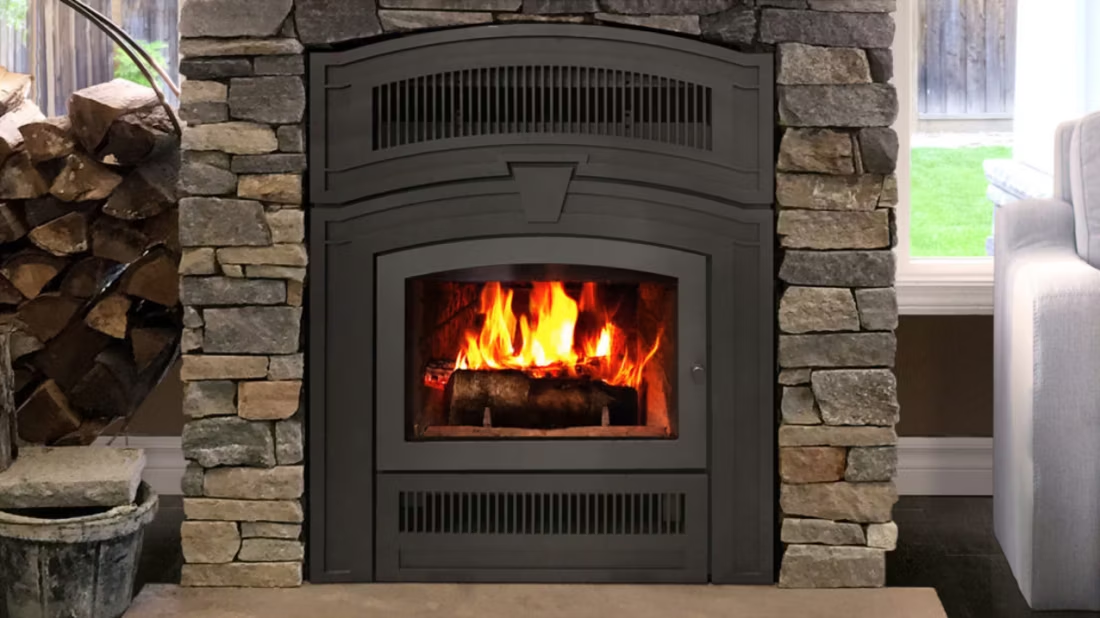
That doesn't mean wood heat is off the table—it just means it's a deliberate choice rather than the default. Homeowners in Brownville who install a wood stove or fireplace insert are usually doing it for one of a few reasons: backup heat during a power outage, ambiance in a den or finished basement, or a secondary property elsewhere that gets more use out of it. If that's you, the install still needs to be done right—proper hearth pad clearances, code-compliant Class A chimney venting, and a building permit through the local construction office. A trusted local dealer will size the unit to the room (not the whole house) and make sure it's installed to code rather than as an afterthought.
Three steps. No salesperson until you're ready.
Tell us about your project
Your zip code, your situation, and the fuel you're leaning toward—or let the answers point you to one.
See what's actually available
The brands dealers within 100 miles genuinely carry—real options, never a catalog mirage.
Get your dealer & Project Guide
A trusted local dealer, plus the free Project Guide & Parts List that names every component of the job.
Frequently Asked Questions
How much does a wood stove installation cost in Brownville?
Because wood stoves are a less common request in this part of Middlesex County, pricing tends to run on the higher end of typical Northeast costs—expect roughly $5,000 to $9,500 for a freestanding stove with a new Class A chimney system, hearth pad, and permit. If you're converting an existing masonry fireplace to a wood insert, costs are usually lower, in the $4,000 to $7,000 range, since the existing chimney does most of the venting work. Get a firm quote from a local dealer after an in-home visit—travel and setup can add more to the bill here than in areas with more wood-stove installers on the roster.
Does a wood stove even make sense for a Brownville home?
For most primary heating needs, no—with average winter lows around 23°F and a moderate mid-Atlantic winter heating season, a gas furnace or electric heat pump handles the job more efficiently and with far less hands-on effort. Where a wood stove does make sense is as supplemental or backup heat: a smaller stove (rated for 800–1,200 sq ft) in a family room or finished basement can offset the furnace on the coldest nights and keep a space livable if the power goes out. Given that oak, hickory, and maple are the common local hardwoods, whatever stove you choose should be rated to burn dense hardwood efficiently rather than the softer, faster-burning species common further north.
Where do I find a wood stove installer near Brownville?
There simply aren't many installers who specialize in wood-burning appliances in this immediate area, since demand is low—most local hearth companies focus on gas fireplaces and inserts. Look for NFI (National Fireplace Institute) certified installers, and be prepared to work with a dealer based elsewhere in Middlesex or Monmouth County who travels to do the install. This is one case where it's worth the drive or the wait rather than hiring a general contractor unfamiliar with wood-burning clearance and venting requirements—improper installs are the leading cause of chimney fires.
What's the difference between a wood stove and a wood insert?
A wood stove is a freestanding unit on its own hearth pad, vented through a new or existing chimney—it can go almost anywhere with the right clearances. A wood insert slides into an existing masonry fireplace opening and uses that chimney (usually with a stainless liner) to vent. If your Brownville home already has a masonry fireplace that mostly sits unused, an insert is usually the more practical and less expensive path, since you're not building new venting from scratch.
Do I need a permit to install a wood stove in Brownville?
Yes. New wood-burning installations require a building permit through the local township construction code office, and the stove itself needs to meet current EPA emissions standards. There's no wintertime air quality advisory system here the way there is in western wood-heavy regions—Brownville doesn't have inversion or nonattainment issues—so once the unit is installed and permitted, there are no seasonal burn restrictions to track. A local dealer will typically handle the permit paperwork as part of the installation.
What's the best type of wood stove for this area's climate?
Since most Brownville installs are for supplemental or backup heat rather than round-the-clock winter heating, a mid-size non-catalytic stove from a brand like Jotul, Pacific Energy, or Lopi is usually the right fit—easier to operate intermittently than a catalytic model built for 20-hour burns in much colder climates. Given that local hardwood is dominated by oak, hickory, and maple—all dense, high-BTU species—a stove rated for hardwood-heavy use will get more efficient, longer burns than one optimized for softwood.
How often should my chimney be inspected if I only use my wood stove occasionally?
Even light or occasional use warrants an annual inspection—the CSIA recommends this regardless of how often a stove is fired. Creosote can build up even from infrequent burns, especially if the wood isn't fully seasoned, and a stove that sits unused for long stretches between fires is also worth having checked for pests, debris, or moisture damage in the flue before the season's first fire.
Where can I buy firewood near Brownville?
There's no national forest or public cutting-permit program in this part of New Jersey, so firewood here comes from local tree services, landscapers, and seasonal firewood vendors rather than self-cut permits. Expect to pay roughly $250 to $375 per cord for seasoned hardwood—oak, hickory, and maple are the most common species sold locally and all burn hot and long, which is useful if you're only running the stove occasionally and want maximum heat per load.
Wood vs. gas or electric heat—which makes more sense for my home?
For nearly all Brownville homes, gas or electric is the more practical everyday choice—natural gas service and Jersey Central Power & Light's electric grid are both reliable here, and neither requires storing or hauling cordwood. Wood's real advantage is that it works without electricity, which matters if you want heat during a power outage regardless of what runs your main system. Most homeowners here who install a wood stove are pairing it with an existing gas or electric setup as backup, not replacing it—and that's usually the right call given the moderate winters and lack of any local wood-burning infrastructure.
Why is a fireplace insert so efficient?
An insert does two things: it seals the chimney completely, so you stop losing air you already paid to heat, and it radiates warmth into the room through the firebox and glass. Most add a heat-exchange fan that pulls cool room air underneath, wraps it around the hot firebox, and pushes it back out warm. Your home is more efficient before you've even lit the first fire.
What's the difference between an insert and a zero-clearance fireplace?
An insert is a fireplace that slides into a pre-existing wood-burning fireplace—if you don't have one, there's nothing to insert it into. A zero-clearance fireplace is built into a framed wall, which makes it the answer for remodels and new construction. Simple test: existing masonry fireplace means insert; blank or framed wall means zero-clearance.
How much should I budget for a fireplace?
For an average home—covering the fireplace, the vent pipe, and basic installation—a budget between $3,900 and $5,500 gives you a lot of options across wood, gas, and pellet. By the time you add finish work, gas line, and electrical, the average complete installation lands between $5,000 and $12,000 all-in. In a remodel or new build, a good rule is to put about 2.5% of the total project cost toward the fireplace.
What is an in-home preview and do I need one?
It's a visit where a hearth professional measures your space, confirms the model you picked actually works in your home, and walks the specs—framing, gas line, venting, finish work—before anything is ordered. Some details you just can't know until you see the house. Never make a down payment without one; it's the single most-skipped step that burns buyers.
Nearby Dealers
Hearth shops serving Brownville and the surrounding area. Every listing shows whether it is a WhyFire partner, a dealer we have verified as authorized for the brands we recommend, or a local business carrying hearth products. No manufacturer pays for placement. How we verify dealers →
Island Renovations
Appliance Brokers, Ltd.
Fireside Pros/Awning Design
Builders Architectural Millwork
Central Jersey Masonry & Chimney Sweep
Hot Concepts Fireplaces
Alternate Energy Products
East Coast Energy Products Inc.
Fireplaces R Us
Harris Hearth And Home
H2 LLC
D & D Design Center
Alpine Fireplaces
Find your wood stove option in Brownville.
Tell us about your home and how you'd use a wood stove—backup heat, ambiance, or a secondary property—and we'll match you with a local dealer and send a free Project Guide & Parts List with the exact parts, vent kit, and recommended installer for your project.
Find Your Fireplace →