
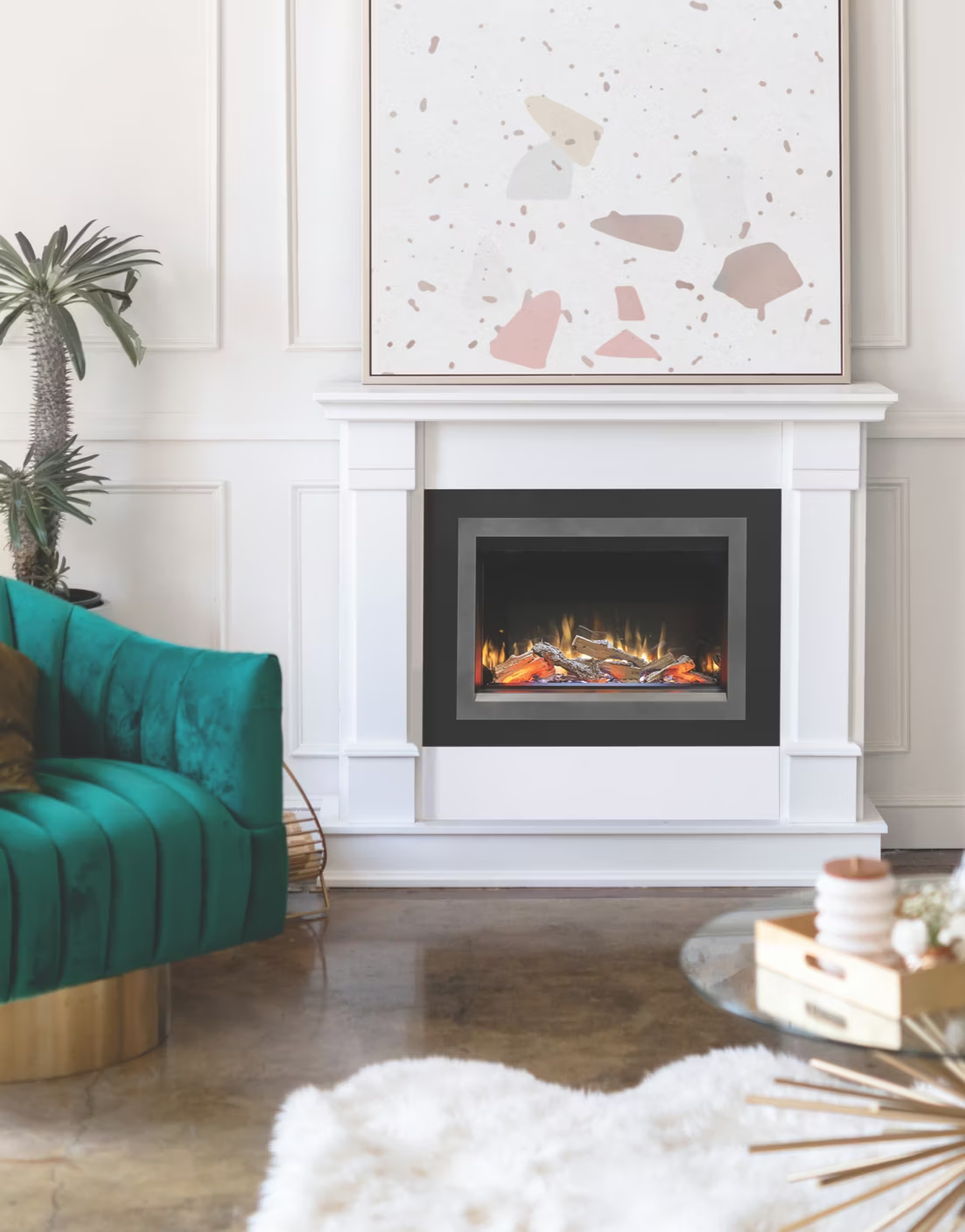
Add real warmth and ambiance without a chimney.
For Brownville homes without gas lines or masonry flues, an electric fireplace installs in an afternoon and runs on the JCP&L service you already have. Find the right unit and connect with a trusted local dealer.
Every Project Starts From One of These Five Situations
The simplest heat upgrade in this corner of Middlesex County.
Brownville sits at just 61 feet in the flatlands of Old Bridge Township, in climate zone 4A with a real, moderately long winter heating season and average winter lows near 23°F. It's real heating season, but nothing like the sub-zero stretches of Fargo, ND or Duluth, MN—most of the year the demand is for supplemental warmth in a family room, finished basement, or bedroom addition rather than a full-house heat source. That's exactly the job an electric fireplace is built for.
A lot of the housing stock here—split-levels, townhomes, and mid-century ranches—was never plumbed for gas fireplace lines or built with a masonry chimney to retrofit. Electric sidesteps both problems: no venting, no gas permit, no flue clearance issues, and Jersey Central Power & Light is already running to the panel. Plug-in units need nothing more than an outlet; built-in or recessed models need a dedicated circuit, which a licensed electrician can usually add in a single visit. Either way, you get flame-effect ambiance and real supplemental heat without touching your roofline or your insurance rider for an open flame.
Three steps. No salesperson until you're ready.
Tell us about your project
Your zip code, your situation, and the fuel you're leaning toward—or let the answers point you to one.
See what's actually available
The brands dealers within 100 miles genuinely carry—real options, never a catalog mirage.
Get your dealer & Project Guide
A trusted local dealer, plus the free Project Guide & Parts List that names every component of the job.
Frequently Asked Questions
How much does an electric fireplace installation cost in Brownville?
Most Brownville installs run $400 to $2,500. A plug-in stove or a mantel-package insert that drops into an existing opening sits at the low end—no electrical work beyond a standard outlet. Wall-mounted linear units and built-ins that require a new dedicated 120V or 240V circuit run higher, mainly because of electrician labor to run wire to the wall. Converting an old wood-burning masonry opening to a electric log insert is typically mid-range since it involves fitting the insert to the existing firebox rather than framing new construction.
Do I need a permit to install an electric fireplace in Old Bridge Township?
A simple plug-in unit that draws from an existing outlet generally doesn't require a permit. If your installer adds a new dedicated circuit or does any panel work, that falls under an electrical permit through the Old Bridge Township Building Department, and it needs to be pulled by a licensed electrician. Local dealers who install built-in electric units typically handle this coordination for you, which is one advantage of working with a certified installer instead of a big-box DIY kit.
How much does it cost to run an electric fireplace with JCP&L rates?
Jersey Central Power & Light's residential rate in this area runs about $0.1497 per kWh. A typical 1,500-watt electric fireplace on high heat costs roughly 22 cents an hour to run. Used for ambiance only (flame with heater off), draw drops to 30–50 watts, essentially pennies a day. If you run the heater 4 hours an evening through a Brownville winter, expect somewhere around $25–$30 a month added to your JCP&L bill—far less than most homeowners assume.
What's the difference between an electric fireplace, an electric insert, and an electric stove?
An electric fireplace is typically a wall-mounted or built-in unit designed for new construction or a remodel—often a linear, modern look. An electric insert is sized to slide into an existing fireplace opening, masonry or zero-clearance, and is the natural choice for Brownville homes with an old wood-burning firebox that's no longer in use. An electric stove is a freestanding cabinet-style unit that mimics a classic wood stove but plugs into a standard outlet—a good fit for a corner of a finished basement with no existing opening at all.
Can I install an electric fireplace in a condo or townhome in Brownville?
Yes, and it's one of the most common reasons people choose electric here. Condo and townhome associations that restrict open-flame appliances, chimneys, or gas line modifications generally have no issue with a plug-in or hardwired electric unit, since there's no combustion, no venting penetration, and no change to the building's exterior. Always check your specific HOA documents, but electric is typically the path of least resistance for multi-unit housing.
Electric vs. gas—which is right for my home?
Gas is a standard, well-supported option in this part of Middlesex County and delivers stronger heat output—a real consideration given Brownville's real, moderately long winter heating season. If you already have a gas line or an existing fireplace to convert, a gas insert will out-heat an electric unit on the coldest nights. Electric wins on installation simplicity and cost, works in homes with no gas service or venting path, and is the only realistic option in most condos and rentals. Many Brownville homeowners choose electric for a bedroom, basement, or secondary living space and reserve gas for the main living area.
Will an electric fireplace actually heat my room, or is it just for looks?
Most electric fireplaces sold today include a 1,500-watt (roughly 4,600–5,100 BTU) heater rated to comfortably warm 400 to 1,000 square feet, depending on insulation and ceiling height. That's genuinely useful supplemental heat for a family room or finished basement in Brownville's climate, but it isn't a whole-house furnace replacement given the area's real winter heating load. Think of it as zone heat for the room you use most, with the flame effect running independently of the heater whenever you just want ambiance without the electric bill of the heat function.
What styles of electric fireplace are available for a Brownville home?
Local dealers typically carry three broad categories: wall-mounted linear units for a modern remodel, mantel packages that pair an electric insert with a surrounding wood or stone mantel for a more traditional living room look, and freestanding stove-style units for a cabin or basement feel without any built-in framing. Recessed, flush-mount units are also available for new construction where the wall cavity can be framed around the unit ahead of drywall.
Can I convert my old wood fireplace opening to electric?
Yes—this is a common project in Brownville's older homes with an unused masonry firebox. An electric log insert or panel insert slides into the existing opening, plugs into a nearby outlet or a new dedicated circuit if the unit calls for one, and requires no chimney work, no liner, and no venting at all. It's a straightforward way to bring a dead fireplace back to life without the cost or maintenance of reopening it for wood or converting it to gas.
Can I put a TV above my fireplace?
Yes—with an asterisk. Fireplaces are hot and TVs don't like heat. Either put a mantel between them to deflect rising warmth, or choose a fireplace with heat-management technology that creates a cool zone on the wall above—the wall stays around 125 degrees, barely warm, while the room still gets full heat. If you like clean lines and don't want a mantel, heat management is the answer.
Do electric fireplaces actually produce heat?
Yes—most put out around 4,800–5,000 BTUs from a standard outlet, which comfortably warms a bedroom, office, or den as a comfort-zone heater. What they won't do is carry a whole house the way wood, gas, or pellet can. Think of electric as ambiance-first with honest supplemental heat: flames on with no heat in July, flames plus warmth in January.
Can a fireplace actually lower my heating bill?
Yes—by creating a comfort zone. A furnace heats every square foot of the house just to warm the one room you're in; a gas fireplace on low burns roughly a sixth of the gas a typical furnace does. Set the furnace around 55–60 degrees as a baseline, then heat the rooms your family actually uses. Families who heat this way commonly save $20–$60 a month.
What is an in-home preview and do I need one?
It's a visit where a hearth professional measures your space, confirms the model you picked actually works in your home, and walks the specs—framing, gas line, venting, finish work—before anything is ordered. Some details you just can't know until you see the house. Never make a down payment without one; it's the single most-skipped step that burns buyers.
Nearby Dealers
Hearth shops serving Brownville and the surrounding area. Every listing shows whether it is a WhyFire partner, a dealer we have verified as authorized for the brands we recommend, or a local business carrying hearth products. No manufacturer pays for placement. How we verify dealers →
Island Renovations
Appliance Brokers, Ltd.
Fireside Pros/Awning Design
Builders Architectural Millwork
Central Jersey Masonry & Chimney Sweep
Hot Concepts Fireplaces
Alternate Energy Products
East Coast Energy Products Inc.
Fireplaces R Us
Harris Hearth And Home
H2 LLC
D & D Design Center
Alpine Fireplaces
Electric Service in Brownville
An electric fireplace's heater draws about 1,500 watts—pennies per hour at local rates.
Jersey Central Power & Lt Co
Find your electric fireplace in Brownville.
Tell us a bit about your home and we'll put together a free Project Guide & Parts List for your electric fireplace project in Brownville—the right unit, the exact parts, and a trusted local dealer to install it.
Find Your Fireplace →